The short answer
As of September 2026, ignition work in Fort Worth costs $150 to $400 done mobile, on site, part and labour included. Where you land inside that band depends almost entirely on one question: is the failure in the mechanical lock cylinder, or in the electrical ignition switch behind it?
Those are two different parts. They fail for different reasons, they present with different symptoms, and a shop that does not separate them will happily sell you both. The single most useful thing you can do before calling anyone is work out which one you probably have, because it changes the conversation from "my ignition is broken" to "my key turns to run but the starter never engages" — and the second sentence gets you an accurate quote over the phone.
Call (817) 842-1256 and describe the symptom, not the part. The diagnosis is ours to make.
Two parts, one hole in your dashboard
When people say "the ignition," they mean the slot the key goes into. Mechanically there are two components stacked behind that slot.
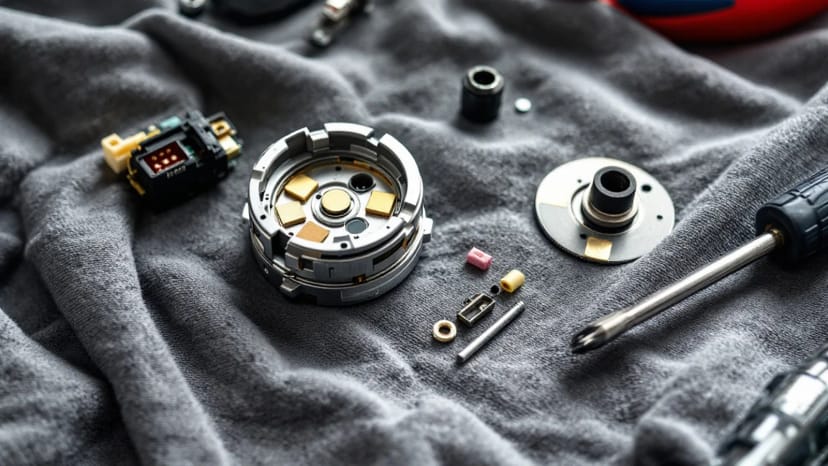
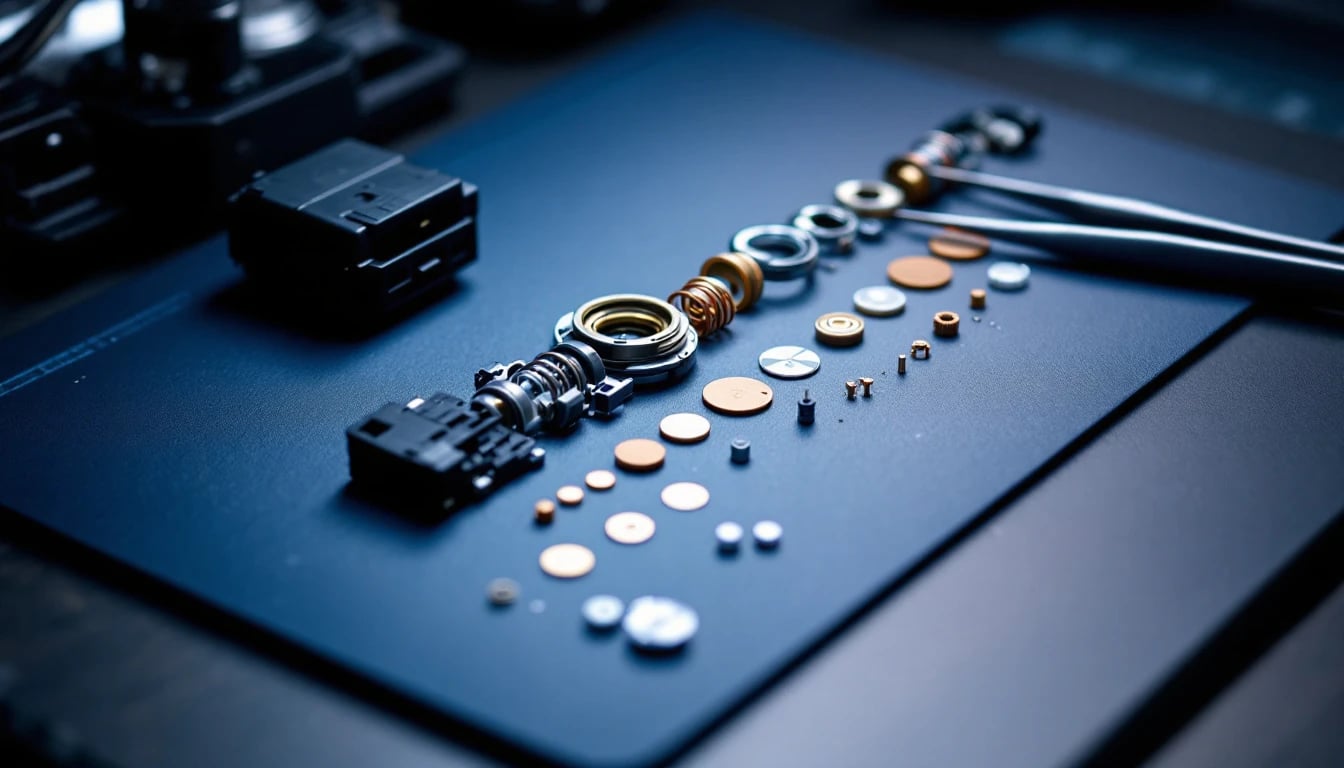
The lock cylinder is the mechanical lock. Inside it sits a stack of spring-loaded brass wafers. Your key blade pushes each wafer to a specific height; when every wafer sits flush with the cylinder wall, the plug is free to rotate. That rotation is all the cylinder does. It is a purely mechanical part and it wears exactly like any other mechanical part — the wafers erode, the springs weaken, the plug develops play.
The ignition switch is the electrical component the cylinder turns. It is usually a separate module clamped to the back of the lock housing, connected by a short actuator rod or a plastic cam. As the cylinder rotates through accessory, run and crank, the switch closes different sets of contacts and tells the rest of the car what position you are in. It contains no lock parts at all and does not care what key you use.
There is a third thing people lump in and should not: the immobilizer. That is not a mechanical part. It is an electronic handshake between a chip in your key and a receiver ring around the ignition, and it is the reason a perfectly cut key can turn the cylinder, close the switch, crank the engine and still not let it run. Anti-theft immobilizers became effectively universal on US-market passenger vehicles through the late 1990s and early 2000s under the federal theft-prevention framework administered by NHTSA, which is why an ignition conversation about a 2004 car is a very different conversation than one about a 1989 car.
Which one do you have? Read your own symptom
This is the diagnostic ladder we walk over the phone before dispatching a technician to a Fort Worth driveway.
The key will not go all the way in, or goes in and will not turn at all. Cylinder. Worn wafers, a worn key, debris packed into the keyway, or a bound steering lock. Try the steering-wheel wiggle first — rock the wheel gently left and right with light turning pressure on the key. If it frees up, the cylinder is fine and the steering lock was simply loaded.
The key turns but feels gritty, sloppy, or turns too far. Cylinder, worn. This is the classic high-mileage failure. The wafers no longer index cleanly, the plug has developed rotational play, and the key is doing more work than it should. This is the state that precedes a key snapping off in the lock.
The key turns freely with no resistance and nothing happens at any position. Cylinder — but a broken one, not a worn one. The plug has separated from the cam or the actuator rod, so rotation is no longer transmitted to the switch.
The key turns normally through every detent, but you get no dash lights at run. Switch. The mechanical side did its job. The electrical contacts are not closing.
The key turns to run, the dash lights up, but nothing happens at crank. Switch, starter circuit, or battery — in that order of likelihood if the dash lights hold steady rather than dimming when you turn to crank.
The engine cranks and starts, then dies within two seconds. Not the ignition at all. That is the immobilizer refusing to authorise fuel. Start with our anti-theft light flashing and the car will not start diagnosis instead.
The car runs but stalls when you hit a bump, or the accessories cut out intermittently. Switch, with worn or heat-damaged contacts. This one is genuinely dangerous and should not wait — an ignition that drops out of the run position at speed takes your power steering assist with it.
What each job costs in Fort Worth
As of September 2026, here is the honest breakdown. Everything below is mobile, on-site, at your location in Fort Worth or the surrounding cities, and includes the part, the labour and the travel.
| Job | What is actually done | Typical cost | On-site time |
|---|---|---|---|
| Cylinder service and rebuild | Cylinder extracted, disassembled, cleaned, new wafers and springs fitted, keyed to your existing key | $150 – $200 | 60 – 90 min |
| Cylinder replacement, key matched | New cylinder fitted and keyed to your original key so the same key still works | $200 – $275 | 90 – 120 min |
| Cylinder replacement plus new key | New cylinder, new key cut, transponder programmed to the immobilizer | $250 – $350 | 90 – 150 min |
| Electrical ignition switch | Column opened, switch replaced, run and crank circuits verified | $200 – $350 | 90 – 150 min |
| Switch plus immobilizer re-learn | Switch replaced, then key and receiver re-synchronised to the vehicle | $300 – $400 | 120 – 180 min |
| Additional key programmed same visit | Second key enrolled while the technician is already on-site | $65 | +15 min |
The band tops out at $400 for a reason. Beyond that you are usually no longer looking at an ignition job — you are looking at a steering column repair, a body control module, or a key origination on an encrypted European platform, all of which are separate conversations with separate pricing.
Dealer pricing for the same work generally runs well above these numbers. Part of that is genuine parts markup, but the larger part is structural: dealer service is billed against a posted shop labour rate, and Bureau of Labor Statistics occupational data for automotive service technicians shows the sector's employment and wage base has held or climbed through the 2020s, which flows straight into posted rates. The other cost most dealer quotes leave out is the tow. If the key will not turn, the car does not drive to the dealership.
What actually makes the price move
Four variables account for nearly all of the spread inside that band.
1. Whether you still have a working key. This is the single largest lever. With a key in hand, the cylinder can be keyed to match and no origination is needed. Without one, the key code has to be pulled through the manufacturer-authorised channel — the National Automotive Service Task Force Vehicle Security Professional registry exists precisely to gate that access — and the job gains both time and access overhead.
2. Whether the vehicle has an immobilizer. Pre-1996 vehicles largely do not. Almost everything after 2000 does. On an immobilized vehicle, any work that disturbs the key or the receiver ring means a programming session afterwards, and that session is billed.
3. How the column is built. Some platforms give up the cylinder in ten minutes with two screws. Others require dropping the column, removing a lock housing, and working carefully around an airbag. Research from the Insurance Institute for Highway Safety on vehicle theft and anti-theft design is a useful proxy here — the platforms manufacturers hardened most aggressively against forced entry are, unsurprisingly, the platforms that take the most work to service legitimately.
4. Whether somebody has already been in there. A cylinder that a previous owner or an unqualified operator attacked with a drill or a screwdriver is a replacement, not a rebuild, and sometimes takes the lock housing with it. We see this often on vehicles bought at auction.
The repair-versus-replace decision, honestly
Rebuild wins when the housing and the cam are sound and the failure is ordinary wear. You keep your original key, you keep your original part, and the bill lands at the bottom of the band.
Replace wins when any of the following is true: the housing is cracked; the cam or retaining tab has sheared; the plug spins free of the cam; the lock has been forced; or the vehicle is one of the platforms where a rebuilt cylinder is known to fail again inside a year. A technician who will not tell you which category you are in is not doing a diagnosis, they are reading a price list.
One thing worth saying plainly, because it comes up on nearly every ignition call: an operator who quotes a firm ignition price before seeing the vehicle and before knowing whether you have a working key is guessing. The Federal Trade Commission's guidance on hiring a locksmith makes the same point from the consumer side — the pattern to watch for is a very low phone quote followed by a much larger figure once the technician is standing at your car. An honest range quoted on the phone is a better sign than a suspiciously precise number.
As one credentialed automotive locksmith who reviews our technical standards put it: "The wafers tell you everything. Pull the cylinder, dump the stack on the mat, and you can see in five seconds whether this car needed a rebuild or a replacement. Anybody selling ignition parts without opening the cylinder first is selling parts, not repairs."
What a Fort Worth ignition visit actually looks like
A technician arrives at your location with a cutting machine, a diagnostic tablet and a wafer kit. First step is verification of ownership — registration or title plus photo ID that matches. That is not bureaucracy; it is the baseline standard set out in the Associated Locksmiths of America code of ethics for anyone touching a vehicle security system, and an operator who skips it for you will skip it for the next person too, including on your car.
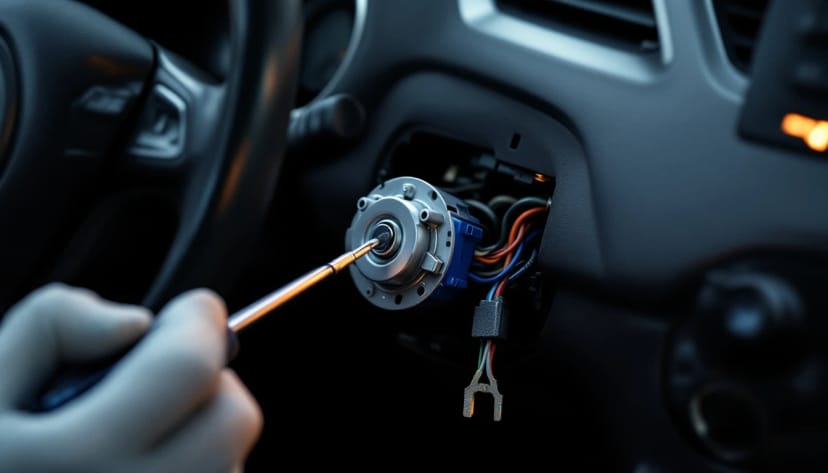
Then the diagnosis: a scan for stored immobilizer and body-control faults, a functional test at each key position, and a visual inspection of the keyway. Only then does the column come apart. Shrouds off, cylinder or switch out, and the actual state of the part inspected on the mat in front of you.
If it is a rebuild, the cylinder is cleaned and re-wafered to your key and goes straight back in. If it is a replacement, the new cylinder is keyed to your original where possible, or a new key is cut and programmed. Switch work adds a functional verification pass across accessory, run and crank plus a re-scan to confirm no new faults were introduced.
Before the technician leaves, every key you own gets tested in the repaired ignition. That last step catches the most common post-repair complaint, which is a spare key that was already marginal and only became unusable once fresh wafers went in.
Update, September 2026: the car that will not turn off
Prices re-checked as of September 2026 and unchanged: ignition repair $150 to $400, with the switch and the cylinder quoted separately where they are separate parts on your vehicle.
One symptom has come up often enough in recent Fort Worth calls to deserve its own note here, because it splits cleanly between the two parts this page is about. When the key turns all the way to off and the engine keeps running, the electrical switch is the prime suspect. When the key stops short of off and will not go further, the lock cylinder or the key itself is far more likely. And on push-button cars that stay in accessory with a "shift to Park" message, neither part is at fault — that is a shifter switch, and it is a mechanic job. We now ask that one question — does the key actually reach off? — before quoting any of these calls, because it decides whether the job is ours at all. The full walk-through, including how to shut a running car down safely, is in car won't turn off with the key.
If your car cranks but will not start and the key head is cracked, check the key before assuming the ignition: key head cracked and the chip fell out covers the symptom that most often gets misdiagnosed as an ignition fault.
Related Fort Worth reading
If your key turns but the engine will not catch, start on the immobilizer side rather than the mechanical side. If you are trying to work out what a locksmith visit costs generally before you commit, our breakdown of car key replacement cost in Fort Worth TX covers the full service menu using the same bands as above.
Model-specific ignition writeups worth reading if they match your vehicle: Chevrolet Cruze and Sonic ignition repair, Ford Taurus and Flex ignition switch repair, and our ignition repair in Fort Worth service overview. If the wheel itself is locked solid, that is a steering column lock repair question rather than an ignition one.
For the two adjacent symptoms most often confused with ignition failure, see key stuck in the ignition and the car key will not turn in the ignition.
Frequently Asked Questions
How much does ignition repair cost in Fort Worth?
As of September 2026, mobile ignition work in Fort Worth runs $150 to $400 all-in. A cylinder rebuild using your existing key runs at the low end of that band. A full cylinder replacement with a new key cut and programmed to the vehicle sits in the middle. A column-mounted electrical switch replacement with an immobilizer re-learn sits at the top. Those are on-site prices including the part, the labour and the travel.
What is the difference between the ignition cylinder and the ignition switch?
The cylinder is the mechanical lock your key physically enters. It contains spring-loaded brass wafers that read the cuts on your key blade. The switch is the electrical component behind the cylinder that the cylinder rotates. It sends the accessory, run and crank signals to the vehicle. A key that will not turn is almost always a cylinder problem. A key that turns fully but produces no dash lights or no crank is almost always a switch problem.
Can an ignition be repaired instead of replaced?
Often yes. If the wafers are worn but the housing and the cam are intact, the cylinder can be disassembled, cleaned and rebuilt with new wafers and springs, keyed to your existing key so you do not have to carry a second key. Rebuild is not possible when the housing is cracked, when the cam or the retaining tab has sheared, or when somebody has previously forced the lock with a screwdriver or a drill. In those cases replacement is the only honest answer.
Do I need a new key after ignition work?
It depends on what was done. A rebuild keyed to your existing key needs no new key. A replacement cylinder can usually be keyed to match your original so your key still works, which is the outcome most people want. If the original key is lost or too worn to copy accurately, a new key is cut and, on any vehicle from roughly the mid-1990s forward, programmed to the immobilizer as part of the same visit.
Why did a shop say the ignition is fine but the car still will not start?
Because a no-start has several possible sources and only some of them live in the ignition. A key that turns to the run position and lights the dash has already proven the cylinder and the switch are doing their jobs. At that point you are looking at the immobilizer, the starter circuit, the battery or the fuel system. A credentialed operator should scan before selling you any ignition part, and should be willing to tell you the ignition is not the fault.
Can ignition work be done at my location or does the car need a tow?
Nearly all ignition work is mobile. The technician removes the steering column shrouds at your location, extracts the cylinder or the switch, services or replaces it, and re-installs. The car does not need to move. The exceptions are vehicles where the column was damaged in an attempted theft and the repair extends into the lock housing itself, and a small number of platforms where the switch sits deep enough behind an airbag assembly that the work is safer in a shop.
How long does ignition work take on-site in Fort Worth?
A cylinder rebuild with the key present is typically 60 to 90 minutes. A cylinder replacement with a new key cut and programmed runs 90 to 150 minutes. An electrical switch replacement with an immobilizer re-learn afterwards runs 90 to 180 minutes depending on the platform. Anyone quoting a flat 20 minutes for ignition work is quoting a lockout, not an ignition job.
Book ignition work in Fort Worth
Fort Worth Car Keys is a mobile-only automotive locksmith. We come to the vehicle — driveway, workplace parking lot, roadside — seven days a week, 8 AM to 8 PM. Licensing for automotive locksmith work in Texas sits with the Texas Department of Public Safety Private Security Program, and any operator working on your vehicle security system should be able to produce that credential on request.
Call (817) 842-1256 or email contact@fortworthcarkeys.com with your year, make, model and the exact symptom, and you will get a real range before anyone is dispatched.
References
- NHTSA — Federal Motor Vehicle Safety Standards
- Federal Trade Commission — Hiring a Locksmith
- National Automotive Service Task Force — Vehicle Security Professional registry
- Associated Locksmiths of America
- IIHS — Vehicle theft research
- Bureau of Labor Statistics — Automotive Service Technicians and Mechanics
- AAA — Auto repair consumer guidance