Key stuck in the ignition in Fort Worth, in one screen
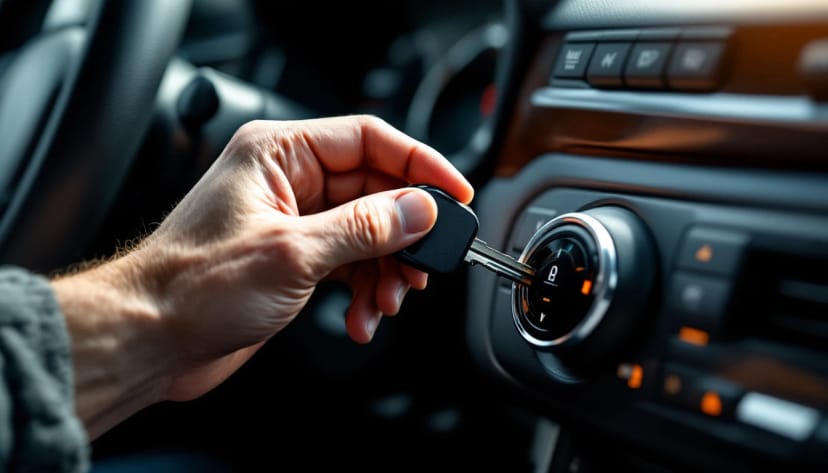
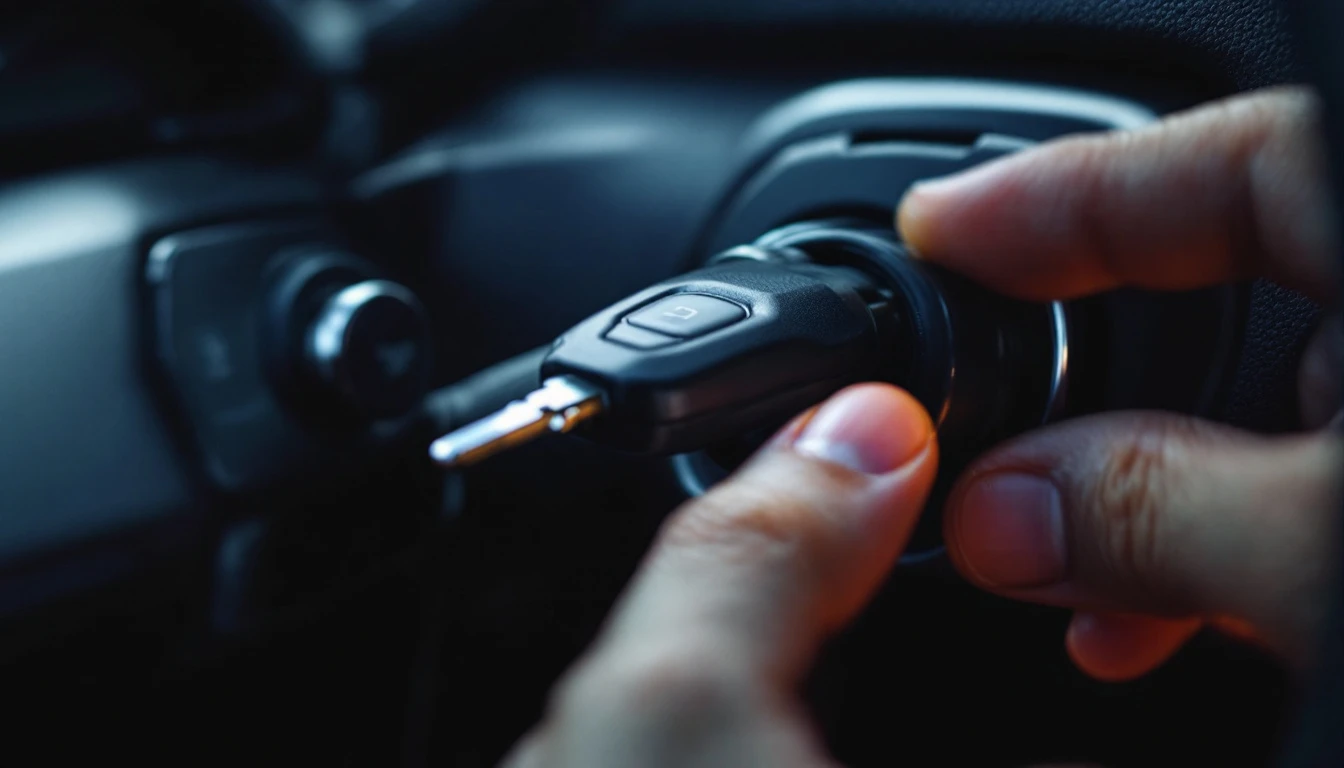
You finished your drive, turned the car off, and the key will not come out of the ignition. It is one of the more alarming car problems because you cannot walk away and leave the key in the car. The good news: most causes are fixable, several are minor, and forcing the key is the single worst thing you can do.
As of July 2026, here is the short version for Fort Worth drivers:
- The most common causes are a gear selector not fully in Park, a dead or low 12V battery on cars with electronic shift-lock, worn ignition wafers or a worn key, debris or a bent key, a seized ignition cylinder, or a failed ignition lock actuator / shift-interlock solenoid.
- Do not force it. Yanking a stuck key snaps blades and bends wafers, turning a small fix into a bigger bill.
- If it is a mechanical ignition fault, ignition repair in Fort Worth runs $150-$400 depending on the vehicle. A broken-off key adds a new key in the transponder ($120-$200) or higher band for smart-key cars.
- A mobile locksmith diagnoses and repairs on-site — no tow to the dealer.
The Federal Trade Commission's guidance on hiring a locksmith recommends getting a total-price estimate before work begins — a real ignition operator quotes after diagnosing the actual cause.
Why a key gets stuck: the real causes
Understanding why the key is trapped helps you try the safe checks and avoid the expensive mistakes.
Gear selector not fully in Park. This is the single most common cause on automatics. Most vehicles are engineered so the key releases only when the shifter is completely seated in Park and the ignition is fully off. A shifter resting a hair short of Park keeps the key locked in. Rock the shifter firmly into Park and try again.
Dead or low 12V battery (shift-interlock). Modern cars use an electronic shift-interlock solenoid tied to the ignition. If the 12V battery is dead or low, that solenoid may not release, and the key stays put. A jump or charge can free it — which is why a stuck key sometimes coincides with a hard-starting car.
Worn ignition wafers or a worn key. Over years of use, the wafers inside the cylinder and the cuts on the key both wear. A worn key can insert and turn but bind on the way out. This is extremely common on higher-mileage vehicles and is a classic Fort Worth summer complaint when heat expansion adds to the bind.
Debris or a bent key. Dirt, pocket lint, or a slightly bent blade can jam the cylinder. Never spray household lubricants like oil into a lock — they attract grit; a locksmith uses dry graphite or a proper lock lubricant.
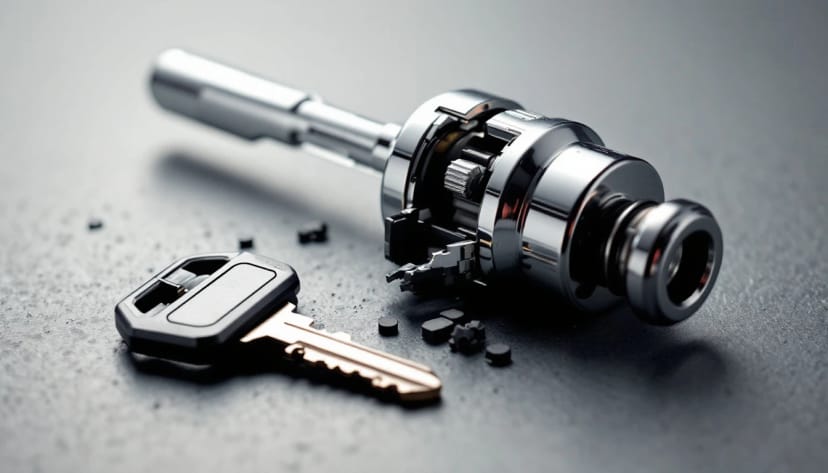
Seized ignition cylinder. The cylinder mechanism itself can seize, especially on older vehicles or after water intrusion. This is a repair, not a DIY.
Failed ignition lock actuator / shift-interlock solenoid. When the electronic or mechanical release component fails, the key will not come out even with everything else correct. Diagnosis requires opening the assembly.
The mistake that costs people the most is the yank. They feel it stuck, they get frustrated, and they pull hard or twist the key with pliers. Now the blade is snapped off inside the cylinder and the wafers are bent. What could have been a shifter nudge or a battery jump becomes a full cylinder replacement plus a key extraction plus a new key. Stop pulling and call before you make it worse.
— ALOA Registered Locksmith (RL), DFW automotive-specialty operator, 12 years experience (anonymized)
Safe checks you can try before calling
Before you call anyone, run through these in order. They are safe, they cost nothing, and they resolve a real share of stuck-key calls.
- Confirm the ignition is fully OFF. On many cars the key only releases in the full-off position, not accessory. Turn it all the way back.
- Rock the shifter firmly into Park. Push it forward past where it normally rests, then try the key. This is the number-one fix on automatics.
- Wiggle the steering wheel gently while turning the key. A locked steering column can bind the ignition; light left-right wheel pressure releases it.
- Check the battery. If the dash was dim or the car struggled to start, a low 12V battery may be holding the shift-interlock. A jump can free the key.
- Gently jiggle the key — small in-and-out and side-to-side motion, never force. Debris sometimes releases with light movement.
- Do not lubricate with household oil. If you suspect a sticky lock, a locksmith will use the correct dry lubricant.
If none of these work, stop. Continuing to force it only raises the repair cost.
Cost to fix a stuck ignition key in Fort Worth
This table maps the cause to the realistic Fort Worth mobile price band. The operator confirms the cause on-site before quoting.
| Underlying cause | What it involves | Fort Worth mobile price band |
|---|---|---|
| Gear selector / shift-interlock (minor) | Reseat Park, free interlock | Minor service call |
| Low/dead 12V battery holding interlock | Jump / advise battery replacement | Minor service call |
| Worn key binding in cylinder | Cut a fresh key to code | $120-$200 (transponder) |
| Broken key extracted from cylinder | Extract blade + cut/program new key | $120-$200+ (higher for smart key) |
| Worn or seized ignition cylinder | Ignition cylinder repair/replacement | $150-$400 |
| Failed lock actuator / interlock solenoid | Ignition assembly repair | $150-$400 |
| Smart-key vehicle new key after damage | Program smart proximity fob | $220-$500 |
A note on the ranges: the mechanical ignition repair sits in the $150-$400 band for most vehicles; a broken-off or worn key adds the cost of a new key, which is transponder ($120-$200) or smart/proximity ($220-$500) depending on the car. Where the two overlap, a good operator gives you one combined quote.
What a mobile locksmith actually does
When the safe checks fail, here is what a licensed mobile operator does at your location:
- Diagnose the cause. Is the shifter seated? Is the battery healthy? Does the cylinder turn freely? Is the key intact? The operator isolates whether it is a shifter/interlock issue, a worn key, or an ignition-assembly failure before touching anything.
- Extract a broken key if needed. If the blade snapped off, specialized extraction tools remove it without further damaging the cylinder.
- Repair or replace the ignition. A worn or seized cylinder is repaired or replaced on-site. This is the same work covered on our ignition repair in Fort Worth page. On some vehicles the steering column lock repair is involved when the column mechanism is part of the bind.
- Cut and program a fresh key. If the old key is damaged, a new key is cut to code and programmed to the immobilizer so it starts the car — see transponder key programming.
- Test the release cycle. The operator confirms the key inserts, turns, starts, and comes out cleanly across several cycles before leaving.
Because we come to you, there is no tow. For related "key won't turn" symptoms — which share several causes but happen before the engine starts — see our companion guide on a car key that won't turn in the ignition.
Why forcing it costs you more
It is worth stating plainly, because it is the single most expensive habit with a stuck key. Every year, mechanical wear and heat cause routine bind; the U.S. Bureau of Labor Statistics tracks the locksmith and ignition-repair trade as steady, ordinary work — most stuck-key jobs are not dramatic. What turns them dramatic is force.
- A snapped key means extraction plus a new key on top of the ignition work.
- Bent wafers can turn a lubrication-and-adjustment fix into a full cylinder replacement.
- A damaged lock actuator from prying adds parts and labor.
- A scratched or gouged dash from tool slips is cosmetic damage you pay to fix.
Per the Associated Locksmiths of America, ignition work is precisely the kind of job where diagnosing first and using the correct tools saves the customer money — and where the wrong approach compounds the bill. Vehicle downtime has a cost too: AAA's Your Driving Costs research puts ownership well over ten thousand dollars a year for the average driver, and a car you cannot leave (because the key is stuck in it) is a car you cannot use.
When it points to a bigger issue
A few stuck-key situations signal something beyond the ignition:
- Repeated sticking after a fix. If the key sticks again soon after a repair, the underlying wear or an interlock fault was not fully resolved — worth a second look before it strands you.
- Security light plus stuck key. On some vehicles a combination of warning lights and a stuck key points to a broader electrical or immobilizer fault; our no key detected / immobilizer page covers that diagnosis.
- Water intrusion. A car that sat in flooding or had a spilled drink over the console can seize the cylinder or corrode the interlock — a repair, not a jiggle.
- Smart-key vehicles. Push-button-start cars do not have a traditional ignition key, so a "stuck key" complaint there usually means a different fault entirely; see push-button start problems.
A Fort Worth heat note
There is a seasonal pattern worth flagging for local drivers: stuck-key and hard-turning-ignition calls climb in the North Texas summer. Cabin temperatures in a car parked in July sun routinely exceed 130 degrees, and that heat expands metal components, thickens old lubricant into a gummy film, and stiffens worn wafers that behave fine in mild weather. A cylinder that was merely "a little sticky" in spring can bind hard in August. If your key has started catching on the way out during hot months, treat it as an early warning rather than an annoyance — a worn cylinder or key caught early is a straightforward repair, while the same part left until it fully seizes can strand you in a parking lot with the key trapped. Getting it looked at before peak summer is the cheap, low-stress path.
How to hire the right ignition locksmith in Fort Worth
Ignition work touches your vehicle's security assembly, so credentials matter. Before you book:
- Confirm the operator is licensed through Texas DPS Private Security. Texas regulates locksmith companies through the Texas Department of Public Safety, not a general trade board. Ask for the license and verify it.
- Ask for a diagnosis before a quote — a legitimate operator identifies the cause before naming a price, and works within the ignition-repair $150-$400 band plus any key cost.
- Confirm they come to you. Fort Worth Car Keys is mobile-only; we serve Fort Worth, Arlington, Keller, and Hurst.
- Confirm they will cut and program a replacement key on the spot if the old one is damaged.
You can reach Fort Worth Car Keys at (817) 842-1256 or contact@fortworthcarkeys.com, 8AM-8PM seven days a week. For overall pricing, see our car key replacement cost in Fort Worth page.
Frequently Asked Questions
Why is my key stuck in the ignition and won't come out?
The most common causes are the gear selector not fully seated in Park, a dead or low 12V battery on cars with an electronic shift-lock, worn ignition wafers or a worn key, debris or a bent key in the cylinder, a seized ignition lock cylinder, or a failed ignition lock actuator. On many cars the key is designed to release only in Park with the ignition fully off, so a shifter or battery issue is the first thing to check.
Can I force the key out of the ignition myself?
No. Forcing, yanking, or twisting hard on a stuck key is the fastest way to turn a cheap fix into an expensive one. You can snap the key blade off inside the cylinder, bend the wafers, or damage the lock actuator, all of which increase the repair cost. Try the safe checks first (Park, battery, jiggle gently), and if it does not release, stop and call a locksmith.
How much does it cost to fix a key stuck in the ignition in Fort Worth?
It depends on the cause. If it is a shifter or battery issue, the fix can be minor. If the ignition cylinder is worn or seized, ignition repair in Fort Worth runs $150-$400 depending on the vehicle. If the key has broken off in the cylinder, extraction plus a new key is typically in the transponder $120-$200 or, for a smart-key vehicle, higher band. A mobile locksmith quotes after diagnosing on-site.
The car is off and in Park but the key still won't come out — now what?
That points to a mechanical problem in the ignition itself: worn wafers, a seized cylinder, a bent key, or a failed lock actuator. On some vehicles a stuck shift-interlock solenoid keeps the ignition from releasing the key. This is where a licensed mobile locksmith diagnoses and repairs the ignition on-site rather than guessing. Do not keep forcing it.
Can a mobile locksmith fix a stuck ignition at my location in Fort Worth?
Yes. Fort Worth Car Keys is fully mobile and comes to your home, workplace, or a parking lot anywhere in Fort Worth and the surrounding cities. We diagnose why the key is stuck, extract a broken key if needed, and repair or replace the ignition cylinder on-site, then cut and program a fresh key if the old one is damaged.
Is a stuck key the same as a key that won't turn?
No, though they share causes. A key that will not turn usually points to a locked steering column, a worn cylinder, or an immobilizer issue before the engine starts. A key that will not come out happens after use and points more often to the gear selector, shift interlock, worn wafers, or a seized cylinder. Both are ignition-side problems a locksmith handles.
Will I need a new key too, or just an ignition repair?
Often just the ignition, but not always. If your key snapped off in the cylinder or the blade is badly worn, you will need a new key cut and programmed along with the ignition work. If the key is intact and only the cylinder failed, the ignition repair alone may solve it. A locksmith confirms which after diagnosing.
References & external sources
- FTC Consumer Advice — Hiring a Locksmith — Federal Trade Commission guidance on verifying locksmith legitimacy and getting a price estimate.
- Associated Locksmiths of America (ALOA) — Trade association governing locksmith certification and ignition-repair standards.
- National Highway Traffic Safety Administration (NHTSA) — Anti-Theft Systems — Federal immobilizer and ignition/anti-theft standard (FMVSS 114).
- Texas Department of Public Safety — Private Security — Texas locksmith company and individual licensing authority.
- U.S. Bureau of Labor Statistics — Locksmiths (49-9094) — National wage and employment data for the locksmith occupation.
- AAA — Your Driving Costs — Annual vehicle-ownership cost study, including downtime context.