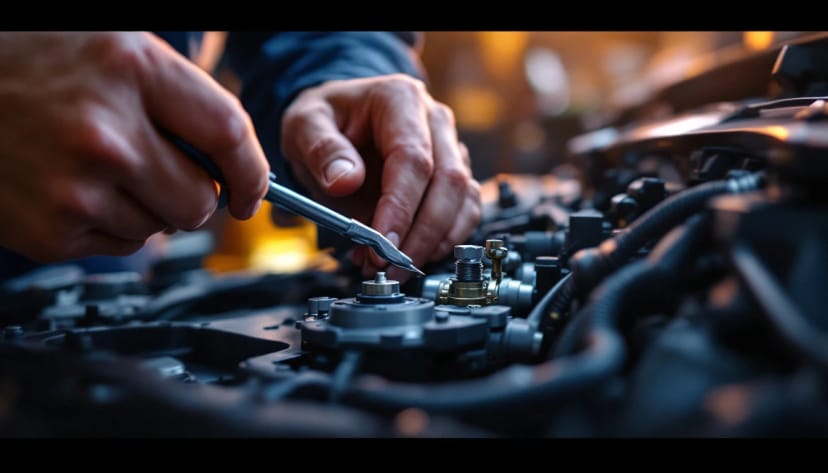
"The ignition" is not one part. Depending on the vehicle, it can be a mechanical lock cylinder, an electrical switch, a steering column lock, a start button with its sensors, or a sealed electronic module. Each fails differently and each is priced differently, which is why two people with a car that "will not start at the ignition" can be quoted very different numbers and both quotes can be fair. Call or text 817-842-1256 and tell us what the key or the button does, and we will tell you which repair you are looking at.
The Short Answer
As of October 2026, ignition repair in Fort Worth runs $150 to $400 on a mainstream vehicle. A lock cylinder rebuild is $150 to $200, a cylinder replacement keyed to your existing key is $200 to $275, and an electrical ignition switch is $200 to $350. Repairs that also need the immobilizer re-synchronized reach $300 to $400. European electronic ignition systems run $350 to $800. Most of this work is done where the car is parked.
Ignition Repair Cost in Fort Worth by Ignition Type (As of October 2026)
| Ignition type | Common on | Typical failure | Mobile price | On-site time |
|---|---|---|---|---|
| Keyed lock cylinder (mechanical) | Most vehicles with a turn key | Key will not turn, sticks, or spins freely | $150 to $275 | 60 to 120 minutes |
| Electrical ignition switch behind the cylinder | Most keyed vehicles | Key turns but power is missing or intermittent | $200 to $350 | 90 to 150 minutes |
| Steering column lock | Keyed columns and many push-button cars | Wheel stays locked, no start | $150 to $400 | 60 to 180 minutes |
| Push-button start system | Proximity-key vehicles | Button does nothing or only accessory mode | $150 to $400 | 45 to 150 minutes |
| Electronic key-slot ignition | Vehicles where a fob is inserted in the dash | Fob will not turn or is not read | $300 to $400 | 90 to 180 minutes |
| European electronic ignition | BMW, Mercedes-Benz, Audi, Volkswagen and similar | No authorization, column will not release | $350 to $800 | 60 to 180 minutes |
A spare key programmed during any of these visits is about $65. The full menu of what we charge for everything else is in the automotive locksmith price list.
Type One: The Keyed Lock Cylinder
This is the part you touch. The key slides into a cylinder containing a row of small brass wafers, and when the cuts on the key line them all up, the cylinder turns. Tens of thousands of insertions wear both the wafers and the key, and eventually they stop lining up.
How it fails. The key goes in but will not turn. Or it turns only after jiggling. Or it turns freely with no resistance and nothing happens, which means a part inside has broken. Or it will not come back out.
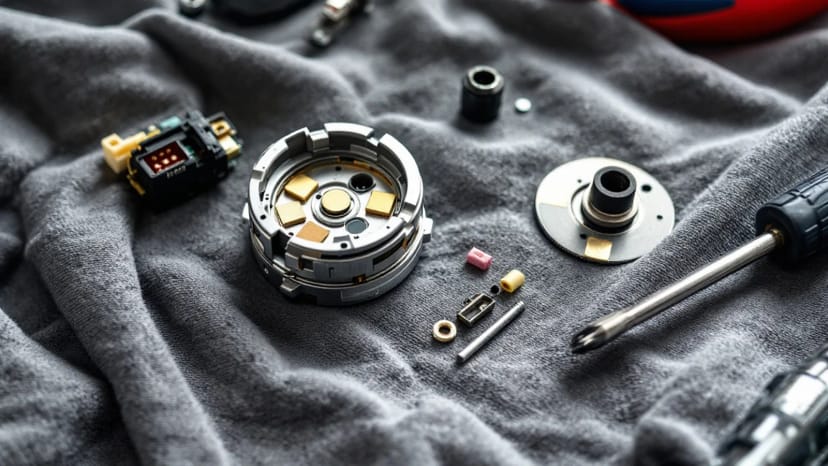
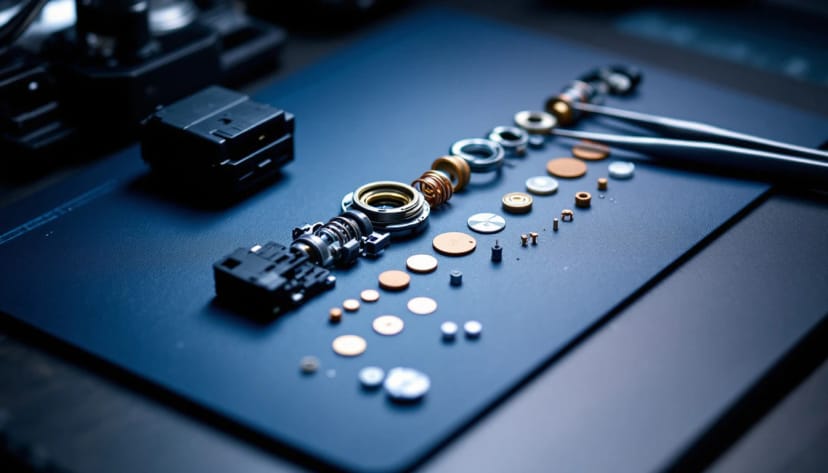
How it is fixed. A worn cylinder can usually be rebuilt: removed, disassembled, cleaned, fitted with new wafers and springs and keyed to your existing key. That is the $150 to $200 job. When the housing itself is damaged, the cylinder is replaced and keyed to match your key, at $200 to $275.
Before assuming the cylinder has failed, rule out the simplest cause. If the key won't turn in the ignition and the steering wheel is locked, the wheel is loading the lock pin, and relieving that pressure costs nothing. The other cylinder symptoms have their own guides: a key stuck in the ignition and an ignition key that spins freely.
Type Two: The Electrical Ignition Switch
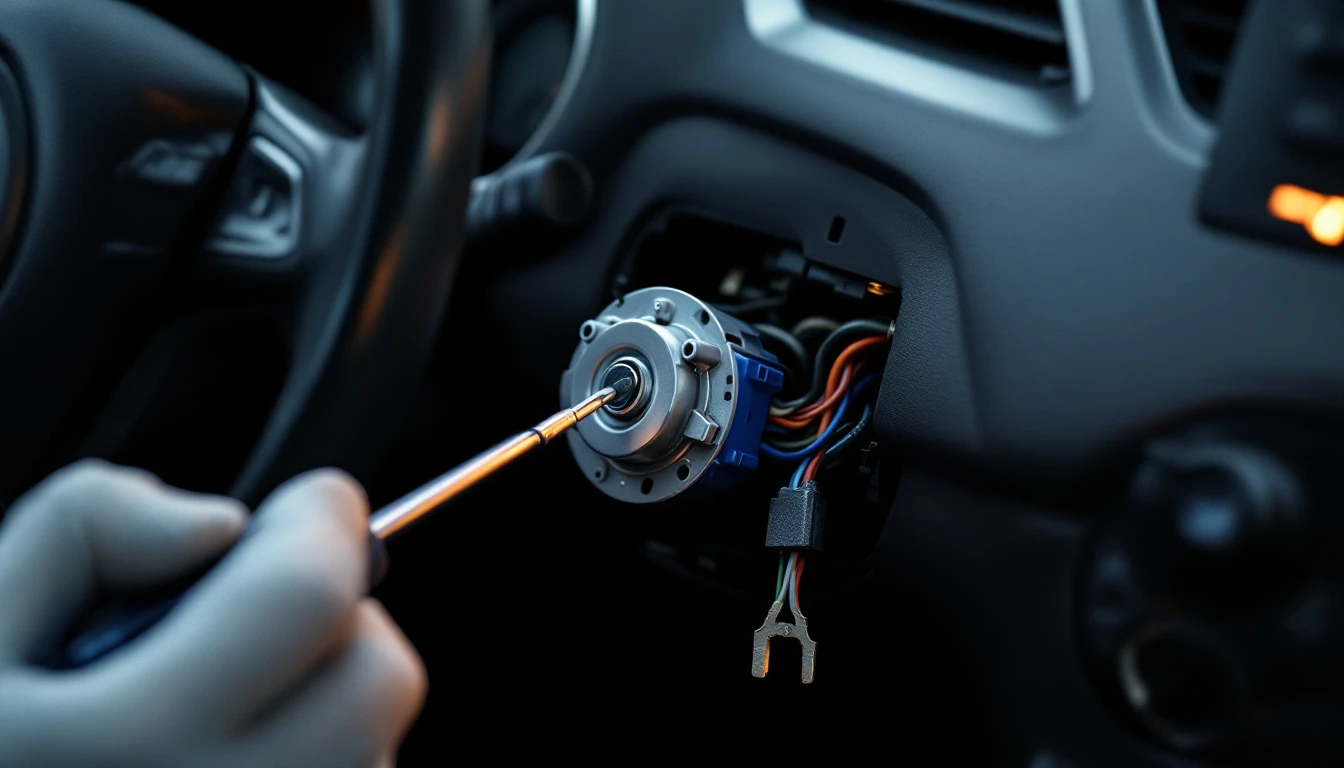
Behind the cylinder, usually lower on the column, sits the switch that does the electrical work. Turning the key moves a rod or a gear that slides contacts across terminals: accessory, run, start.
How it fails. The key feels perfectly normal, but the dash stays dark, or the accessories work and the starter does not, or the engine cuts out when the key is bumped. Contacts burn and wear, and heat makes marginal contacts worse.
This failure has real safety history. In 2014, General Motors recalled about 2.6 million vehicles because the ignition switch could move out of the run position while driving, shutting off the engine and disabling the airbags, a campaign documented by the National Highway Traffic Safety Administration. One contributing factor investigators identified was weight hanging from the key. It is the reason we tell everyone to keep the ignition key on a light ring.
How it is fixed. The column shroud comes off, the switch is replaced, and the accessory, run and crank circuits are verified. That is $200 to $350. If you are unsure which of the first two types you have, our guide to ignition switch vs ignition cylinder separates them by symptom, and ignition switch repair versus replacement cost covers the repair-or-replace decision.
Type Three: The Steering Column Lock
Every car has an anti-theft lock on the steering column. On a keyed car it is a mechanical pin driven by the cylinder. On many push-button cars it is a small electric motor that releases the column only after the car has authorized the key.
How it fails. On a mechanical column the pin binds and the key will not turn. On an electronic column lock the motor or its control circuit fails, the column stays locked, and the car refuses to start because it will not allow the engine to run with the steering locked. The dash often shows a steering lock warning.
How it is fixed. It depends heavily on the platform, which is why this row of the table spans the whole $150 to $400 band. Some are freed and serviced; others need the lock unit replaced and matched to the car. Our steering column lock repair page lists the platforms where this is a known weak point.
Type Four: Push-Button Start
No key, no cylinder, but still an ignition system. Pressing the button asks the car to look for an authorized fob, check that the brake is pressed, release the column if it has a lock, and power up. The recommended practice for these systems is published by SAE International as J2948, which exists largely because drivers needed consistent behavior from a button that replaced a key.
How it fails. The button itself wears out. The brake switch stops reporting. An antenna stops seeing the fob. A weak 12-volt battery leaves the system with too little voltage to wake up. Each produces the same experience: press, and nothing.
How it is fixed. Diagnosis first, because the parts are unrelated to each other. Our push-button start diagnostic walks through the order we check them in, and the push-button start problems page covers the service. Repairs fall across the $150 to $400 band depending on which component it turns out to be.
Type Five: Electronic Key-Slot Ignitions
Some vehicles sit between the two worlds. The fob is pushed into a slot in the dash and turned or pressed, and the slot is an electronic receiver rather than a lock. Many Chrysler, Dodge and Jeep vehicles from roughly 2008 onward work this way, and so do several other makes.
How it fails. The fob will not turn, turns but does not start the car, or will not release. Because the receiver is an electronic module tied to the immobilizer, a replacement has to be programmed to the vehicle, and that programming is why this type sits at $300 to $400. Related faults on newer vehicles of the same family are covered on our Dodge and Jeep RF hub page, and a model-specific example is in Chrysler 300 ignition repair.
Type Six: European Electronic Ignitions
BMW, Mercedes-Benz, Audi and Volkswagen moved to fully electronic authorization earlier than most. The key or fob is read by an electronic ignition module, which talks to a separate steering lock and to the engine computer, and all of them have to agree before anything happens.
How it fails. The key is inserted and nothing wakes up. Or the dash lights and the column will not release. Or the car authorizes the key one day and not the next.
How it is fixed. These repairs need brand-specific equipment and credentialed access to security data, which is why European work runs $350 to $800. Our Mercedes ESL and EZS page covers the most common example in Fort Worth.
Which Type Do I Have? A One-Minute Check
- Is there a slot for a metal key that you turn? You have a keyed cylinder and an electrical switch behind it. Types one and two.
- Is there a start button and you never insert anything? Push-button start. Type four, possibly with an electronic column lock, type three.
- Do you push a plastic fob into the dash? An electronic key-slot ignition. Type five, or type six on a European car.
- Is the badge European? Assume type six until proven otherwise.
Then note the symptom: does the key or button physically do what it normally does? If it does and the car still will not respond, the fault is electrical or electronic. If it does not, the fault is mechanical. That one observation usually halves the possibilities before anyone opens a tool case.
Things That Look Like an Ignition Failure and Are Not
A good share of ignition calls turn out to be something else, and it is worth ruling these out before paying for anything.
- A weak battery. AAA, which publishes its roadside data through the AAA newsroom, consistently lists battery problems among the top reasons drivers call for help. A battery too weak to crank can leave the dash dim and the starter silent, which feels exactly like a dead ignition.
- The shifter is not fully in Park. Federal safety standard FMVSS 114, administered by NHTSA, requires that the key cannot be removed unless the transmission is locked in Park. The same interlock will stop some cars from cranking. Press the brake, move the shifter firmly into Park and try again.
- The immobilizer does not recognize the key. A flashing security light with an engine that cranks and dies is a key or immobilizer fault, not an ignition fault.
- A worn key. If a spare key works smoothly where the daily key struggles, the key is worn and the cylinder may be fine. On some GM sedans the anti-theft sensor lives in the ignition housing itself, as our Buick LaCrosse, Regal and Enclave ignition guide explains.
- An open recall. Check the VIN in the NHTSA recall lookup first. Recall repairs are free at the dealer.
Ignitions Damaged by Attempted Theft
One category has grown sharply. The Insurance Institute for Highway Safety's Highway Loss Data Institute recorded theft claims for certain Hyundai and Kia models rising more than tenfold between 2020 and 2023, and the method involved breaking open the steering column to force the ignition. NHTSA reports more than one million vehicles stolen nationally in 2022. A column that has been attacked needs the cylinder and often the housing replaced, and it is worth photographing the damage for your insurer before the repair begins.
Can It Be Fixed Where the Car Is Parked?
In most cases, yes, and for a simple reason: a car with a failed ignition generally cannot be driven to a shop. Cylinder rebuilds, cylinder replacement, switch replacement, push-button diagnosis and key or immobilizer re-synchronization are all normally done on site in a single visit. The van carries the key machine, the programming equipment and the common cylinders and switches.
The alternative route starts with a tow. A mobile repair removes that step, which is the largest structural difference between the two options. If the car is stranded somewhere unsafe, our emergency car locksmith service covers Fort Worth and the surrounding cities during service hours.
What Moves the Price Inside the Band
- Whether keys are needed. A cylinder keyed to your existing key keeps the price down. Cutting and programming new keys adds to it.
- Whether the immobilizer is involved. Any repair that disturbs the link between key, receiver and engine computer needs a re-synchronization, which pushes the job to $300 to $400.
- Access. Some columns come apart in minutes. Others require the airbag clockspring and half the dash trim to be moved carefully out of the way.
- Parts. A rebuild uses small internal parts. A replacement uses a complete assembly.
The Federal Trade Commission's auto repair guidance recommends getting a written estimate that states what will be done before work begins, and that is how we quote: the price is confirmed against your vehicle before dispatch, and it does not change on arrival.
"Nine times out of ten the customer says the ignition is bad, and they are right that something is. The work is finding out which of five parts they mean. A cylinder rebuild and an electronic column lock are both 'the ignition', and they have almost nothing in common." — an ALOA-credentialed Master Automotive Locksmith working the DFW metro
Choosing Who Does the Work
Ignition work sits on the boundary between a locksmith and a mechanic. Mechanical cylinders, keys, immobilizers and column locks are locksmith territory; a failed starter motor or wiring fault further down the circuit is a mechanic's. A good diagnosis tells you which side of that line you are on before you spend anything.
In Texas, locksmith companies are licensed by the Texas Department of Public Safety through its Private Security Program, and ALOA maintains the professional credentials for automotive specialists. Ask for the license number. For a sense of how ignition work compares with everything else we charge for, see how much is a locksmith for a car, and for the service itself see ignition repair in Fort Worth.
Frequently Asked Questions
How much does ignition repair cost in Fort Worth?
As of October 2026, ignition repair on a mainstream vehicle runs $150 to $400 depending on which part has failed. A lock cylinder rebuild sits at the low end, an electrical ignition switch in the middle, and work that also needs keys or the immobilizer re-synchronized at the top. European electronic ignition systems run $350 to $800. Adding a spare key during the same visit is about $65.
Can a locksmith come to my location to fix an ignition?
Yes. Most ignition work is done where the car is parked, because a car with a failed ignition usually cannot be driven anywhere. Cylinder rebuilds, cylinder replacement, switch replacement and key or immobilizer re-synchronization are all normally completed on site in one visit. Call or text 817-842-1256 with the year, make and model and a description of what the key or button does, and we will tell you whether it is a driveway job.
Is the ignition switch the same thing as the lock cylinder?
No. The lock cylinder is the mechanical part the key slides into and turns. The ignition switch is the electrical part behind it that actually sends power to the accessories, the run circuits and the starter. They fail in different ways: a cylinder fault is felt in the key, while a switch fault shows up as power that is missing or intermittent even though the key turns normally.
Do push-button start cars have an ignition to repair?
They have no lock cylinder, but they still have an ignition system. It is made up of the start button, a brake or clutch signal, antennas that look for the fob, and on many vehicles an electronic steering column lock. Any of those can fail, and the result looks the same from the driver seat: you press the button and nothing useful happens. Diagnosis matters more on these cars because the parts are not interchangeable.
Will I need new keys if the ignition is replaced?
Usually not. A replacement cylinder can normally be keyed to match your existing key, so the same key still opens the doors and starts the car. New keys become necessary only when the original key is badly worn, when the cylinder cannot be matched, or when the repair involves an immobilizer component that has to be re-synchronized. If keys are needed, making them in the same visit is far cheaper than a separate call.
How long does an ignition repair take?
A cylinder rebuild typically takes 60 to 90 minutes on site. Cylinder replacement keyed to your existing key takes 90 to 120 minutes. An electrical switch takes 90 to 150 minutes, and jobs that also need the immobilizer re-synchronized can run to three hours. European electronic systems vary the most. We give a realistic window when you call, before dispatch.
Should I check for a recall before paying for ignition repair?
Yes, it takes two minutes and it can save you the whole bill. Enter your 17-character VIN in the recall lookup run by the National Highway Traffic Safety Administration. Ignition switches and key interlocks have been the subject of some of the largest recalls on record, and recall repairs are performed by the dealer at no charge. If no open recall applies, call 817-842-1256 and we will diagnose it at the vehicle.
References
- NHTSA — Recalls Lookup
- NHTSA — Vehicle Theft Prevention
- SAE International — J2948 Keyless Ignition Subsystems
- AAA Newsroom
- Insurance Institute for Highway Safety / Highway Loss Data Institute
- FTC Consumer Advice — Auto Repair Basics
- ALOA — Associated Locksmiths of America
Ignition trouble? Call or text 817-842-1256 with your year, make and model and what the key or start button does. Most ignition repairs are completed on site across Fort Worth and the surrounding cities, Mon-Sun 8AM to 8PM.
Reviewed against the ALOA Master Automotive Locksmith (MAL) standard. Prices are Fort Worth mobile service ranges current as of October 2026 and are confirmed per vehicle before dispatch.