Three failures, one symptom, very different bills
Ignition calls on the 2011-2019 Chevrolet Cruze and the 2012-2020 Chevrolet Sonic are the most frequently misdiagnosed jobs we take in Tarrant County. The reason is not that these are unreliable cars. It is that three completely separate faults produce descriptions an owner reasonably writes as the same sentence: the key will not turn, or the key turns and nothing happens.
As of August 2026, this is the honest split on these two platforms:
- A worn ignition lock cylinder. Mechanical wear inside the plug. The key enters, but rotation takes force, a specific wiggle, or does not happen at all.
- A failed electrical ignition switch. The plastic block behind the cylinder that actually closes circuits. The key rotates normally through every position, but the dash stays dark or the starter never engages.
- A shifter interlock fault. Not an ignition part at all. The interlock ties shifter position to key rotation and key release, and a lever slightly out of the Park detent or a worn shifter cable stops the key cold.
Only the first two are ignition repairs. The third is the most common false diagnosis on these cars, and it is the reason competent operators run through a phone script before quoting a price. Getting the order right is worth more than any parts discount.
Diagnose it yourself in five minutes, before anyone charges you
Do these in order. All four are free and none of them require tools.
One: seat the shifter. Push the lever firmly into Park with real pressure and try the key again. On the Cruze and Sonic this alone resolves a meaningful share of the calls we get. If the key frees up, you have an interlock symptom rather than a cylinder failure, and the underlying cause is usually a lever that is not fully home or a shifter cable that has stretched enough to leave the interlock switch unhappy.
Two: unload the column lock. With light rotational pressure on the key, rock the steering wheel gently left and right. If the key suddenly frees, the column lock pin was bound against the lock plate. That happens constantly on the crowned residential streets and sloped driveways across Fort Worth, because the parked wheels stay under side load. If this works every single time, note it — that is a column lock symptom, and forcing the key against a bound pin is the fastest way to snap a blade off inside the lock.
Three: try a drawer key. A spare that has lived in a kitchen drawer is an unworn key. If it turns and your daily key does not, your key is the worn part. A fresh blade cut to factory code fixes that at key-work prices in the $120-$200 transponder band, not at ignition-repair prices. If both keys feel identical, the cylinder is worn and no new key will change that.
Four: watch the cluster. Turn the key to run. If the dash lights, chimes work, and accessories power up but the starter never engages, the mechanical side is healthy and you are looking at the electrical switch, a relay, the range input, or battery voltage. If the key rotates and the cluster stays completely dark, the electrical ignition switch moves to the top of the list.
Those four tests separate a free fix from a $150 fix from a $400 fix. What none of them tells you is anything about the immobilizer. If the engine cranks strongly and never catches while the security indicator behaves oddly, the ignition hardware is doing its job and the fault is on the key-credential side instead.
The Cruze and Sonic key itself: HU100 high-security blade
Both models use GM's HU100-family high-security blade, the internally milled profile GM adopted across the Cruze, Sonic, and Malibu generation. Two things follow from that.
First, this is not a key any hardware kiosk duplicates correctly. The blade is milled on a code-capable machine, either duplicated from a good original or cut to the factory code derived from the VIN through an authenticated channel. A sloppy aftermarket copy that is slightly out of spec will turn a healthy cylinder today and accelerate wear on it for the next two years, which is a genuinely common origin story for the cylinder failures we end up replacing.
Second, the key carries a transponder. Even a perfectly cut blade will crank the engine and get nothing if the chip is not recognized. That is why replacing a key and repairing an ignition are two different jobs that occasionally have to happen on the same visit, and why the quote is given as two numbers rather than one.
Later Cruze trims equipped with keyless open and push-button start are a different animal entirely: there is no ignition lock cylinder in the column at all, so there is nothing to wear or seize. On those, a no-start diagnosis moves to the start button, the brake pedal switch, the fob battery, the RF receiver, and the immobilizer handshake. Verify by VIN which configuration you have — the technician will ask whether you turn a key or press a button before quoting anything, and that is not small talk.
The immobilizer relearn nobody mentions at the parts counter
This is the step that turns a self-service ignition job into a tow, and it is worth understanding before you buy a cylinder online.
On these GM platforms, the immobilizer relationship is tied closely to the ignition area, and the transponder antenna sits right at the lock. When a cylinder is replaced, one of two things has to happen:
- The new cylinder is re-keyed to your existing blade. The wafer stack in the replacement is rearranged to match your current key. You keep one key for one car, the transponder relationship is untouched, and nothing has to be reprogrammed. This is the outcome to want, and it is why a competent operator carries re-keying capability rather than just bolting on whatever the box contained.
- The new cylinder comes with its own key. Now you have a blade that turns the new cylinder but a transponder the vehicle has never seen. The engine will crank and refuse to start until that credential is programmed into the immobilizer. That is a security-session job requiring authenticated tooling.
The failure mode we get called out to rescue looks like this: an owner buys a cylinder from a parts site, installs it in an afternoon, and discovers the car now cranks and will not start. The mechanical repair worked perfectly. The security system simply does not recognize the key that came in the box. At that point the car is immobile in a driveway and needs an authenticated operator anyway, which is where the money that was supposed to be saved goes.
An ALOA-credentialed automotive locksmith working Tarrant County put it this way:
On a Cruze I re-key the replacement cylinder to the customer's original blade whenever the wafer stack lets me, and I do it for a selfish reason as much as a generous one — it means there is no relearn, no second key floating around, and no phone call in six months from somebody who grabbed the wrong key off the hook. When people show me a cylinder they already bought and installed, nine times out of ten the mechanical part of their job was fine. They just did not know the car has to be told about the new key.
Cruze and Sonic ignition diagnostic matrix
One table. Find your symptom on the left, read across.
| Symptom | Most likely cause | Free confirming test | Repair path | Cost band | On-site time |
|---|---|---|---|---|---|
| Key will not turn, frees up when shifter is pushed into Park | Shifter interlock or worn shifter cable | Firm pressure into Park | Interlock adjustment or cable service | $150-$400 | 30-60 min |
| Key will not turn, frees up when wheel is rocked | Column lock pin binding | Rock wheel under light key pressure | Column lock service | $150-$400 | 45-90 min |
| Key turns only with force and one exact wiggle | Worn cylinder wafers | Drawer key feels identical | Cylinder replacement, re-keyed to your key | $150-$400 | 45-90 min |
| Key rotates fully, cluster stays dark | Failed electrical ignition switch | Check power at switch outputs | Ignition switch replacement | $150-$400 | 45-75 min |
| Key rotates, dash lights, no crank | Switch, relay, range input, or battery | Load-test battery, test start circuit | Targeted component replacement | $150-$400 | 45-90 min |
| Cranks strongly, never starts, security indicator active | Immobilizer or transponder credential | Scan for security codes | Key programming, not ignition repair | $120-$200 key work | 30-60 min |
| Cranks and will not start right after a DIY cylinder swap | New key never learned by the immobilizer | Confirm the new cylinder came with its own key | Immobilizer relearn and key programming | $150-$400 plus key work | 45-90 min |
| Key will not come out of the ignition | Interlock or cylinder wear | Confirm Park, then try drawer key | Interlock or cylinder service | $150-$400 | 30-60 min |
The two rows that are not ignition repairs are priced in key-work bands on purpose. Charging ignition-repair prices for a key problem, or the reverse, is exactly the sloppiness this table exists to prevent.
What the on-site repair actually looks like
For the cases that are genuinely ignition repairs, here is the sequence in your driveway.
- Verify and document. Confirm the symptom in person, verify ownership, note odometer and key condition. Battery gets load-tested on any no-crank car before parts are discussed.
- Cut a factory-code test key. Ten minutes that ends the job outright a meaningful share of the time, and proves the diagnosis to you either way when it does not.
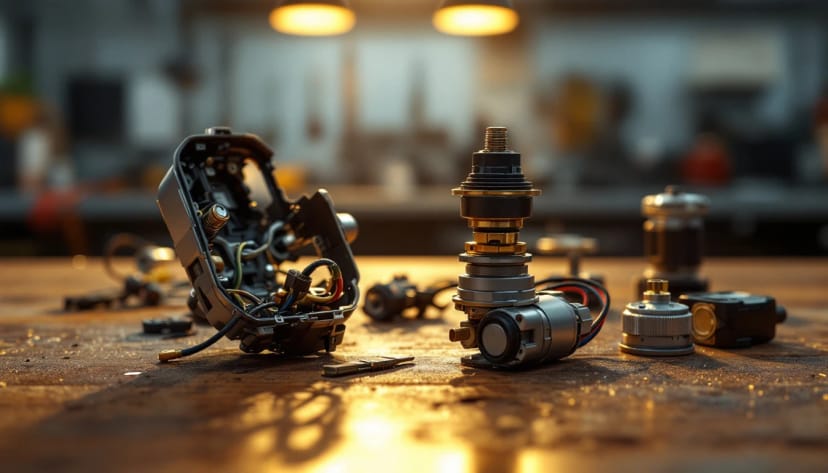
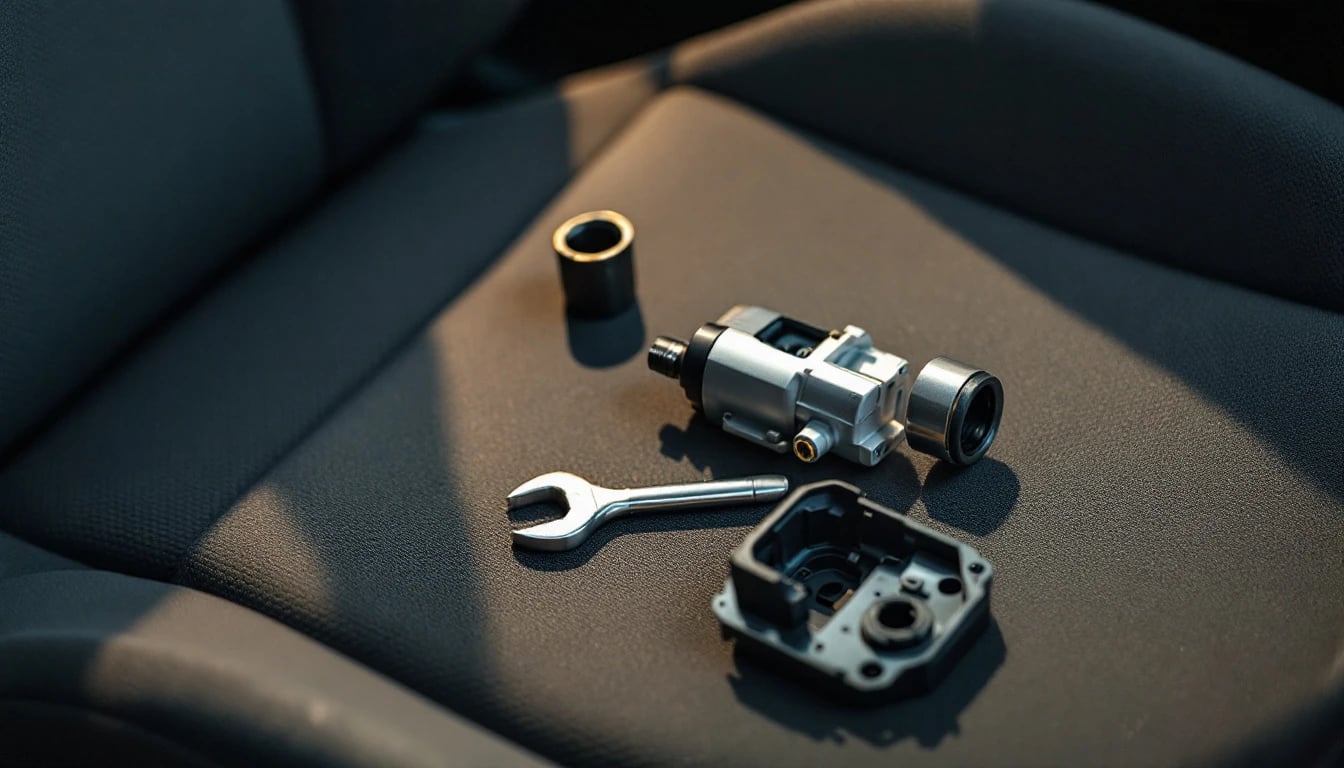
- Drop the column shrouds. Upper and lower plastic covers come off with the tilt column lowered, exposing the lock housing, the cylinder, the electrical switch, and the transponder antenna.
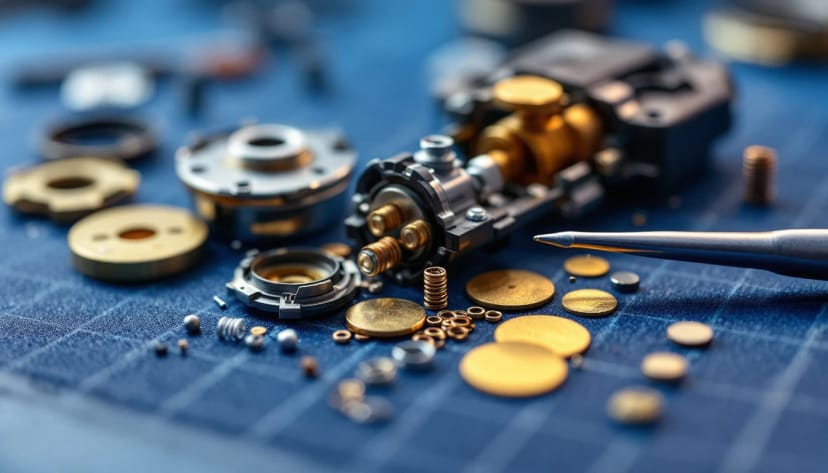
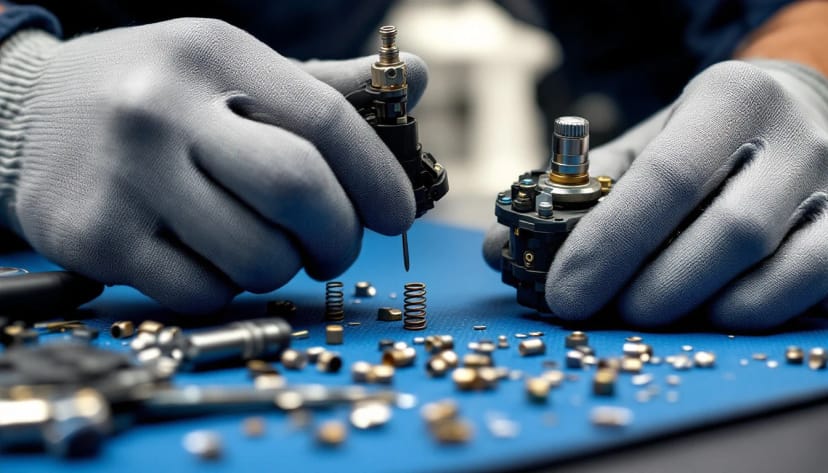
- Release the cylinder. A healthy GM cylinder releases at a specific key position with a release pin depressed through the housing. This is the fork in the road. If it rotates, the job stays short. If it is seized short of the release position, the housing has to be worked mechanically and the labor moves toward the top of the band.
- Re-key or replace. The replacement is re-keyed to your existing blade wherever the wafer stack allows. Where it cannot be, a new key is cut and programmed and that is quoted separately.
- Relearn, if required. Authenticated session over OBD-II to write the credential where a new key was introduced.
- Reassemble and test. Every key position, accessory power, crank, start, key release in Park, column lock engagement, and a scan for stored codes before an invoice is written.
The airbag caution is not optional on this work. The clockspring and driver restraint circuit live inches from everything above. Anyone who reaches for a steering wheel puller without disabling and discharging the restraint system first is not someone to have in your column.
The honest limits of mobile work. Most of this is driveway work. What is not: a lock housing damaged badly enough to need column disassembly beyond the shrouds, a fault that turns out to be in the harness or the starter rather than the ignition, and a vehicle parked somewhere with no safe working space around the driver's door. When a job crosses one of those lines, the right answer is to say so before charging for it rather than after.
What it costs, and how it compares to the alternatives
Ignition repair sits in the $150-$400 band. Where you land inside it is driven by which part failed, whether the cylinder can be re-keyed to your existing blade, and how much of the column has to come apart. If a key also has to be originated, that is $120-$200 in the transponder band on top and is quoted as its own line.
The comparison that matters is total cost, not parts cost. A Cruze that will not turn over does not drive to a service department, so the shop path starts with a tow inside Tarrant County before any labor is billed. Mobile work removes that line entirely because the tools come to the car. For the full picture on how parts, session labor, and travel combine across every kind of job we do, see our breakdown of how much car key replacement costs in Fort Worth TX.
AAA's annual driving cost research puts average vehicle ownership above $12,000 a year, roughly a thousand dollars a month, which is a reasonable way to value a commuter car sitting immobile in a driveway waiting on an appointment slot. J.D. Power's Customer Service Index research consistently identifies time-in-shop as one of the strongest drivers of service dissatisfaction — which matches what we see on ignition calls, where a same-day driveway repair beats a multi-day queue on the measure owners actually care about.
Related Chevrolet jobs worth reading first
Ignition work does not transfer cleanly between GM models, so the neighboring guides are genuinely different jobs rather than the same article renamed. On the full-size sedan side, Chevrolet Impala ignition repair in Fort Worth covers a platform where the ignition and the anti-theft system interact differently enough to change the diagnostic order. And if the fault turns out to be the key rather than the ignition, Chevrolet Malibu key replacement covers the same HU100-family blade lineage and the programming path that goes with it.
The general mechanical side lives on our ignition repair page, the brand-wide picture is on the Chevrolet brand page, and if the diagnosis lands on a security fault rather than a mechanical one, GM theft deterrent system and transponder key programming cover what happens next.
Verify the operator before the column comes apart
This work happens inside your steering column and, when a key is involved, writes new credentials into your vehicle's anti-theft system. Both are reasons to check who you are hiring. The FTC's guidance on hiring a locksmith documents the phone-quote-versus-arrival-price problem in this trade well enough that it publishes about it specifically.
Ask for four things. A Texas DPS Private Security Bureau company license number, since Texas licenses locksmith companies and individual technicians through that bureau. NASTF Vehicle Security Professional registration, the credential that authorizes legitimate access to OEM security data. A written flat-rate range before dispatch. And a straight answer on whether they will attempt to re-key the replacement cylinder to your existing blade, because an operator who has never done that is an operator who is going to hand you a second key and a relearn bill.
The credential ladder behind this work is maintained by the Associated Locksmiths of America, and per Bureau of Labor Statistics occupational data this is a small trade of roughly 15,000 practitioners nationally — the qualified operators in a metro this size are a knowable group. The reason your ignition is built to be this stubborn in the first place is documented by NHTSA's anti-theft equipment guidance and IIHS vehicle theft research: hardened column locks and immobilizers drove theft rates down sharply, and the lock currently refusing to release your key is the same hardware doing that job.
Frequently Asked Questions
My Chevy Cruze key will not turn. Is the ignition bad?
Maybe, but check three free things first. Push the shifter firmly into Park, because the interlock will hold the cylinder if the lever is a hair out of detent. Rock the steering wheel gently while applying light key pressure, because the column lock pin binds when the wheel is parked under load. Then try a spare key that has lived in a drawer instead of a pocket. If the drawer key turns, your key wore out, not the ignition. If all three fail, the cylinder is the likely fault.
What is the difference between an ignition lock cylinder and an ignition switch on a Cruze?
The lock cylinder is the mechanical part your key enters, full of spring-loaded wafers that read the blade cuts. The electrical ignition switch is a separate block behind it that rotates with the cylinder and closes the accessory, run, and start circuits. A worn cylinder means the key will not turn at all. A failed switch means the key turns perfectly but the dash stays dark or the starter never engages. They are different parts at different prices.
Why does my Sonic key turn but the car does nothing?
That points away from the cylinder and toward the electrical side. Candidates are the ignition switch block, the starter relay, the transmission range or neutral safety input, and simple battery voltage. Low voltage on these cars produces symptoms that convincingly imitate a switch failure, so a technician load-tests the battery before condemning anything. Replacing a healthy ignition switch to chase a bad relay is a very common wasted repair on this platform.
Do I need the key reprogrammed after an ignition cylinder replacement?
Often yes. On these GM platforms the transponder antenna and the immobilizer relationship live right at the ignition, so a cylinder swap can require the system to relearn the key credential before the engine will run. If the new cylinder cannot be re-keyed to your existing blade, a new key is cut and has to be programmed as well. A technician tells you which of those two situations applies before starting, because it changes both the price and the time.
How much does Chevrolet Cruze or Sonic ignition repair cost in Fort Worth?
Ignition repair runs $150-$400 depending on which part failed and how much column work it takes. A lock cylinder replaced and re-keyed to your existing key sits in the lower half of the band. An electrical ignition switch replacement sits in the middle. A seized cylinder that needs extended work on the lock housing sits at the top. If a new key has to be cut and programmed at the same time, that is quoted separately as key work.
Can this be fixed in my driveway or does the car need a tow?
Almost always the driveway. Cylinder replacement, re-keying, electrical switch replacement, and immobilizer relearn are all mobile jobs with the right tooling, which is the entire reason to call a mobile operator on a car that will not start. The honest limits are a cylinder so seized it will not reach the service release position, a damaged lock housing, and any fault that turns out to be deeper in the vehicle wiring or the starter. In those cases we tell you before charging you.
Is the shifter interlock really mistaken for a bad ignition that often?
Yes, and it is the single most common false ignition diagnosis on the Cruze and Sonic. The interlock ties the shifter position to the ignition, so a lever resting slightly out of Park or a worn shifter cable can prevent the key from rotating or from coming out. Owners describe that as the ignition being stuck, and it is not. Confirming Park with firm pressure and watching whether the symptom disappears takes five seconds and has saved a lot of people the price of a cylinder.
References
- NHTSA — Anti-Theft Systems — federal guidance on immobilizers and anti-theft equipment.
- IIHS — Vehicle Theft — research on theft rates and hardened ignition security.
- FTC Consumer Advice — Hiring a Locksmith — verifying a locksmith before authorizing work.
- NASTF Vehicle Security Professional Registry — credentialed access to OEM vehicle security data.
- Associated Locksmiths of America — Master Automotive Locksmith credential standard.
- AAA — Your Driving Costs — annual vehicle ownership cost research.
- J.D. Power — Customer Service Index — service satisfaction and time-in-shop research.
- U.S. Bureau of Labor Statistics — Locksmiths and Safe Repairers (49-9094) — national occupational employment data.
Related Pages
- Ignition Repair Fort Worth
- Chevrolet Brand Page
- GM Theft Deterrent System
- Transponder Key Programming
- Steering Column Lock Repair
- Car Key Replacement Fort Worth
Book Cruze or Sonic ignition repair in Fort Worth
We are mobile only, and on an ignition job that is the point rather than a limitation. A car that will not turn over also will not drive to a shop, so we bring the cutting machine, the programming tools, and the column work to wherever it is parked. Tell us the year, whether you turn a key or press a button, and which of the free tests in this guide changed the symptom, and we can usually tell you what we expect to find before we roll.
Call or text 817-842-1256, Mon-Sun 8AM-8PM, across Fort Worth and Tarrant County. You can also reach us through the contact page.