TL;DR — Buick ignition faults in one screen
A LaCrosse, Regal or Enclave from roughly 2008 through 2019 that will not start reliably almost always falls into one of four buckets, and three of them are security-system problems rather than mechanical ones.
- Starts then dies in about two seconds. This is the theft-deterrent system cutting fuel. It is not a fuel pump, not a crank sensor, and not spark. Watch the security light.
- Passlock sensor or lock housing fault. GM's Passlock and Passlock II designs read a resistance value from the ignition lock housing rather than a chip in the key. Wear or damage there produces a security fault with a perfectly good key.
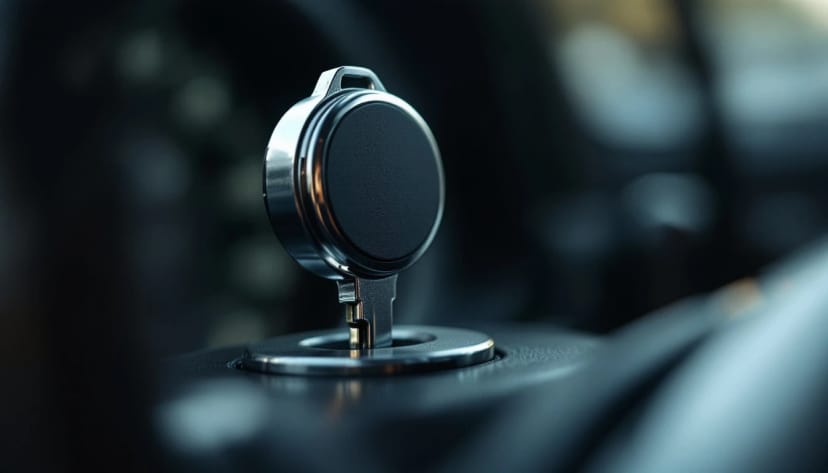
- Worn column lock cylinder. The classic high-mileage GM sedan and crossover failure — a loose, wobbly, or hard-turning cylinder that eventually stops turning at all.
- A relearn that never completed. After certain repairs the system requires a security relearn cycle, commonly around ten minutes in the on position, and on some procedures repeated up to three times for roughly thirty minutes total.
As of August 2026, ignition repair work in Fort Worth sits in the $150–$400 band. A bladed transponder key, if one is needed, is $120–$200. A lockout with no key work is $75–$200. Full scope on our ignition repair page. For the market-wide picture, see our breakdown of car key replacement cost in Fort Worth TX.
Call 817-842-1256 and describe exactly what the car does. On these vehicles the wording of the symptom is most of the diagnosis.
Quick answer
If the engine fires and dies within a couple of seconds and the security indicator is lit or flashing, you have a theft-deterrent fault and you should stop shopping for fuel-system parts immediately. If the key is loose, wobbly, or getting harder to turn, you have a worn column lock cylinder heading toward a stranding. If the key turns normally and the car does nothing at all, you are looking at the electrical side of the column. Those three sentences cover the large majority of Buick calls we take.
How the GM theft-deterrent system works
Understanding this is what separates a targeted repair at the bottom of the ignition band from a parts-cannon exercise that runs to the top of it.
Passlock and Passlock II
Passlock is a GM design that behaves quite differently from the transponder systems most drivers assume they have.
There is no chip in the key. Instead, a sensor in the ignition lock housing reads a specific resistance value as the cylinder rotates. The body control module expects that exact value. If it sees it, the module sends an authorization to the powertrain side and the engine is permitted to run. If it sees the wrong value — or no value, or an intermittent one — it withholds authorization and fuel is cut.
Two consequences fall directly out of that design, and they explain most of the frustration owners feel.
Your key can be perfect and the car can still refuse. Because the key carries no electronics on a Passlock system, a security fault tells you nothing about the key. People replace keys chasing this symptom and get nowhere.
Mechanical wear becomes an electrical fault. The sensor lives in the lock housing. Wear, play, or damage in that housing disturbs the sensor path. So the same high-mileage cylinder wear that makes the key feel wobbly can also produce a security no-start, which is why the two symptoms so often show up on the same car in the same month.
Later GM architectures across this range moved toward transponder and immobilizer designs with the credential in the key, so which system your specific Buick uses depends on the model and year — a fact worth establishing by VIN before anyone touches the column. Deeper detail is on our GM theft-deterrent system page.
The two-second stall
This is the most useful diagnostic pattern in the entire GM range and it is worth stating precisely.
The engine cranks. It catches. It runs for roughly two seconds. Then it dies, cleanly, without sputtering or hunting.
That behavior is the signature of an authorization failure rather than a fuel or air problem. A genuine fuel-delivery fault produces a rough, hunting, sputtering stall as the engine starves. A security cut is abrupt — the system simply stops permitting the run. If you can hear the difference once, you will never confuse them again.
Our dedicated guide on the anti-theft light flashing when the car will not start walks through what the indicator behavior is telling you in each state.
The security relearn
After certain theft-deterrent repairs, replacements, or resets, the system will not permit a normal start until a relearn cycle completes. The common procedure is holding the ignition in the on position without cranking for roughly ten minutes, waiting for the security indicator to change state, and on some procedures repeating that cycle up to three times for approximately thirty minutes total.
Three things owners should know about it. It is a deliberate security delay, not a technician padding the invoice. Nobody — independent or dealer — can shorten it. And a relearn that gets interrupted partway through frequently has to be started over from the beginning, which is why we ask you not to open the driver door and start pressing buttons halfway through.
The Buick call always starts the same way. Somebody has already replaced a fuel pump, or a crank sensor, or both, on a car that fires and dies in two seconds. Nobody looked at the security light. That light was telling them the answer the entire time, and the actual repair was a worn lock housing and a relearn. I would rather spend five minutes on the phone before you buy a part than three hours undoing the guess.
— a NASTF-registered Fort Worth automotive locksmith, ALOA Master Automotive Locksmith (MAL) credential, DFW metroplex (anonymized)
Model-by-model notes
Spec layer. Configurations varied across a long production run, and the only reliable identification is by VIN.
LaCrosse — roughly 2008 through 2016
A full-size sedan that sold heavily to owners who kept it a long time, which means the cars on the road now carry high mileage on their original ignition hardware. Column-mounted lock cylinders in this range are the archetypal wear case: a decade of daily rotation, frequently with a loaded keyring, producing play in the cylinder long before it fails outright. Bladed keys on the earlier cars are commonly worn well past their original profile by now, and a worn blade in a worn cylinder is a compounding problem rather than two separate ones.
Regal — roughly 2011 through 2017
A lighter sedan on a different platform lineage but with the same fundamental theft-deterrent behavior and the same class of column wear. Regals in Tarrant County tend to be second- and third-owner cars at this point, which means a meaningful share arrive with exactly one key, worn, and no service history for the column.
Enclave — roughly 2008 through 2019
The volume crossover in this group and the one that spans the biggest architectural change. Early Enclaves are conventional bladed-ignition vehicles that behave like the sedans above. Later Enclaves at the newer end of the range moved to push-button start, and those vehicles have no mechanical lock cylinder to wear at all.
That distinction matters enormously for diagnosis. On a keyless Enclave the mechanical failures described here simply do not exist, though the theft-deterrent principle still applies and a no-start with a security indicator still points at the security system rather than at fuel or spark. The diagnostic path is different, and a technician confirms your exact setup by VIN before quoting. Related reading: push-button start not working and push-button start problems.
Fort Worth pricing
As of August 2026. Bands, not single numbers, because what the car actually needs is only known once the column is open and the security state is read.
| Symptom | Likely cause | What the repair involves | Fort Worth band |
|---|---|---|---|
| Fires, dies in about two seconds, security light on | Theft-deterrent authorization failure | Diagnose Passlock path, repair, run relearn | $150–$400 |
| Key loose or wobbly in the cylinder | Worn column lock cylinder | Rebuild or replace cylinder, re-key to existing code | $150–$400 |
| Key getting harder to turn each month | Worn blade plus worn wafers | Cut fresh key to code, assess cylinder | $120–$200 plus cylinder work |
| Key turns, no dash response at all | Electrical ignition switch | Replace switch behind cylinder | $150–$400 |
| Security light stays on, car will not restart | Incomplete or failed relearn | Diagnose, repair, complete full relearn cycle | $150–$400 |
| Key snapped off in the cylinder | Key failure | Extract blade, assess cylinder, cut new key | $150–$400 |
| Keyless Enclave, no-start with security indicator | Theft-deterrent, keyless architecture | Diagnose by VIN, scope confirmed before work | $150–$400, quoted on VIN |
| Lockout, no ignition or key work | Locked out | Non-destructive entry | $75–$200 |
Common problems we see
The parts-cannon Buick
The single most common way this repair goes wrong. A two-second stall gets diagnosed as fuel delivery, and by the time we see the car it has a new pump, a new relay, and sometimes a new crank sensor, none of which addressed a security-system fault. The security indicator was reporting the correct answer from day one.
Worn lock housing producing an intermittent security fault
On Passlock cars this is the classic slow failure. It starts as an occasional no-start that clears if you wait, progresses to a daily event, and eventually becomes permanent. Because it is intermittent early on, owners rationalize it — the car is cold, the car is hot, it was a fluke. It is wear, and it does not reverse.
The heavy keyring
A column-mounted cylinder rotated with a heavy keyring hanging off it is being side-loaded thousands of times a year. On a fifteen-year-old LaCrosse that is the difference between a cylinder that is still fine and one with visible play. It costs nothing to fix and almost nobody does it.
Snapped blade in the cylinder
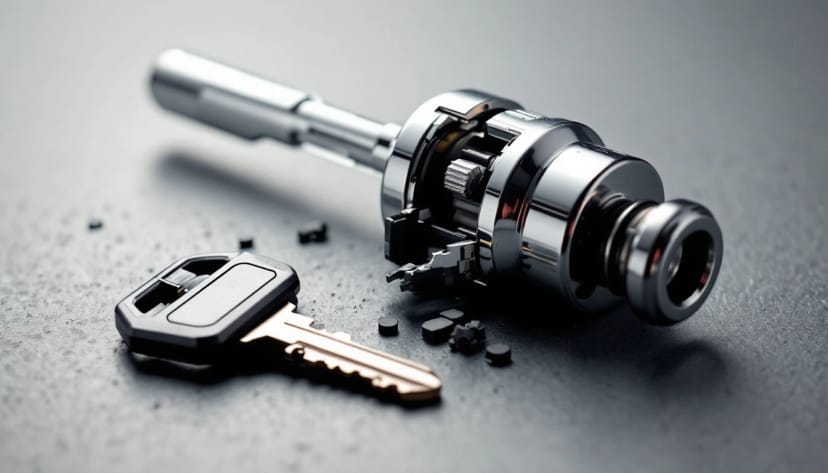
A worn key in a worn cylinder plus one impatient morning. Do not attempt extraction with pliers, screwdrivers, or adhesive — all three routinely convert a clean extraction into a cylinder replacement. See broken car key extraction.
Steering column lock faults
Some configurations in this range carry column-locking hardware that can fail independently of the ignition and prevent a start with its own symptom set. Scope for that repair is on steering column lock repair.
The interrupted relearn
Customer is told to hold the key on for ten minutes, gets bored at six, opens the door to check something, and the cycle resets. Then the car still will not start and everyone concludes the repair failed. Set a timer, leave the car alone, and let it finish.
The repair path, in order
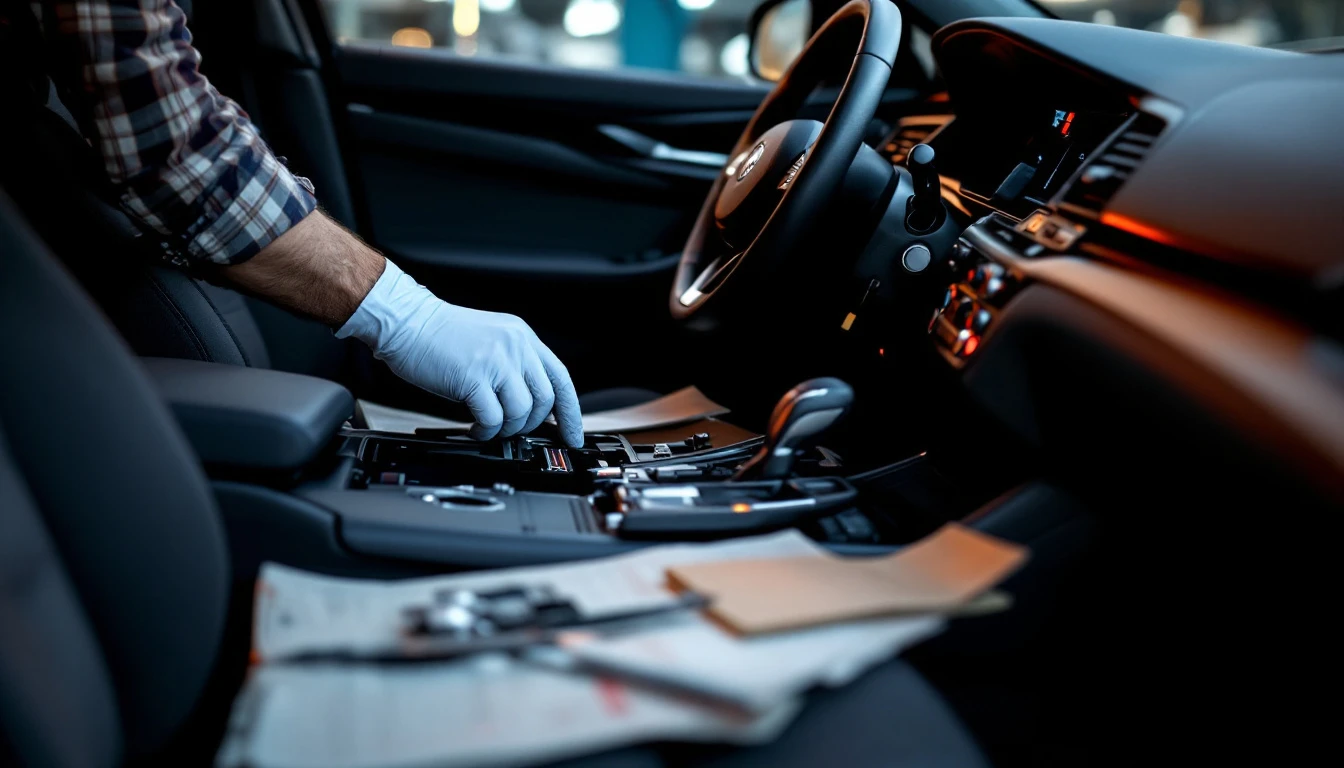
Step one — confirm the symptom in person. Not a description of a description. What does the car do, what does the security indicator do while it does it, and does it repeat.
Step two — 12V load test. A battery sitting at the edge of usable voltage produces convincing false security faults on GM body control architecture. It is a two-minute test that occasionally ends the job right there and saves everyone a morning.
Step three — read the security state. Establish which theft-deterrent architecture the vehicle uses and what it is currently reporting. This is the step that separates a Passlock housing fault from a transponder credential fault from a purely mechanical no-turn.
Step four — mechanical assessment. Key condition, cylinder play, whether the cylinder rotates through every detent cleanly, whether a spare key behaves differently.
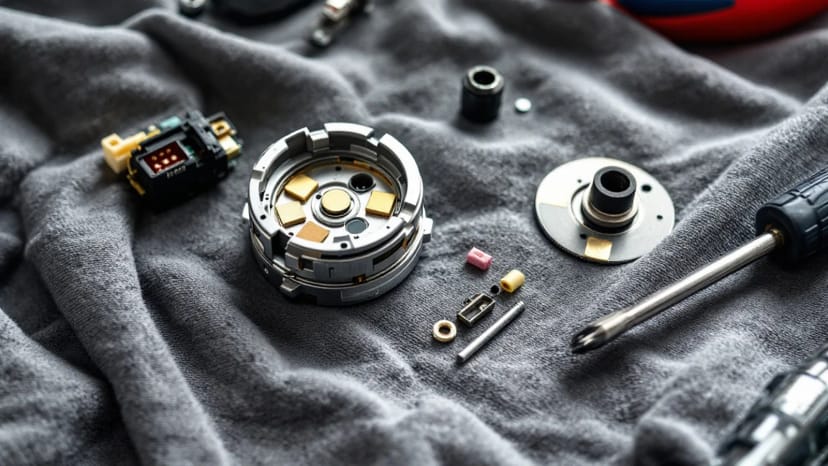
Step five — the repair itself. Cylinder rebuild or replacement, housing and sensor work, or electrical switch replacement. Where a cylinder is replaced, re-keying it to your existing key code is usually the better outcome because it keeps one key operating the doors and the ignition rather than leaving you carrying two.
Step six — relearn and verify. Run the full relearn cycle without interruption, then test every ignition position, every door, the tailgate or trunk, and perform a cold restart after everything is reassembled.
Proof of ownership applies to any key work. If the repair involves cutting or registering a key credential, expect to produce the vehicle title or a current registration together with a government-issued photo ID in a matching name, recorded on the invoice. The FTC's consumer guidance on hiring a locksmith treats identity verification as a baseline expectation, and the legitimate route for independent access to manufacturer security data is the NASTF Vehicle Security Professional registry.
Honest boundaries
Four things stated plainly rather than bluffed:
- Not every no-start is ours. A no-crank with a healthy security system and a healthy switch can be a starter, a relay, a neutral safety switch, or a ground. We will tell you when the answer is a mechanic.
- Body control faults are their own diagnostic path. Where a symptom traces past the ignition into the body control module or the wider security network, that is a scoped diagnostic job and a technician confirms what your car needs before committing.
- Keyless Enclaves are a different repair. The mechanical failures on this page do not apply to a push-button vehicle. Same principle, different path, quoted on VIN.
- The relearn cannot be shortened. Not by us, not by the dealer, not by any tool. Budget the time.
Cross-platform context, since GM shares theft-deterrent architecture widely across its brands: the Chevrolet Impala ignition repair guide covers the same failure class on a sibling platform, and the Chevrolet brand page and Cadillac brand page hold the wider GM reference. For a comparable failure on another make, see Chrysler 300 ignition repair.
How the on-site visit works in Fort Worth
We are mobile-only, seven days a week from 8AM to 8PM, and on ignition work that is the entire value proposition. A Buick that fires and dies is not driving to a shop — that is a tow on top of the repair, and on a car of this age the tow is frequently the larger of the two numbers. AAA's Your Driving Costs research put average annual new-vehicle ownership above $12,000 in its 2024 edition, which is a fair frame for what days without the car actually cost a one-vehicle household.
One practical note specific to these cars: budget for the relearn. If your repair needs it, the visit includes a stretch of time where the car simply sits with the ignition on and nothing appears to be happening. That is the job working correctly. We will tell you up front rather than have you watching the clock wondering.
We cover Fort Worth plus Arlington, Bedford, Hurst, Keller, and North Richland Hills. Coverage detail is on the Fort Worth service area page.
One licensing note worth stating clearly: Texas locksmiths are regulated through the Texas DPS Private Security Program, under the Department of Public Safety. An operator naming any other Texas agency is not describing the law correctly, and that is a useful five-second filter when you are calling around.
On why any of this friction exists: NHTSA's material on anti-theft systems covers theft-deterrent equipment as a federal safety and security matter, and IIHS vehicle theft research documents how sharply theft loss rates fell as these systems became standard equipment across the industry. A Buick cutting fuel two seconds into a start is a system doing precisely what it was engineered to do — which is cold comfort at six in the morning, but it is the reason the car was worth stealing far less often than the generation before it. The Associated Locksmiths of America certification ladder and FTC business guidance on honoring quoted pricing are the two standards worth holding any operator to before you authorize work.
References
- NASTF Vehicle Security Professional (VSP) Registry — Credentialed independent access to OEM immobilizer and security data.
- Associated Locksmiths of America (ALOA) — Certification ladder including Master Automotive Locksmith.
- NHTSA — Anti-Theft Systems — Federal guidance on theft-deterrent and immobilizer equipment.
- IIHS — Vehicle Theft — Research on theft loss rates and anti-theft system effectiveness.
- FTC Consumer Advice — Hiring a Locksmith — Verifying an operator before authorizing service.
- FTC — Business Guidance — Federal guidance on pricing and advertising disclosure.
- AAA — Your Driving Costs — Vehicle ownership and downtime cost research.
Frequently Asked Questions
My Buick starts and then dies after about two seconds. What is that?
That pattern is close to a signature for the GM theft-deterrent system rather than a fuel or spark problem. The engine is allowed to fire, then fuel is cut within a couple of seconds because the security system did not receive the authorization it expected. Watch the security indicator on the cluster while it happens. A security light that stays lit or flashes through the stall confirms you are chasing a theft-deterrent fault, and replacing a fuel pump on that symptom is money spent for nothing.
What is Passlock and how is it different from a transponder key?
Passlock is a GM theft-deterrent design that reads a resistance value from a sensor in the ignition lock housing rather than a chip in the key head. The key itself carries no electronics on a Passlock system. That is why a Passlock car can refuse to run with a perfectly good key, and why a worn or damaged lock housing produces a security fault even though nothing about the key has changed. Later GM designs moved toward transponder and immobilizer architectures, so which system your Buick uses depends on the model and year.
What is the security relearn and how long does it take?
After certain theft-deterrent repairs or component replacements, the GM system requires a relearn cycle before it will permit a normal start. On many of these platforms that means holding the ignition in the on position for roughly ten minutes until the security indicator changes state, and some procedures require that cycle repeated up to three times for around thirty minutes total. It is a designed security delay, not a technician stalling, and there is no way to shorten it.
Why does the key feel loose or wobbly in my Enclave ignition?
Usually because the lock cylinder and its housing have worn after years of daily rotation, often accelerated by a heavy keyring hanging off the key. On column-mounted GM ignitions that wear shows up as play in the cylinder, a key that has to be held in a particular position, or a cylinder that turns but does not reliably engage. Left alone it progresses toward a key that will not turn at all, and on Passlock cars the same wear can also disturb the sensor path and trigger security faults.
How much does a Buick ignition repair cost in Fort Worth?
As of August 2026, ignition repair and replacement work sits in the 150 to 400 dollar band. Where you land depends on whether the job is a cylinder rebuild, a cylinder replacement re-keyed to your existing key, a lock housing and sensor replacement, or a combination of those. If a new key has to be cut and a credential registered as part of the repair, that is separate work in the 120 to 200 dollar band for a bladed transponder key.
My Enclave has push-button start. Does this guide apply?
Only partly. A push-button-start Enclave at the newer end of this range has no mechanical lock cylinder to wear, so the mechanical failures described here do not apply to it. The theft-deterrent principle still does, and a no-start with a security indicator on a keyless Enclave still points at the security system rather than at fuel or spark. The diagnostic path is different though, and a technician confirms your exact setup by VIN before quoting.
Can a mobile locksmith fix this at my house or does it need a shop?
For the large majority of LaCrosse, Regal and Enclave ignition work in this year range, a properly equipped mobile operator handles it where the car sits. The column comes apart with hand tools, the cylinder and housing are accessible, key cutting happens on the truck, and the relearn cycle runs in your driveway. That matters because a car that will not start is not driving to a shop, and the tow is frequently a bigger number than the repair itself.
Stop replacing parts and get it diagnosed
Fort Worth Car Keys is a mobile-only automotive locksmith serving Fort Worth and Tarrant County, seven days a week from 8AM to 8PM. Call 817-842-1256 or email contact@fortworthcarkeys.com. Tell us exactly what the car does and what the security light does while it does it — on a Buick of this era those two details are most of the answer before anyone opens the column.
More: ignition repair, GM theft-deterrent system, car key cutting, transponder key programming, and 24-hour car locksmith.
Reviewed against the ALOA Master Automotive Locksmith (MAL) field-service standard for Fort Worth mobile automotive work. Pricing bands current as of August 2026 and quoted as ranges only; your exact figure depends on which component has actually failed, confirmed on site.