As of July 2026: Chrysler 300 ignition repair in Fort Worth
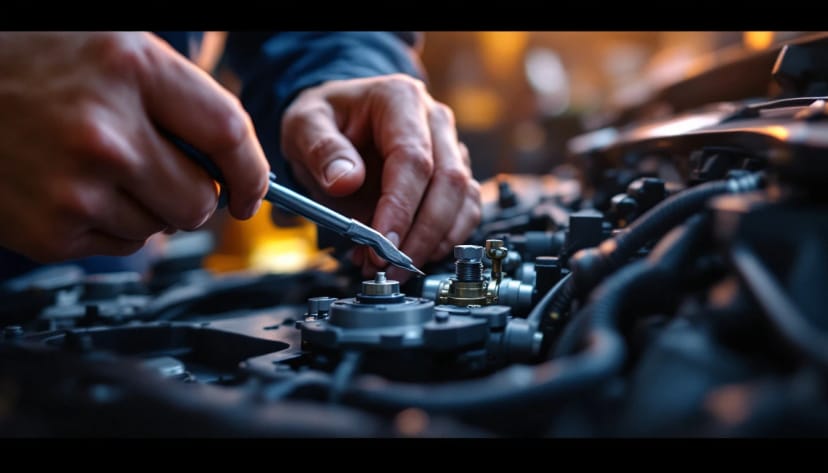
The Chrysler 300 is a distinctive, long-lived full-size sedan, and its ignition system is one of the more misunderstood parts of the car — because the 300 never used an ordinary key cylinder the way most cars do. Instead, it used a FOBIK (a push-in fob-and-ignition unit) on the first generation and the WIN, or Wireless Ignition Node, on the second. When a 300 won't start, won't release the key, or cranks only intermittently, the fault is usually one of those two systems rather than a worn mechanical lock — and telling them apart is the entire value of a professional diagnosis.
As of July 2026, ignition repair on a Chrysler 300 runs $150–$400, covering the FOBIK ignition assembly or the WIN module. If a fresh FOBIK or key credential is needed alongside the module work, that adds transponder ($120–$200) or smart-key ($220–$500) programming. This guide walks the two generations, the specific failures each is known for, and why forcing a stuck fob is the fastest way to turn a manageable repair into an expensive one. We serve Fort Worth and the surrounding cities — Arlington, North Richland Hills, Hurst, Bedford, Euless, Grapevine, Keller, Benbrook, Saginaw, White Settlement, and Lake Worth — and every price here reflects on-site mobile work, not a dealer counter quote.
FOBIK and WIN: why the 300 has no ordinary cylinder
Most cars have a metal cylinder you insert a bladed key into and turn. The Chrysler 300 took a different path, and understanding it is the key to every no-start on the car:
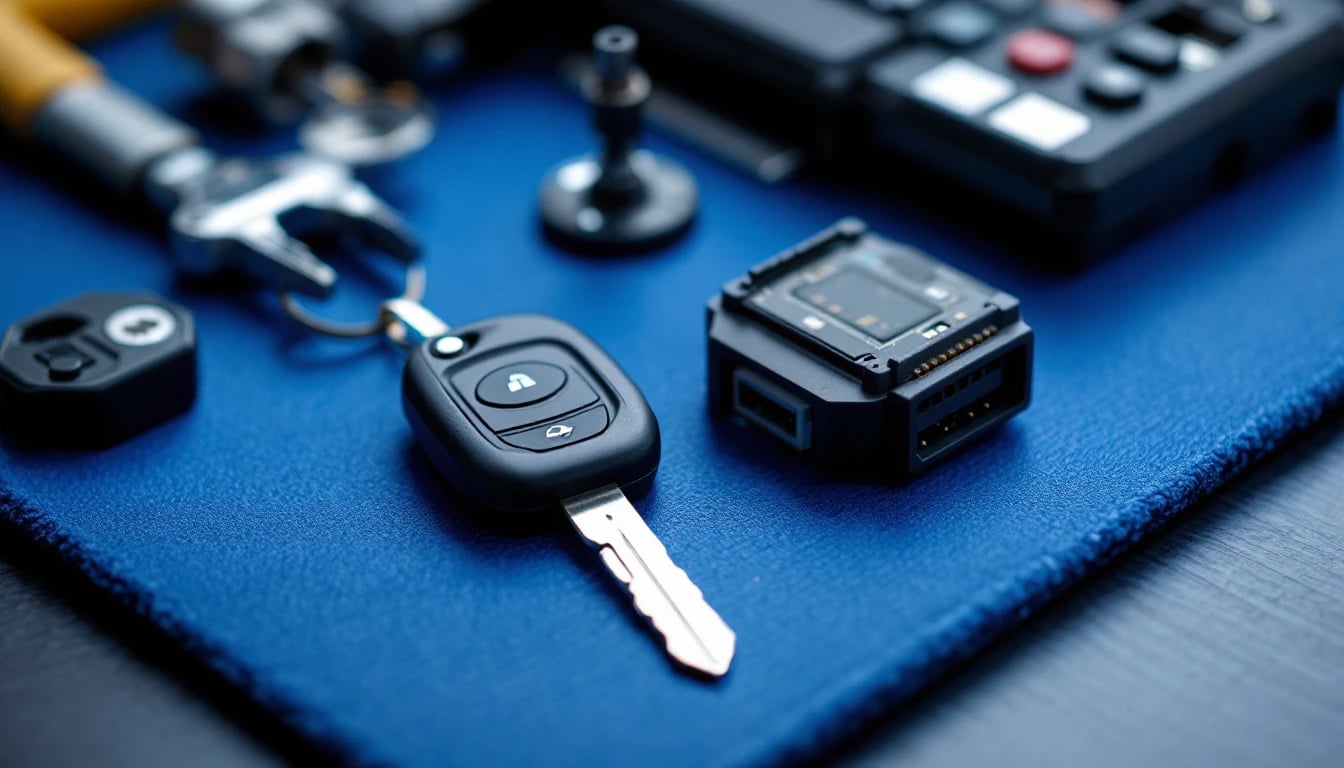
- FOBIK (2005–2010, first generation). FOBIK stands for "fob integrated key." Instead of a bladed key, you insert an electronic fob into the ignition slot and rotate it like a key. The fob carries the transponder credential, and the ignition reads it electronically. There is still a rotate-to-start motion, but the intelligence is in the fob and the ignition electronics, not a set of brass tumblers.
- WIN — Wireless Ignition Node (2011-and-newer, second generation). The WIN module replaces the ignition assembly with an electronic node. Depending on trim you either insert a FOBIK-style fob and rotate, or press a keyless-go start button; either way the WIN reads the credential, releases the steering-column lock, and enables the start. The WIN is the brain of the ignition on these cars.
Because both systems are electronic, the failures look different from a worn-cylinder car. You do not usually get "the tumblers wore out." You get "the fob won't rotate," "the key won't release," "no crank," or "intermittent no-start" — and those point at the FOBIK assembly or the WIN, not at a lock that needs re-pinning.
What a Chrysler 300 ignition job costs up front
Here are the bands that apply to a 300 ignition or no-start situation. Your exact number depends on which system and which failure you have:
- Ignition repair (FOBIK assembly or WIN module): $150–$400 depending on the part and access.
- FOBIK or key credential (if a new fob is needed): $120–$200 transponder / $220–$500 smart-key band depending on the fob type.
- All-keys-lost programming session: $180–$450 plus fob hardware, if no working key remains.
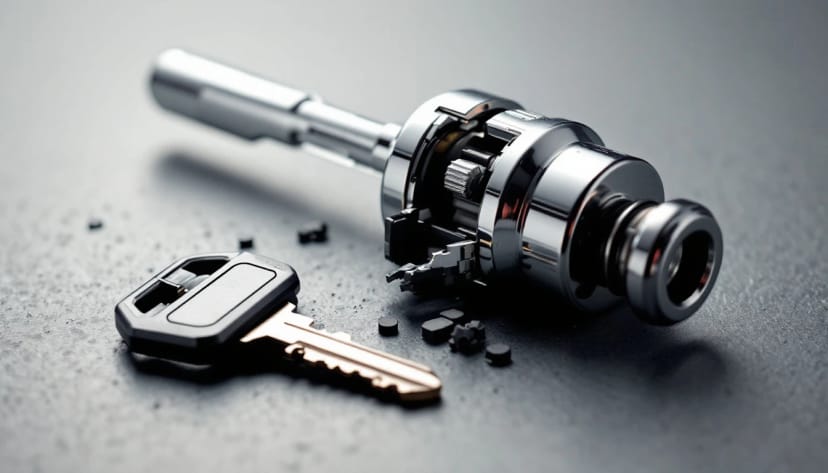
- Broken or trapped key/fob extraction: part of the ignition-repair band, then key work as needed.
- Lockout (keys shut inside the 300): $75–$200 depending on time and access.
Notice that a WIN job and a key job can both be part of the same repair, or entirely separate. That is exactly why a diagnosis comes first: the operator confirms whether you need module work, key work, or both before anything is ordered.
2005–2010: the FOBIK first generation
The first-generation 300 uses a FOBIK ignition. The fob inserts into the ignition slot and rotates to run and start positions, and the transponder inside the fob authorizes the immobilizer. The common complaints here are a fob that will not rotate cleanly, a fob that will not release from the ignition, or an intermittent no-start where the car does not consistently recognize the fob.
Because the FOBIK combines the fob and the ignition function, a fault can live in either the fob or the ignition assembly, and the diagnosis has to separate them. A worn or water-damaged FOBIK can cause both no-start and no-release symptoms; so can a failing ignition assembly. A mobile operator determines which by testing whether the car reads a known-good fob and whether the ignition mechanism rotates and releases properly. If the fob itself is the fault, a replacement FOBIK is cut and programmed in the transponder or smart-key bands; if the ignition assembly is the fault, that is the $150–$400 ignition repair. The Federal Trade Commission's guidance on hiring a locksmith specifically warns against anyone who commits to a repair before diagnosing it — and a FOBIK no-start is exactly that kind of two-possibilities problem.
2011–2023: the WIN module second generation
The second-generation 300 is where the Wireless Ignition Node earns its reputation. The WIN is a known wear point on these platforms, and its failures are some of the most common ignition calls we get on the car. Symptoms include:
- Key won't turn or won't release. The FOBIK will not rotate, or it rotates in but will not come back out — a classic WIN failure where the module's internal mechanism or electronics have degraded.
- No-crank. You turn or press to start and nothing happens — the WIN is not releasing the start circuit even though the rest of the car has power.
- Fob stuck in the ignition. On insert-and-rotate trims, a failing WIN can trap the fob.
- Intermittent no-start. The car starts sometimes and not others, often getting worse over weeks — the signature of a WIN on its way out.
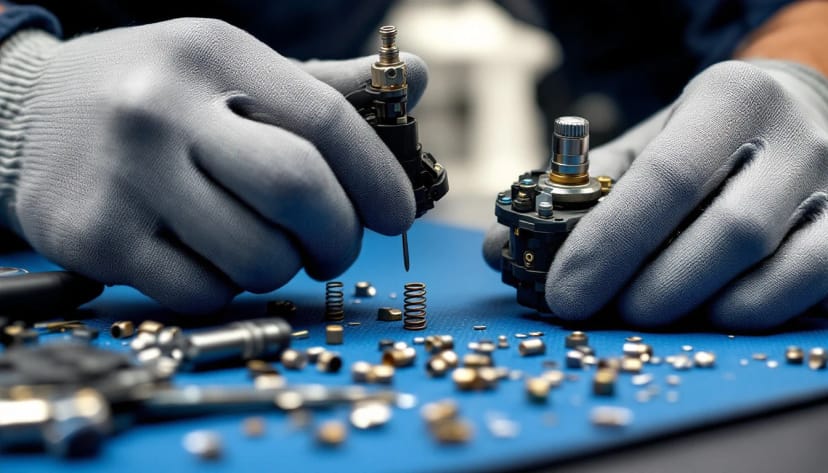
WIN replacement is module work: the new node has to be programmed to the vehicle, and the key credential has to be programmed to the module, both through the data port. This is squarely inside the $150–$400 ignition band for the module-side labor, with key programming added if a fresh credential is needed. Because the WIN also handles the immobilizer handshake, a WIN fault and an immobilizer fault can look identical from the driver's seat, which is why the diagnosis checks the dash for a security light and scans the key before condemning the module. On the newest platform variants, some functions require model-specific tooling, so a technician confirms your exact setup before quoting a firm number.
Telling the 300's ignition failures apart
Here is the single reference table for Chrysler 300 ignition and no-start diagnosis. Prices are ranges as of July 2026 for on-site mobile work in Fort Worth:
| Symptom | Likely system/failure | Era it applies to | Most likely fix | Fort Worth price band |
|---|---|---|---|---|
| Fob won't rotate / no-start | FOBIK assembly or fob | 2005–2010 FOBIK | Diagnose fob vs. ignition; replace/program | $150–$400 (ignition) / $120–$200 (fob) |
| Key won't turn or won't release | WIN module | 2011+ WIN | WIN replacement + program to vehicle/key | $150–$400 (module) |
| No-crank, power present | WIN module or start circuit | 2011+ WIN | WIN diagnosis and replacement | $150–$400 |
| Intermittent no-start, security light | Immobilizer / WIN / dead fob | 2005+ | Scan key, test WIN, credential or module fix | $120–$200 (key) / $150–$400 (module) |
The pattern in that table: a "won't start" or "won't release" 300 is almost always a FOBIK or WIN problem, and the specific fix depends on whether the module, the fob, or the credential is at fault. Guessing is expensive; diagnosing is cheap.
Why the diagnosis is the whole job
The reason we keep returning to diagnosis is that the 300 is a car where the wrong repair is genuinely common. Owners hear "WIN module" from a forum and replace it, when the real fault was a dying fob battery or a failed FOBIK. Others replace the fob when the WIN was the problem all along and the new fob changes nothing. Each wrong turn costs real money.
The stakes are not small in aggregate, either. The FBI's Uniform Crime Reporting data on motor vehicle theft shows hundreds of thousands of vehicles stolen or broken into every year, which is exactly why Chrysler built the immobilizer handshake into the FOBIK and WIN in the first place — and it is why a blank fob will never start the car. The National Highway Traffic Safety Administration documents that engine immobilizers materially reduce theft rates, and the Insurance Institute for Highway Safety has tracked the same effect across its theft-loss data. The upshot for a 300 owner: the security is doing its job, and a proper diagnosis is what separates a $150–$400 module fix from a wrong part on the bench.
Mobile versus the Chrysler dealer
For WIN replacement, FOBIK ignition work, key programming, and immobilizer faults, a mobile locksmith is usually faster and cheaper than the dealer counter. Your 300 stays in the driveway or the parking lot, and the operator comes to it — no tow for a car that will not start or won't release its key. A dealer visit for a WIN failure typically means towing the car in and waiting for a service slot.
The cost gap is real. Skilled-trade labor rates are meaningful — the U.S. Bureau of Labor Statistics tracks locksmith and safe-repair wages as a distinct occupation, and dealer service departments layer a service-writer markup on top of that labor. Over the life of the car, ownership costs add up fast too: the AAA Your Driving Costs study puts unscheduled maintenance and downtime among the larger swings in annual operating cost. The dealer still wins in a narrow set of cases: an open recall, a warranty claim, or a deep internal electrical fault beyond lock-and-key scope.
The 300 and its Dodge cousins are WIN cars — that module is the number-one ignition call I get on them. The trap is that a failing WIN and a failing fob feel identical to the driver: won't turn, won't release, won't crank. I scan the key and test the node before I touch anything, because I have seen people buy a WIN their car didn't need. On these cars, the diagnosis is worth more than the part.
— ALOA Master Automotive Locksmith (MAL), Chrysler WIN specialist, DFW metroplex (anonymized)
Verifying an operator before they drive out protects you. The Federal Trade Commission's guidance on hiring a locksmith recommends confirming licensing and a written quote up front. In Texas, automotive locksmiths operate under the Texas Department of Public Safety Private Security program, and a credentialed operator will also be registered through the NASTF Vehicle Security Professional program, which governs credentialed access to OEM security data.
If your fob or key snapped in the ignition rather than simply refusing to turn, our walkthrough of broken car key extraction covers that specific job. The Dodge/Jeep RF hub issues service page covers the closely related module family across the Chrysler group, the steering column lock repair page covers the column-lock side of a WIN no-turn, and the general ignition repair page explains how on-site ignition and module work is done. You can also start on the Chrysler brand page.
Frequently Asked Questions
How much does a Chrysler 300 ignition repair cost in Fort Worth?
As of July 2026, ignition repair on a Chrysler 300 runs $150–$400, which covers the FOBIK ignition assembly on earlier cars or the Wireless Ignition Node (WIN) module on 2011-and-newer cars. If a new FOBIK or key credential is needed alongside the module work, that adds transponder ($120–$200) or smart-key ($220–$500) programming. The exact figure depends on whether the fault is the ignition mechanism, the WIN module, or the key itself, which a diagnosis determines.
What is the WIN module on a Chrysler 300?
WIN stands for Wireless Ignition Node — the module on 2011-and-newer Chrysler 300s that replaces a traditional key cylinder. You insert the FOBIK or press start, and the WIN reads the key credential, releases the steering lock, and enables starting. When a WIN fails, symptoms include a key that won't turn or won't release, a no-crank condition, a stuck fob, or an intermittent no-start. It is a common wear point on these cars and is diagnosed and replaced as a module, not a cylinder.
Why won't my Chrysler 300 key turn or come out of the ignition?
On a FOBIK-ignition 300, a key that won't turn or won't release usually points to the ignition assembly or the WIN module rather than a worn mechanical cylinder, because the FOBIK is an electronic fob that inserts and rotates. A failing WIN can trap the fob or refuse to rotate out of a position. Forcing it risks damage, so the module should be diagnosed rather than fought. A mobile operator can confirm whether it is the WIN, the fob, or a related fault.
Can a mobile locksmith replace and program a Chrysler 300 WIN module in Fort Worth?
Yes, in most cases. A credentialed mobile operator can diagnose the WIN, replace the module, and program it together with the key credential on-site in Fort Worth and the surrounding cities. WIN replacement requires programming the module to the vehicle and the key to the module, which is done through the data port. Some late-platform variants may need model-specific tooling, so a technician confirms your exact setup before quoting a firm number.
Does my Chrysler 300 have a FOBIK or a push-button start?
It depends on the year and trim. The 2005–2010 first-generation 300 used a FOBIK — a push-in fob that inserts into the ignition and rotates to start. The 2011-and-newer second-generation cars use the WIN module, with a FOBIK-style insert on some trims and full push-button keyless-go on others. Your year and trim decide which system you have and therefore how a no-start is diagnosed, so confirm both when you call.
Is a Chrysler 300 no-start always the ignition or WIN?
No. A no-start can also be a dead or failing key fob, a weak battery, a starter fault, or the immobilizer refusing to authorize the key. A security or immobilizer light on the dash points toward the anti-theft system rather than the ignition mechanism. That is why a proper diagnosis checks the dash, scans the key, and tests the WIN before condemning any one part — replacing the wrong component fixes nothing and costs money.
Should I use the Chrysler dealer or a locksmith for a 300 ignition or WIN problem?
For WIN replacement, FOBIK ignition work, key programming, and immobilizer faults, a mobile locksmith is usually faster and cheaper because your 300 stays where it is and the operator comes to it. The dealer is the better path for an open recall, a warranty claim, or a deep internal electrical fault. For the common WIN and FOBIK failures these cars are known for, mobile is the practical call with no tow.
References & external sources
- NHTSA — Anti-Theft Systems & FMVSS 114 — Federal standard governing immobilizers and their documented effect on theft rates.
- IIHS — Vehicle Theft — Insurance Institute for Highway Safety data on theft loss and immobilizer effectiveness.
- FBI — Uniform Crime Reporting (Motor Vehicle Theft) — National data on vehicle theft and break-in volume.
- FTC Consumer Advice — Hiring a Locksmith — Federal Trade Commission guidance on diagnosing before repairing and verifying a locksmith.
- NASTF Vehicle Security Professional (VSP) Program — Registry for credentialed access to OEM security data.
- AAA — Your Driving Costs 2024 — Annual ownership-cost study including unscheduled maintenance and downtime.
- U.S. Bureau of Labor Statistics — Locksmiths & Safe Repairers — Occupational wage data for the locksmith trade.
- Texas DPS — Private Security Licensing — Texas licensing authority for automotive locksmiths.
Related Pages
- Broken Car Key Extraction
- Dodge/Jeep RF Hub Issues
- Steering Column Lock Repair
- Ignition Repair
- Chrysler Brand Page
Get a firm quote on your chrysler 300 ignition repair
Have your VIN and an accurate count of how many keys exist, and we can give you a band before anyone is dispatched — no guessing and no surprises when the van arrives.
Call or text 817-842-1256, Mon-Sun 8AM-8PM. Mobile service throughout Fort Worth and Tarrant County. You can also reach us via the contact page.