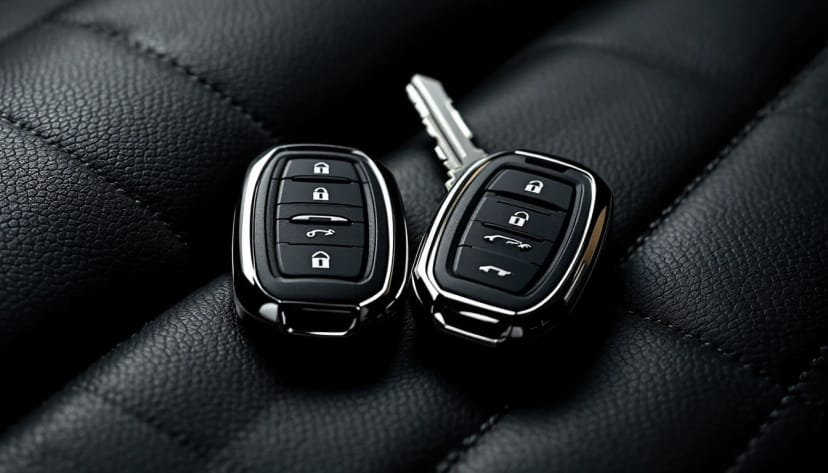
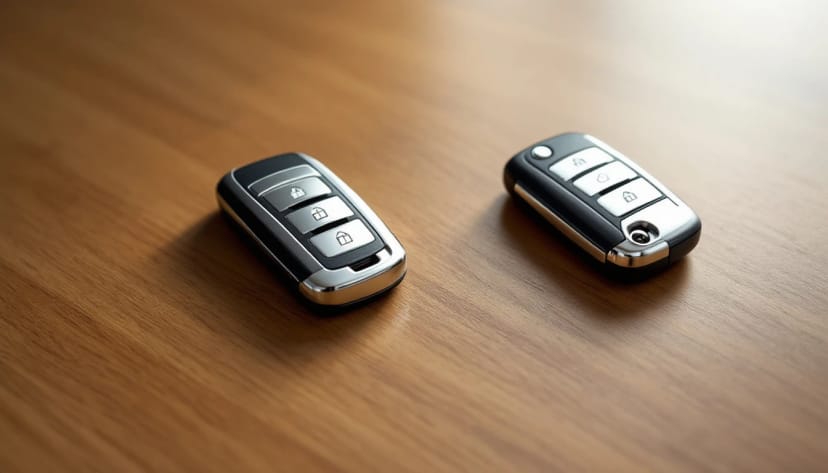
Very few trucks built this century have a key with no chip in it. The first-generation Chevrolet Colorado and GMC Canyon are on that short list, which makes a spare for a 2004 to 2012 truck unusually cheap — and makes the 2015-and-up trucks a completely different conversation. If you own one of these, the generation matters more than anything else. Call or text 817-842-1256 with the year and we will tell you which category you are in.
The Short Answer
As of September 2026, a 2004 to 2012 Colorado or Canyon uses the GM Passlock family, where the anti-theft sensor sits in the ignition housing and the key is a plain mechanical blade with no transponder — so a spare needs cutting only, no programming. A 2015 to 2022 truck uses a transponder remote-head key at $120 to $200 with a working key. A 2023-and-newer truck uses a proximity fob at $220 to $500.
Generation Reference
| Generation | Model years | Key type | Anti-theft system | Programming needed |
|---|---|---|---|---|
| First generation | 2004-2012 | Mechanical GM 10-cut blade, separate remote fob if equipped | Passlock family — sensor in the ignition lock housing | None for the blade; remote pairing only if a fob is fitted |
| (production gap) | 2013-2014 | Not sold new in North America | n/a | n/a |
| Second generation | 2015-2022 | Remote-head flip key with integrated transponder | Transponder immobilizer | Yes — chip registered to the truck |
| Second generation, higher trims | later 2nd-gen | Proximity fob where push-button start was fitted | Transponder immobilizer with passive entry | Yes — fob paired to the truck |
| Third generation | 2023-2026 | Proximity smart fob | Encrypted immobilizer, passive entry and start | Yes — fob paired, tooling dependent |
Keep that production gap in mind. Listings routinely advertise a part as fitting "2004-2022" as though the truck ran continuously, and a first-generation blank has nothing whatsoever in common with a second-generation key.
First Generation, 2004 to 2012 — The Chipless One
How Passlock actually works
This is the part worth understanding, because it inverts the normal assumption about car keys. On a transponder system the key carries a chip, the vehicle interrogates it, and a correct answer permits the engine to run. Passlock does not work that way. The sensor is built into the ignition lock cylinder housing, and it reports the correct resistance value when the correct key rotates the cylinder. The intelligence is in the truck, not in the key.
The practical consequences are all good news for owners:
- A spare blade needs no programming at all. Cut it accurately and it starts the engine. This is genuinely rare on anything built after the late nineties.
- A spare is the cheapest key work we do, because the only cost is an accurate cut.
- A remote, if the truck has one, is a separate item. Keyless entry was a standalone fob, not part of the key, so its pairing is independent of whether the blade works.
The blade
First-generation trucks use a GM 10-cut blade from the B-series family that ran across much of the GM lineup in that era. Any competent operator will identify it on sight, but the reliable move is to have the existing key in hand when you call rather than relying on a year lookup, because GM used several closely related profiles across overlapping model years.
One caution that matters more on a chipless truck than anywhere else: do not copy a worn key. A copy of a copy of a twenty-year-old blade accumulates error at every step, and the result is a key that turns today, wears the cylinder faster, and eventually jams. Cut a new key to the vehicle key code instead of duplicating what is on your ring. That is the difference between a key that lasts and a cylinder replacement at $150 to $400 two years from now.
If a first-generation truck will not start
Here is where the chipless design changes the diagnosis completely. Because the key carries no credential, a security-light no-start on a Passlock truck is usually not a key problem. The far more common causes are the sensor in the ignition housing, its wiring, or the control module. Cutting another key does not address any of those.
We see this mistake regularly: a no-start gets treated as a key problem, keys get cut, the truck still does not start, and the actual fault was never touched. If your truck has a security light and will not run, it needs diagnosing before anything is cut — our GM theft deterrent system page covers what that involves. If the key physically will not rotate, that is a separate mechanical question covered in ignition switch or lock cylinder.
Second Generation, 2015 to 2022 — Transponder Territory
The 2015 redesign moved these trucks onto a conventional transponder immobilizer, and the key became a remote-head flip key with the chip, the blade and the remote buttons in one body.
Everything the first generation avoided now applies. The chip has to be registered to the truck, a blade cut alone will open the doors and not start the engine, and a key bought online is a component rather than a working key until somebody programs it. That puts a spare at $120 to $200 with a working key present, and an all-keys-lost job at $180 to $450.
On FCC IDs
This is the single most useful thing you can do before calling anyone: read the FCC ID off your own fob. It is printed in small type on the back of the case, sometimes under the battery cover or on a label inside the shell.
GM used a small number of remote-head key part numbers across a wide range of trucks and SUVs in this era — the same key family appears on Silverado and Sierra models of overlapping years, which is why cross-referencing by FCC ID beats cross-referencing by vehicle. A number commonly seen on second-generation Colorado and Canyon trucks is M3N-40821302, but button counts and variants differ by trim and year, so treat that as a starting point and verify it against the number on your own key rather than ordering from a year range. Getting this wrong is the most common reason a fob arrives and cannot be made to work.
Later second-generation trucks in higher trims moved to push-button start with a proximity fob, which is a different part again and sits in the $220 to $500 band. If your truck starts with a button rather than a turned key, you are in that category regardless of what a year-based listing says.
Because these keys are shared across the GM truck lineup, the Chevrolet Silverado key replacement notes are directly relevant, and the same family logic applies to GMC Acadia and Terrain spare keys and Chevrolet Traverse spare keys.
Third Generation, 2023 to 2026 — Proximity and Encryption
The current trucks use a proximity smart fob with passive entry and push-button start, on an encrypted immobilizer. Pairing is tooling-dependent and, on the newest software levels, may require a documented security-data session before anything can be written.
That access exists and it is legitimate. The National Automotive Service Task Force administers the Secure Data Release framework through which a vetted, credentialed locksmith obtains manufacturer security information via a documented channel. What that means for you as an owner is simple: ask any operator how they get access on a 2023-and-up truck. A clear answer is a good sign. Vagueness is not.
Honest boundary, stated plainly: on the very newest software levels, some operations are dealer-only, and where that is the case for your specific truck we will tell you before dispatch rather than after. A proximity fob for these trucks sits at $220 to $500 where it can be done independently.
Which Generation Do I Have?
Three checks, in order of reliability.
Look at the key. A plain metal blade with no buttons and a thin head is first generation. A flip key where the blade folds into a plastic body with buttons is second generation. A fob with no visible blade at all, used with a start button, is proximity — second-generation higher trim or third generation.
Read the FCC ID. Printed on the fob. This beats every other method and is what an operator actually wants to hear on the phone.
Check the model year against the table above — and remember the 2013-2014 gap.
If the key is a blade with buttons attached as a separate fob on the same ring, you almost certainly have a first-generation truck with factory keyless entry, which is the chipless case.
What Each Scenario Costs in Fort Worth
As of September 2026, and confirmed per vehicle before dispatch:
A first-generation spare blade is our cheapest key job, cut on site with no programming step. A second-generation transponder or remote-head key is $120 to $200 with a working key present. A proximity fob is $220 to $500. All keys lost on any generation runs $180 to $450 on these trucks. An extra matching key during the same visit is about $65. Ignition cylinder work, if the diagnosis lands there, is $150 to $400.
The full cross-service picture is in our automotive locksmith price list, the chip-specific detail is in chip key replacement cost, and work-truck considerations are covered in truck key replacement cost and on our truck key replacement page.
The Spare-Key Argument, Specific to These Trucks
For a first-generation owner this is close to a no-brainer. There is no programming step, so a second key costs about as little as a car key ever costs. These trucks are now thirteen to twenty-two model years old, their ignition cylinders are worn, and an accurately cut fresh key is easier on a tired cylinder than a worn original. Getting a spare cut to code is both cheap insurance and mild preventive maintenance.
For a second- or third-generation owner the arithmetic is the familiar one, just sharper: about $65 for an extra key during a visit you are already paying for, against $180 to $450 for the all-keys-lost version of the same key later. Many of these trucks work for a living, and a work truck out of service costs more per hour than the key does.
AAA's annual Your Driving Costs research has put average new-vehicle ownership in the region of $12,000 per year, published each year through the AAA newsroom. Against that figure, neither number is a major financial decision. The only real decision is whether you make it before or after the key goes missing. Spare car key covers the visit.
"The first-generation Colorado is the truck I most often tell people to just go get a spare for, today, because it is the cheapest key I cut all week. The 2015-and-up is the one people put off — and that is the one that costs real money when the last key goes in a lake." — an ALOA-credentialed Master Automotive Locksmith working the DFW metro
Two Things Worth Knowing Before You Buy a Key Online
The year-range trap. Because of the 2013-2014 production gap and the mid-generation move to push-button start, year-based listings for these trucks are unusually unreliable. Match on FCC ID and blade profile, not on model year.
Programming is the job on anything 2015 or newer. The part is the cheap half. Anti-theft immobilizers went from optional to near-universal across the 1997-1998 model years, and the NHTSA's guidance on anti-theft systems explains the design intent — these systems are supposed to refuse keys they have not been told to trust. The radio and electrical side of them is standardized engineering documented by bodies including SAE International, and theft data from the Insurance Institute for Highway Safety shows how much the architecture changed the risk picture for pickups in particular.
If a price on the phone sounds impossibly low for a programmed key, it usually is. Consumer guidance from the Federal Trade Commission and long-running warnings from ALOA both describe the same pattern: a headline number that becomes something else once a technician is standing next to your truck. The Bureau of Labor Statistics data on this trade is a reminder that it is a small, local, skilled field — and that the person who identifies your generation correctly on the phone is the one likely to finish the job in one visit.
More on these makes generally: Chevrolet and GMC.
Frequently Asked Questions
Does my Chevrolet Colorado key have a chip in it?
It depends entirely on the generation. First-generation trucks, roughly 2004 through 2012, use the GM Passlock family, where the anti-theft sensor lives in the ignition lock housing rather than in the key — so the key itself is a plain mechanical blade with no transponder. Second-generation trucks from 2015 onward do use a transponder, and 2023-and-newer trucks use a proximity fob. That single difference is the biggest factor in what a spare costs you.
Why is there no 2013 or 2014 Colorado?
Because the first generation ended after the 2012 model year and the second generation did not arrive in North America until the 2015 model year, leaving a two-year gap in the domestic lineup. It matters when you are shopping for keys, because online listings frequently describe a part as fitting 2004 to 2022 as if it were one continuous run. It is not. A blank for a 2012 truck has nothing in common with a key for a 2015 truck.
How much does a Colorado or Canyon key cost in Fort Worth?
As of September 2026, a first-generation mechanical key is the cheapest key work we do because there is no programming step at all. A second-generation transponder remote-head key runs $120 to $200 with a working key present. A third-generation proximity fob runs $220 to $500. With no working key at all, expect $180 to $450. Adding a matching spare during the same visit is about $65 on any of them.
How do I find the FCC ID on my key fob?
It is printed on the fob itself, usually on the back of the case in small type, sometimes under the battery cover or on a label inside the shell. It normally starts with a manufacturer prefix and is the single most reliable way to match a replacement, far better than a model-year lookup. Read it off your own fob and quote that number rather than trusting a marketplace listing that claims broad year coverage.
My truck has Passlock and it will not start. Is that the key?
Usually not, and this is the useful consequence of a chipless key. Because the sensor is in the ignition housing rather than the key, a Passlock no-start with a security light is far more often the sensor, the wiring to it, or the module than anything to do with the key you are holding. Cutting another key rarely fixes a Passlock fault. It needs diagnosing at the vehicle, and cutting keys first is money spent in the wrong place.
Can I get a spare cut at a hardware store for a first-generation truck?
A hardware store can cut the blade, and on a chipless first-generation truck that blade may well start the engine, which is genuinely unusual for a modern vehicle. Two cautions. The blade must be cut accurately, and a worn original copied on a cheap machine produces a key that works today and jams a cylinder later. And confirm you actually have the chipless generation before assuming it, because a 2015 truck copied the same way will open the doors and never start.
Is a Colorado or Canyon key something you can do at my location?
Yes, for all three generations. First-generation keys are cut on site with no programming needed. Second-generation transponder and remote-head keys are cut and programmed at the truck, typically 20 to 40 minutes with a working key present. Third-generation proximity fobs are paired on site as well. Call or text 817-842-1256 with the year and whether any key still starts it, and we will confirm the price before dispatch.
References
- NHTSA — Anti-Theft Systems
- NASTF — Secure Data Release framework
- ALOA — Associated Locksmiths of America
- SAE International
- Insurance Institute for Highway Safety
- AAA Newsroom — Your Driving Costs
- FTC — Advertising and Marketing Guidance
- Bureau of Labor Statistics — Occupational Outlook Handbook
Colorado or Canyon key needed? Call or text 817-842-1256 with the model year, whether the key is a plain blade or a fob, and whether any key still starts the truck. Part numbers stated above are a starting point — always verify against the FCC ID printed on your own key. Mobile across Fort Worth and the surrounding cities, Mon-Sun 8AM to 8PM.
Reviewed against the ALOA Master Automotive Locksmith (MAL) standard. Prices are Fort Worth mobile service ranges current as of September 2026 and are confirmed per vehicle before dispatch.