As of July 2026: the Chevrolet Traverse spare-key math in Fort Worth
The Chevrolet Traverse is a household workhorse — a three-row family hauler that spends its life doing school runs, road trips, and hardware-store loads across Tarrant County. And that is exactly why the single smartest key decision a Traverse owner can make is the one almost nobody makes until it is too late: cut and program a spare while your first key still works. As of July 2026, a spare added on a Traverse while a working key exists runs roughly $65 in hardware plus a short programming charge. Wait until every key is gone, and the same vehicle becomes a $180–$450 all-keys-lost session plus fob hardware — several times the money, plus a stranded family SUV.
This guide walks the Traverse generation by generation, with the key type, a commonly documented FCC-ID example you can verify on your own fob, and the Fort Worth mobile-service price band for each. But the through-line is the economics of the spare: why the gap between an add-a-key and an all-keys-lost is the whole reason to act now. We serve Fort Worth and the surrounding cities — Arlington, North Richland Hills, Hurst, Bedford, Euless, Grapevine, Keller, Benbrook, Saginaw, White Settlement, and Lake Worth — and every price here reflects on-site mobile work, not a dealer counter quote.
The core idea: a spare is insurance, not a luxury
Think of a car key the way you think of a smoke detector. It is cheap, it is boring, and its entire value shows up on the one day something goes wrong. A Traverse owner with two programmed keys never has an all-keys-lost event — by definition, one key is always available to authorize a replacement. A Traverse owner with exactly one key is one dropped keyring, one washing-machine cycle, or one theft away from a tow and a full immobilizer relearn.
The scale of the problem is not hypothetical. The FBI's Uniform Crime Reporting data on motor vehicle theft shows hundreds of thousands of vehicles stolen or broken into every year, and family SUVs sit squarely in the middle of that risk pool because they are parked in public lots for hours at a time. Lost keys are even more common than theft: dropped, misplaced, or accidentally destroyed keys are one of the most frequent reasons owners call a locksmith at all. A spare does not prevent either event — it just makes both of them a minor inconvenience instead of an expensive one.
What a Traverse key costs up front
Before the generation breakdown, here are the bands that apply to the Traverse. Your exact number depends on the key type, whether a working key still exists, and the model year:
- Spare key added with a working key present: roughly $65 in hardware plus a short programming charge — the cheapest path by far.
- Transponder / remote-head key (full replacement): $120–$200 with cutting and programming.
- Proximity smart / flip-with-prox fob: $220–$500 depending on trim and fob generation.
- All-keys-lost programming session: $180–$450 plus fob hardware.
- Ignition cylinder repair or replacement: $150–$400 if the lock itself is the fault.
- Lockout (keys shut inside the Traverse): $75–$200 depending on time and access.
The single most important line in that list is the first one against the last relevant one: about $65 for a spare now, versus $180–$450 for an all-keys-lost later. That is the entire economic case in two numbers.
How GM's theft-deterrent system decides your price
Every Traverse in this guide has an electronic immobilizer. On the first generation, GM branded its system Passlock and later the transponder-based PK3+ / "Circle Plus" arrangement; on newer platforms the same job is handled by GM's theft-deterrent electronics tied to the body control module. The principle is constant: a coded credential inside the key or fob must be recognized before the engine will start. No valid credential, no start — often with a security-light warning on the cluster.
That system is not a Chevrolet upsell. It is federal safety policy with a measurable payoff. The National Highway Traffic Safety Administration documents that engine immobilizers materially reduce the rate at which equipped vehicles are stolen, and the Insurance Institute for Highway Safety has tracked the same effect across its theft-loss data, finding that models without immobilizers are stolen at conspicuously higher rates. The practical consequence for your wallet: the cost of a Traverse key is mostly the credential and the programming, not the metal. That is also why the add-a-key session is so cheap — with a working key already trusted by the module, the operator is only teaching the system one more credential, not fighting it from scratch.
Generation by generation: the Traverse key breakdown
Here is the single reference table for the Chevrolet Traverse. FCC-IDs are commonly documented examples — GM ran several variants across the same years, so confirm your exact key by reading the FCC-ID printed on the back of your own fob and by giving your VIN and trim when you call.
| Generation | Years | Key type | Common FCC-ID (verify by VIN) | Fort Worth price band |
|---|---|---|---|---|
| 1st gen | 2009–2017 | Bladed transponder / remote-head, PK3+ / Circle Plus | OHT01060512-style remote-head | $120–$200 full; ~$65 spare add |
| 1st gen (later) | 2013–2017 | Remote-head key, GM high-security blade | OHT01060512 / GM-46-style variants | $120–$200 full; ~$65 spare add |
| 2nd gen (lower trim) | 2018–2025 | Flip key with transponder | M3N-32337100-style flip | $120–$200 full; ~$65 spare add |
| 2nd gen (higher trim) | 2018–2025 | Push-button proximity smart fob | HYQ1AA / M3N-32337100 variants | $220–$500; $180–$450 all-keys-lost |
2009–2017 (first generation)
The first-generation Traverse uses a bladed transponder or remote-head key on GM's PK3+ / Circle Plus immobilizer. On these SUVs the key is commonly a remote-head design with a documented FCC-ID such as OHT01060512, combining the transponder blade and the lock/unlock buttons in one unit. Because the hardware is inexpensive and the programming is well-supported by independent tooling, a full replacement sits squarely in the $120–$200 band — and a spare added while your existing key still works drops to roughly $65 in hardware plus a short programming charge. This is the generation where the spare argument is at its most lopsided: the metal and chip are cheap, so there is almost no reason for a first-gen Traverse owner to be running on a single key.
2018–2025 (second generation)
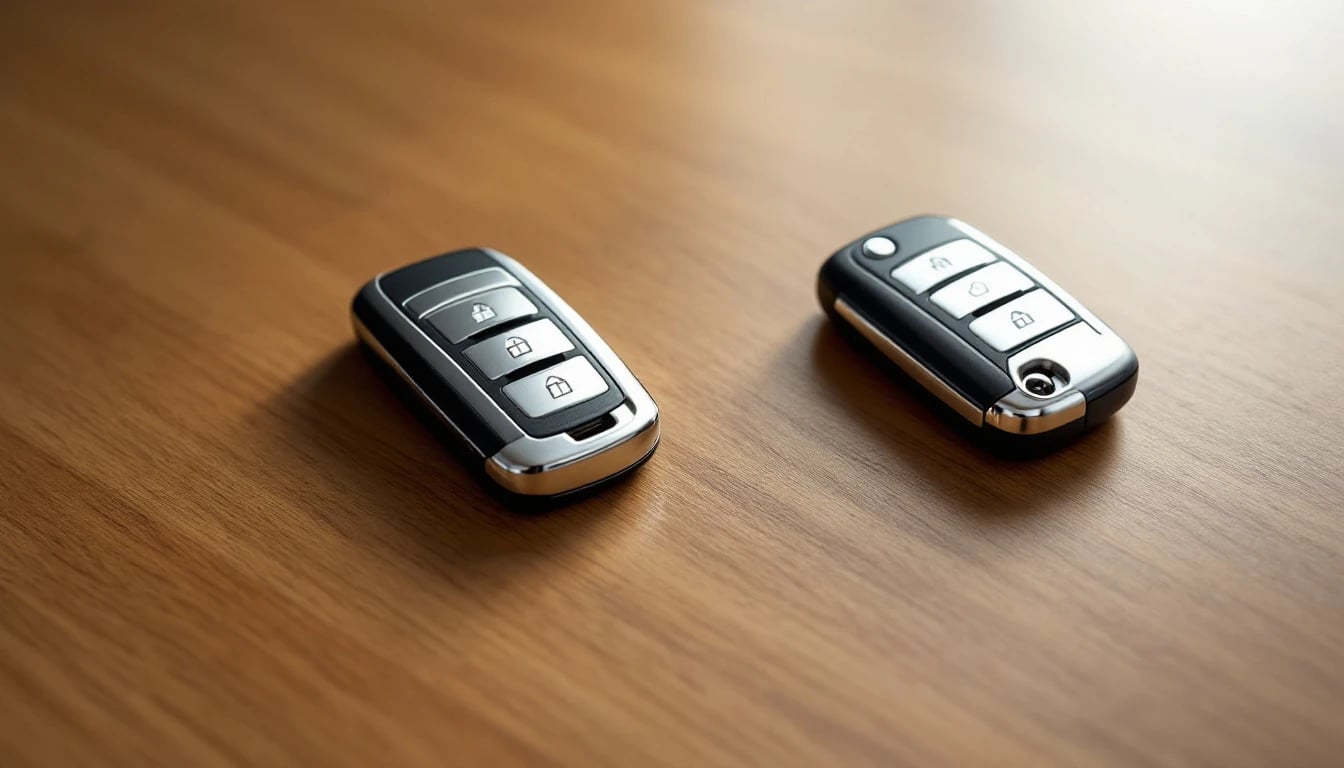
The second-generation Traverse splits by trim, and this is the single most important thing to know before you call. Lower trims came with a flip key carrying a transponder — a $120–$200 full-replacement job, or roughly $65 as a spare add. Higher trims came with push-button start and a flat proximity smart fob, commonly carrying an FCC-ID such as HYQ1AA or an M3N-32337100-style variant. That smart fob lands in the $220–$500 band, and an all-keys-lost on one runs the $180–$450 session plus fob hardware. Two Traverses from the same model year can therefore have very different keys and very different prices — so lead with the trim when you call, not just "a 2020 Traverse." And on the proximity trims, the spare argument is even stronger, because the downside of waiting is the higher smart-fob all-keys-lost number.
All-keys-lost versus adding a spare: the number that matters
The biggest single swing in what you pay comes down to one question: do you still have a working key? It changes both the method and the money.
Adding a spare is the easy case. Because a working key already authorizes GM's theft-deterrent system, a new key or fob is added in a short programming session. On a Traverse this is why an extra key is roughly $65 in hardware plus a modest programming charge — the module is already unlocked by your existing credential, so the operator simply teaches it one more. On the first generation this is the cheapest key event you will ever have on the vehicle.
All-keys-lost is the hard case. With no working key, the immobilizer has to be put into a learn state before any new credential will take. On a transponder or flip-key Traverse that still lands in the $120–$200 range for the replacement, but on a proximity smart-fob trim it climbs to the $180–$450 session plus the cost of the fob itself, because the prox fob is expensive hardware and the reset takes longer. The lesson is the same either way: the cheapest Traverse key you will ever buy is the spare you program before you need it. GM immobilizers hold several credentials at once — commonly up to around eight to ten depending on the platform — so adding a spare never forces you to erase an existing key.
Mobile versus the Chevrolet dealer
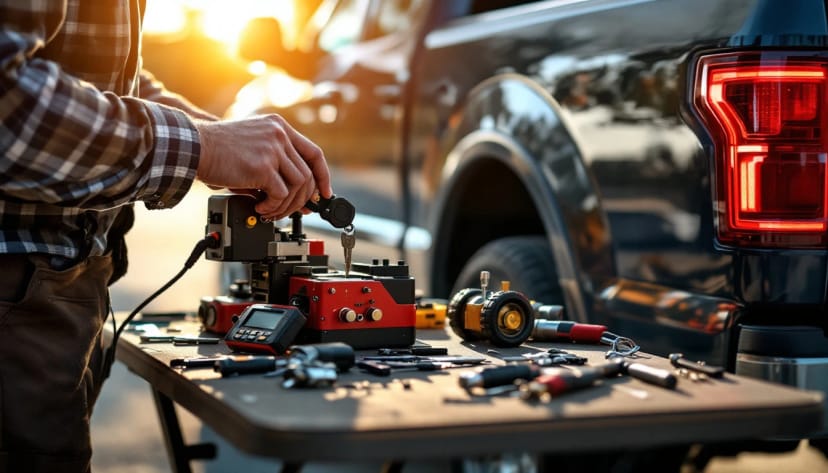
For nearly every Traverse key job, a mobile locksmith is both faster and cheaper than the dealer counter. Your SUV is usually at home, a school lot, or a trailhead — and a mobile operator comes to it, cuts the key or pairs the fob, and programs the theft-deterrent system on-site with no tow. A dealer all-keys-lost, by contrast, typically means towing an SUV that will not start and waiting for a service appointment.
The cost gap is real. Skilled-trade labor rates are meaningful — the U.S. Bureau of Labor Statistics tracks locksmith and safe-repair wages as a distinct occupation, and dealer service departments layer a service-writer markup on top of that labor. Over the life of the vehicle, ownership costs add up fast too: the AAA Your Driving Costs study puts unscheduled maintenance and downtime among the larger swings in annual operating cost, and a stranded family hauler compounds that with missed schedules for an entire household.
The Traverse owners who call me for an all-keys-lost almost always say the same thing — they meant to get a spare and never did. On a first-gen it would have been about sixty-five bucks in hardware; now they are looking at a full lost-key session and a truck they can't move. I tell every customer with one key on any GM SUV: get the second one cut before you leave the driveway. It is the cheapest thing I will ever quote you.
— ALOA Master Automotive Locksmith (MAL), GM theft-deterrent specialist, DFW metroplex (anonymized)
Verifying an operator before they drive out protects you. The Federal Trade Commission's guidance on hiring a locksmith warns against anyone who commits to a repair before diagnosing it and recommends confirming licensing and a written quote up front. In Texas, automotive locksmiths operate under the Texas Department of Public Safety Private Security program, and a credentialed operator will also be registered through the NASTF Vehicle Security Professional program, which governs credentialed access to OEM security data. Asking for both is fair, and a real operator answers in seconds.
What to have ready when you call
A tight quote depends on a few facts. Have these ready and the price you are quoted before dispatch will match what you pay:
- Exact model year and trim. "2020 Traverse Premier" beats "a Traverse" — the trim decides flip-key versus proximity fob from 2018 on.
- Do you have a working key? Spare add versus all-keys-lost hinges entirely on this one answer.
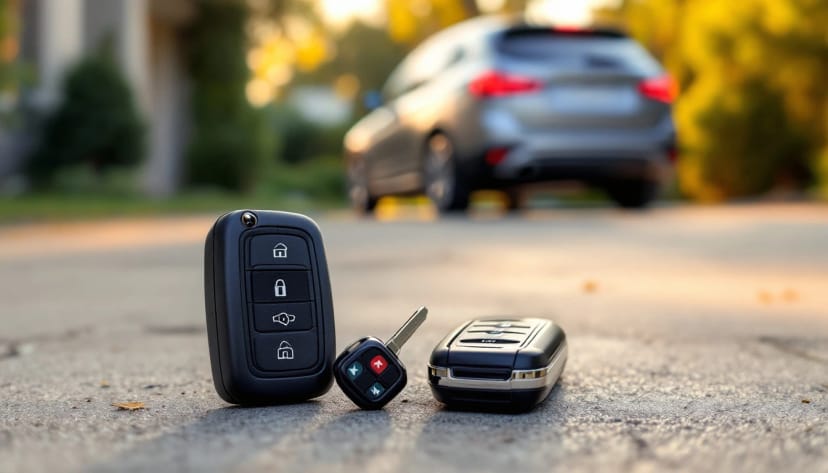
- Key type in hand. Remote-head key, flip key, or flat proximity fob with push-button start.
- The FCC-ID off your fob. Flip it over and read the printed FCC-ID; it removes guesswork on the exact variant.
- Your VIN. It confirms the factory key configuration and catches running changes within a generation.
If you own the closely related Chevrolet Equinox or a Chevrolet Silverado, the same GM add-a-key logic applies almost identically — the key types differ by platform, but the spare-versus-all-keys-lost math is the same. You can also read the deeper GM theft-deterrent system service page, book a second key directly through the spare car key service, or start on the Chevrolet brand page.
Frequently Asked Questions
How much does a Chevrolet Traverse spare key cost in Fort Worth?
As of July 2026, adding a spare while a working key still exists is roughly $65 in hardware for a bladed transponder or remote-head key, plus a short programming charge. A first-generation remote-head key as a full replacement runs $120–$200. A second-generation proximity smart fob runs $220–$500. The spare-while-you-still-have-one route is by far the cheapest, because your existing key authorizes the module and no reset is needed.
Why is a spare so much cheaper than replacing a lost Traverse key?
Because the immobilizer is already unlocked by your working key. Adding a spare is a quick learn session — the module trusts the key in hand and simply accepts one more. All-keys-lost has no trusted key, so GM's theft-deterrent system must be put into a learn state before any credential takes, which runs the $180–$450 session plus fob hardware. The whole argument for a spare is closing that gap before you lose the first key.
What FCC-ID does my Chevrolet Traverse key use?
It depends on the generation and trim. First-generation remote-head keys are commonly documented with an FCC-ID such as OHT01060512, while second-generation proximity fobs commonly carry HYQ1AA or an M3N-32337100-style variant. Treat these as documented examples only — read the FCC-ID printed on the back of your own fob and confirm by VIN, because GM ran more than one variant across the same years.
Can a mobile locksmith program a Traverse spare key at my house in Fort Worth?
Yes. A Chevrolet Traverse spare is programmed through the vehicle's data port, so a mobile operator cuts the blade or pairs the proximity fob and writes the credential into GM's theft-deterrent system right in your driveway. Because you already have a working key, the add-a-key session is short and there is no tow involved anywhere in Fort Worth, Arlington, Keller, or the surrounding cities.
Does the Chevrolet Traverse use a smart key or a transponder key?
It depends on the model year and trim. The 2009–2017 first generation used a bladed transponder or remote-head key on GM's PK3+ / Circle Plus system. The 2018–2025 second generation moved to a flip key on lower trims and a push-button proximity smart fob on higher trims. Your generation and trim decide the key type and therefore the price band, so confirm both when you call.
How many keys can a Chevrolet Traverse hold?
A Traverse immobilizer stores several programmed keys or fobs at once — typically up to around eight to ten depending on the platform. That means adding a spare never forces you to erase an existing key. If you want maximum security after buying a used Traverse with unknown key history, an all-keys-lost-style wipe-and-relearn erases every prior credential, but for a simple second key a straightforward add is all you need.
Is it worth keeping a Traverse spare if I only have one key?
For most owners, yes. The math is stark: about $65 in hardware for a spare now versus a $180–$450 all-keys-lost session plus fob hardware later, on top of the disruption of a family hauler stranded at a school or a soccer field. A three-row SUV is a household's primary vehicle, and one broken or lost key should not sideline it. A spare turns a future emergency into a five-minute swap.
References & external sources
- NHTSA — Anti-Theft Systems & FMVSS 114 — Federal standard governing immobilizers and their documented effect on theft rates.
- IIHS — Vehicle Theft — Insurance Institute for Highway Safety data on theft loss and immobilizer effectiveness.
- FBI — Uniform Crime Reporting (Motor Vehicle Theft) — National data on vehicle theft and break-in volume.
- FTC Consumer Advice — Hiring a Locksmith — Federal Trade Commission guidance on verifying a locksmith before service.
- NASTF Vehicle Security Professional (VSP) Program — Registry for credentialed access to OEM security data.
- AAA — Your Driving Costs 2024 — Annual ownership-cost study including unscheduled maintenance and downtime.
- U.S. Bureau of Labor Statistics — Locksmiths & Safe Repairers — Occupational wage data for the locksmith trade.
- Texas DPS — Private Security Licensing — Texas licensing authority for automotive locksmiths.
Related Pages
- Chevrolet Equinox Key Replacement Guide
- Chevrolet Silverado Key Replacement Guide
- GM Theft-Deterrent System
- Spare Car Key Service
- Chevrolet Brand Page
Talk to a technician about your chevrolet traverse spare key
Every vehicle is different, and the fastest way to a real number is a short call with the VIN in front of you. We will tell you the band, the realistic time on site, and anything about your specific car that changes either.
Call or text 817-842-1256, Mon-Sun 8AM-8PM. We are fully mobile across Fort Worth and Tarrant County, or reach us through the contact page.