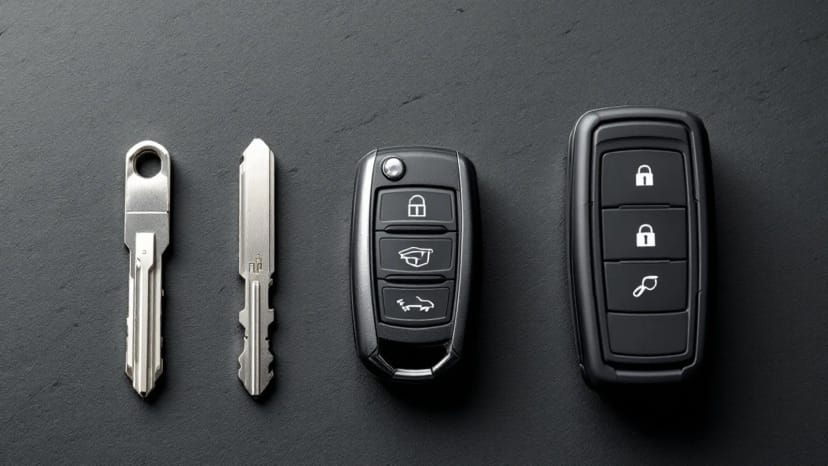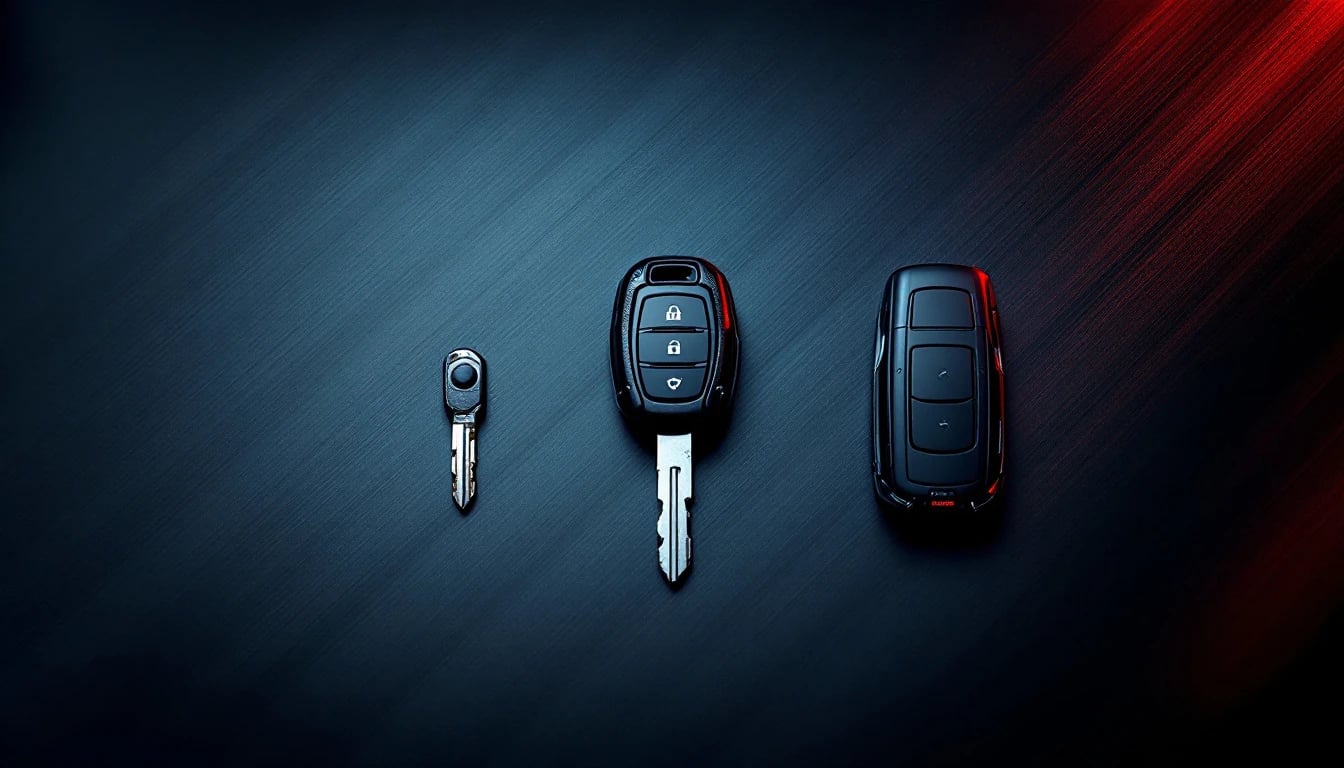
The Camaro is one of the few cars on the road that has used three unrelated key systems in thirty years, with a seven-year gap in the middle. A key for a 1998 car, a 2012 car and a 2019 car share a badge and nothing else. Identify the generation first and every other answer — programming, time, price — follows. Call or text 817-842-1256 with the year, trim and whether any key still works.
The Short Answer
As of September 2026, Camaro keys in Fort Worth break down by generation. A 1993 to 2002 car uses a PASS-Key with a resistor pellet and needs no programming. A 2010 to 2015 car uses a flip key with an encrypted chip: $120 to $200 with a working key, $180 to $450 all keys lost. A 2016 to 2024 car uses a proximity fob: $220 to $500 with a working fob, $180 to $450 when every fob is gone. An extra key during the same visit is about $65.
Camaro Key Reference by Generation (As of September 2026)
| Generation and years | Ignition | Key type | Anti-theft system | Programming needed? | Mobile price |
|---|---|---|---|---|---|
| Fourth, 1993 to 2002 | Turn key | Mechanical blade with resistor pellet | GM PASS-Key (resistor value) | No, pellet value matched | Among our least expensive keys |
| None, 2003 to 2009 | — | — | Not produced | — | — |
| Fifth, 2010 to 2015 | Turn key | Flip remote key, high-security blade | Encrypted GM transponder | Yes | $120 to $200 with a working key |
| Fifth, all keys lost | Turn key | Flip remote key | Encrypted GM transponder | Yes, timed security relearn | $180 to $450 |
| Sixth, 2016 to 2024 | Push button | Proximity fob with emergency blade | GM smart key system | Yes | $220 to $500 with a working fob |
| Sixth, all fobs lost | Push button | Proximity fob | GM smart key system | Yes, credentialed security data | $180 to $450 |
Trims share keys within a generation: an LS, LT, SS, 1LE, ZL1 or convertible from the same generation uses the same key family. Every price here matches our automotive locksmith price list.
Fourth Generation, 1993 to 2002: The Resistor Pellet Key
Fourth-generation Camaros, and their Pontiac Firebird siblings, use General Motors' PASS-Key system. Look at the blade of an original key and you will see a small black pellet embedded in it. That pellet is a resistor, and it carries one of fifteen resistance values. When you turn the key, contacts in the ignition lock cylinder measure the resistance and a module decides whether it matches the value the car expects.
That design has three practical consequences.
No programming. A new key is cut to your key code and fitted with a pellet of the correct value. Nothing is written into any module. This makes a fourth-generation Camaro key one of the least expensive keys we make, and one of the few modern-era keys where an accurate cut and the right pellet are the whole job.
The value has to be right. If the resistance does not match, the car will not start and will typically enter a timed anti-theft lockout, with the security light on, before it lets you try again. Measuring the pellet on your existing key with a meter identifies the value in a minute. With no key at all, the value can be determined at the car.
Many no-starts are not the key. The pellet is read through a thin wire that runs from the ignition cylinder down the steering column. Decades of turning the wheel flex that wire until it breaks, and the car then behaves exactly as if the key were wrong. If your key looks fine and the security light is on, the wire is a strong suspect. Our guide to ignition switch versus ignition cylinder explains how cylinder-side faults present, and our GM theft deterrent system page covers diagnosis.
These cars are old enough that the lock cylinders themselves wear. A key that sticks, or turns only with wiggling, is often a worn cylinder rather than a worn key, which is ignition work in the $150 to $400 range.
2003 to 2009: The Gap
There is no Camaro from these model years. Chevrolet ended production after 2002 and reintroduced the car for 2010. It is worth stating plainly because listings for keys, remotes and shells sometimes describe a year range that spans the gap, and a fourth-generation key and a fifth-generation key have nothing in common. Identify your car by model year, not by a listing's description.
Fifth Generation, 2010 to 2015: The Flip Key
The fifth-generation Camaro kept a traditional turn-key ignition and gave most trims a flip remote key: a folding high-security blade that springs out of a body containing the lock, unlock and trunk buttons and, on many cars, remote start. The blade is a side-milled high-security profile that General Motors used across much of its lineup from this period. Inside the head is an encrypted GM transponder.
With a working key
This is a straightforward job. We cut a new blade to your key code, register the chip to the immobilizer and pair the remote. Expect $120 to $200 and roughly 25 to 45 minutes on site. Some GM vehicles of this era also support an owner add-a-key procedure described in the owner manual when a recognized key is present; if you want to try that first, the new key still has to be cut and carry the correct chip.
With every key lost
All-keys-lost on this platform typically involves a timed security relearn — a sequence of waiting periods the immobilizer imposes before it will accept new keys. It cannot be hurried, and it is deliberately designed that way. Plan on 45 to 90 minutes and $180 to $450. Proof of ownership is required before we start.
Flip key failures
The most common fifth-generation complaint is not a lost key but a broken one: a worn hinge, a blade that flops or snaps, a cracked case. If the remote still works and the chip is intact, the blade or case can often be replaced with no programming. Our flip key replacement cost and broken key fob repair cost guides go through those repairs.
If a fifth-generation car cranks but will not start and the security light flashes, the key may not be the only suspect. Our anti-theft light troubleshooting guide covers what that light is telling you.
Sixth Generation, 2016 to 2024: The Proximity Fob
The sixth-generation Camaro moved to keyless access and push-button start. The fob stays in a pocket or bag, and the car detects it through antennas inside the cabin. A mechanical emergency blade hides inside the fob for opening the driver's door when the fob battery or the car's battery is dead. Remote start is fitted to many cars from this generation.
With a working fob
A new fob is paired to the car and its emergency blade cut to your key code: $220 to $500, typically 30 to 60 minutes. Adding a second fob during the same visit is about $65, which is the best-value moment to fix a one-fob car.
With every fob lost
This requires manufacturer security data obtained through a documented channel. The National Automotive Service Task Force administers the Secure Data Release framework that lets vetted, credentialed locksmiths access that data legitimately. Expect $180 to $450 and a longer visit than a spare. If an operator cannot explain how they access security data for a 2016-and-up General Motors car, ask before they start.
Fob problems that are not lost fobs
"No key detected" messages, a fob that only works when held against the start button, and short remote range are usually the fob battery first. If a new battery does not fix it, see our push-button start problems page and smart key fob replacement guide.
How to Identify Your Camaro in Ten Seconds
- Does it have a start button? Yes means sixth generation, 2016 to 2024.
- Does the key fold into a remote? Yes means fifth generation, 2010 to 2015.
- Is there a small black pellet in the key blade? Yes means fourth generation, 1993 to 2002.
- Still unsure? The tenth character of the VIN encodes the model year.
Reading the Details Off Your Own Key
For fifth- and sixth-generation cars, the most reliable way to match a replacement is the information printed on your existing remote — usually an FCC ID on the back of the case or under the battery cover. The Federal Communications Commission assigns those identifiers to radio transmitters, and they pin down the remote circuit and frequency far better than a model-year lookup. Match on FCC ID and blade profile, not on a listing's year range. Treat any part number you find online as a starting point, and verify it against your own key.
Theft, Insurance and the Camaro
Performance cars attract attention. Sixth-generation proximity systems are designed to resist casual theft, and the NHTSA's anti-theft guidance explains why immobilizers became universal. The Insurance Institute for Highway Safety's Highway Loss Data Institute publishes theft-claim data by model, and sporty two-door cars have historically appeared high on those lists. Two practical takeaways: keep a spare fob somewhere other than the car, and if a fob is stolen rather than lost, ask for the key list to be erased and rebuilt so the missing fob no longer starts the car.
What It Costs, at a Glance
- 1993 to 2002 PASS-Key: among the least expensive keys we make — cut and matched, no programming.
- 2010 to 2015 flip key: $120 to $200 with a working key, $180 to $450 all keys lost.
- 2016 to 2024 proximity fob: $220 to $500 with a working fob, $180 to $450 all fobs lost.
- Extra key during the same visit: about $65.
- Worn ignition cylinder on a turn-key car: $150 to $400.
For comparison with other Chevrolet models, see our Chevrolet key replacement overview, the Chevrolet brand page, and the Colorado and Canyon key reference, which covers a truck line whose early keys were chipless for a different reason. For the wider price picture, how much is a locksmith for a car lays out every service.
"On a Camaro the first thing we ask is the year, because it tells us whether we are measuring a resistor, programming a chip or pairing a fob. Get that wrong and every quote after it is wrong too." — an ALOA-credentialed Master Automotive Locksmith working the DFW metro
Before You Call
Have the year and trim, whether any key or fob still works, and where the car is parked. For all-keys-lost jobs, proof of ownership is required — registration or title in your name with matching photo identification. Good consumer practice from ALOA and the Federal Trade Commission applies: the price you are quoted on the phone should be the price you pay at the car.
Frequently Asked Questions
What kind of key does my Camaro use?
It depends on the generation. Fourth-generation cars, 1993 to 2002, use the GM PASS-Key system, where a small resistor pellet in the key blade is measured by the ignition rather than a transponder chip. Fifth-generation cars, 2010 to 2015, use a turn-key ignition with a flip remote key carrying an encrypted transponder. Sixth-generation cars, 2016 to 2024, use a proximity fob with push-button start and an emergency blade hidden inside.
Why is there no 2003 to 2009 Camaro?
Because Chevrolet stopped building the Camaro after the 2002 model year and did not bring it back until the 2010 model year. That gap matters when shopping for keys, because online listings sometimes blur the generations together. A fourth-generation key and a fifth-generation key have nothing in common electronically, so always identify the car by generation before buying anything.
How much does a Camaro key cost in Fort Worth?
As of September 2026, a fifth-generation flip key runs $120 to $200 cut and programmed when one working key exists, and $180 to $450 as an all-keys-lost job. A sixth-generation proximity fob runs $220 to $500 with a working fob present, and $180 to $450 when every fob is lost on this mainstream platform. A fourth-generation PASS-Key is among the least expensive keys we make because no programming is involved. An extra key added during the same visit is about $65.
Does a fourth-generation Camaro key need programming?
No. The PASS-Key system reads a resistor pellet in the blade, and each key carries one of fifteen resistance values. A new key is cut to your key code and fitted with a pellet that matches the value your car expects. Nothing is written to a module. The catch is that the wrong resistance, or a broken wire in the steering column that reads the pellet, puts the car into a timed anti-theft lockout.
Can I add a key to my fifth-generation Camaro myself?
Possibly. Some General Motors vehicles of this era support an owner procedure for adding a key when an already-recognized key is present, and the steps are described in the owner manual. It does not help when no working key exists, and the new key still has to be cut to your key code and have the correct chip. If the procedure does not take, we program keys at the car with a working key present in the $120 to $200 band.
Why does all-keys-lost take longer on a Camaro than people expect?
Because General Motors vehicles of the fifth-generation era typically require a timed security relearn when no working key exists, and the timer cannot be skipped. The sixth generation relies on manufacturer security data obtained through credentialed channels. Neither is slow because of the locksmith; both are designed to be slow so that a stolen car cannot be keyed quickly.
Can you replace a Camaro key at my location?
Yes, for all three generations. PASS-Key keys are cut on site and matched to your resistance value. Flip keys are cut and programmed at the car. Proximity fobs are paired at the car, and emergency blades are cut to your key code. Call or text 817-842-1256 with the year, trim and whether any key still works.
References
- NHTSA — Anti-Theft Systems
- NASTF — Secure Data Release framework
- Federal Communications Commission
- Insurance Institute for Highway Safety / Highway Loss Data Institute
- ALOA — Associated Locksmiths of America
- FTC — Advertising and Marketing Guidance
- SAE International
Need a Camaro key? Call or text 817-842-1256 with the year, trim and whether any key still works. We cut, match and program Camaro keys on site across Fort Worth and the surrounding cities, Mon-Sun 8AM to 8PM.
Reviewed against the ALOA Master Automotive Locksmith (MAL) standard. Part and system details are a starting point — always verify against the FCC ID and blade on your own key. Prices are Fort Worth mobile service ranges current as of September 2026 and are confirmed per vehicle before dispatch.