A chip key is the cheapest type of modern car key to replace — right up until the moment you no longer have one that works. That single condition is worth more than the make of your car when it comes to what you pay. Call or text 817-842-1256 for a firm number on your vehicle, or read on for the full picture.
The Short Answer
As of September 2026, chip key replacement in Fort Worth costs $120 to $200 cut and programmed when one working key still exists. With every key lost it becomes an all-keys-lost job: $180 to $450 on a mainstream domestic or Asian vehicle, and $350 to $800 on European platforms. A second matching chip key added during the same visit is about $65.
Chip Key Replacement Cost in Fort Worth (As of September 2026)
| Scenario | What the job involves | Mobile price | On-site time |
|---|---|---|---|
| Chip key, one working key present | Blade cut to key code, chip added to immobilizer memory | $120 to $200 | 20 to 40 minutes |
| Extra matching chip key, same visit | One additional key while the equipment is already out | about $65 | adds 10 minutes |
| Chip key, all keys lost (domestic / Asian) | Ownership check, immobilizer access, key list rebuilt | $180 to $450 | 45 to 90 minutes |
| Chip key or immobilizer work, European | Heavier tooling and credentialed data access | $350 to $800 | 60 to 120 minutes |
| Chip programming only, key already cut | Registering a chip you already own to the vehicle | $120 to $200 | 20 to 30 minutes |
| Ignition fault found during a key job | Cylinder or switch repair, quoted separately | $150 to $400 | 45 to 120 minutes |
Every one of those bands also appears in our full automotive locksmith price list, so you can see where chip keys sit relative to everything else we do.
What a "Chip Key" Actually Is
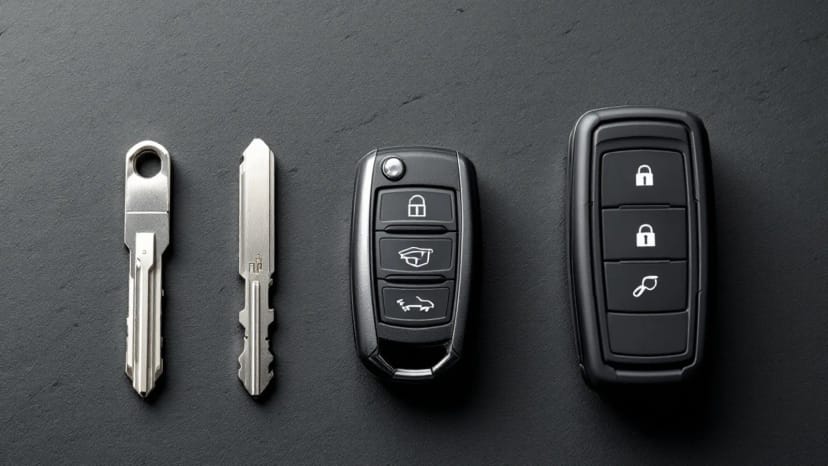
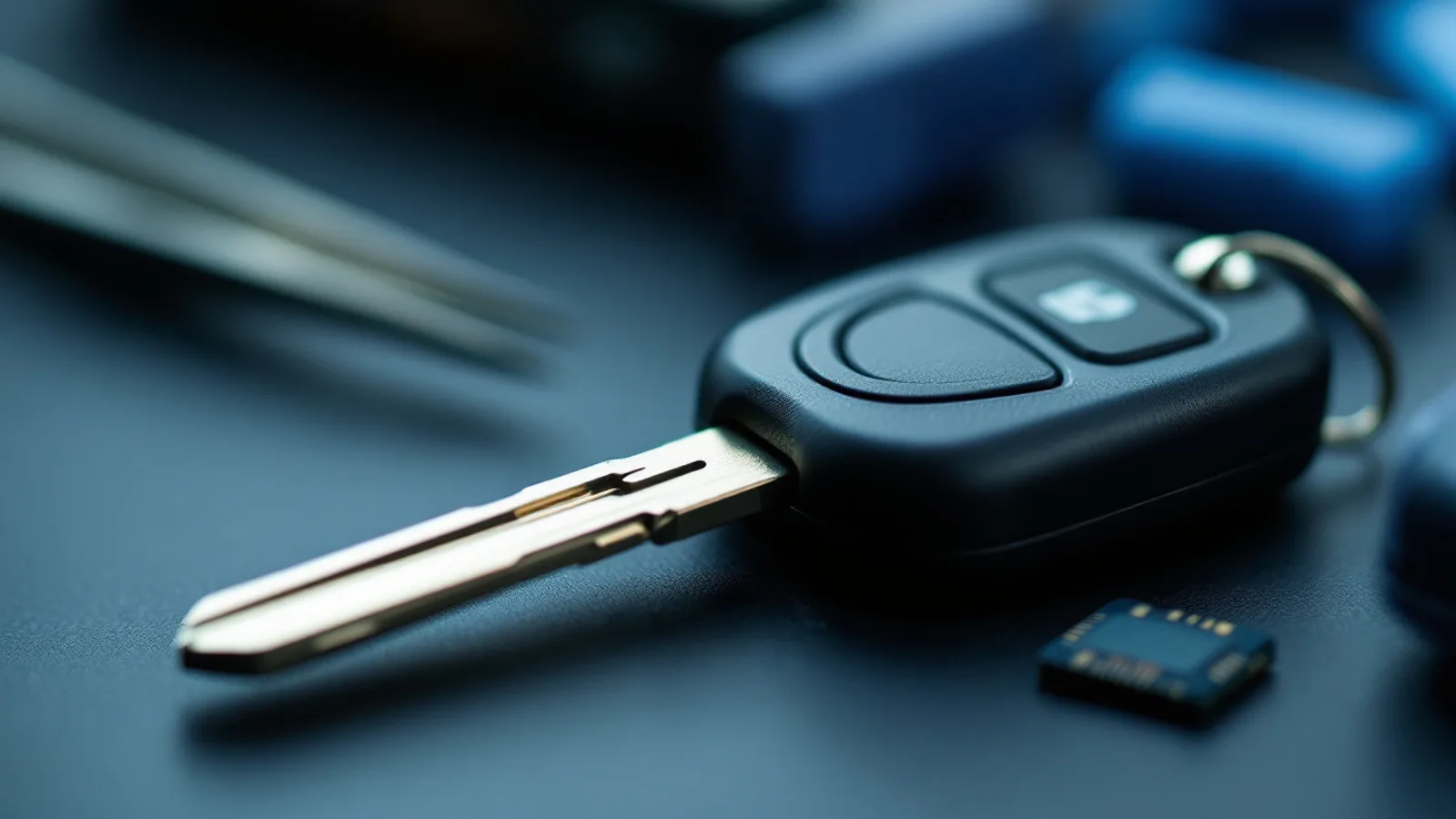
A transponder chip key is a metal blade with a small passive RFID chip molded into the plastic head. Passive means it has no battery. When you put the key in the ignition, a coil around the lock cylinder energises the chip, the chip answers with its identity, and the immobilizer decides whether to let the engine run. If the chip is missing, wrong, or unregistered, you get one of two symptoms: the engine cranks and immediately dies, or it does not crank at all.
This architecture became near-universal across the 1997 to 1998 model years, and it exists for exactly the reason you would guess. The NHTSA's anti-theft systems guidance is explicit that immobilizers were adopted to make unauthorized key generation difficult. They worked — vehicle theft patterns shifted measurably afterward, and the Insurance Institute for Highway Safety has tracked how much harder hot-wiring became once immobilizers were standard. The flip side for owners is that a lost key is now a security event rather than a hardware problem.
If you are unsure which category your key falls into, our side-by-side on transponder keys versus key fobs sorts it out in a couple of minutes.
The One Variable That Matters Most
Everything else on this page is secondary to this: do you still have a key that starts the car?
With a working key, your new chip key is essentially an addition. The vehicle already trusts a key, the immobilizer's memory is intact, and the operator's job is to cut a blade to your key code and write one more trusted chip into the list. That is the $120 to $200 job, and it is usually finished inside half an hour.
With no working key, the job changes category. Ownership has to be verified before anyone touches the car — that is not bureaucracy, it is the whole point of the system. Then the immobilizer has to be accessed directly, and on many platforms the existing key list is erased and rebuilt from scratch, which is why any old keys that later turn up will no longer work. That is the $180 to $450 job on mainstream vehicles.
The difference between those two numbers is the entire argument for getting a spare made while you can. We put real figures on that trade-off in bought a used car with one key, and spare car key covers the service itself.
How to Tell If Your Key Has a Chip
Check the model year
1997 or newer: assume yes. There are edge cases — a handful of base-trim vehicles and some work trucks ran later without transponders, and General Motors used a lock-cylinder sensor system on certain platforms where the key genuinely has no chip in it at all. But the default assumption for anything from the last twenty-eight model years should be that a chip is involved.
Look at the head of the key
A transponder key's plastic head is visibly thicker and heavier than a plain mechanical key of the same era, because there is a component inside it. Hold it next to a house key and the difference is obvious.
Watch what a copy does
This is the diagnostic most people arrive with already completed. If a hardware-store copy unlocks your door but will not start the engine, the copy is a correctly cut blade with no working chip. That is not a defective key — it is an unprogrammed one, and the remedy is programming rather than yet another key.
Have it scanned
A chip reader identifies the generation in well under a minute. This matters more than it sounds, because chip generations are not interchangeable. Using the wrong generation produces a key that fits, turns, and never starts the car.
Chip Keys by Era — What Changes
Roughly 1997 to 2005
First-generation fixed-code and early rolling-code chips. Blades are usually conventional edge-cut. This is the era where do-it-yourself on-board programming sometimes works, provided two working keys already exist. Cost sits at the bottom of the band, and parts availability is generally good.
Roughly 2006 to 2014
Rolling-code and encrypted chips become standard, remote-head keys become common, and high-security laser-cut blades spread across mainstream lineups. Laser-cut blades need a different cutting machine than edge-cut blades, which is one honest reason two quotes can differ — see laser-cut versus transponder keys for what that means in practice.
2015 and newer
Encrypted platforms, secure gateways on many makes, and timed security handshakes that simply cannot be hurried. On the newest systems a legitimate operator obtains manufacturer security data through a documented channel rather than working around it — the National Automotive Service Task Force administers the Secure Data Release framework that makes this possible for vetted, credentialed locksmiths. If an operator cannot explain how they get access on a 2020-and-up platform, that is worth asking about.
Can I Buy One Online and Save Money?
You can buy the hardware. You generally cannot finish the job.
Two things have to happen for a chip key to work, and a seller can do neither. The blade must be cut to your specific key code, which requires your vehicle or its code. And the chip must be registered to your immobilizer at the vehicle. What arrives in the post is a component.
There is also a compatibility trap. Listings routinely describe a key as fitting a broad year range when the chip generation changed partway through it, and a wrong-generation chip cannot be made to work by programming harder. If you are going to buy hardware anyway, confirm the chip generation, the blade profile and the frequency with an operator first — the radio side of these systems is standardized territory that bodies like SAE International publish on, and mismatches are common in the aftermarket.
What you can reasonably do is bring your own key and pay for programming only, which is the $120 to $200 programming-only line in the table. Whether that saves money depends entirely on whether you bought the right part.
Mobile Versus the Dealership
The structural difference on a chip key job is the tow. If no key works, the car generally cannot be driven to a dealer, so that route starts with a towing bill and a scheduling wait. A mobile operator brings the cutting machine and programming equipment to the car, so the tow disappears and the job is normally one visit.
Worth keeping in proportion: AAA's annual Your Driving Costs research has put average new-vehicle ownership in the region of $12,000 a year, and the study is published each year through the AAA newsroom. Against that, the gap between a $65 spare and a $450 all-keys-lost call is not a big financial decision — it is just one that has to be made before the key goes missing rather than after.
Our full comparison of the two routes is in how much does a locksmith cost in Fort Worth, and if you have already lost everything, replace a car key without the original covers what that visit involves.
What to Have Ready Before You Call
Four things turn a range into a firm quote: the year, make and model; whether any key still starts the car; whether the key is a plain blade, a blade with buttons, or a buttonless fob; and where the vehicle is sitting. Proof of ownership is required for anything all-keys-lost — current registration or title in your name plus matching photo identification is the normal standard, and any operator who does not ask for it is one to avoid.
On pricing conduct, the Federal Trade Commission's advertising guidance and long-running consumer warnings from ALOA point at the same pattern: a headline price far below the market that becomes something else once a technician is on site. A real chip key quote should hold from the phone call to the invoice.
"On a chip key the blade is the easy half. What you are actually buying is the fifteen minutes where somebody's equipment convinces your car to trust a new key — and the judgement to know when a platform will not allow it." — an ALOA-credentialed Master Automotive Locksmith working the DFW metro
The Cheapest Version of This Problem
Every expensive scenario on this page began as a cheap one. A chip key while you still hold a working key is $120 to $200; a second one in the same visit is about $65. The same key, ordered after the last one is gone, is $180 to $450 and a longer wait. Nothing about the hardware changed between those two sentences.
If your car currently has exactly one key, that is the situation to fix this month. Car key replacement and transponder key programming both cover what the visit looks like, and lost car keys is there for the version nobody plans for.
Frequently Asked Questions
How much does chip key replacement cost in Fort Worth?
As of September 2026, a transponder chip key runs $120 to $200 cut and programmed when you still have one working key. With no working key at all it becomes an all-keys-lost job at $180 to $450 on a mainstream domestic or Asian vehicle, and $350 to $800 on European platforms. Adding one more matching chip key during the same visit is about $65, which is the single best-value moment in the whole process.
How do I know whether my key even has a chip?
Four quick checks. One, model year: if the vehicle is 1997 or newer it almost certainly has a chip. Two, the head of the key: a transponder key has a noticeably thicker plastic head than a plain mechanical key because the chip lives inside it. Three, behavior: if a copied key opens the doors but will not start the engine, the copy has no working chip. Four, ask an operator to scan it, which takes under a minute with a chip reader.
Why does a chip key cost more than the hardware costs online?
Because the blade and the chip are not the job. The blade has to be cut to your vehicle key code, and the chip has to be written into the list of keys your immobilizer is willing to accept. That second step needs equipment, current software for your platform, and on many vehicles documented access to manufacturer security data. A blank off a marketplace listing is a component, not a working key, and it will open your door without ever starting your engine.
Can I program a chip key myself?
On a narrow set of older vehicles, yes — some platforms from roughly the late nineties through the mid-2000s accept an on-board programming sequence when two working keys are already present. That last condition is what defeats most people, because if you had two working keys you would not need a third urgently. Anything newer, and anything where no working key exists, needs equipment at the vehicle. Cutting the blade is also not a home job; it has to match your key code.
Is a chip key the same thing as a key fob?
No, though the words get used interchangeably. A transponder chip key is a metal blade with a passive chip in the head, no battery, which only answers the immobilizer when it is in the ignition. A key fob is a battery-powered remote with buttons. A remote-head key is both in one body, and a smart or proximity fob is the modern combination that enables push-button start. They replace at different prices, so it is worth knowing which you have before you ask for a quote.
My replacement chip key turns the ignition but the car will not start. What happened?
Almost always the blade was cut correctly and the chip was never successfully registered to the immobilizer, or a chip of the wrong generation was used. That is the classic signature of a key bought online and cut by someone who does not program. The fix is programming, not another key, so keep the key you have and have the chip written to the vehicle. If the security light is behaving oddly at the same time, the immobilizer side needs looking at rather than the key.
How long does chip key replacement take?
With one working key present, 20 to 40 minutes on site for most vehicles. All-keys-lost runs 45 to 90 minutes on mainstream platforms because ownership verification and immobilizer access come first, and 60 to 120 minutes on European systems. If you need it done today, call or text 817-842-1256 with your year, make and model and we will tell you the realistic window before dispatch.
References
- NHTSA — Anti-Theft Systems
- NASTF — Secure Data Release framework
- ALOA — Associated Locksmiths of America
- SAE International
- Insurance Institute for Highway Safety
- AAA Newsroom — Your Driving Costs
- FTC — Advertising and Marketing Guidance
Need a chip key today? Call or text 817-842-1256 with your year, make, model, and whether any key still starts the car. We cut and program on site across Fort Worth and the surrounding cities, Mon-Sun 8AM to 8PM.
Reviewed against the ALOA Master Automotive Locksmith (MAL) standard. Prices are Fort Worth mobile service ranges current as of September 2026 and are confirmed per vehicle before dispatch.