Broken car key extraction in Fort Worth, in one screen
A key that snapped off — in the ignition, a door lock, or the trunk — is one of those problems that feels catastrophic and usually is not. For a properly equipped mobile locksmith it is routine: grip the broken blade, draw it straight out without harming the lock, then cut and program a fresh key. What turns it into an expensive problem is the do-it-yourself dig with tweezers, glue, or a paperclip.
As of July 2026, here is the short version for Fort Worth drivers:
- Do not dig it out. Tweezers, super glue, and paperclips push the fragment deeper or bend the wafers, converting a simple extraction into a cylinder replacement.
- Professional extraction is a modest part of the job; the main cost is the replacement key — transponder ($120-$200) or smart/proximity ($220-$500).
- If the lock or ignition was worn or damaged, ignition repair adds $150-$400.
- A mobile locksmith extracts and re-keys on-site — no tow.
The Federal Trade Commission's guidance on hiring a locksmith recommends a clear estimate before work; a good operator gives one combined quote for extraction plus key after seeing the break.
Why car keys break
Keys do not snap at random. Understanding the cause helps you decide whether you need just a new key or an ignition repair too.
Metal fatigue. A key is a thin piece of brass or nickel-silver that gets twisted thousands of times. Over years, micro-cracks form at the shoulder (where the blade meets the head) — the most common break point. Older keys and daily-driver keys are the usual victims.
A worn or binding lock. This is the important one. If your ignition or door lock had become stiff and you were turning the key harder to compensate, the lock was doing the breaking. The key just gave out first. In that case, replacing only the key leaves the underlying stiff cylinder to break the next key too — the lock needs attention. Our ignition repair in Fort Worth page covers that side.
Cold and force. A frozen or gummed lock forced with a cold key snaps easily. Never force a stiff lock; a locksmith uses the correct dry lubricant.
Using the key as a tool. Prying, scraping, or opening packages with a car key bends and weakens the blade.
Soft aftermarket copies. Cheap duplicate keys cut from softer metal snap far more readily than OEM blanks — a false economy.
The break itself is rarely the real story. When a key snaps in the ignition, I want to know how hard the customer had been turning it lately. If they say it had been getting stiff, that tells me the cylinder is worn and we are looking at an ignition repair plus a new key, not just a key. Fix only the key on a bad cylinder and they are calling me again in a month with another snapped blade.
— ALOA Registered Locksmith (RL), DFW automotive-specialty operator, 11 years experience (anonymized)
Safe first steps when a key breaks off
Whether the blade snapped in the ignition, a door, or the trunk, the safe response is the same:
- Do not force or turn the visible stub. If part of the blade protrudes, leave it as-is; turning it can jam the fragment or damage the wafers.
- Do not insert anything else — no second key, no screwdriver, no paperclip. Every insertion risks pushing the fragment deeper.
- Do not apply glue. The internet's "super-glue the broken half to the stub" trick fails far more often than it works, and glue in the keyway means a full cylinder replacement.
- Note the situation — which lock, whether any blade protrudes, and whether you still have any working key.
- Call a mobile locksmith. Extraction with proper tools is quick and preserves the lock.
If the break left you with no working key at all, treat it as an all-keys-lost job (see below and our all-keys-lost service), which requires proof of ownership.
What extraction plus a new key costs in Fort Worth
This table maps the scenario to the realistic Fort Worth mobile price picture. The operator confirms after seeing the break.
| Scenario | What it involves | Fort Worth cost picture |
|---|---|---|
| Blade snapped, you have a spare | Extract fragment; cut spare or new key | Extraction + $120-$200 (transponder) |
| Blade snapped in ignition, no spare | Extract + cut/program new key (AKL) | Extraction + $120-$200 / $220-$500 |
| Break plus worn/damaged cylinder | Extraction + ignition repair + key | $150-$400 ignition + key |
| Smart-key emergency blade snapped in door | Extract + cut emergency blade + fob | Extraction + $220-$500 (smart) |
| Key broke off in trunk/glovebox lock | Extract from auxiliary lock + key | Extraction + key band |
| Snapped cheap aftermarket copy | Extract + cut OEM-grade key | Extraction + $120-$200 |
A note on the ranges: extraction alone is a modest line item; the meaningful cost is the replacement key (transponder $120-$200 or smart $220-$500) and, where the cylinder is at fault, the $150-$400 ignition repair. A good operator quotes the total up front, not piece by piece.
What a mobile locksmith actually does
At your location, a licensed operator:
- Assesses the break. Which lock, how deep the fragment sits, whether the cylinder turns, and whether you have any working key.
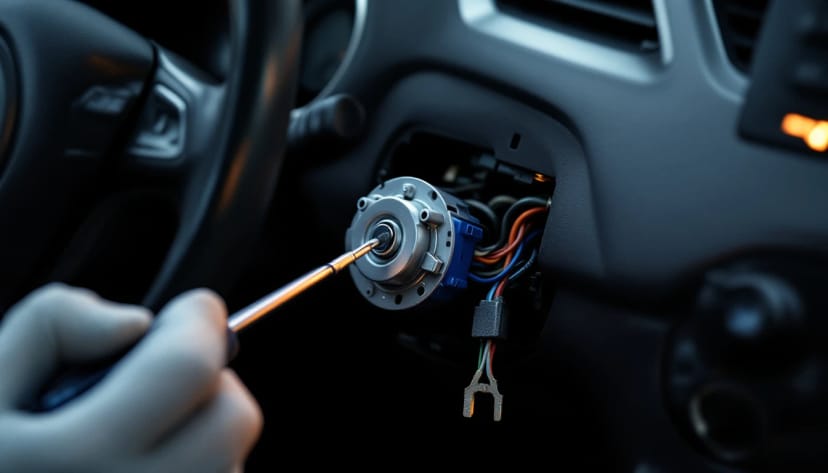
- Extracts the fragment with purpose-made key-extractor tools that grip the blade and draw it straight out along the keyway — no scratching the wafers, no pushing it deeper.
- Checks the lock or ignition for wear or damage that caused or resulted from the break; recommends ignition repair or steering column lock repair if the cylinder is the culprit.
- Cuts a fresh key to the vehicle's key code (from the VIN or by decoding the lock), using OEM-grade blanks rather than soft copies.
- Programs the transponder or smart key so it starts the car — see transponder key programming or smart key replacement.
- Tests everything across several cycles before leaving.
Because we come to you, there is no tow. If the break happened in a door or trunk lock rather than the ignition, extraction is often even quicker — but the same rule applies: do not dig at it first.
Why DIY extraction backfires
It is worth being blunt about the cost of the dig, because it is the single most expensive mistake with a broken key. Metal fatigue and worn locks are ordinary — the U.S. Bureau of Labor Statistics recognizes locksmithing as skilled work precisely because clean extraction takes the right tools and technique. What escalates the bill is force applied blind:
- A paperclip or tweezers typically pushes the fragment deeper into the keyway, where it is far harder to reach.
- Super glue bonds the fragment to the wafers, guaranteeing a cylinder replacement.
- Prying bends the delicate wafers, so even after the fragment comes out the lock no longer works.
- Drilling — the last resort of an under-equipped operator — destroys the cylinder outright.
Per the Associated Locksmiths of America, non-destructive entry and extraction are core professional standards; a legitimate operator extracts without drilling in the overwhelming majority of cases. And there is a downtime cost to getting it wrong: AAA's Your Driving Costs research puts vehicle ownership well over ten thousand dollars a year, and a car you cannot start or lock is a car you cannot rely on.
If the break leaves you with no working key
Sometimes the snapped key was your only key. That makes it an all-keys-lost situation, and two things change:
- Proof of ownership is required. You will need a title or current registration matching the vehicle plus a government-issued photo ID. A legitimate locksmith never makes a full key set to a car you cannot prove you own — this protects you as much as anyone. See our all-keys-lost service in Fort Worth and the primer on replacing a car key without the original.
- The job takes a bit longer, because the new key must be registered to the immobilizer from scratch rather than cloned from a working key.
Otherwise, extraction plus a fresh cut-and-program is the same on-site work.
Preventing the next broken key
Once you are back on the road, a little prevention keeps you from repeating the experience. The break usually signals wear that will recur if ignored:
- Address the cause, not just the symptom. If the lock had been stiff, get the cylinder serviced. A worn ignition will snap the next key too — see ignition repair.
- Retire the worn original. A daily-driver key that is years old and visibly worn is living on borrowed time; have a fresh key cut to code rather than trusting the old blade.
- Cut a spare while you have a working key. This is the cheapest insurance in car keys. Adding a spare now, at the transponder or smart-key band, is far cheaper than the all-keys-lost job that follows if your last key snaps with no backup. Our spare car key service covers it.
- Never use the key as a tool. Prying and scraping weaken the blade at the shoulder, the exact spot that snaps.
- Do not force cold or gummy locks. Use the correct dry lubricant, not household oil, and never crank hard on a lock that resists.
- Lighten the keyring. A heavy bunch of keys and fobs swinging from the ignition puts constant leverage on the blade and wears both the key and the cylinder faster; keeping the driving key on a light ring genuinely extends its life.
A short habit — a fresh key plus a programmed spare — turns "my key snapped and I am stranded" into a problem you never have again.
How to hire the right locksmith for a broken key in Fort Worth
Before you book:
- Confirm the operator is licensed through Texas DPS Private Security. Texas regulates locksmith companies through the Texas Department of Public Safety, not a general trade board. Ask for the license and verify it.
- Confirm they do non-destructive extraction — a real operator does not default to drilling.
- Ask for one combined quote for extraction plus key (and ignition repair if the cylinder is at fault).
- Make sure they come to you. Fort Worth Car Keys is mobile-only; we serve Fort Worth, Arlington, Keller, and Hurst.
You can reach Fort Worth Car Keys at (817) 842-1256 or contact@fortworthcarkeys.com, 8AM-8PM seven days a week. For overall pricing, see our car key replacement cost in Fort Worth page, and for the related trapped-key situation, our key stuck in the ignition guide.
Frequently Asked Questions
My key broke off in the ignition — what do I do first?
Stop and do not try to force or dig out the broken piece. First, do not turn or push the visible stub, and do not insert anything else into the slot. If the ignition is on, leave it; forcing it can push the fragment deeper or damage the cylinder. Note whether any part of the blade is protruding, then call a mobile locksmith. Extraction plus a new key is routine when done with the right tools.
How much does it cost to extract a broken key and make a new one in Fort Worth?
Extraction itself is usually a modest part of the job; the bigger cost is the replacement key. In Fort Worth, a new transponder key runs $120-$200 and a smart/proximity fob runs $220-$500. If the ignition cylinder was damaged before or during the break, ignition repair adds $150-$400. A mobile locksmith gives one combined quote after seeing the break.
Can a locksmith get a broken key out without damaging the lock?
Yes. That is the whole point of professional extraction. A locksmith uses purpose-made extractor tools that grip the broken blade and draw it straight out along the keyway, without scratching the wafers or the cylinder. Do-it-yourself attempts with tweezers, glue, or paperclips usually push the fragment deeper or bend the wafers, which turns a simple extraction into a cylinder replacement.
Why did my car key break in the first place?
Keys break from metal fatigue over years of turning, from a worn cylinder that binds and forces you to twist harder, from freezing then forcing a cold lock, or from using the key as a pry tool. Older keys and cheap aftermarket copies with softer metal are the most common to snap. If your key broke because the lock was hard to turn, the cylinder likely needs attention too, not just a new key.
Can a mobile locksmith come to me for a broken key in Fort Worth?
Yes. Fort Worth Car Keys is fully mobile and comes to your home, workplace, or a parking lot anywhere in Fort Worth and the surrounding cities. We extract the broken piece on-site, check the lock or ignition for damage, and cut and program a fresh key so you drive away. We work 8AM-8PM, seven days a week.
I have the other half of the key — can you just copy it?
Sometimes, if the broken halves together give a complete, undamaged cut pattern, a new key can be cut from them or from the key code. But if the blade is worn or the break distorted the cuts, the locksmith cuts to the vehicle's key code from the VIN or by decoding the lock instead. Either way, a transponder or smart key must also be programmed to start the car.
Will I need proof of ownership for a broken-key job?
For simple extraction of a key you clearly possess, generally no. But if the job becomes an all-keys-lost situation — you have no working key at all after the break — then proof of ownership is required: a title or current registration matching the vehicle plus a government-issued photo ID. This protects you and is standard for any legitimate licensed locksmith.
References & external sources
- FTC Consumer Advice — Hiring a Locksmith — Federal Trade Commission guidance on getting an estimate and avoiding drilling scams.
- Associated Locksmiths of America (ALOA) — Trade association governing non-destructive entry and extraction standards.
- National Highway Traffic Safety Administration (NHTSA) — Anti-Theft Systems — Federal immobilizer and anti-theft standard (FMVSS 114).
- Texas Department of Public Safety — Private Security — Texas locksmith company and individual licensing authority.
- U.S. Bureau of Labor Statistics — Locksmiths (49-9094) — National wage and employment data for the locksmith occupation.
- AAA — Your Driving Costs — Annual vehicle-ownership cost study, including downtime context.