Laser-Cut vs. Transponder: You're Comparing Two Different Things
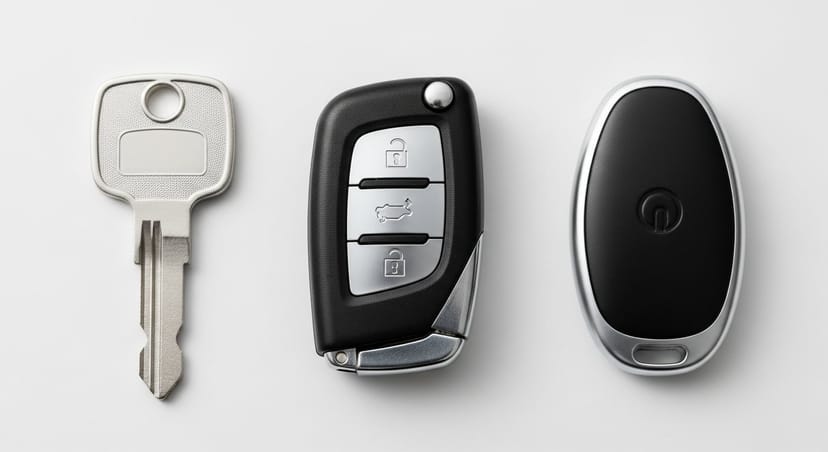
Here's the confusion this article exists to fix. People ask, "Is my key laser-cut or transponder?" — as if those are the two options. They aren't. "Laser-cut" describes the metal blade. "Transponder" describes the electronic chip. A single modern key is very often both at once: a laser-cut blade with a transponder chip in the head. Asking which one you have is a bit like asking whether your phone is "touchscreen or has a battery" — it's almost certainly both.
So the real comparison, the one that actually helps you when a key breaks or gets lost in a Fort Worth parking lot, is a three-way one: traditional edge-cut transponder keys versus laser-cut (sidewinder) transponder keys versus smart / proximity keys. This guide separates the mechanics (how the blade is cut) from the electronics (how the chip and programming work), then maps each combination to the cars that use it and the price band to expect.
Fort Worth Car Keys is a mobile automotive locksmith serving Fort Worth and the surrounding suburbs. We cut and program all three types on-site — call 817-842-1256 or email contact@fortworthcarkeys.com. For the programming service specifically, see transponder key programming in Fort Worth, and for blade cutting, car key cutting in Fort Worth.
The Mechanical Side: How the Blade Is Cut
Traditional edge-cut (the "old" key)
The classic car key has teeth cut into the top or bottom edge of a relatively thin blade. Inside the lock, those teeth lift a row of wafers to the correct height. It's a proven design that goes back generations and is cheap to duplicate on a standard key machine. Millions of Fort Worth vehicles — especially economy models and cars from the 1990s and 2000s — still use edge-cut blades, usually with a transponder chip added in the head for post-1997 immobilizer compliance.
Laser-cut / sidewinder (the "high-security" blade)
A laser-cut key — also called a sidewinder or internal-cut key — has a thicker blade with a single winding channel milled down the center of the flat face, rather than teeth on the edge. Despite the name, no laser is involved; it's precision-milled with a specialized cutter. Because the groove engages wafers on both sides of the cylinder, the lock is dramatically harder to pick or jiggle open. Both faces of the blade typically look identical, so it inserts either way up. Manufacturers moved to sidewinder blades across many mid-2000s-and-newer vehicles precisely for this pick resistance.
The trade-off is on the locksmith's end: cutting a sidewinder blade requires a more expensive milling machine than an edge-cut duplicator. A properly equipped Fort Worth mobile locksmith carries one and cuts these by code from your VIN or by decoding the lock.
The Electronic Side: The Transponder Chip
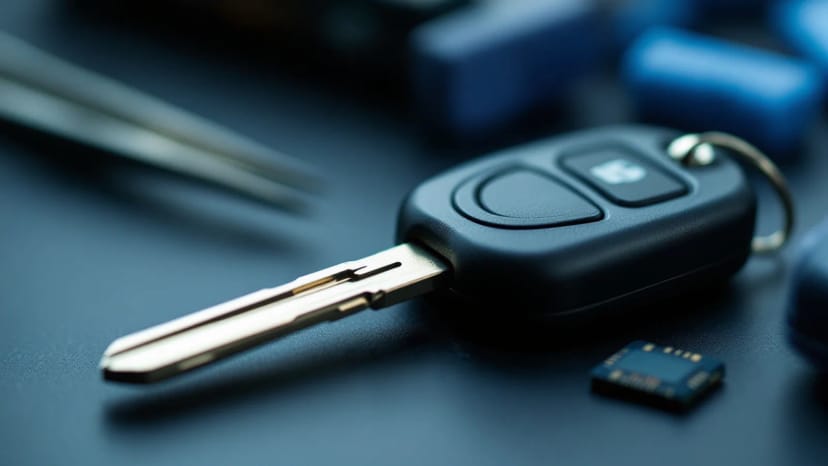
Independent of how the blade is cut, most keys since the late 1990s carry a transponder — a passive RFID chip in the plastic head. Per NHTSA anti-theft system guidance and FMVSS 114, immobilizers exist to stop a car from starting unless the correct chip is present. When you insert and turn the key, the immobilizer powers the chip, reads its code, authenticates, and authorizes the engine. No valid chip, no start — even if the blade is cut perfectly and turns the cylinder.
That chip has evolved through generations, a story our transponder key vs. key fob explainer covers in detail. Early fixed-code chips (late 1990s) gave way to rolling-code challenge-response systems (mid-2000s), then to modern AES-encrypted chips. Programming the encrypted generations requires either credentialed registry access through the NASTF Vehicle Security Professional program or specialized aftermarket tooling certified through the Associated Locksmiths of America.
Smart / Proximity Keys: The Third Category
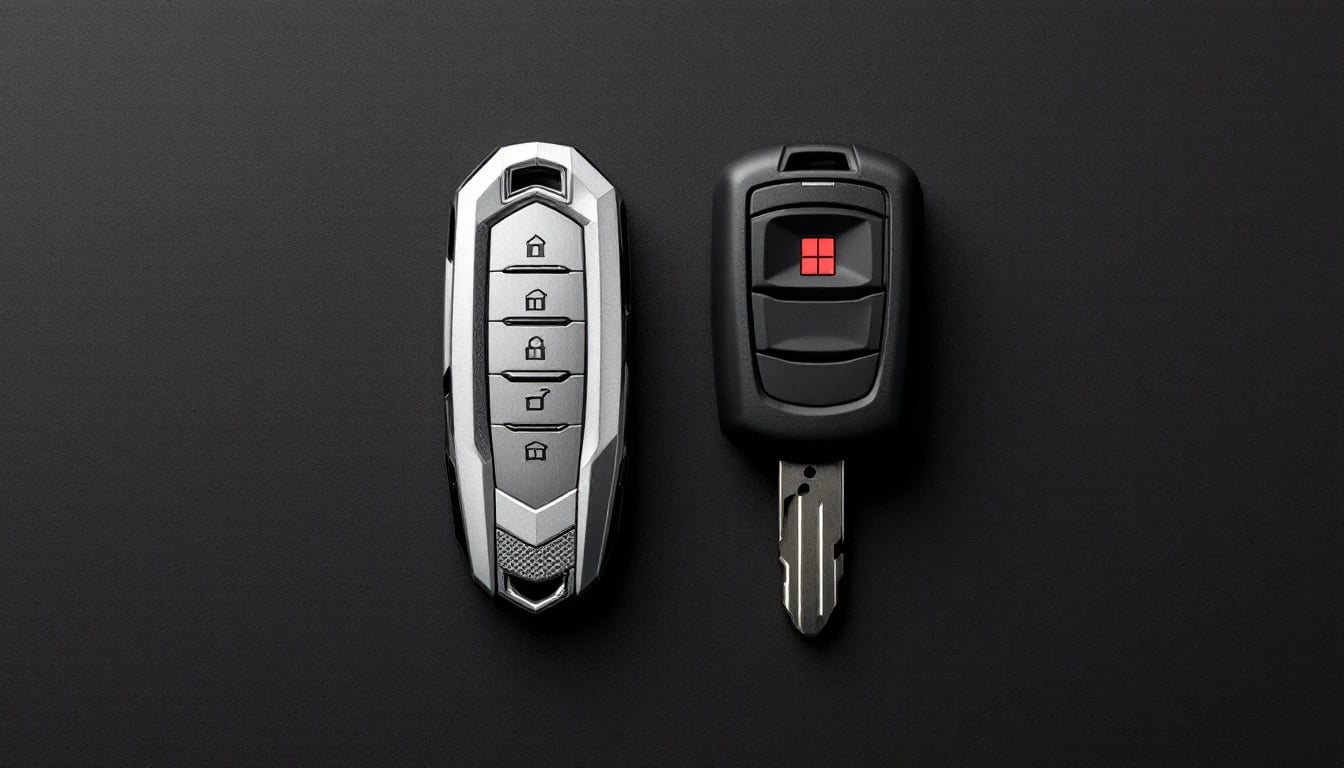
A smart key — proximity fob, push-button-start key — is the newest architecture and it usually has no blade you insert at all. Antennas in the car detect the fob when it's nearby, authenticate it automatically, and let you unlock by touching the handle and start by pressing a button. Most smart keys still hide an emergency blade inside the shell (often a laser-cut one) so you can unlock the door manually if the fob battery dies. So a single smart key can bundle a laser-cut blade, transponder-style authentication, and the proximity electronics on top — which is exactly why it sits in a higher price band. See our smart key fob replacement in Fort Worth guide for the proximity-specific detail.
The Three-Way Comparison Table
Here's how the three combinations line up on the factors that matter when you need a replacement. As of August 2026, prices are Fort Worth mobile bands.
| Factor | Edge-cut transponder | Laser-cut (sidewinder) transponder | Smart / proximity key |
|---|---|---|---|
| Blade style | Teeth on the edge, thin blade | Center groove, thick blade, no visible teeth | Hidden emergency blade (often laser-cut); no insert needed to drive |
| Typical era | Late 1990s–2010s | Mid-2000s–present | ~2015–present (spreading downward) |
| Common on | Economy & older mainstream models | Much Ford, GM, Toyota/Lexus, most European | Modern push-button-start vehicles, all tiers |
| Pick resistance | Moderate | High | High (plus electronic proximity) |
| How it's cut | Standard key machine | Sidewinder milling machine | Emergency blade milled; fob is electronic |
| Programming | Fast transponder pairing | Transponder pairing (may be encrypted) | Complex; encrypted, longer for AKL |
| Fort Worth price band | $120–$200 (transponder) | $120–$200 mainstream; up to $350–$800 European | $220–$500; European $350–$800 |
| Add a spare (working key exists) | ~$65 | ~$65 | ~$65 |
| All-keys-lost | Higher; VIN code needed | Higher; VIN code needed | $180–$450 lost-fob band; European higher |
The pattern to notice: the blade style barely moves the price on its own — cutting a sidewinder costs a little more than an edge-cut, but the real money is in the electronics and programming. A laser-cut key on a mainstream Toyota still sits in the $120–$200 transponder band. The same blade concept on a BMW smart key lands in the $350–$800 European band because of the encryption, not the groove. For the full price picture across every key type, see our car key replacement cost guide.
Which Cars Use Which
There's no perfectly clean line, because manufacturers transitioned model by model, but here's the practical shape of it:
- Edge-cut transponder is most common on older and economy vehicles — think a lot of 1997–2010 mainstream sedans and trucks. Many still on Fort Worth roads.
- Laser-cut (sidewinder) transponder spread widely from the mid-2000s. Large swaths of Ford and GM, much of Toyota and Lexus, and nearly all European makes adopted sidewinder blades. If your key is thick with a center channel and no edge teeth, this is you.
- Smart / proximity dominates newer vehicles across every tier, from mainstream crossovers to BMW, Mercedes-Benz, and Audi. If you've never inserted a blade to start the car, you have one.
The only reliable way to know for certain is to have the key identified — by the physical blade, or by decoding your VIN. A Fort Worth mobile locksmith does this in seconds, which matters because ordering the wrong blank wastes a trip.
Cutting and Programming: What Actually Happens
Regardless of type, a replacement job has the same two phases — cutting and programming — but each key type stresses a different one.
Cutting. For an edge-cut key, a standard duplicator or code machine handles it. For a laser-cut blade, the tech uses a sidewinder milling machine, cutting either by duplicating your existing key or by generating the cut from the VIN code when all keys are lost. For a smart key, the emergency blade is cut the same way, but the fob itself is electronic. Blade cutting is fast; it's rarely the bottleneck.
Programming. This is where the type drives the time and cost. A basic transponder pairs quickly. An encrypted rolling-code or AES chip takes longer and may require registry access. A smart key's proximity functions add another layer, and an all-keys-lost job on any encrypted system is the longest because the security module must be read or reset with no reference key. For the encrypted-make deep end, our European car locksmith page covers the tooling reality.
The question I get most is "is it laser-cut or transponder," and my answer is always: probably both, and that's the wrong question. Tell me the year, make, and model, and whether you have a working key. That tells me the blade machine to bring, the chip to stock, and the programming path — which together set your price. The blade groove is the easy part; the electronics decide the job.
— ALOA Master Automotive Locksmith (MAL), 14 years experience, DFW metroplex (anonymized)
Four Numbers Worth Knowing
- 1997 — the model year after which nearly every car needs a transponder chip to start, per NHTSA anti-theft guidance, regardless of blade style.
- $120–$200 vs. $220–$500 — the mainstream transponder band versus the smart-fob band, showing that electronics, not the blade, drive the gap.
- ~$65 — the cost to program a spare while a working key exists, the same for all three key types and the cheapest insurance against a future all-keys-lost job.
- $150–$300 — the tow you avoid with mobile service versus a dealer, per AAA's 2024 driving-cost data.
Per U.S. Bureau of Labor Statistics occupational data on locksmiths, the tooling investment behind sidewinder cutting and encrypted programming is exactly why credentialed pricing sits where it does — and why the "$19 any key" ads flagged by the Better Business Bureau's locksmith scam advisory can't cover a real laser-cut or smart-key job.
Verify Before You Book
Whatever your key type, the protection is the same. Per the Federal Trade Commission's guidance on hiring a locksmith, get a flat-rate range on the phone tied to your exact year/make/model, and verify the operator's license. Texas automotive locksmiths are licensed through the Texas DPS Private Security program (not a general trade board); per the Texas DPS Private Security licensing information you can ask for and look up the number. A legitimate operator confirms the blade type, the chip, and the price without stalling.
A Real-World Example
Operator: Anonymized Fort Worth driver, 2016 Ford Fusion, snapped the laser-cut blade off in the ignition after years of wear.
Before:
- The sidewinder blade sheared; the transponder head still worked, but the key wouldn't turn.
- Driver assumed "laser-cut" meant a dealer-only, tow-required job.
- Ford dealer quote: $215 for a new laser-cut transponder key plus a required extraction, three-day wait.
What changed: The driver called a Texas DPS-licensed mobile operator, who explained the key was both laser-cut and transponder — a routine mainstream job, not a European one. Pre-dispatch flat-rate quote landed in the standard transponder band of $120–$200. On-site, the tech extracted the broken blade, cut a fresh sidewinder blade from the VIN on a milling machine in the van, and programmed the transponder in under half an hour.
Outcome:
- Final invoice: $175, within the transponder band.
- Broken blade extracted; new laser-cut key cut and programmed on the first visit.
- Driver added a programmed spare for a $65 add-on to avoid a future all-keys-lost situation.
Net: Understanding that "laser-cut" and "transponder" describe different things — and that the blade style didn't push a mainstream Ford into the European band — saved the driver from an unnecessary dealer tow and a three-day wait. One mobile visit, correct band, spare in hand.
Frequently Asked Questions
What's the difference between a laser-cut key and a transponder key?
They describe two different things. "Laser-cut" (also called sidewinder or high-security) refers to how the metal blade is machined — a single center groove milled into a thicker blade, instead of the traditional edge-cut serrations. "Transponder" refers to the RFID chip embedded in the key's head that talks to the immobilizer. Most modern keys are both laser-cut AND transponder-chipped; the two terms aren't opposites.
Which cars use laser-cut (sidewinder) keys?
Laser-cut blades became common on many mid-2000s-and-newer vehicles across mainstream and luxury brands — a lot of Ford, GM, Toyota/Lexus, and most European makes moved to sidewinder blades for their higher pick resistance. Older and economy models often still use traditional edge-cut transponder keys. A locksmith confirms your blade type by the key or the VIN.
Are laser-cut keys more expensive to replace than standard transponder keys?
Cutting a laser-cut blade requires a more expensive milling machine, so it can cost a bit more to duplicate, but the bigger price driver is the electronics. A standard transponder key runs $120–$200 in Fort Worth; a smart/proximity fob runs $220–$500; European keys $350–$800. The blade style matters less than the chip and programming.
Can a locksmith cut a laser-cut key in Fort Worth?
Yes. A properly equipped mobile locksmith carries a sidewinder-capable cutting machine and can cut a laser-cut blade by code from your VIN or by decoding the lock, then program the transponder on-site. You do not need to tow the car to a dealer for most makes.
What is a smart key and how is it different from both?
A smart (proximity) key usually has no traditional blade you insert — it's a fob that lets you enter and push-start the car when it's nearby. Most include a hidden emergency laser-cut or edge-cut blade for manual entry if the battery dies. So a smart key can contain a laser-cut blade AND transponder tech, plus the proximity electronics on top.
How can I tell if my key is laser-cut or standard edge-cut?
Look at the blade. A laser-cut (sidewinder) blade is thicker and has a single channel or groove milled down the center of the flat face, and both sides usually look identical. A traditional edge-cut key has jagged teeth cut into the top or bottom edge. If you're unsure, a locksmith identifies it in seconds by the key or the VIN.
Is a laser-cut key harder to pick or steal than an edge-cut key?
Yes, that's why manufacturers adopted them. The internal sidewinder groove engages wafers on both sides of the lock, making the mechanical cylinder far more resistant to picking and jiggling than a traditional edge-cut wafer lock. Combined with the transponder chip, it raises the bar for both mechanical and electronic theft.
References & external sources
- NHTSA — Anti-Theft Systems & FMVSS 114 — Federal standard governing immobilizer and key-code security.
- NASTF Vehicle Security Professional (VSP) Registry — Registry for credentialed access to OEM security data on encrypted makes.
- Associated Locksmiths of America (ALOA) — Trade association governing locksmith certifications including the Master Automotive Locksmith (MAL) credential.
- FTC Consumer Advice — Hiring a Locksmith — Federal Trade Commission guidance on verifying legitimacy and getting a firm price.
- Texas Department of Public Safety — Private Security Licensing — Texas locksmith company + individual licensing requirements and public lookup.
- U.S. Bureau of Labor Statistics — Occupational Employment and Wages, Locksmiths (49-9094) — National wage and employment data underpinning trade tooling economics.
- AAA — Your Driving Costs 2024 — Annual ownership cost study including towing costs.
- Better Business Bureau — Locksmith Scam Advisory — BBB consumer protection guidance on locksmith bait-and-switch pricing.