The short answer
As of September 2026 in Fort Worth, a second key for a used car costs $120 to $180 for a basic transponder, $175 to $275 for a remote head or flip key, and $220 to $500 for a smart or proximity fob, cut and programmed at your location while your existing key still works. European luxury keys run $350 to $800. Lose that last key first and an all-keys-lost surcharge of $75 to $150 lands on top, along with a much longer appointment.
Why almost every used car arrives with one key
This is not bad luck and it is rarely dishonesty. Cars shed keys slowly. A second key goes into a kitchen drawer during a house move in 2019 and is never seen again; a valet key rides in a glovebox until the car is traded; a spare fob dies, gets replaced by nothing, and the owner simply adapts to living on one key. By the time the vehicle reaches a private sale or a small lot, one key is the normal state of affairs and nobody in the transaction thinks to mention it.
Franchise dealers are more likely to disclose it, and a few will make a second key part of the deal if you ask before signing. The Federal Trade Commission's Used Car Rule requires a Buyers Guide on the window of most used vehicles offered by dealers, covering warranty status — it does not require anybody to tell you how many keys came with the car. That question is yours to ask, and the best moment to ask it is before money changes hands, when the answer still has leverage attached.
The cost of not asking is not theoretical. It is a line item that shows up weeks or months later, and its size depends almost entirely on one thing: whether you still have a key that works when you finally deal with it.
What a second key costs in Fort Worth, by key type
These are our on-site prices as of September 2026, with your existing working key present. The dealer column is what the same job typically runs through a franchise service department, before considering how the car gets there.
| What your car takes | How to recognise it | Our price | Typical dealer | All-keys-lost path |
|---|---|---|---|---|
| Basic transponder key | Metal blade, no buttons, plastic head | $120–$180 | dealer $250–$400 | +$75–$150 surcharge |
| Remote head / flip key | Blade plus lock/unlock buttons in one unit | $175–$275 | dealer $350–$550 | +$75–$150 surcharge |
| Smart / proximity fob | No blade in use, push-button start | $220–$500 | dealer $450–$950 | $180–$450 depending on platform |
| European luxury key (BMW, Mercedes, Audi) | Proximity fob, encrypted immobiliser | $350–$800 | dealer $700–$1,500 | Quoted per VIN |
| Extra fob added during the same visit | Any of the above | around $65 on top | Usually full price again | n/a |
| Lockout only, keys are fine | You can see the key on the seat | $75–$200 | Not typically offered | n/a |
Two things in that table matter more than the headline numbers.
The first is the extra-fob line. Adding a third key while we are already on site and already connected to the vehicle costs a fraction of a separate visit, because the expensive parts of the job — travel, setup, security access — have already been paid for once. Households with two drivers almost always want two working keys plus one that lives at home, and the cheapest moment to buy the third is during the appointment for the second.
The second is the gap between our column and the dealer column, which widens as the key gets more sophisticated. On a basic transponder the difference is meaningful. On a smart fob it is frequently double. On European platforms it can be a four-figure decision, which is why our full pricing guide splits European keys out by make rather than pretending one band covers them.
What actually moves the price
Nobody can quote a car key honestly without knowing four things, and every one of them can move the number inside the bands above.
Key type, not model year. A 2016 economy sedan on a bladed transponder key is a cheaper job than a 2016 crossover with proximity entry, even though they are the same age. What matters is the credential the car expects, not how old the car is. This is why the first question on the phone is never "what year is it" but "does it have a blade you turn, or do you press a button to start".
Whether a key still works. Covered above, and it is the single largest variable available to you. It is also the only one you control.
Whether the vehicle needs a module touched. Most second-key jobs are pure key work. A minority — usually cars that have had an immobiliser or body control module replaced, or European vehicles with encrypted key systems — need the module addressed as well, which typically adds $75 to $150 and turns a key job into module programming. We identify this from the VIN, not on arrival.
Where the car is and when. Mobile service is included in our pricing to the vehicle within our normal area. After-hours and rush work carries a surcharge in the $25 to $75 range across legitimate operators in this market. What you should never see is a $19 headline that becomes $400 once somebody is standing next to your car. A real replacement in Fort Worth starts at $120, and any advertisement below that is an advertisement for a conversation you will not enjoy.
The number that should actually worry you
Here is the arithmetic that makes this an easy decision rather than a close one.
Take a common case: a used crossover with proximity entry, bought with a single fob. The second key today, with the first one working, sits in the $220 to $500 band. It takes half an hour, at a time you pick, in your own driveway.
Now lose that fob. The same vehicle needs an all-keys-lost procedure. The key itself is in the $180 to $450 range, the surcharge adds $75 to $150, and the appointment runs longer because many platforms impose a security learn cycle that no tool shortens. If you choose the dealer instead, the car is not drivable to get there, so a tow at $150 to $300 one way joins the bill, followed by a wait of three to seven days for a keyed vehicle in a service queue.
The dollar difference is unpleasant. The time difference is the part that actually costs you: a missed shift, a day of childcare, a rental. The American Automobile Association's annual Your Driving Costs research puts the all-in cost of owning and operating a new vehicle north of $12,000 a year, and none of that is spent on the one component whose absence stops the car entirely. A second key is the cheapest insurance in the whole ownership budget, and it is the only one you buy once.
An ALOA-credentialed automotive locksmith working this market put it about as plainly as it can be put: "Nobody has ever called me to say they regret having a spare. Every all-keys-lost call I run is somebody who meant to get one."
How to tell what your car takes before you call
You can settle the quote in about ninety seconds, standing at the car.
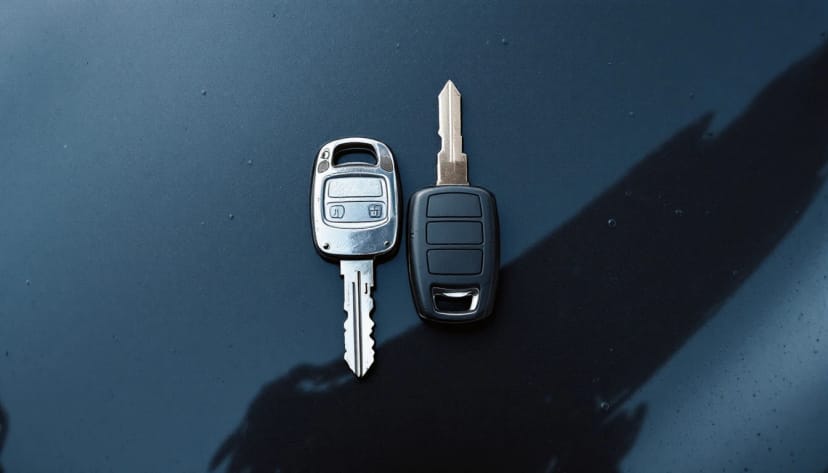
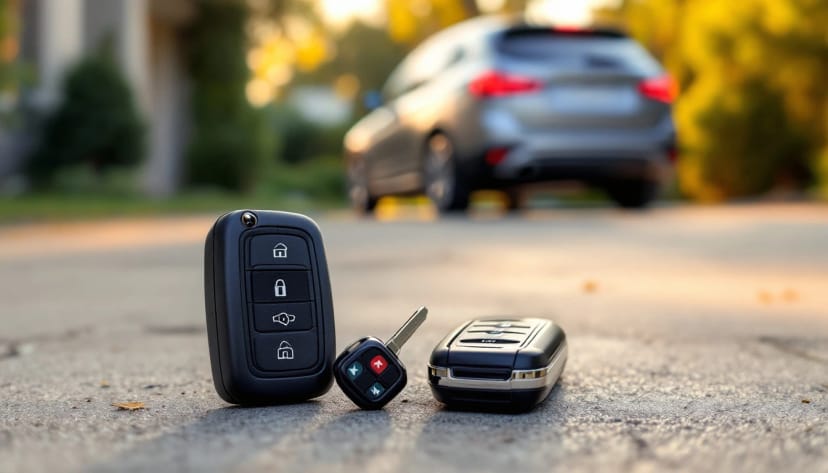
Look at the key you have. A plain metal blade with a plastic head and no buttons is a transponder key. A blade that folds out of a button housing is a flip key. A blade plus buttons in one fixed unit is a remote head key. A fob with no blade in daily use, paired with a start button on the dash, is a proximity key — and there is an emergency blade hidden inside it, usually released by a small catch on the side.
Turn the fob over. Most fobs carry a printed identifier on the back. That identifier, read to us on the phone, resolves the exact family your vehicle expects and removes the guesswork from the price. It matters more than the year on your registration, because manufacturers change key families mid-model-run and a table printed today would be wrong for somebody within months.
Have the VIN ready. Seventeen characters, visible through the windscreen at the base of the driver's side and printed on your insurance card. The VIN tells us the security architecture, whether a module is likely to be involved, and whether your specific vehicle is one of the narrow cases that genuinely needs a dealer. Vehicle security data for qualified independents is administered through the National Automotive Service Task Force, and legitimate operators work inside that framework — a locksmith who does not want your VIN is a locksmith who has not checked.
Proof of ownership. Registration or title in your name, plus photo ID. Any operator who will make a key to a car without checking that is one you should not want near your vehicle. This is not paperwork for its own sake; it is the entire reason the trade is credentialed.
Dealer, mobile locksmith, or online fob
Three routes exist and they suit different situations.
The mobile locksmith route is the default for a used car with one working key. We come to the vehicle, cut the blade to your locks, program the credential and hand you a key that does everything the original does. The car never moves. Our car key replacement service covers the whole range from basic transponders to European proximity keys.
The dealer route makes sense in a small number of genuine cases — certain late-model platforms, some warranty situations, and vehicles with unusual module histories. It is slower and more expensive by design, and the hidden cost is transport if the car cannot be driven. Our comparison of mobile locksmith versus dealership lays out where each one honestly wins.
The buy-the-fob-online route is the one that produces the most disappointed phone calls. It can work and it can save real money when the part number is right. It fails when the frequency is wrong, when the chip family is wrong, or when the listing is a clone of a fob for a different market. If you are going to try it, read us the identifier off your current fob first. Thirty seconds on the phone is cheaper than a fob you cannot return, and our guide to aftermarket fobs that will not program is the long version of why.
When to do it
Immediately after purchase, for two reasons.
The first is practical. You have just spent money on a vehicle and you know exactly what condition it is in. Adding a key now folds a known cost into the purchase rather than discovering it at the roadside later.
The second is that risk does not sit still. A single-key car is one dropped keyring away from an all-keys-lost job, and the failure modes are mundane rather than dramatic — a pocket at a Trinity Trails car park, a load of laundry, a fob that meets a water bottle. The Insurance Institute for Highway Safety's research on immobiliser-equipped vehicles is a useful reminder of why modern keys are difficult to reproduce in the first place: the security that makes your car hard to steal is exactly the security that makes a key from nothing expensive.
If the seller promised to post the second key, give it two weeks. If it has not arrived, price the job properly. Our page on whether a spare key is worth it works through the decision in more detail, and what happens when there is no spare at all is the version of this article nobody wants to need.
What the appointment actually looks like
We arrive where the car is. You show registration and ID. We confirm the key family against the VIN and the identifier on your existing fob, and confirm the price we quoted on the phone before any work starts.
The blade is cut to your vehicle's locks — including the emergency blade inside a proximity fob, which is the step budget operators skip. The new credential is programmed to the vehicle. You test it yourself before we leave: doors, boot, ignition or start button, and the panic button if it has one. On a proximity car we also check that the emergency blade physically opens the driver door, because that is the function you will want on the morning the vehicle battery is flat.
Twenty to forty-five minutes for most cars. Longer where a platform imposes its own security timer, which we will have told you about before dispatch. You keep both keys, and the one-key problem is over permanently.
Frequently Asked Questions
How much is a second key for a used car in Fort Worth?
As of September 2026 it depends entirely on key type. A basic transponder key runs $120 to $180, a remote head or flip key $175 to $275, and a smart or proximity fob $220 to $500. European luxury keys sit in the $350 to $800 band. Those are our on-site prices with your existing working key present, which is the cheapest version of this job that exists. Every figure assumes we come to the vehicle rather than the vehicle coming to us.
Why is it cheaper to make a second key now than to replace a lost one later?
Because a working key is a credential the car already trusts. With one in hand the vehicle will accept a new key through a normal add-a-key procedure. With no working key the vehicle has to be persuaded to accept a credential from nothing, which needs more tooling, more time and on many platforms a security wait built into the car. That difference shows up as an all-keys-lost surcharge of $75 to $150 on top of the key price, and it is the smaller half of the cost. The larger half is the day you lose.
Does the dealer have to make my second key?
For the overwhelming majority of vehicles on Fort Worth roads, no. Cutting and programming a second key is routine mobile work for a properly equipped independent locksmith, done wherever the car is parked. A handful of platforms genuinely require dealer-level access, and those are identifiable from the VIN before anybody is dispatched. The dealer route also usually means getting the car there, which is where the tow charge of $150 to $300 enters the conversation if the car is not drivable.
The seller said they would mail me the second key. Should I wait?
Give it a deadline and put a date on your calendar. Second keys promised at handover arrive far less often than buyers expect, and the promise costs the seller nothing to make. If it has not turned up within a couple of weeks, treat the car as a one-key car and price the second key properly. Waiting is only free while the remaining key keeps working.
Can I just buy a fob online and have it programmed?
Sometimes, and it is worth understanding the risk before you spend. A fob has to match the vehicle's radio frequency and its chip type, and listings routinely describe both loosely. When the part is right the saving is real. When it is wrong you have bought something unreturnable and still need a working key. Read us the identifier printed on your existing fob before you order anything, and we will tell you whether the part you are looking at is the right family.
Does a second key need to be cut as well as programmed?
Almost always, yes, and this is the step people forget when comparing prices. Even a push-button-start car with a proximity fob has an emergency blade inside it that has to be cut to your locks, and cars with bladed keys obviously need cutting. Programming alone gets you a fob that can start the car but not open the door when the battery is flat, which is exactly the situation a spare exists for.
How long does making a second key take?
For most vehicles, twenty to forty-five minutes on site with your working key present. Cutting is quick, programming is quick, and the paperwork is short. Some platforms impose a timed security cycle that we cannot shorten, and where that applies we say so on the phone rather than in your driveway. It is a lunch break, not a day off work.
Is it worth getting the second key on a car I might sell soon?
Usually yes, on straightforward resale arithmetic. A two-key car is easier to sell than a one-key car, and buyers who know what a replacement costs will price the missing key into their offer, often at more than the key would have cost you. You also stop carrying the risk of a total loss of access in the meantime, which is the part that has no resale value at all until it happens.
References
- Federal Trade Commission — Used Car Rule and Buyers Guide requirements for used-vehicle sales.
- National Highway Traffic Safety Administration — federal vehicle theft prevention standards and anti-theft device requirements.
- Insurance Institute for Highway Safety — theft-loss research across immobiliser-equipped vehicle generations.
- American Automobile Association — Your Driving Costs annual vehicle ownership cost research.
- Associated Locksmiths of America — professional credentialing and consumer guidance on selecting a locksmith.
- National Automotive Service Task Force — secure vehicle security data access for qualified independent locksmiths.
- U.S. Bureau of Labor Statistics — consumer price index for motor vehicle maintenance and repair.
Get the second key made this week
Read us the identifier off the back of your key and the VIN off the windscreen, and you will have a firm price in about two minutes — including whether your specific vehicle is one of the rare ones that needs anything more than a normal add-a-key visit. Call 817-842-1256 or get in touch here, and we will come to the car.