As of July 2026: Toyota Tacoma key replacement in Fort Worth
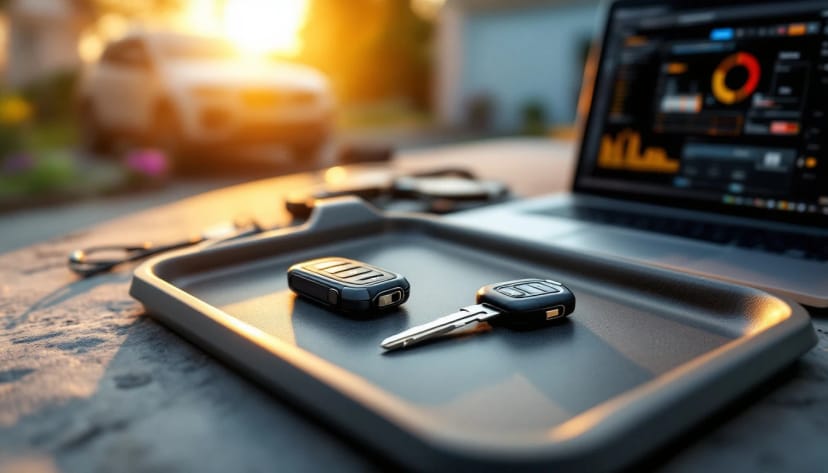
The Toyota Tacoma is one of the most common trucks on Fort Worth roads, and its key work is unusually clean to price once you know two things: which generation you drive, and whether you still hold a working key. Tacomas split into three generations that map neatly onto three key types — a 2nd-gen bladed transponder, a 3rd-gen remote-head key running Toyota's H chip, and a smart proximity fob on Limited, TRD, and 4th-gen push-button trucks. Each uses a different tool and a different procedure.
Here is the honest Fort Worth mobile range as of July 2026, drawn entirely from the published price bands for this market:
- Bladed transponder / remote-head key: $120–$200 cut and programmed
- Smart / proximity fob (push-to-start): $220–$500 depending on trim
- All-keys-lost, transponder: $120–$200
- All-keys-lost, smart fob: $180–$450 depending on model and fob count
- Extra spare programmed with a working key present: often around $65 add-on
- Ignition cylinder repair or replacement: $150–$400
- Vehicle lockout (no key damage): $75–$200
These are mobile-service ranges — a technician drives to your driveway, job site, or a Fort Worth parking lot and completes the work on-site. Dealer pricing for the same job typically runs higher once you add service-writer overhead, parts markup, and — for all-keys-lost — a tow for a truck that will not start. Our truck key replacement service page covers the process, or call 817-842-1256 for a firm phone quote.
How the immobilizer decides the price
A Tacoma key is a credential, not just a piece of cut brass. When you start the truck, a transponder chip inside the key exchanges an encrypted challenge-and-response with Toyota's immobilizer. If the response does not match, the engine will not run. That security layer is exactly why the physical appearance of the key tells you almost nothing about the price — the encryption generation does.
Immobilizers are among the most effective anti-theft technologies ever deployed. The Insurance Institute for Highway Safety reports that vehicles without modern electronic immobilizers are stolen at substantially higher rates, and the National Highway Traffic Safety Administration frames immobilizers as a cornerstone theft-reduction technology. Toyota's progression from the older 4D and "G" chips to the rolling-code "H" chip on 2014-and-later keys is a direct response to that security arms race — and it is why a mid-cycle 3rd-gen Tacoma key requires a newer programmer than an early 2nd-gen key.
"A Tacoma's replacement price is set by the immobilizer generation and how many keys are already enrolled, not by whether the key has buttons on it," notes a NASTF-registered Vehicle Security Professional. That framing keeps owners from overpaying for the wrong assumption.
Generation-by-generation walkthrough
Below is the at-a-glance breakdown, followed by prose detail for each generation. Treat every FCC-ID as a commonly documented example — read the ID printed on the back of your own key or fob and confirm the exact part by VIN and trim before ordering.
| Generation | Years | Key type | Commonly documented FCC-ID | Fort Worth price band |
|---|---|---|---|---|
| 2nd gen | 2005–2015 | Bladed transponder (TOY43 "dot" 4D67); later remote-head | Varies by build | $120–$200 |
| 3rd gen | 2016–2023 | Remote-head H-chip key; Limited/TRD smart fob | HYQ12BDM / GQ4-29T; smart HYQ14FBA | $120–$200 (smart $220–$500) |
| 4th gen | 2024–present | Smart proximity fob, push-button start | Varies by build | $220–$500 (AKL $180–$450) |
2005–2015 2nd generation: bladed transponder and the TOY43 blade
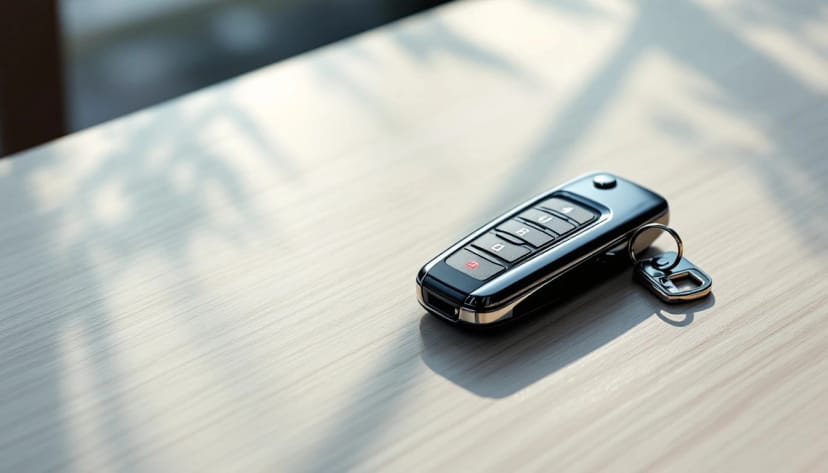
The 2nd-gen Tacoma is the classic insert-and-twist truck. Early builds use a plain bladed transponder key cut on the TOY43 "dot" keyway, commonly paired with a 4D67 transponder chip enrolled to the Toyota immobilizer. As the generation matured, remote-head keys — a bladed key with integrated lock, unlock, and sometimes tailgate buttons — became more common on higher trims.
For a locksmith, a 2nd-gen spare is one of the more straightforward Tacoma jobs: cut the TOY43 blade to the VIN code, then enroll the transponder over the OBD-II port. Because these trucks are now a decade or more old, worn ignition cylinders are common, so a 2nd-gen no-start sometimes turns out to be an ignition problem rather than a bad key. A spare add lands around $65 in add-on programming plus the key; a from-scratch transponder key falls in the $120–$200 band. Our transponder key programming page covers the enrollment process in detail.
2016–2023 3rd generation: the H chip and the remote-head key
The 3rd-gen Tacoma is where Toyota's H chip takes over. Most base and mid-trim 3rd-gen trucks use a remote-head key you still insert and turn, but the transponder inside runs the rolling-code H encryption introduced across the Toyota lineup in the mid-2010s. Commonly documented FCC-IDs for these remote-head keys include HYQ12BDM and GQ4-29T — confirm your exact key by the printed FCC-ID and by VIN and trim, because Toyota used more than one part across the run.
The important wrinkle: because the H chip is rolling-code, it requires a programmer that specifically supports Toyota H-key generation. An operator with an older tool cannot enroll an H key, which is one reason 3rd-gen owners occasionally hear "we can't do that key" from a general locksmith — the credential is the limitation, not the truck. A credentialed automotive specialist with current tooling handles it as a standard $120–$200 remote-head job.
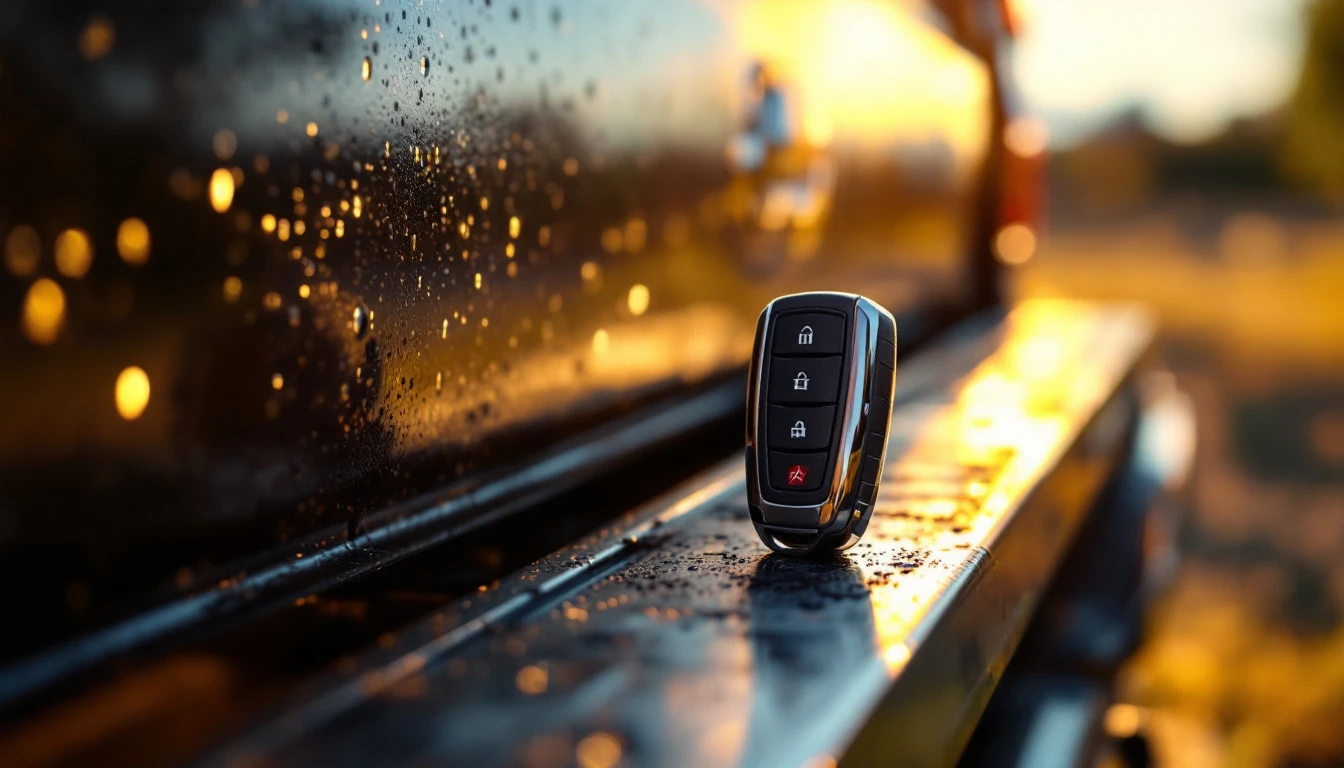
Higher 3rd-gen trims — Limited and many TRD configurations from the mid-2010s onward — moved to a smart proximity fob with push-button start, commonly documented as FCC-ID HYQ14FBA. Those trucks jump into the $220–$500 smart-fob band because the credential is an encrypted proximity fob rather than a bladed key.
2024–present 4th generation: full smart-fob era
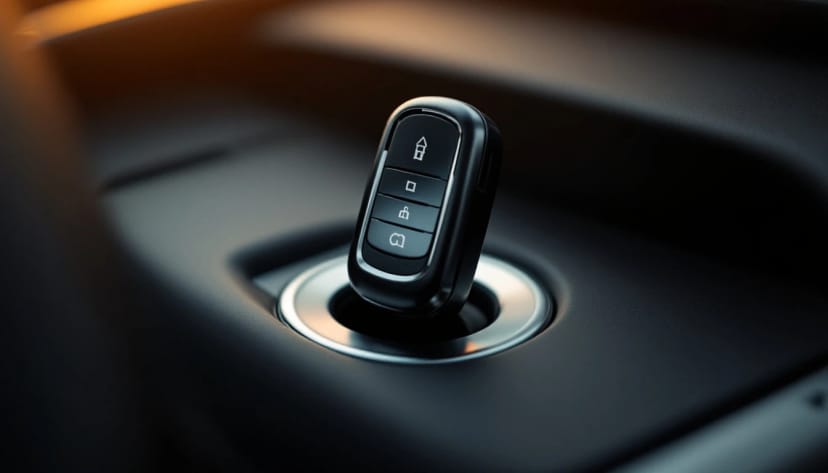
The current 4th-gen Tacoma standardizes on a smart proximity fob with push-button start across most of the lineup — no ignition slot, no twist. The vehicle detects the fob wirelessly and authenticates it to the immobilizer. Because the fob is an encrypted smart credential, its replacement sits in the $220–$500 band, and an all-keys-lost 4th-gen — where the immobilizer has no reference fob — runs $180–$450 including the new hardware. Confirm the exact fob by the FCC-ID printed on it and by VIN, as part numbers on a fresh generation shift with build date. Our smart key replacement page covers the proximity-fob process end to end.
All-keys-lost versus adding a spare
This is the widest price fork in Tacoma key work.
Adding a spare assumes you still have at least one working key. The immobilizer already holds a valid reference credential, so the operator enrolls the new key quickly and cuts the blade or emergency key from your VIN code. That efficiency is why a spare add is often around $65 in add-on programming plus the key — the single best-value move a Tacoma owner can make.
All-keys-lost (AKL) means the immobilizer has no reference key. The operator must generate secure access from the VIN, then supply new hardware. On a bladed-key Tacoma that stays in the $120–$200 band; on a smart-fob truck it climbs to $180–$450 because the fob hardware is more expensive and the enrollment more involved. The takeaway: cut a spare while you still have a working key, and you avoid the more expensive emergency entirely.
The financial logic is stark when you look at ownership costs. AAA's 2024 Your Driving Costs study put the average annual cost of vehicle ownership above $12,000 per year, and pickups sit near the top of that range. An unplanned all-keys-lost event plus a tow is exactly the kind of unbudgeted expense that study warns owners to plan for — and a $65 spare is cheap insurance against it.
Mobile locksmith versus the dealer
For a Tacoma, the mobile-versus-dealer decision comes down to three things: whether the truck can drive to the dealer, total out-the-door cost, and time.
If your Tacoma will not start — an all-keys-lost situation — the dealer route almost always adds a tow, because the truck cannot be driven in. A mobile locksmith eliminates that by cutting and programming the key wherever the truck sits. The U.S. Bureau of Labor Statistics tracks locksmiths and safe repairers as occupation 49-9094, a licensed trade, and mobile automotive specialists have grown as a share of that field precisely because on-site programming solves the non-starting-vehicle problem dealers cannot.
Before you dispatch anyone, the Federal Trade Commission's guidance on hiring a locksmith is worth two minutes: confirm the company's identity and license, get the price range up front, and be wary of quotes that jump on arrival. A reputable Fort Worth operator gives you a flat-rate band by phone and honors it.
What to have ready when you call
You will get a faster, firmer quote — and a faster on-site job — with these details in hand:
- Year and trim confirmation. "2018 Tacoma TRD Sport" tells the operator whether to expect a remote-head H key or a smart fob.
- The VIN. Every Tacoma key is cut and programmed from the VIN. It is on the dash at the base of the windshield and on the driver's door jamb sticker.
- How you start the truck. Insert-and-twist means transponder or remote-head; push-button means a smart fob.
- Whether you have a working key. The single biggest price factor — spare add versus all-keys-lost.
- The FCC-ID on your current key or fob. Reading the ID helps the operator confirm the exact part before dispatch.
- Your exact location and access notes. Mobile service means the truck stays where it is — a driveway, a job site, a lot in Grapevine or Saginaw.
Fort Worth Car Keys serves Fort Worth and the surrounding communities — Arlington, North Richland Hills, Hurst, Bedford, Euless, Grapevine, Keller, Benbrook, Saginaw, and White Settlement — seven days a week, 8AM to 8PM. For Toyota background across the lineup, our Toyota brand page and our Toyota key replacement overview go deeper on the family as a whole.
Frequently Asked Questions
How much does a Toyota Tacoma key replacement cost in Fort Worth?
As of July 2026, Fort Worth mobile ranges are: a 2nd- or 3rd-gen bladed transponder or remote-head key $120–$200 cut and programmed; a smart proximity fob on Limited or TRD push-button trucks $220–$500 depending on trim and fob count; all-keys-lost on a smart-fob Tacoma $180–$450 including the hardware; and an extra spare added with a working key present often around $65 in add-on programming. Lockouts run $75–$200 and ignition work $150–$400. Dealer pricing usually runs higher after parts markup and, for all-keys-lost, a tow.
How do I tell which Toyota Tacoma generation I have?
Model years 2005 through 2015 are the 2nd generation, 2016 through 2023 are the 3rd generation, and 2024 and newer are the 4th generation. The fastest tell is how you start the truck: a bladed key you insert and turn points to a 2nd-gen or a base 3rd-gen; a remote-head key with lock buttons that still inserts and turns is a mid-cycle 3rd-gen; a push-button start with no ignition slot means a smart proximity fob on a higher 3rd- or 4th-gen trim.
What is the H chip in a Toyota Tacoma key?
The 'H' chip is Toyota's designation for the transponder used in many 2014-and-later Toyota keys, including 3rd-gen Tacoma remote-head keys. It uses a rolling-code encryption that is more secure than the older fixed-code 'G' and 4D chips, and it requires a programmer that supports Toyota H-key generation. A commonly documented FCC-ID for these remote-head keys is HYQ12BDM or GQ4-29T — confirm your exact key by the printed FCC-ID and by VIN and trim.
Can a mobile locksmith program a Toyota Tacoma key at my location?
Yes. A credentialed mobile operator connects a diagnostic tool to your Tacoma's OBD-II port, authenticates to the Toyota immobilizer, cuts the mechanical blade or emergency key from your VIN code, and programs the transponder or smart fob on-site in your Fort Worth driveway or job site. This covers spare adds, all-keys-lost, and smart-fob programming for nearly every Tacoma on Fort Worth roads.
Does my Toyota Tacoma use a transponder key or a smart fob?
It depends on year and trim. Base and mid-trim 2nd- and 3rd-gen Tacomas use a bladed transponder or remote-head key you insert and turn. Limited and many TRD trims from the mid-2010s onward, and most 4th-gen trucks, use a smart proximity fob with push-button start. If you press a button to start the engine it is a smart-fob job in the higher price band; if you insert and twist a key it is a transponder job.
Is all-keys-lost more expensive on a Toyota Tacoma than adding a spare?
Yes. With one working key the immobilizer already has a valid reference, so a locksmith enrolls the additional key quickly, which is why a spare add is often around $65 in add-on programming plus the key. All-keys-lost means the immobilizer has no reference key, so the operator must generate access from the VIN and supply new hardware, placing a smart-fob all-keys-lost job in the $180–$450 range depending on model and fob count.
Why won't my Toyota Tacoma start even though I have the key?
A no-start with the correct key in hand can be a dead smart-fob battery, an immobilizer fault, a worn ignition on bladed-key trucks, or a security lockout after failed start attempts. On push-button trucks a dying fob battery is one of the most common causes and can often be worked around by holding the fob against the start button. A credentialed operator should scan the immobilizer before recommending a new key, because the key is frequently not the failed part.
Is a Fort Worth locksmith licensed to do Toyota Tacoma key work?
Automotive locksmith companies in Texas are licensed and regulated by the Texas Department of Public Safety Private Security program, which covers both the company and its individual technicians. Ask for the company license number, confirm the technician will scan the immobilizer before cutting any key, and get a flat-rate range in writing before dispatch.
References & external sources
- NHTSA — Anti-Theft Systems — federal guidance on immobilizers and anti-theft technology.
- IIHS — Vehicle Theft — theft-rate research comparing immobilizer-equipped and non-equipped vehicles.
- FTC — Hiring a Locksmith — consumer guidance on verifying a locksmith and confirming price up front.
- ALOA — Associated Locksmiths of America — professional credentialing body for the locksmith trade.
- NASTF — Vehicle Security Professional Program — the registry that authorizes locksmiths for secure vehicle access.
- AAA — 2024 Your Driving Costs — annual cost-of-ownership data.
- BLS — Locksmiths and Safe Repairers (49-9094) — occupational data for the licensed trade.
- Texas DPS — Private Security Licensing — Texas licensing authority for locksmith companies and technicians.