What just happened to your car
You swapped the battery, or somebody gave you a jump, and the car got worse. Before, it cranked slowly. Now it cranks and dies, or it does not crank at all, or the dash lights up like a Christmas tree and nothing responds.
This is not bad luck and it is not usually a coincidence. Interrupting power to a modern vehicle is a genuine event that the electronics react to. As of August 2026, on the Fort Worth calls we see for exactly this symptom, the cause is nearly always one of four things — and only one of them involves buying a part.
Call (817) 842-1256 if you want it diagnosed on-site. But read the ladder below first, because the top rung is free and it solves a meaningful share of these calls.
Rung 1: the connection, not the electronics
Before anything else, rule out the boring answer. A battery swap is a mechanical operation performed in an awkward space, often in a parking lot, often in a hurry.
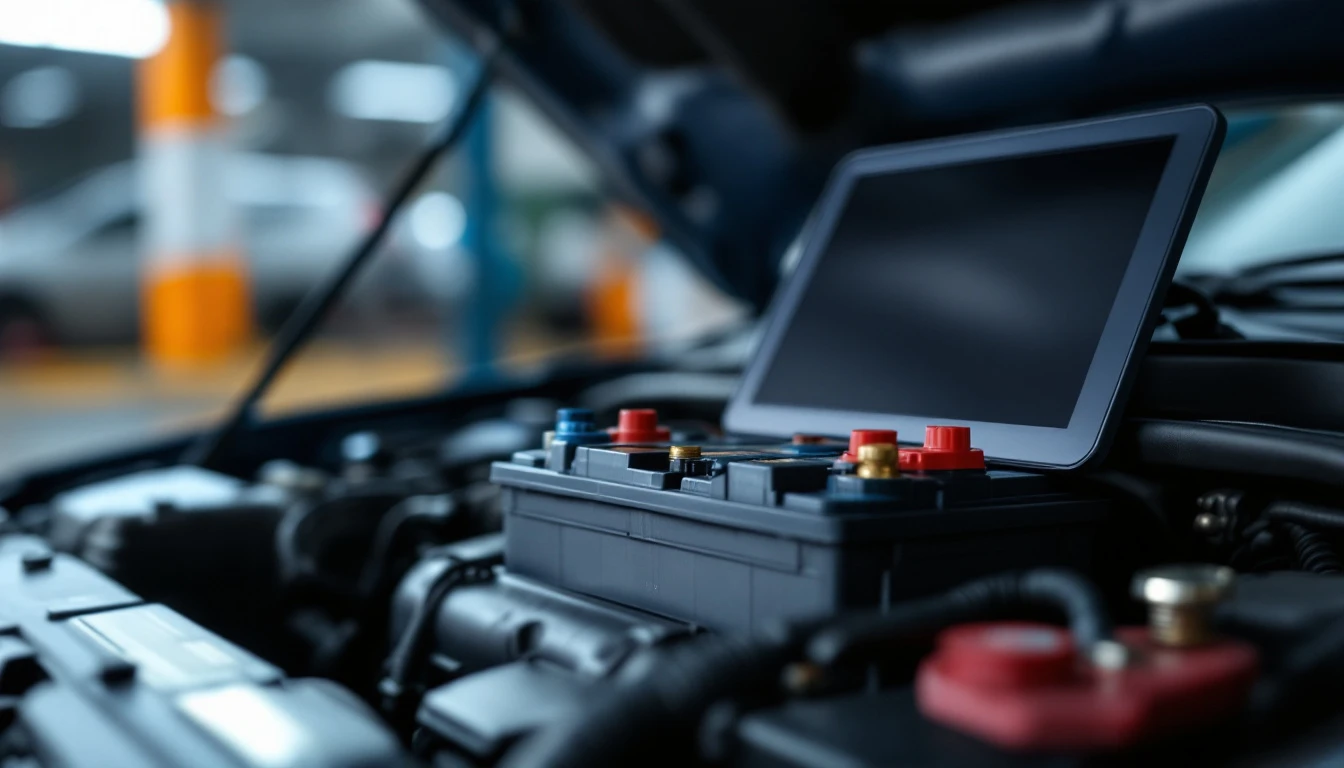
Check the terminals. Both of them. A clamp that looks seated can still be a quarter-turn loose, and a loose clamp behaves in a specific and misleading way: interior lights, radio and dash all work fine because they draw almost nothing, but the several hundred amps a starter demands cannot get through. So you turn the key and get a click, or a stutter, or nothing.
Check the negative ground strap. Especially on a jump-start recovery. The engine-to-body ground is the return path for the entire starter circuit and it is the connection people forget exists.
Check for corrosion under the clamp. White or blue-green powder between the clamp and the post is an insulator. It does not have to look dramatic to matter.
Check the terminal is on the right post. It happens, and reverse polarity even for a moment can take out modules. If the car went silent the instant the second clamp touched, stop and say so when you call.
Grip each clamp and try to rotate it by hand. If it moves at all, that is your fault. Tighten it and retry before spending money on anything.
Rung 2: the immobilizer lost sync with your key
This is the one that brings people to an automotive locksmith rather than a mechanic, and it is the most commonly misdiagnosed failure on this list.
Anti-theft immobilizers became effectively universal on US-market passenger vehicles through the late 1990s and 2000s under the federal theft-prevention framework administered by NHTSA. The system works as a challenge-and-response: a chip in your key answers a coded question from a receiver ring around the ignition or from an antenna in the cabin. Only a correct answer authorises the engine controller to deliver fuel and spark.
On some platforms, part of that exchange depends on state the vehicle holds in volatile memory — a rolling counter, a session value, a stored sync position. Cut power completely and that state can be lost. The key still knows who it is. The car no longer agrees.
How it presents:
- The engine cranks normally, fires, and dies within one to three seconds. Every time. Repeatably.
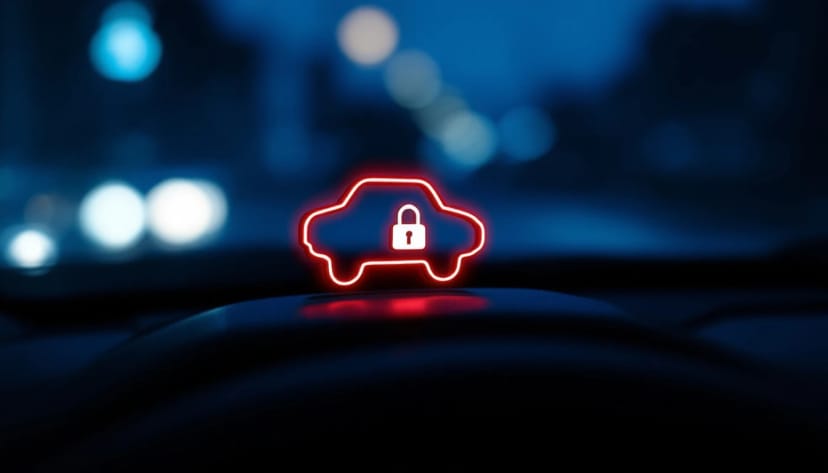
- A security light, a key-shaped icon or a padlock symbol flashes on the dash, or stays lit when it should go out.
- Remote lock and unlock still work fine — which fools people into thinking the key is healthy, when the remote and the immobilizer are entirely separate systems in the same plastic shell.
- On push-button vehicles, a "key not detected" or "no key detected" message despite the fob sitting in the cupholder.
That two-second start-then-die is close to a signature. It means the starter worked, the battery is fine, the ignition switch closed, and the fuel system delivered — and then something deliberately shut it down. Mechanical faults are not that tidy.
Our fuller writeup on the anti-theft light flashing and the car not starting covers the light patterns per system. If your vehicle uses a proximity fob rather than a bladed key, push-button start not working is the closer match.
Try this before calling. On many platforms there is a documented re-learn wait: insert the key and turn to run (or press start without a foot on the brake to reach accessory), leave it for ten to twelve minutes until the security light stops flashing and goes out, then turn off, wait a few seconds, and start normally. Some vehicles need this cycle repeated three times. It costs nothing but twenty minutes and it resolves a real share of post-battery desyncs. It will not help if the fault is a hardware failure, but it eliminates the cheapest possibility.
Rung 3: modules lost their learned values
A modern vehicle is a network of computers, and several of them keep adaptive data that is genuinely lost on a power interruption.
The engine controller loses its idle and fuel trim adaptations. The car may start but idle badly, hunt, or stall for the first few miles until it re-learns. That is normal and self-correcting.
The throttle body on drive-by-wire vehicles often needs a relearn of its closed position. Symptom: it starts, then dies the moment you take your foot off, or will not idle at all.
The body control module can come back up in a strange state — doors behaving oddly, windows losing auto-up, alarm arming when it should not. On some platforms the BCM is also the immobilizer authority, which is why this rung and rung 2 overlap.
Steering angle and stability sensors lose calibration, which shows as warning lights rather than a no-start.
The distinguishing question: does the engine run at all? If it runs but behaves badly, you are on this rung, and much of it resolves itself with a drive cycle. If it will not run, you are on rung 2 or rung 4.
Rung 4: an anti-theft lockout tripped
Distinct from a desync. A lockout is the vehicle deliberately refusing to accept further attempts because it thinks it is being stolen.
This happens when the immobilizer sees several consecutive failed authentications in a short window — which is exactly what a desync produces once you have tried to start six times in a row. The system then enters a timed penalty state. Some platforms lock out for ten minutes, some for thirty, some require a specific unlock sequence.
How to recognise it: the car worked, sort of, on the first attempt or two, and then stopped responding entirely. The security light changed behaviour partway through your attempts. Cranking may have stopped altogether.
What to do: stop trying. Every additional attempt can extend the timer. Leave the vehicle locked and untouched for thirty minutes, then make one clean attempt.
What not to do: disconnect the battery to "reset" it. This is the most common bad advice on the internet for this symptom, and on a car that just lost power it is exactly wrong. You repeat the event that caused the problem, and you clear the stored fault codes a technician needs to read. Scan first.
What this costs to diagnose and fix in Fort Worth
Everything below is mobile, at your location, as of August 2026.
| Finding | What is actually done | Typical cost | Time on-site |
|---|---|---|---|
| Loose or corroded terminal | Cleaned, torqued, load-tested | Callout only | 10 – 20 min |
| Immobilizer re-learn, key present | Diagnostic scan, security session, key re-synchronised | $150 – $250 | 45 – 90 min |
| Module re-learn plus immobilizer | Scan, BCM or receiver re-learn, key re-sync, verification | $250 – $400 | 90 – 150 min |
| Failed key or fob confirmed by scan | New key supplied, cut, programmed to the vehicle | $180 – $450 | 60 – 120 min |
| Additional key programmed same visit | Second key enrolled while the technician is on-site | $65 | +15 min |
| Diagnosis points away from security | Findings documented, referred to a mechanic | Callout only | 30 – 45 min |
That last row matters. Sometimes the honest answer is that this is not a locksmith problem — it is a starter, an alternator that killed the new battery, or a fuel pump. A credentialed operator should be willing to say so and hand you the scan data rather than selling a key you do not need. Guidance from the Federal Trade Commission on hiring a locksmith makes the same point from the consumer side: the warning sign is a firm parts quote produced before any diagnosis.
Why this is more common than it used to be
Two trends collided.
Vehicle electrical architectures got far more complex. A car built in 1995 had a handful of controllers. A car built in 2020 has dozens on multiple networks, many of which hold learned state. More stored state means more to lose when power drops.
At the same time, the anti-theft systems got much stronger. Research from the Insurance Institute for Highway Safety on vehicle theft documents how sharply immobilizer adoption cut theft rates for equipped models — and the flip side of a system rigorous enough to stop a thief is a system rigorous enough to stop you when its state is disturbed. That is not a defect. It is the security working, applied to the wrong person.
Battery replacement also became something people do themselves far more often, and the AAA guidance on batteries and roadside service is a useful reminder of what the professional procedure includes that a parking-lot swap does not: a memory-saver device across the power interruption, correct disconnect and reconnect order, and a post-install verification. The memory saver is the single item that prevents most of what this article is about, and it costs almost nothing.
As one credentialed automotive locksmith who reviews our technical standards put it: "Nine out of ten of these calls, the customer has already bought something they didn't need. A ten-dollar memory saver clipped to the OBD port before you pull the terminals would have prevented the whole visit."
When to call an automotive locksmith versus a mechanic
Call an automotive locksmith when: the engine cranks and dies in seconds; a security or key icon is flashing; the dash reports no key detected; remote functions work but the car will not start; or the fault appeared immediately after a battery swap or a jump.
Call a mechanic when: there is no crank at all and the terminals are confirmed tight; the new battery is flat again within a day, which points at the charging system; the engine cranks strongly and never fires with no security light involved; or the car runs but performs badly, which is adaptation rather than security.
Either can go first when: the symptoms are mixed. A locksmith with proper diagnostic tooling can scan and tell you which side of the line you are on, and that scan is worth having before anyone opens a parts catalogue.
Any operator touching your vehicle's security system will verify ownership first — registration or title plus matching photo ID. That is the baseline standard in the Associated Locksmiths of America code of ethics. Key origination access, where it is needed, is gated through the National Automotive Service Task Force Vehicle Security Professional registry, which is why credentialing is not a formality on this kind of work.
Related Fort Worth reading: transponder key versus key fob explains why the remote can work while the immobilizer does not, our module programming in Fort Worth page covers the re-learn side, and no key detected and immobilizer faults covers the proximity-fob version. If you have no spare and this turns into a key job, read lost car keys with no spare. Module-level examples worth a look: Infiniti QX56 and Q60 immobilizer module programming and Chrysler Pacifica RF hub module programming.
Frequently Asked Questions
Why won't my car start after I replaced the battery?
Three common causes, in order of likelihood. First, a loose or corroded terminal — the car has power for lights but cannot deliver crank current. Second, the immobilizer or body control module lost its volatile state during the power interruption and no longer recognises the key, which shows as a cranking engine that dies immediately or a flashing security light. Third, an anti-theft lockout timer tripped during the swap. The first is free to fix. The second and third need a diagnostic scan, not new parts.
Can a battery change really break the immobilizer?
It does not break it, but it can desynchronise it. Some platforms hold rolling-code or counter data in volatile memory that a full power loss clears, and the key and the receiver then disagree. It is a re-synchronisation job, not a replacement job. On many vehicles it is resolved with a diagnostic re-learn in under an hour, and on some it clears on its own after a specific key-on wait cycle. Anyone quoting you a new immobilizer module for this without scanning first is guessing.
What does it mean if the engine cranks but dies after two seconds?
That is close to a signature for immobilizer refusal. The starter, the battery and the ignition switch all just proved they work — the engine turned and caught. Two seconds later the immobilizer declined to authorise fuel or spark, so it shut down. Mechanical faults do not behave that cleanly or that repeatably. Look at the security or key-shaped warning light on the dash while it happens; if it flashes or stays lit, that confirms it.
Does the key fob need reprogramming after a battery change?
Usually not. The key itself keeps its identity in non-volatile memory and does not forget it because the car lost power. What can go wrong is on the vehicle side — the receiver or the body control module losing sync. So the correct fix is a re-learn on the vehicle, not a new key. If an operator's first suggestion after a battery swap is to sell you a new fob, get a second opinion.
Can jump-starting a car cause electrical damage?
It can if it is done wrong. Reversed polarity, even briefly, can take out modules. A large voltage spike when the donor vehicle is disconnected under load can do the same. And on some modern vehicles the manufacturer specifies a designated remote jump point rather than the battery terminals, precisely to protect the electronics. If the car behaved differently immediately after a jump, mention that when you call — it changes the diagnosis.
How much does this cost to fix in Fort Worth?
As of August 2026, a diagnostic scan with an immobilizer or module re-learn runs $150 to $400 mobile, at your location, depending on the platform and how much of the security session the vehicle enforces. If the diagnosis turns out to be a key that genuinely needs replacing, that is a separate range of $180 to $450 for a lost or failed smart key. A loose terminal costs you nothing but the callout, and a good operator will tell you that is what it was.
Should I disconnect the battery to reset the anti-theft system?
Generally no, and on a vehicle that just lost power that advice is actively counterproductive. Pulling the battery again repeats the exact event that caused the problem and can deepen the desync or clear the stored fault codes a technician needs to read. If a forum tells you to disconnect for fifteen minutes, understand that you are also erasing the diagnostic evidence. Scan first, then decide.
Get it scanned in Fort Worth
Fort Worth Car Keys is a mobile-only automotive locksmith covering Fort Worth and the surrounding cities, seven days a week from 8 AM to 8 PM. We bring diagnostic tooling to the vehicle, so a post-battery no-start is diagnosed where the car is sitting. Automotive locksmith licensing in Texas is administered by the Texas Department of Public Safety Private Security Program.
Call (817) 842-1256 or email contact@fortworthcarkeys.com. Tell us the year, make and model, exactly what changed after the battery work, and whether a security light is showing.
References
- NHTSA — Federal Motor Vehicle Safety Standards
- IIHS — Vehicle theft research
- AAA — Auto repair and battery service guidance
- Federal Trade Commission — Hiring a Locksmith
- Associated Locksmiths of America
- National Automotive Service Task Force — Vehicle Security Professional registry
- SAE International — Automotive electrical and electronic systems standards