The short answer
As of August 2026, a vehicle that started before a repair and will not start afterwards has one of four causes: a battery that discharged or was disconnected badly, an immobiliser antenna or coil disturbed during trim removal, a body control or security module that lost configuration, or a fob that dropped its pairing during a long power loss. Check them in that order. The fix is usually reconnection or programming rather than a new key.
The timing is the diagnosis
When a car develops a fault, the honest answer is usually "it could be a lot of things." This is the exception. A vehicle that ran fine on the way into a shop and refuses on the way out has been changed by the visit, and that narrows the field enormously before anyone opens a bonnet.
What matters is not what the shop was hired to do. It is what had to be moved in order to do it. Glass replacement means A-pillar trim and mirror assembly. Collision work means bumper covers, headlight assemblies, wiring looms and frequently a disconnected battery for days. Stereo and camera installs mean dash panels and a tap into vehicle power. Every one of those disturbs something adjacent to the security system, and the security system is what decides whether the engine may start.
That is not a criticism of body shops. The good ones in Fort Worth are careful and will chase this down with you. It is simply how modern vehicles are put together: the National Highway Traffic Safety Administration has documented how comprehensively electronic architecture now spans a vehicle, and the Society of Automotive Engineers maintains the communications standards those modules talk over. A car is a network, and the network runs through the areas a body shop has to open.
The four causes, in the order we check them
| Order | Cause | The tell | Typical fix |
|---|---|---|---|
| 1 | Battery discharged or reconnected badly | Slow crank, dim dash, multiple unrelated warning lights, clock reset | Charge, test, sometimes a module wake-up |
| 2 | Immobiliser antenna or coil disturbed | Key symbol on dash, engine cranks but will not fire | Reseat or reconnect; rarely a part |
| 3 | Module lost configuration | Several systems misbehaving at once, not just starting | Diagnosis, then configuration work |
| 4 | Fob lost its pairing | Remote buttons dead too, or intermittent, spare fob behaves the same | Programming, $120–$200 or $220–$500 by key type |
We work that order deliberately, cheapest and most likely first. It is remarkable how often a job that arrived described as "needs a new key after the body shop" ends at line one.
1. Start with the battery, always
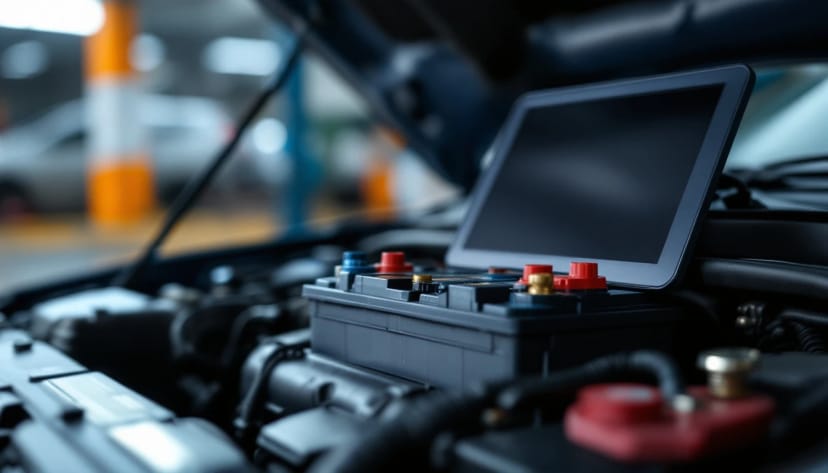
A vehicle sitting on a lift for a week with a door ajar and an interior light on will flatten a battery that was already marginal. That is the single most common cause in this whole category and it is also the cheapest.
What makes it confusing is that a low battery does not present as a dead car. It presents as a strange car: the dash lights up but the engine turns slowly, several unrelated warnings appear together, the clock and radio presets have reset, and the central locking behaves oddly. Modern modules do genuinely unpredictable things at low voltage, and chasing any one of those symptoms individually is wasted effort until the voltage is right.
So: proper charge, proper load test, then reassess. Half the time there is nothing else to find. We covered the related pattern in the car will not start after battery replacement guide, which is the same physics arriving from a different direction.
2. The antenna ring, and why glass work triggers it
If the battery is healthy and you have a key or security symbol on the dash, the next suspect is the component that physically reads your key.
On a bladed-key vehicle this is a coil, a ring of wire around the ignition barrel, which reads the transponder in your key head from an inch away. On a push-to-start vehicle it is one or more antennas distributed around the cabin. Either way, it is a small, low-power aerial connected by a thin harness — and thin harnesses live under trim.
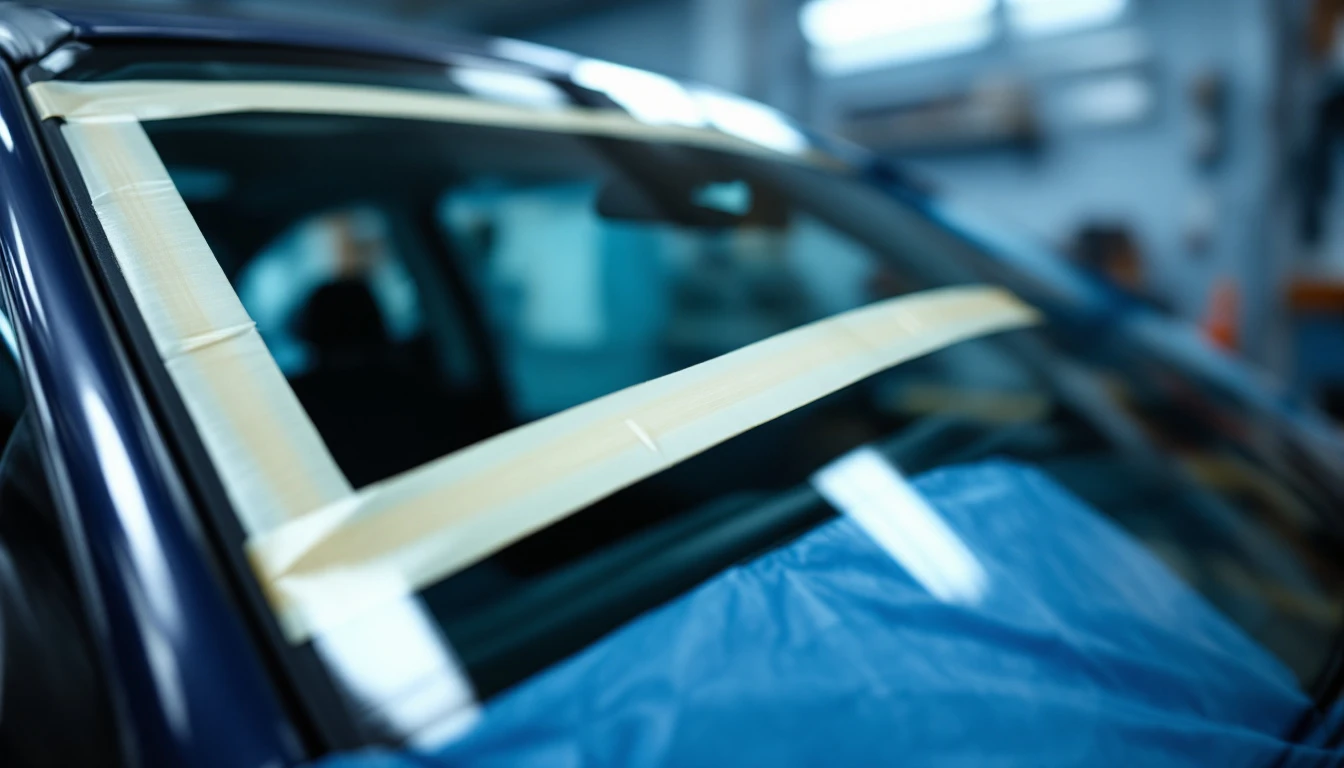
Windshield replacement is a recurring offender because of geography rather than negligence. Fitting glass means removing the interior mirror assembly, releasing A-pillar trim, and lifting the leading edge of the headliner. That region on many vehicles carries antenna wiring, sensor harnesses and connectors that are easy to leave unseated when everything goes back together in a hurry. The glass is fine. The connector behind the pillar is not.
The signature is specific and useful: the engine cranks normally but will not fire, with a key or immobiliser symbol showing. Cranking means the battery and starter are fine. Not firing with a security symbol means fuel and ignition are being withheld deliberately, because the vehicle cannot confirm an authorised key is present.
3. Modules that lost their configuration
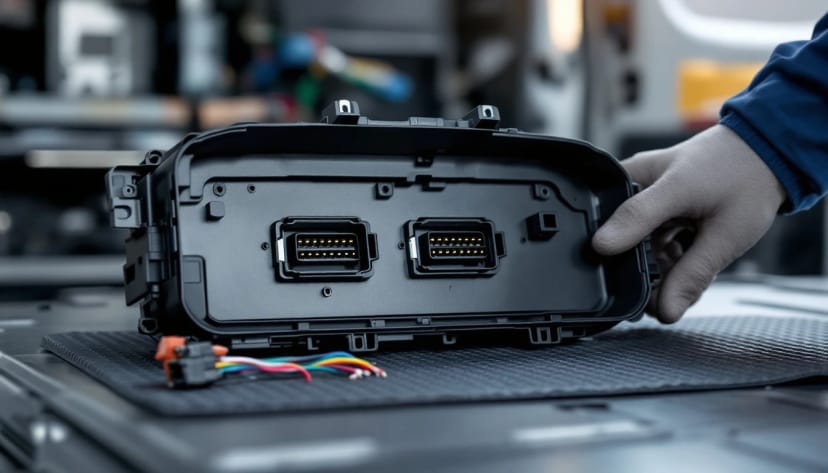
Body control modules and immobiliser modules hold configuration data: which keys are authorised, what options the vehicle has, how the network should behave. A prolonged flat battery, an aggressive jump start, water intrusion during a repair, or a module that was replaced with a used unit can all leave that data wrong or missing.
The tell here is breadth. It is not only that the car will not start — it is that the windows have forgotten their one-touch, or the lights behave oddly, or something on the dash is reporting a fault in a system nobody touched. When multiple unrelated systems misbehave together, you are looking at a module, not a key.
This is real diagnostic work and it is what our module programming page covers. Worked examples on specific platforms are in the Chrysler Pacifica RF hub guide and the Mercedes C-Class and GLC guide, which is also a useful read on where independent capability ends and a dealer genuinely is required.
4. The fob that quietly forgot
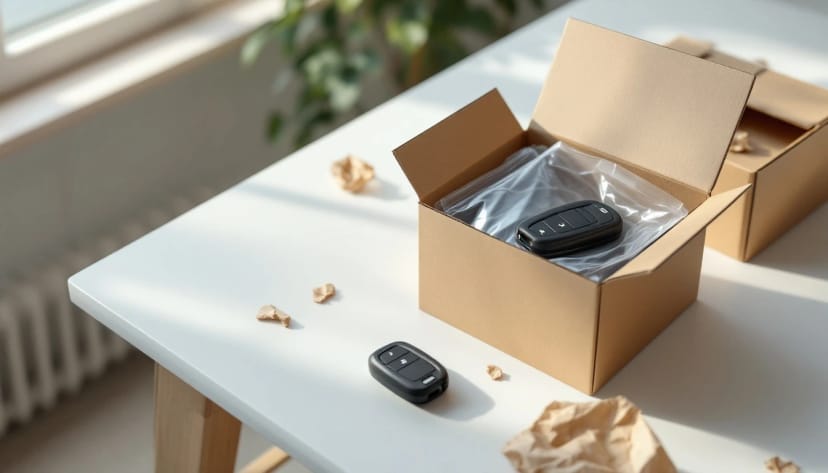
Last and least common: the key itself has lost its pairing. Long power loss can do it on some platforms; so can a module replacement that arrived without your key list on it.
The tell is that the remote functions are also affected — the buttons do nothing or work intermittently — and a spare fob behaves the same way. If one fob works and the other does not, that is a fob problem. If neither works, that is a vehicle problem.
Where this is genuinely the cause, it is straightforward programming, priced in the ordinary bands: $120 to $200 for an older transponder key, $220 to $500 for a proximity system.
The phrase I hear most is "they must have broken something expensive." Almost never. In four years of these calls the answer has been a connector, a battery, or a module that needed configuring, and I can count on one hand the times the customer actually needed a key. Check whether the car can see the key you already have before anyone sells you another one.
— Automotive locksmith, 12 years mobile diagnostics in Tarrant County, credentials verified, name withheld by request
What to tell the shop, and how
Most Fort Worth shops handle this well when it is raised early and factually. The conversations that go badly are the ones where the customer arrives with a theory instead of an observation.
Useful things to say:
- When it worked and when it stopped. "It started when I dropped it off on Tuesday and would not start when I collected it Friday" is a complete and unarguable statement.
- Exactly what the car does now. Cranks and will not fire, or does not crank at all, or nothing on the dash. These are three very different faults and shops will triage them differently.
- Which warning lights are on, particularly a key or security symbol.
- Whether the remote buttons still work. This one sentence separates a vehicle-side problem from a key-side one and almost nobody thinks to mention it.
Things worth avoiding: asserting what was damaged before anyone has looked, and authorising a key replacement to make the problem go away. That second one is how people end up paying for a key while the actual fault is still there.
If the shop cannot identify it, an independent diagnosis in writing is worth the visit on its own. The Federal Trade Commission publishes guidance on vehicle repair disputes that boils down to the same principle: document the condition and the cause, and most disagreements resolve themselves.
Why this became common
None of this happened twenty years ago because there was nothing to disturb. A car either had a key that fitted the ignition or it did not.
Then immobilisers arrived and worked extremely well. The Insurance Institute for Highway Safety has repeatedly measured the drop in theft rates for equipped vehicles, and immobiliser fitment is one of the genuine success stories in vehicle security. The cost of that success is complexity: to start the engine, a vehicle must now confirm a cryptographic credential, and that confirmation depends on an antenna, a harness, a module and a stored key list, all of which sit inside the areas a repair opens up.
The Bureau of Labor Statistics has tracked the corresponding rise in vehicle repair costs generally, and the electronics share of that number keeps growing. The Associated Locksmiths of America and the National Automotive Service Task Force both exist partly to keep this class of work accessible to qualified independents rather than dealer-only, which is what makes a mobile fix possible at all.
Texas automotive locksmiths work under the Department of Public Safety Private Security Program, and any work that touches a vehicle security credential requires proof of ownership — title or registration and matching photo ID. If your car is currently sitting at a shop, bring that documentation with you; it saves a return trip.
What it is not
Two reassurances, because people arrive at this genuinely worried.
It is almost certainly not structural or engine damage. A car that cranks strongly and refuses to fire, with a security light showing, is a vehicle actively choosing not to start. That is a functioning anti-theft system, not a broken engine.
It is almost certainly not a wiped or destroyed computer. Modules do lose configuration and they are almost always recoverable. The genuinely dealer-only scenarios exist but are narrow and specific, and a competent independent will identify one from the VIN and tell you rather than discovering it slowly at your expense.
For the general price picture across every kind of key and security work, the how much a locksmith costs in Fort Worth breakdown is the reference. If the symptom turns out to be a push-button system specifically, the push button start diagnostic goes deeper on that path, and if it is an ignition rather than a security fault, the ignition repair page is the right starting point.
Frequently Asked Questions
Why will my car not start after the body shop?
Because something in the security or power path was disturbed. The four candidates, in the order we check them, are a discharged or disconnected battery that left the system in a confused state, an immobiliser antenna or coil that was moved during trim removal, a body control or security module that lost its configuration, and a fob that has simply dropped its pairing after a long power loss. All four are recoverable and none of them means your car is broken in an expensive structural sense.
Can a windshield replacement stop a car from starting?
Indirectly, yes, and it happens more than glass shops like to admit. Windshield work involves removing the interior mirror assembly, A-pillar trim and often the headliner edge, and on many vehicles that region carries antenna wiring, a rain-light-humidity sensor harness and sometimes a component of the keyless system. A connector left unseated or a harness pinched under a trim clip produces a no-start that has nothing to do with the glass itself and everything to do with what was moved to fit it.
Is this the shop responsibility or mine?
If the vehicle started when it went in and does not start when it comes out, the reasonable position is that the shop should investigate first, and most reputable shops do exactly that without argument. Where it gets less clear is a battery that was already weak and finally died during a week on a lift. Our advice is practical rather than legal: get the actual cause identified by someone independent, in writing, before the conversation becomes adversarial, because a documented cause usually ends the disagreement in one sentence.
What does it cost to fix in Fort Worth?
As of August 2026 it depends entirely on which of the four causes you have. A fob that lost its pairing is programming work in the $220 to $500 band for a proximity system or $120 to $200 for an older transponder key. An immobiliser antenna or coil that was disturbed is usually a reconnection rather than a part. Module-level configuration work is quoted after diagnosis. The battery, if that is all it is, costs you nothing from us at all beyond the visit.
The dash shows a key or security warning light. What does that mean?
It means the immobiliser has not authorised a start, which narrows the problem usefully but does not identify it. A steady or flashing key symbol tells you the vehicle is not seeing a credential it trusts. That happens when the fob is not being read, when the antenna that reads it is disconnected, or when the module holding the key list has lost its data. All three look identical on the dashboard and are separated in about fifteen minutes with the right equipment.
Could disconnecting the battery alone cause this?
On some vehicles yes, and on most it should not. A clean disconnect and reconnect is a routine event that modern cars tolerate. What causes trouble is a slow discharge to a very low voltage while modules are still awake, or a reconnection that produces a voltage spike. Either can leave a module in a state it will not exit on its own. This is why a car that sat on a lift for a fortnight is more likely to do this than one that was in and out in a day.
Will I need a new key?
Often not, which is the useful part of this article. The most common outcome we find is that the existing key is perfectly good and something on the vehicle side stopped listening to it. Replacing a key that was never faulty is the most common unnecessary spend in this whole category. We check whether the vehicle can see the key before we discuss supplying another one.
Should I go back to the shop or call a locksmith first?
Tell the shop first, because if they caused it they should fix it and most will. Call us when the shop cannot identify it, when they want to send the car to a dealer for something that is genuinely a mobile job, or when you simply want an independent read on what is wrong before authorising anything. We are frequently the second opinion that saves a tow, and we will tell you honestly if the answer is that the shop should be handling it under their own work.
References
- National Highway Traffic Safety Administration — vehicle electronic architecture and anti-theft standards.
- Insurance Institute for Highway Safety — immobiliser effectiveness and theft-rate research.
- Society of Automotive Engineers — vehicle network and diagnostic communication standards.
- Federal Trade Commission — consumer guidance on vehicle repair disputes.
- Bureau of Labor Statistics — vehicle maintenance and repair cost trends.
- Associated Locksmiths of America — professional standards and consumer guidance.
- National Automotive Service Task Force — independent access to vehicle security information.
Get an independent read before you authorise anything
Tell us three things: whether it cranks, whether a key or security light is showing, and whether the remote buttons still work. Those three answers usually place the fault before anyone drives anywhere.
Call or text 817-842-1256, Mon–Sun 8AM–8PM. We come to the vehicle wherever it currently is, including at the shop, across Fort Worth and Tarrant County. You can also reach us through the contact page.
Written to the Fort Worth Car Keys field-service review standard. Diagnosis precedes any key or module work, and we will tell you when the correct answer is that your repairer should be handling it under their own workmanship.