TL;DR — Infiniti immobilizer work in one screen
The QX56 ran from roughly 2004, the QX80 took over the nameplate for 2014, the G37 covered roughly 2008 to 2015 and the Q60 picked it up from there. Different bodies, one shared security philosophy inherited from the Nissan side of the house.
- The immobilizer control function, IMMU, lives with the body control module rather than in a standalone box. That single fact explains most confusing Infiniti no-start calls.
- A key that opens the doors but will not authorize a start is not automatically a key problem. The remote and the immobilizer handshake are separate functions.
- The three real suspects are a dead or weak fob, a failed antenna amp at the ignition or start button, and an internal module fault. They look identical from the driver seat and completely different on a scan tool.
- A replacement body control module arrives configured to nothing and has to be written into a relationship with the specific vehicle before any key will ever work.
- Registration is gated behind a vehicle-specific security value retrieved through the credentialed manufacturer channel. No legitimate procedure skips it.
As of August 2026, Fort Worth pricing runs $220–$500 for an Intelligent Key proximity fob, $180–$450 for a lost fob with no working spare, roughly $65 to add a second fob during the same visit, $150–$400 for ignition-side work, and $75–$200 for a straight lockout with no key work. Infiniti is a Japanese make, so the higher European band does not apply here. Call or text 817-842-1256.
Service detail lives on module programming and Nissan and Infiniti BCM issues.
Quick answer
Scan first, buy second. On an Infiniti that will not authorize a start, a diagnostic read of the body control module separates a genuine key failure from an antenna amp failure from a module fault in minutes, and the three have wildly different costs. Owners who buy a fob first are gambling several hundred dollars on the least likely of the three explanations, and we get called out to clean that up more often than any other Infiniti scenario.
The Infiniti security architecture, honestly explained
IMMU inside the body control module
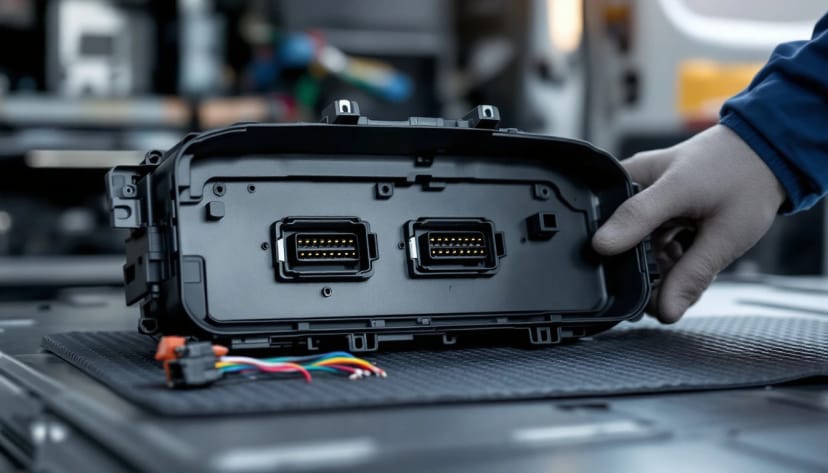
Owners searching for an Infiniti immobilizer module usually expect to find a discrete part. The architecture does not work that way. The immobilizer control function, written IMMU in the service literature, is integrated with the body control module, which also handles entry functions, interior lighting logic and a great deal of body electronics.
Three consequences fall out of that integration. First, key credentials do not live in the ignition switch or the steering column, so mechanical replacement of those parts does nothing for an authorization failure. Second, when the module is replaced, the incoming unit has to be configured to the specific vehicle before any key will authorize a start. Third, a module fault presents in the cabin exactly like a dead key, which is why the diagnostic step is not optional.
This is the same architecture family we walk through for the smaller cars in the guide to Q50 and QX60 BCM immobilizer module programming, and the diagnostic logic carries directly across the range.
The antenna amp, the part nobody thinks about
Between your fob and the module sits an antenna amplifier, positioned near the ignition or the push-button start depending on the vehicle. Its job is to energize the fob's transponder circuit and carry the resulting response back into the network.
When it fails, the vehicle genuinely cannot see a perfectly healthy key. The classic symptom pattern is a fob that works the doors flawlessly, a start attempt that produces a security indicator complaint, and a vehicle that will occasionally start if the fob is held directly against the start button or slotted into the backup position. That last detail is the tell, because it means the fob is fine and the antenna path is marginal.
The security indicator and what it actually tells you
The small key-shaped or car-shaped security indicator on the cluster is a status light, not a fault light, and misreading it costs people money.
A slow, steady blink with the vehicle switched off is normal — the system is armed and saying so. That is what you are supposed to see in a parked QX80 at night. The pattern that matters is the indicator illuminating steadily or blinking rapidly during a start attempt with the key present, because that is the authorization handshake failing in real time. When someone tells us the light behaves strangely, the first question is always whether the vehicle was on or off, because those are two entirely different messages.
Our no key detected and immobilizer diagnostics page covers the full symptom set, and the general difference between a chip-carrying key and a proximity fob is worth understanding before you shop hardware at all — the plain-English breakdown of transponder key vs key fob explains why the two fail in different ways.
Model by model, what you are actually working on
QX56, roughly 2004 to 2013
The original full-size Infiniti SUV, sharing a great deal of its architecture with the Armada of the same period. Early trucks carried bladed transponder keys before Intelligent Key rolled across the line, and mid-cycle trucks can present with a fob for entry and a bladed key for the ignition. Confirm hardware by VIN rather than by model year, because the transition did not land cleanly on a January first.
QX80, 2014 onward
The QX80 nameplate carried the full-size SUV forward on Intelligent Key proximity hardware throughout, with hardware revisions across the run. Fob part numbers overlap across trims and years, which is the same trap Nissan owners fall into: a fob that looks correct in a marketplace photograph can be electronically wrong for your specific truck. The FCC ID printed on the back of an existing fob is the reliable identifier, and on an all-keys-lost job where there is no fob to read, the correct hardware is determined by VIN before anything is ordered.
G37, roughly 2008 to 2015
The G37 coupe, sedan and convertible sit squarely in the Intelligent Key era, and they are among the most common Infiniti key calls we take in Tarrant County simply because there are so many of them still on the road. These cars are also old enough now that antenna amp and module faults are genuinely in play, rather than being exotic diagnoses.
Q60, 2017 onward
The Q60 continued the coupe line with updated proximity hardware and updated security handling. Spare-key work remains a driveway job. On the newest model years, module-level work is where tooling coverage across the independent platforms genuinely varies, and an honest operator confirms feasibility against your VIN before dispatch. That is the same discipline that applies to the newest German platforms, where the encryption generation decides the job — the guide to Mercedes C-Class and GLC FBS4 key replacement shows what that looks like when a manufacturer moves the goalposts mid-generation.
Symptom-to-cause matrix
One lookup covering the whole range. Match your symptom, read across, then confirm with a scan before spending anything.
| Symptom | Most likely cause | What a scan shows | Fixed by a new key | Fort Worth band |
|---|---|---|---|---|
| Doors unlock, engine will not authorize | Weak fob battery | Low or intermittent fob response | Sometimes | Battery, then re-test |
| Starts only when fob is held to the start button | Antenna amp failure | Vehicle sees fob only at close range | No | Diagnosis-led, quoted on site |
| Security indicator steady during start attempt | Authorization failure, source unknown | Immobilizer fault codes present | Depends on code | Diagnosis-led, quoted on site |
| No fob response at all, no remote functions | Dead or damaged fob | No fob seen anywhere | Yes | $220–$500 |
| All fobs lost or stolen | All keys lost | Normal system, no credential | Yes, with ownership proof | $180–$450 |
| Nothing electrical behaves normally | Body control module fault | Multiple unrelated module codes | No | Module work, quoted after diagnosis |
The pattern worth internalizing: only two rows in that table are actually solved by buying a key.
When the module itself is the problem
A body control module can fail internally, and when it does the vehicle behaves strangely in ways that go beyond the key. Multiple unrelated fault codes across systems, entry functions behaving inconsistently, and an authorization failure that persists with known-good keys are the pattern.
Two things owners should know before anyone quotes them a module.
A replacement module is not plug and play. It arrives configured to nothing in particular. The vehicle identity and security data have to be written into it through the credentialed manufacturer channel before any key will authorize a start. A used module bought online and bolted in will not start the vehicle, and the seller describing it as plug and play is describing a part rather than a repair.
Module work is quoted after diagnosis, not before. We do not publish a module price band because the honest answer depends on what the scan finds, whether the module can be configured in the field, and whether the specific configuration is field-serviceable at all. Anyone quoting a firm module price over the phone without seeing a scan is guessing, and the guess is not in your favor.
What the data says about all of this
Four numbers are worth holding in your head while you shop this repair.
The National Highway Traffic Safety Administration has reported roughly a million vehicles stolen nationally in a recent year, the highest total in more than a decade, and identifies electronic immobilizer integrity as a primary defense — which is precisely why manufacturers gate this data behind credentials rather than publishing it. The Insurance Institute for Highway Safety publishes theft-loss research showing large luxury SUVs posting above-average whole-vehicle theft claim rates, the segment the QX56 and QX80 occupy. The American Automobile Association puts average annual new-vehicle ownership cost above twelve thousand dollars in its Your Driving Costs research, which is the number to weigh a diagnostic fee against before guessing at parts. And the Bureau of Labor Statistics reports the locksmith and safe-repairer occupation as a small trade of roughly fifteen thousand workers nationally with a median wage in the high forties, which is a useful sanity check when an advertised price could not plausibly cover a credentialed technician's time plus a security data transaction.
For the dealer comparison, the J.D. Power Customer Service Index has tracked the persistent cost gap between franchise-dealer service and independent service for years. On Infiniti module and key work that gap is real, and it widens further on a non-starting vehicle because the dealer path also requires getting the vehicle to the dealer.
Field-operator perspective
The Infiniti calls that go badly are the ones where somebody already bought a fob. They buy the fob, it does not fix it, and now they are angry at the fob instead of at the diagnosis. On a QX80 with an antenna amp going down, that fob was never going to help. Fifteen minutes with a scan tool up front would have told them exactly which of the three things it was. Scan first. Always scan first.
— ALOA-credentialed automotive locksmith working Tarrant County, anonymized
Spare key versus all keys lost
These are two different jobs with two different price bands, and the difference is entirely about timing.
With a working fob present, the vehicle is drivable, the system reads cleanly through the existing credential, and the visit is short. With no key at all, the job adds ownership verification, security value retrieval through the credentialed channel, and a longer on-site procedure on a vehicle that cannot be repositioned.
Every all-keys-lost job requires proof of ownership. A government-issued photo ID plus a vehicle title or current registration in a matching name, verified before any credential is generated and recorded on the invoice. That requirement comes from the credentialed security data channel itself rather than from us being awkward. Per the Federal Trade Commission's guidance on hiring a locksmith, an operator who does not ask for that documentation is an operator to be wary of, not one to be relieved by.
Honest boundaries
We will tell you when a job is not ours. If a scan points at a failed body control module in a configuration that is not field-serviceable, we say so rather than selling a key that will not help. If the diagnosis lands on an antenna amp, that is a different repair with a different cost, and the fob you were about to buy was never the answer.
We are mobile only, which is a feature on a vehicle that will not start and worth knowing in advance either way. There is no shop to drop the vehicle at, and there is also no shop rate baked into the quote.
How the on-site visit works in Fort Worth
You call or text 817-842-1256 with the VIN, the model year, and a clear description of what the security indicator is doing and when. Those details convert a guess into a real quote.
On site, the sequence is ownership verification where required, a diagnostic scan before anything is cut or ordered, a plain-language explanation of which of the three causes the scan actually points at, then the work itself — fob preparation, security value retrieval through the credentialed channel, registration, and a full functional test of every key against every function. You get a written invoice. We cover Fort Worth and Tarrant County seven days a week from 8AM to 8PM.
References
- NASTF Vehicle Security Professional (VSP) Registry — Credentialed access to manufacturer immobilizer and security code data.
- NHTSA — Vehicle Theft Prevention — Federal data and guidance on vehicle theft and anti-theft equipment.
- IIHS — Vehicle Theft — Theft claim rate research by vehicle segment.
- FTC Consumer Advice — Hiring a Locksmith — Verifying a locksmith and getting a total price before authorizing service.
- Associated Locksmiths of America (ALOA) — Certification ladder including the Master Automotive Locksmith credential.
- Bureau of Labor Statistics — Locksmiths and Safe Repairers — Occupational employment and wage data for the trade.
- AAA — Your Driving Costs — Annual vehicle ownership cost research.
- J.D. Power — Customer Service Index — Dealership service cost and satisfaction research.
Frequently Asked Questions
What is the IMMU on an Infiniti and where does it live?
IMMU is the immobilizer control function, and on these vehicles it is not a standalone box you can point at on a parts diagram. It lives inside or alongside the body control module, which means key authorization, entry functions and a good deal of body electronics share one physical home. That architecture is why a body control module fault can present as a dead key, and why replacing an ignition switch or a fob does nothing at all for a no-start caused by an authorization failure.
My Infiniti security light blinks when the car is parked. Is that a fault?
No. A slow, steady blink from the security indicator with the vehicle switched off is the system telling you it is armed, and that is normal behavior. What is not normal is the indicator staying illuminated or blinking rapidly while you are trying to start the vehicle with the key present. That pattern means the authorization handshake is failing, and it is the point at which a scan is worth more than a new key.
How do I tell a failed antenna amp from a failed BCM from a dead key?
You do not, from the driver seat, and that is the honest answer. All three present as the vehicle refusing to authorize a start with a fob that appears fine. The separation comes from a diagnostic scan that reads the module fault codes and watches whether the vehicle sees the key at all. A dead key produces one pattern, an antenna amp that cannot energize the fob produces another, and an internal module fault produces a third. That scan is the first thing that should happen and it routinely saves people the cost of a key they never needed.
Does a replacement Infiniti body control module work out of the box?
No. A replacement module arrives configured to nothing in particular. It has to be brought into a working relationship with the specific vehicle before any key will authorize a start, which means the vehicle identity and the security data have to be written into it through the credentialed manufacturer channel. Anyone selling you a used module with the promise that it is plug and play is describing a part, not a repair.
Do Infiniti key jobs need a PIN like Nissan key jobs do?
Yes, and for the same reason, because Infiniti and Nissan share the underlying security architecture. Key registration is gated behind a vehicle-specific security value retrieved through the credentialed manufacturer security data channel using registry credentials. There is no legitimate way around that gate. It is also the single fastest way to judge an operator on the phone, because a shop that cannot describe how it obtains the value is a shop that is going to fail in your driveway.
What does an Infiniti key or fob cost in Fort Worth?
As of August 2026, an Intelligent Key proximity fob for a QX56, QX80, Q60 or G37 sits in the 220 to 500 dollar band depending on generation and hardware. A lost fob with no working spare runs 180 to 450 dollars because of the ownership verification and security data work involved. Adding a second fob during the same visit is roughly 65 dollars as an add-on. Infiniti is a Japanese make, so the higher European vehicle band does not apply to it.
Is this a dealer-only job or can a mobile locksmith do it?
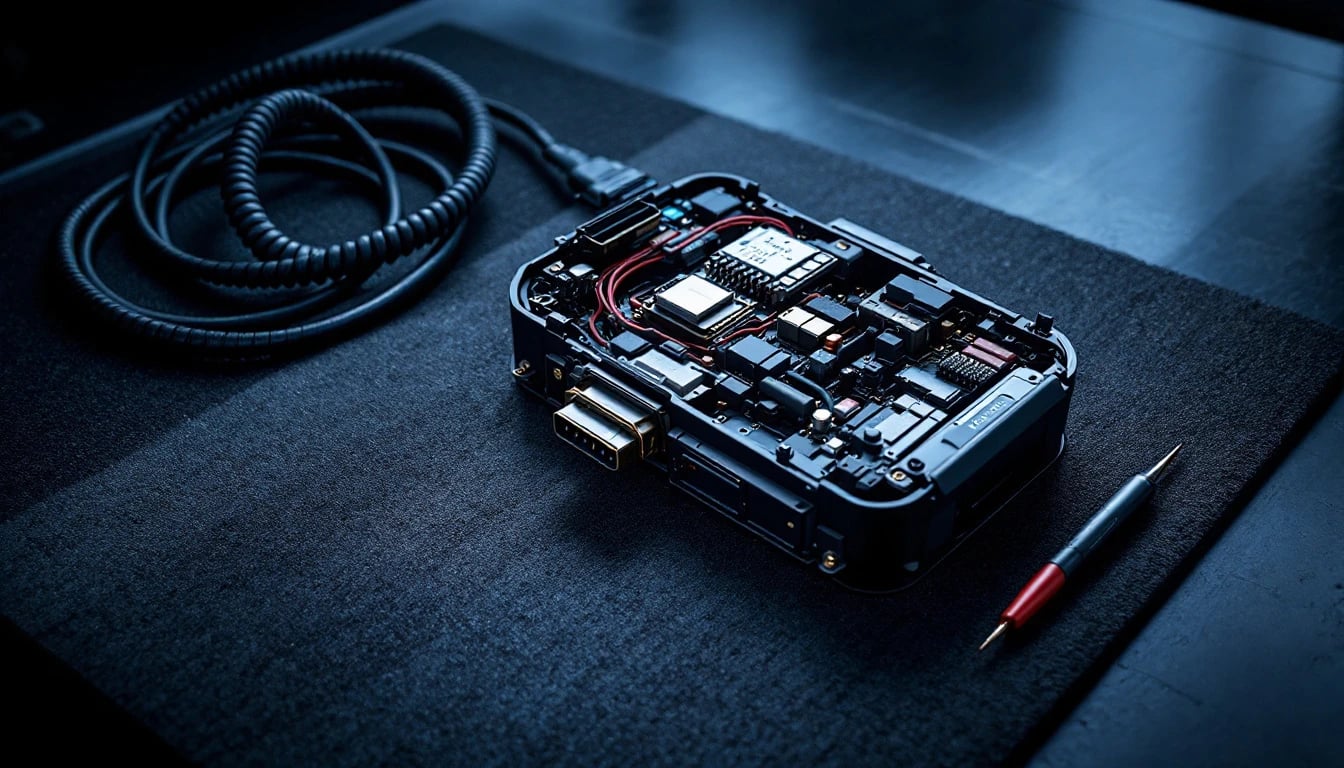
Key and fob work across the QX56, QX80, Q60 and G37 range is routinely a mobile driveway job, and a vehicle that will not start does not need towing anywhere first. Module-level work is decided case by case: some configurations are fully field-serviceable through the OBD-II port and some genuinely are not. An honest operator confirms against the VIN before dispatch rather than collecting a service call fee to find out in your driveway.
Getting it done
Fort Worth Car Keys is a mobile-only operation covering Fort Worth and Tarrant County, seven days a week from 8AM to 8PM. Call or text 817-842-1256, email contact@fortworthcarkeys.com, or use the contact page. Have the VIN ready and be able to describe what the security indicator does and when — with an Infiniti, that one detail often decides whether this is a key job or a module job.
More: module programming, Nissan and Infiniti BCM issues, the Infiniti brand page, no key detected and immobilizer, and smart key replacement.
Written to the Fort Worth Car Keys field-service review standard by an ALOA Master Automotive Locksmith (MAL). Texas locksmith companies and individuals are licensed through the Texas DPS Private Security Bureau. Module and hardware details are described in general terms and hedged deliberately — confirm your exact configuration by VIN before ordering anything.