The short answer for Pacifica owners
If your 2017 to 2026 Chrysler Pacifica flashes Key Fob Not Detected, cranks but will not start, ignores the fob at the sliding doors, or has quietly stopped responding to remote start, the RF Hub is one of five realistic causes and it is rarely the first one you should pay to replace. As of August 2026, the correct sequence in Fort Worth is scan first, exclude the cheap failures, and only then talk about module work.
Straight pricing before anything else, because that is what most callers want: a spare Pacifica proximity fob added while a working fob is present runs $260-$420 on our smart-key band. All-keys-lost on a Pacifica, where the secure PIN has to be pulled and every previous fob erased, runs $290-$450. An extra fob enrolled during the same visit is about $65. RF Hub hardware itself is quoted separately by VIN once the diagnosis actually points at the module, because module part cost is not a locksmith labor item and pretending otherwise would be dishonest.
Fort Worth Car Keys is mobile only. The van does not move. We come to it, in Fort Worth and across Tarrant County, seven days a week from 8AM to 8PM.
What the RF Hub actually is in the Stellantis architecture
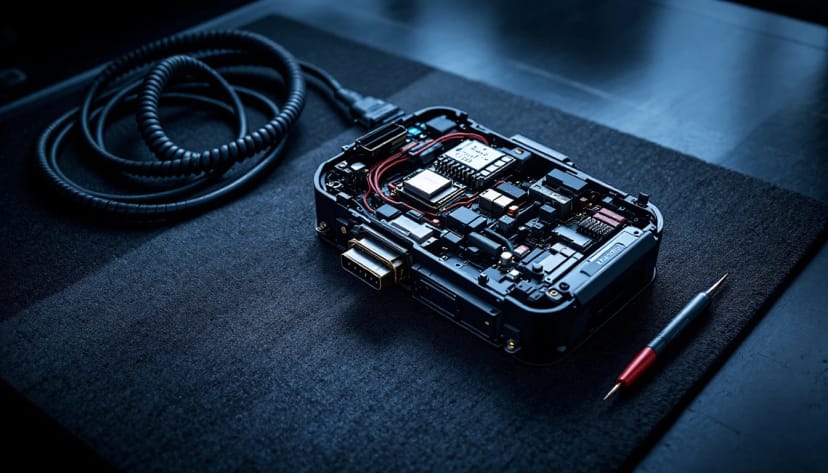
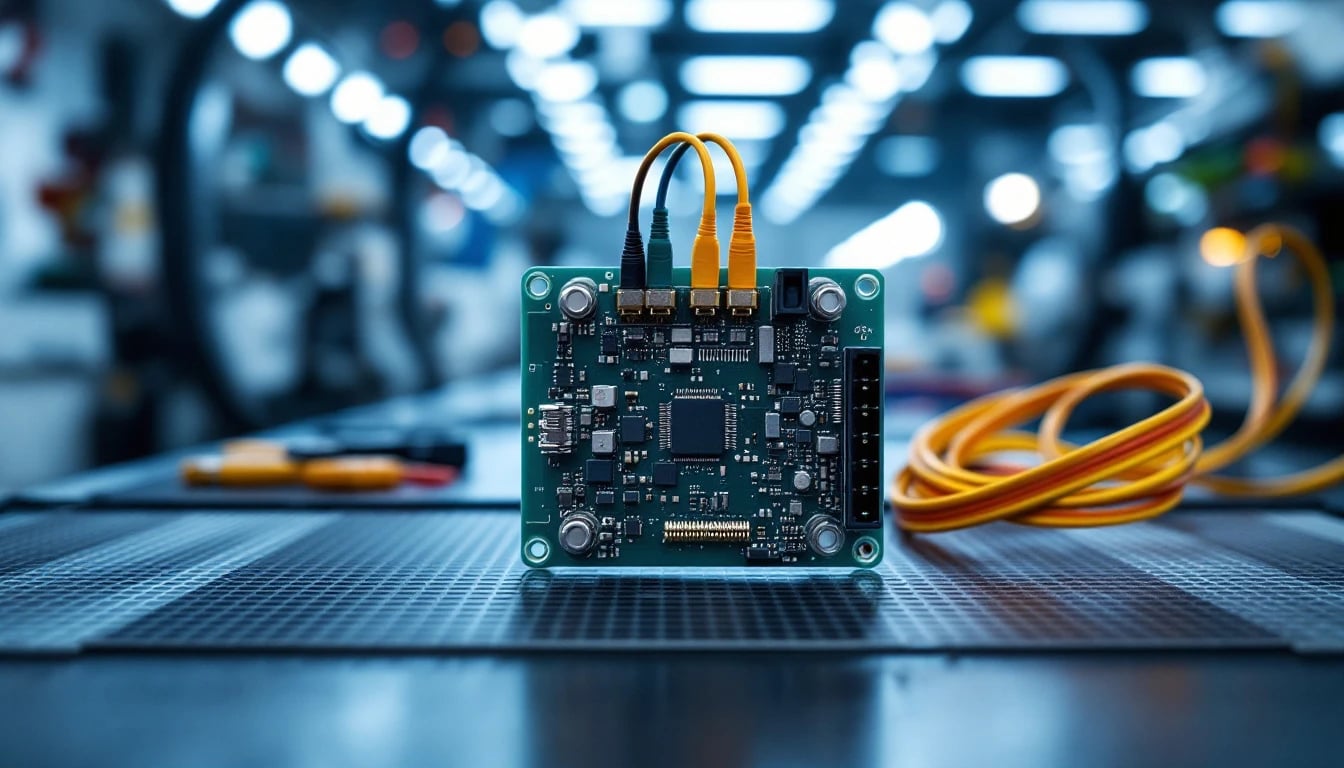
The RF Hub, written RFH in Stellantis service literature, is the radio receiver and the immobilizer authority on the RU-platform Pacifica. Physically it is a small module mounted under the instrument panel, typically up behind the dash near the steering column area, with a short antenna lead. Functionally it is doing four jobs at once:
- Transponder authentication. When you press START, the RF Hub validates the credential in your fob against the stored key list and then tells the powertrain controller that the van is allowed to run. Fail this handshake and you get a crank with no start, or on some configurations no crank at all.
- Passive entry and passive start. The proximity behavior — walk up with the fob in your pocket, touch the door handle, doors unlock — is RF Hub territory. So is the push-button start authorization.
- Remote-start and RKE reception. The lock, unlock, sliding-door, liftgate and remote-start button presses arrive at the RF Hub as radio traffic before they become CAN messages that other modules act on.
- TPMS reception on most trims. The tire-pressure sensors broadcast on the same general RF neighborhood, and the RF Hub is the ear that hears them.
That last point is the single most useful diagnostic clue on this platform, and most owners have never heard it. A tire-pressure warning that appeared at the same time as a key or remote problem is a strong hint that the shared receiver is the common element, not four separate coincidental faults. When a Fort Worth caller describes an intermittent no-start plus a TPMS light that will not clear plus a remote start that quit last month, an experienced operator stops thinking about keys and starts thinking about one module.
How the RF Hub differs from SKIM, SKREEM and the WCM
Chrysler immobilizer history matters here because the wrong mental model leads to the wrong repair.
The earliest Sentry Key systems used the SKIM, the Sentry Key Immobilizer Module. It did one job: read the transponder in the head of a bladed key and authorize the engine. Later the SKREEM, the Sentry Key Remote Entry Module, merged the immobilizer with remote keyless entry so one module handled both the chip and the lock and unlock buttons. Then the FOBIK era arrived, where the fob physically docked into a slot in the dash, and the WCM, the Wireless Control Module, took over. FOBIK-era Chrysler minivans and 300 sedans lived in that world for years.
The RF Hub is a different animal in three specific ways:
- Scope. It absorbed passive entry, push-button start, remote start reception and TPMS. The older modules did not carry that load.
- Network position. SKIM and SKREEM largely worked over dedicated lines and simple bus traffic. The RF Hub is a full participant on the vehicle CAN network and is behind the security gateway on later model years. Diagnosis requires a tool that can read the whole network and see what the RF Hub is publishing, not merely an immobilizer reader.
- Configuration burden. A replacement RF Hub is not plug-and-play. It has to be configured to the VIN and then taught every fob that will be used. On a van with power sliding doors, a power liftgate and TPMS, a bad configuration produces a van that starts but behaves strangely, which owners often misread as a second unrelated problem.
If you have read older Chrysler forum advice about SKIM PINs and ten-minute relearn procedures, understand that you are reading about a different architecture. The procedure that worked on a 2008 Town and Country does not describe a 2019 Pacifica.
The symptoms that actually point at the RF Hub
Not every no-start is a module. Here is the honest symptom map from Tarrant County calls on this platform.
Symptoms that are usually NOT the RF Hub:
- One fob works, the other does not. That is a fob problem — dead coin cell, water damage, or a fob that has drifted out of rolling-code sync.
- The dash message appears only when the fob is in a specific pocket or next to a phone. That is RF interference, which is normal and not a fault.
- The van starts fine but one sliding door will not respond to any input including the interior switch. That is a door motor or latch problem, not RF.
Symptoms that raise real RF Hub suspicion:
- Both fobs fail simultaneously after working fine, especially with fresh batteries in both.
- Intermittent no-start that clears after sitting, with no stored fuel or ignition faults.
- Remote start stops working entirely while lock and unlock still work at close range — a classic partial-receiver symptom.
- Sliding-door and liftgate fob commands drop out at ranges where they used to work, while the door itself operates normally from the interior switch.
- A TPMS warning that will not clear with correctly inflated tires and known-good sensors, occurring alongside any of the above.
- Communication faults stored against the RF Hub by a scan tool, which is the only piece of evidence that turns suspicion into a diagnosis.
There is a sixth pattern worth naming: a van that developed all of this shortly after a jump start, a battery replacement, or aftermarket electrical work. Low-voltage events and bad grounds cause module misbehavior that mimics module failure. Checking the supply voltage and the ground at the module connector before condemning it is the difference between a $0 fix and a needless part.
Secure gateway, PIN retrieval, and why access credentials matter
Two access controls sit between a technician and your Pacifica.
The secure gateway. Stellantis introduced the SGW on most 2018 and newer vehicles. It sits between the OBD-II connector and the vehicle bus and refuses write commands from tools that have not been validated. This was a deliberate security decision, and it is a good one — the same architecture that stops a criminal with a cheap programmer from writing a key in your driveway is the architecture that requires a legitimate operator to hold real credentials. The practical effect for you is simple: an operator who cannot describe how they get past the gateway on your model year is an operator who is going to either fail on site or do something they should not.
The secure PIN. Writing keys to the RF Hub requires the vehicle-specific security code. Legitimate operators obtain that code through the manufacturer's authorized channel, which for independent locksmiths runs through the NASTF Vehicle Security Professional registry and the Secure Data Release process. That registry exists precisely so that a credentialed, identity-verified, background-checked technician can get the same security data a dealer gets, without the dealer being the only door.
The National Highway Traffic Safety Administration's guidance on anti-theft systems frames the underlying federal requirement: every passenger vehicle sold in the United States must carry a starting-system theft protection, and since immobilizers became the universal method, the key has effectively become a cryptographic credential rather than a piece of cut metal. That is why the paperwork and the access chain matter more than the metal now. If you want the plain-language version of how a chipped key differs from a plain remote, our breakdown of transponder key vs key fob covers the distinction without the jargon.
Virginizing versus replacing the module
When the RF Hub genuinely is the fault, there are two paths and they are not equivalent.
Replace with a new, unconfigured module. A new OEM RF Hub arrives virgin. It has never been married to a VIN. The technician installs it, configures it to your VIN, enrolls the fobs, and relearns TPMS positions if required. This is the predictable path with the highest success rate and the highest parts cost.
Virginize a used module. A donor RF Hub from a salvage van is locked to the donor VIN. Returning it to an unconfigured state is bench work — reading and rewriting the module's stored data outside the vehicle. It can be done, it is legitimate work, and it is sometimes the right call on an older van where a new module is hard to source. It also carries real risk: a failed virginize can brick the module, and the labor to attempt it is spent whether or not it succeeds. Once you count that labor, the used-module path is often only marginally cheaper.
The honest recommendation for a Fort Worth Pacifica owner: on a 2017 to 2019 van with high mileage, ask both prices. On a 2020 and newer van, new is almost always the right answer because the module is available and the configuration is cleaner. This same logic applies across manufacturers — the Infiniti Q50 and QX60 BCM immobilizer module programming decision tree runs on identical reasoning, and so does the Honda and Acura immobilizer control unit programming path when the control unit itself has failed rather than the key.
Pacifica key hardware and job type by model year
Everything above compresses into one lookup table. Find your model year, read across. Always verify the exact fob part number by VIN before ordering hardware.
| Model years | Key hardware | Immobilizer authority | Secure gateway | Typical on-site job |
|---|---|---|---|---|
| 2017 | Proximity fob, 6 or 7 button, M3N-family FCC | RF Hub | No | Spare add or AKL, routine |
| 2018-2020 | Proximity fob, 7 button with dual power doors | RF Hub | Yes | Spare add or AKL, credentialed access required |
| 2021-2023 | Updated proximity fob, refreshed dash architecture | RF Hub | Yes | Confirm by VIN before dispatch |
| 2024-2026 | Current proximity fob generation | RF Hub | Yes | Confirm by VIN, some cases dealer-only |
| Hybrid trims, all years | Same fob family as gas equivalent | RF Hub | Per model year | Same as gas, no hybrid-specific key difference |
The pattern to read out of that table: the further down you go, the more the answer depends on the operator's tool subscription and access credentials being current this month, not on some fixed rule. Anyone who quotes a 2025 Pacifica all-keys-lost over the phone without asking for the VIN is guessing.
What is genuinely mobile and what is not
Mobile-appropriate, on a van parked wherever it sits in Fort Worth:
- Spare proximity fob added with a working fob present.
- All-keys-lost key origination with PIN retrieval on model years with confirmed tool coverage.
- Fob shell or coin-cell replacement, and fob resynchronization.
- RF Hub diagnosis, connector and voltage checks, fault-code capture.
- RF Hub configuration after a new module is installed, on covered model years.
Genuinely dealer or shop territory:
- A van with an unrelated network fault that has to be resolved before immobilizer work can even be attempted.
- Model years where tool coverage has not caught up yet, which is a moving target and changes with tool updates.
- Any situation where the ownership documentation does not check out. That is not a technical limit, it is a legal and ethical one, and it is absolute.
For the broader picture of what module-level work involves regardless of make, our module programming service page lays out the process, and the Dodge and Jeep RF Hub issues page covers the sibling Stellantis platforms that share this exact architecture. Model-specific Chrysler information lives on the Chrysler brand page.
Numbers worth knowing before you spend money
Four figures that put a Pacifica key or module decision in context:
- The American Automobile Association reports responding to roughly 32 million roadside assistance calls in a typical year, with lockouts and key-related failures a persistent share of that volume. Key problems are not exotic. They are one of the most common ways a working vehicle becomes an immobile one.
- The Insurance Institute for Highway Safety and its Highway Loss Data Institute affiliate have documented for decades that vehicles equipped with functioning electronic immobilizers show materially lower theft-loss claim frequencies than comparable vehicles without them. The system frustrating you right now is the same system protecting your van.
- J.D. Power's Customer Service Index research consistently finds that dealer service visits carry higher total cost and longer cycle time than equivalent independent service for routine work, with scheduling delay a leading driver of owner dissatisfaction. For a key job on a van that will not move, that delay also means a tow.
- The U.S. Bureau of Labor Statistics occupational data for locksmiths shows a small, specialized national workforce. In practice that means the number of technicians in Tarrant County who hold current Stellantis-capable tooling and access credentials is far smaller than the number of businesses advertising the service.
Field-operator perspective
The mistake I see over and over on Pacificas is somebody replacing the RF Hub because the van says key not detected. That message is the module telling you it did not hear a valid credential. It is not the module telling you it is broken. Nine times out of ten it is a battery, a fob out of sync, or a bad ground on the module connector. Check the cheap things, read the codes, then decide. If the operator on the phone offers to bring a module without ever asking for the VIN or the fault codes, hang up.
— ALOA-credentialed automotive locksmith working Tarrant County, Stellantis-platform specialty, anonymized
Six questions to ask before you book
The Federal Trade Commission's consumer guidance on hiring a locksmith is blunt about what a legitimate operator will and will not do on the phone. Applied to a Pacifica RF Hub call, ask:
- Will you scan the van before quoting module replacement? The only correct answer is yes.
- What is your access path for the secure gateway on my model year? They should be able to answer without hesitating.
- How do you obtain the security PIN? Look for a reference to the manufacturer's authorized channel, not to a workaround.
- Is your price a flat range or does it start at a number? Starts-at pricing is the oldest bait pattern in this trade.
- What documentation do you require? Photo ID plus registration or title matching the van. An operator who does not ask is a problem, not a convenience.
- Are you licensed by the Texas DPS Private Security Bureau? Texas licenses locksmith companies and individuals through DPS. Ask for the number.
Confirming your operator against the Associated Locksmiths of America credential framework takes about ninety seconds and rules out most of the bad outcomes in this category.
Frequently Asked Questions
What is the RF Hub on a Chrysler Pacifica?
The RF Hub, abbreviated RFH, is the radio-frequency receiver and immobilizer authority on 2017 and newer Pacifica vans. It authenticates the key transponder, receives the passive-entry and remote-start signals from the fob, and on most trims also receives the TPMS sensor broadcasts. Because it owns all of those functions, one failing RF Hub can produce a no-start, a dead remote start, sliding doors that ignore the fob, and a phantom tire-pressure warning at the same time.
How is the RF Hub different from the older WCM or SKREEM?
The older Sentry Key modules were narrower. SKIM and SKREEM were mainly transponder authentication with basic remote keyless entry, and the WCM used on the FOBIK-era Chrysler minivans added the docked-fob ignition. The RF Hub folded passive entry, push-button start authorization, remote-start RF and TPMS reception into one networked module that talks across the CAN bus rather than sitting on a simple dedicated line. That is why RF Hub diagnosis needs a scan tool that can see the whole network, not just an immobilizer read.
Does a Pacifica RF Hub always have to be replaced when a key is not detected?
No, and assuming so is the most expensive mistake on this platform. A dead coin cell, a fob that has lost its rolling-code sync, a corroded RF Hub connector, or an antenna problem all produce the same dash message. A credentialed operator scans the vehicle, checks the fob battery and the module supply and ground first, and only calls the module bad after the cheaper causes are excluded. Verify the actual fault by VIN and by scan before anyone orders a module.
What is the security gateway and does it block mobile programming?
Stellantis added a Secure Gateway module, commonly called the SGW, on most 2018 and newer vehicles. It sits between the OBD-II port and the vehicle network and blocks write commands from unauthorized tools. It does not block mobile work outright. It requires the operator to hold current authorized-access credentials so the tool can be validated before it writes. On some 2021 and newer configurations tooling coverage genuinely varies, so a competent shop confirms your specific van by VIN before dispatch instead of promising.
What does virginizing an RF Hub mean?
A used RF Hub pulled from a donor van is locked to that donor VIN. Virginizing is the bench process of returning the module to an unconfigured state so it can learn a new VIN and new keys. A brand-new OEM module arrives already unconfigured and simply learns your VIN during setup. Virginizing a used module is real work with real failure risk and it is not always the cheaper path once labor is counted.
Can this be done in my driveway in Fort Worth or do I need the dealer?
Key programming, fob replacement and most RF Hub configuration on a 2017 to 2020 Pacifica are routinely done on site with the van parked where it sits. No tow is required because the work happens through the OBD-II port and the module. Some 2021 and newer secure-gateway scenarios and some module-replacement cases need current tooling and updated access, so the honest answer is that a technician confirms feasibility from your VIN before you are charged anything.
How long does Pacifica key or RF Hub work take on site?
Adding a spare proximity fob while a working fob is present is usually 25 to 45 minutes. All-keys-lost programming with PIN retrieval usually runs 60 to 110 minutes because the secure code has to be obtained and validated before any key is written. RF Hub configuration after a module swap adds roughly another 30 to 60 minutes depending on how many fobs are being enrolled and whether TPMS sensors need to be relearned.
References
- NASTF Vehicle Security Professional Program — the registry through which credentialed independent technicians obtain manufacturer security data and key codes.
- NHTSA — Anti-Theft Systems — federal requirements governing vehicle starting-system theft protection.
- Associated Locksmiths of America — trade association defining automotive locksmith credential standards.
- FTC Consumer Advice — Hiring a Locksmith — federal guidance on verifying a locksmith before service.
- Insurance Institute for Highway Safety — vehicle theft and anti-theft effectiveness research.
- American Automobile Association — roadside assistance volume and vehicle ownership cost research.
- J.D. Power — Customer Service Index — dealership service cost and cycle-time research.
- U.S. Bureau of Labor Statistics — Locksmiths and Safe Repairers — national occupational employment data for the locksmith trade.
Related Pages
- Chrysler Brand Page
- Module Programming in Fort Worth
- Dodge and Jeep RF Hub Issues
- No Key Detected and Immobilizer Faults
- Smart Key Replacement
- Push Button Start Problems
Book Pacifica RF Hub or key programming in Fort Worth
We are mobile only, which is exactly what a van that will not start needs. Nothing gets towed. Have the VIN ready along with your photo ID and the registration or title, and a technician will confirm what your specific model year needs before any work is authorized.
Call or text 817-842-1256, Mon-Sun 8AM-8PM, across Fort Worth and Tarrant County. You can also reach us through the contact page.