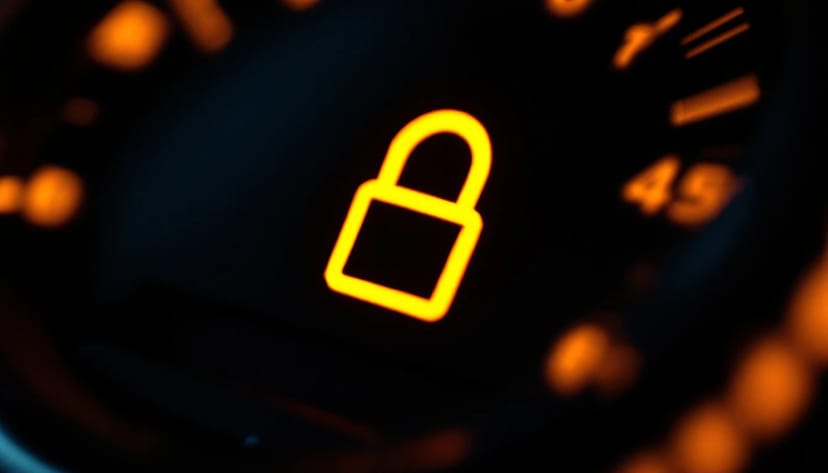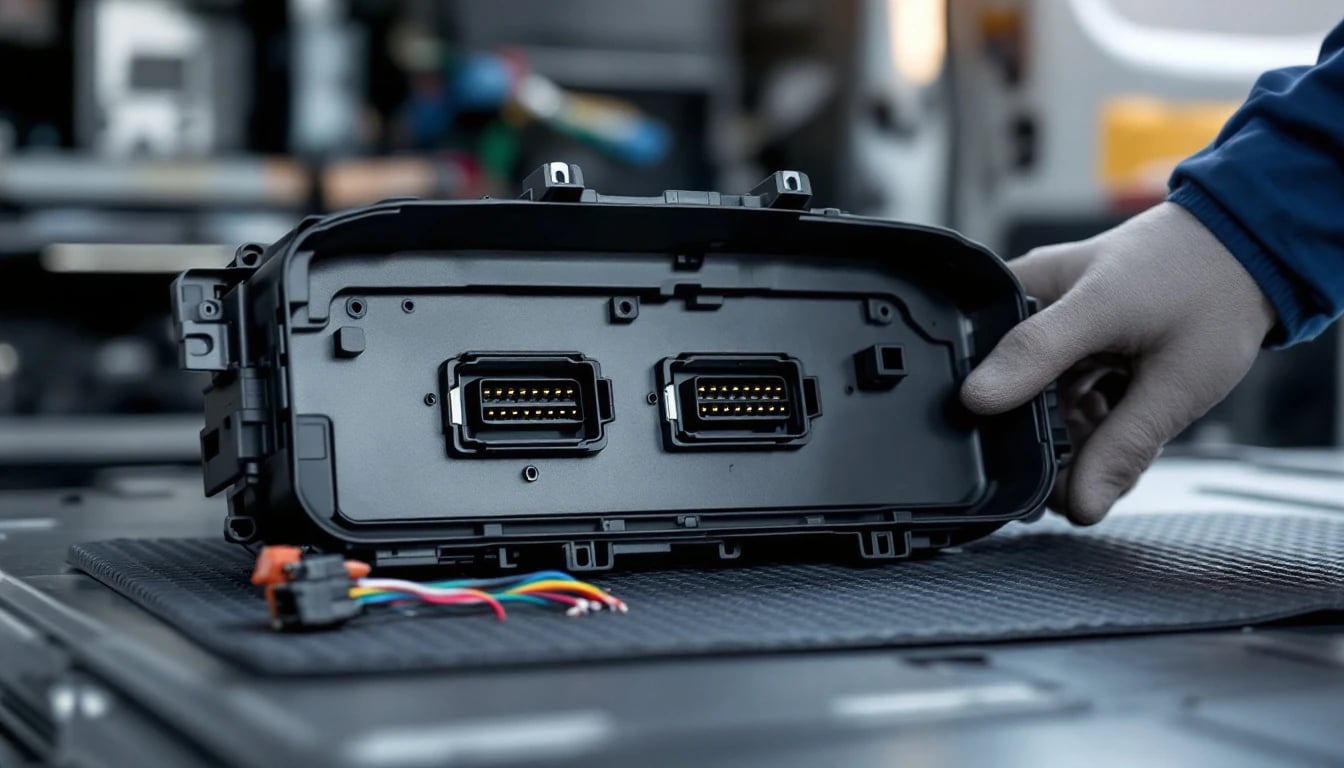
The gauges failed, or the display went dark, or the odometer pixels faded out. You found a used instrument cluster online, swapped it in over a weekend, and turned the key. Now the engine cranks and dies, or does not crank at all, and a security light is blinking at you. Nothing is broken that was not broken before. The car simply no longer recognizes one of its own parts. Call or text 817-842-1256 with the year, make and model, and tell us whether you still have the original cluster.
The Short Answer
On many vehicles the instrument cluster stores immobilizer data that must match the engine computer and the keys. A replacement cluster has a different identity, so the car refuses to start until the modules are matched again. The fix is programming, not parts. As of October 2026, immobilizer and security module work in Fort Worth runs $150 to $400 on mainstream vehicles and $350 to $800 on European platforms. Keep your original cluster: it makes the repair far easier.
Why a Gauge Cluster Can Stop an Engine
It seems unreasonable that the part that shows your speed could prevent the engine from running. The reason is anti-theft design.
A modern immobilizer is not one box. It is an agreement between several modules. The key has a transponder chip. A receiver reads it. A security module decides whether the key is authorized. The engine computer waits for a go-ahead before it will run the injectors. The National Highway Traffic Safety Administration describes these systems as the reason a vehicle will not start without its own authorized key, and the stakes are real: NHTSA counts more than one million vehicle thefts nationally in 2022, and the immobilizer is the main thing standing between a modern car and a thief with a copied blade.
Manufacturers had to put the security module somewhere, and many of them put it inside the instrument cluster. It was already a computer on the network, it was buried in the dash where a thief could not easily reach it, and it had a display for the warning light.
So on those vehicles the cluster is not just gauges. It holds the list of authorized keys, a security code shared with the engine computer, the vehicle identification number and the odometer reading. Swap it, and you have removed the module that vouches for your keys and fitted one that vouches for somebody else's.
Which Vehicles Do This
It varies by manufacturer and by year, so treat this as a guide to what to check rather than a promise about your exact car.
Ford, Lincoln and Mercury
Many Ford products from the 2000s and 2010s run the PATS anti-theft function in the instrument cluster rather than in the engine computer. On those vehicles a replacement cluster needs a parameter reset with the engine computer and the keys enrolled again, and the procedure typically requires two keys to complete. Our Ford PATS key programming page covers the system, and the Ford Fusion key reference shows how it looks on one common model.
Volkswagen and Audi
For roughly a decade many Volkswagen and Audi models kept the immobilizer inside the instrument cluster. A swapped cluster on these cars brings a different immobilizer identity and usually a flashing key symbol with a start-then-stall. Later platforms moved the function elsewhere and added component protection, which locks certain modules to the car they were first fitted to. See Volkswagen immobilizer repair, our Audi key programming guide and Audi component protection.
Honda and Acura
A number of Honda and Acura models integrate the immobilizer function with the gauge control module. A cluster swap on those vehicles produces a blinking green key light and no start. The background is in Honda and Acura immobilizer control unit programming.
Vehicles where the cluster is a participant rather than the boss
On many other makes the immobilizer lives in a body module, a dedicated security computer or the ignition module, and the cluster only stores a copy of the VIN and the mileage. A swap on these cars may not stop the engine, but it can leave warning lights, a mismatched-VIN fault or a tamper indicator. Toyota and Lexus keep the key authority in a separate smart key computer, covered in Toyota and Lexus smart key ECU programming.
What It Looks Like When the Cluster Is the Cause
| What you see after the swap | What it usually means | What fixes it |
|---|---|---|
| Engine starts, runs about two seconds, dies | Immobilizer is cutting fuel; key not recognized by the new cluster | Cluster matched to engine computer, keys re-enrolled |
| Cranks normally, never fires, security light flashing fast | Security handshake failing between modules | Parameter reset or security data transfer |
| No crank at all, security light on solid | Start authorization refused before the starter is allowed | Module matching; check battery and connectors first |
| Starts and runs, but odometer shows dashes or wrong mileage | Cluster not communicating fully, or donor data showing | Configuration and mileage set to the documented true figure |
| Starts and runs, warning lights for systems that worked before | Option configuration in the new cluster does not match the car | Configuration to the vehicle build |
| One key works, the other does not | Only one key was enrolled to the new cluster | Remaining keys enrolled |
The key detail in the first three rows is the security light. A healthy engine that is being deliberately shut down by its own anti-theft system behaves very differently from an engine with a mechanical fault, and the light is the tell. Our guides to an anti-theft light flashing with a car that won't start and a security light that stays on after a new key explain how to read it.
Diagnose Before You Spend: Five Checks
Do these in order. They cost nothing and they stop you buying parts you do not need.
- Confirm the timing. Did the car start and run normally right up until the cluster came out? If yes, the cluster is the prime suspect. If the car was already not starting, the cluster may have been a symptom of something else.
- Check the basics you disturbed. A cluster swap means the battery was disconnected and connectors were unplugged. Reseat the cluster connectors, check the fuses you may have blown and confirm the battery is fully charged. A weak battery causes its own no-start, as car won't start after a battery replacement describes.
- Watch the security light with the key on. Solid then off is normal. Rapid flashing, or on solid and staying on, means the immobilizer is unhappy.
- Refit the original cluster if you still have it. This is the single most informative test. If the car starts with the old cluster plugged back in, even with dead gauges, you have proved the engine is healthy and the replacement cluster is the problem.
- Rule out the mechanical ignition. If the key does not turn or power does not come on at all, you may be looking at a different fault entirely; see ignition switch vs ignition cylinder.
If the fourth check brings the engine back to life, stop there. You now know exactly what needs doing.
The Three Ways It Gets Fixed
Repair the original cluster
If the car runs with the original cluster and only the gauges or the display are faulty, the best answer is often to repair that cluster rather than replace it. The security data, the VIN and the true mileage all stay exactly where they are, and nothing needs programming. Many common cluster failures are a handful of components on the board.
Match the replacement cluster to the car
Where the platform supports it, the replacement cluster is introduced to the engine computer through the diagnostic port, the security link between them is reset, and the keys are enrolled again. On some vehicles a timed security access delay is built in and cannot be shortened. This is the $150 to $400 job on mainstream vehicles, and the usual route when the original cluster is gone.
Transfer the data from the old cluster
Where the platform does not allow a simple reset, the security data is read out of the original cluster's memory chip and written into the replacement, so the replacement becomes an electronic copy of the original. The car never notices the change. This is bench work rather than plug-in work, and it is the reason we keep saying to hold on to the old unit. The same technique is behind the difficult lost-key cases described in EEPROM work for all keys lost.
Legitimate access to the security side of these systems is credentialed. The National Automotive Service Task Force operates the registry through which vetted security professionals obtain manufacturer security data, and a provider doing this work should be able to tell you how they are accessing yours.
The Mileage Question
A used cluster displays the mileage of the car it came from. That is not a cosmetic problem. It is a legal one.
NHTSA estimates that more than 450,000 vehicles are sold each year with false odometer readings, costing American buyers more than $1 billion annually, and federal odometer law exists because of it. The rule that matters to you is simple. When an odometer is repaired or replaced, the mileage must remain the same as before the service. If that cannot be done, the odometer has to be set to zero and a written notice must be attached to the left door frame stating the mileage before the service and the date. The details are on NHTSA's odometer fraud page.
In practice that means three things. Photograph your original odometer reading before the old cluster comes out. Keep a record of the swap with your vehicle paperwork. And expect any reputable provider to set the replacement to the documented true mileage, upward or downward only as far as the truth requires. We do not reduce mileage, and the Federal Trade Commission treats misrepresenting a vehicle to a buyer as deception. If you ever sell the car, the paperwork protects you.
What It Costs in Fort Worth
As of October 2026, immobilizer and security module work on a mainstream domestic or Asian vehicle runs $150 to $400. That covers matching a replacement cluster to the engine computer and re-establishing trust with the keys. European platforms run $350 to $800 because the security architecture is heavier and the tooling is brand-specific.
Used clusters are quoted per VIN, because the first question is whether that particular unit can be reset at all. If keys must be enrolled again and you have only one, adding a second during the same visit is about $65, and many Ford procedures cannot be completed with fewer than two keys in any case.
The full breakdown of this category is in module programming cost, and for how it compares with the rest of what we do, see how much is a locksmith for a car.
Before You Buy a Used Cluster
Most of the trouble in this guide can be avoided at the buying stage.
- Match the part number, not just the model. Clusters differ by engine, transmission, trim level and options. The wrong variant may physically fit and still leave features dead.
- Ask whether it can be reset. Some clusters are locked to their first vehicle. A seller who does not know is not a seller to rely on.
- Favor repairing your own. If the fault is a display, a stepper motor or a backlight, repair keeps every piece of data intact.
- Never return the original as a core until the car runs.
- Budget for programming. A cheap cluster and no plan to match it is how a weekend repair becomes a car that will not start.
Standards for in-vehicle networks and diagnostics are published by SAE International, and the practical upshot for owners is that modules on a modern car are not interchangeable the way a headlamp is. The same lesson applies to other work that disturbs the dash; car won't start after a body shop or windshield job covers a close cousin of this problem.
"The call always starts the same way: the gauges were dead, so I swapped the cluster, and now it will not start. The first thing I ask is whether they still have the old one. If they do, it is usually a straightforward afternoon. If it went back as a core, the job just got harder." — an ALOA-credentialed Master Automotive Locksmith working the DFW metro
When to Call
Call once the original-cluster test has pointed at the replacement, or straight away if the original is gone. Have ready the year, make and model, whether the original cluster is still in your possession, how many keys you have, and the mileage the car really has.
Because the work touches the anti-theft system, we verify ownership first: registration or title in your name and matching photo ID. In Texas, locksmith companies are licensed by the Texas Department of Public Safety through its Private Security Program, and ALOA maintains the professional standard for automotive specialists. The service itself is described on our module programming page, and if the dash is showing a key warning rather than a dead engine, start with no key detected and immobilizer faults.
Frequently Asked Questions
Why won't my car start after I replaced the instrument cluster?
Because on many vehicles the instrument cluster is part of the anti-theft system. It either contains the immobilizer itself or stores security data that must match the engine computer and the keys. A replacement cluster, especially a used one, carries a different identity, so the modules no longer recognize each other and the car refuses to run. The engine is fine. The modules need to be introduced to each other again.
Can a used instrument cluster be programmed to my car?
On many platforms, yes, but not all. Some used clusters can be reset and matched to your vehicle. Some need the security data transferred from your original cluster. A few are locked to their first vehicle and cannot be reused at all. That is why the make, model and year matter before you buy one, and why keeping your original cluster is so valuable even if it no longer works.
How much does it cost to program a replacement cluster in Fort Worth?
As of October 2026, immobilizer and security module work on a mainstream vehicle runs $150 to $400, which covers matching the cluster and re-establishing key trust. European platforms run $350 to $800. Used-module work is quoted per VIN because it depends on whether the unit can be reset. If keys also have to be re-enrolled, adding a spare in the same visit is about $65.
Should I keep my old cluster after replacing it?
Yes, always, until the car is running and has been for a while. The original cluster holds the security data and the true mileage for your vehicle. With it in hand, the data can often be read out and written into the replacement, which is the cleanest fix available. Without it, the job is harder, slower and on some platforms not possible. Do not send it back as a core until the car starts.
Will replacing the cluster change my mileage?
A used cluster shows the mileage of the vehicle it came from, not yours. Federal law requires the odometer to reflect the true mileage of the vehicle, and where a replacement cannot be set to the true figure it must be set to zero with a written notice attached to the driver door frame. We set a replacement to the documented true mileage where the platform allows it. We do not lower mileage for anyone.
Can this be fixed in my driveway or does the car need towing?
Most cluster and immobilizer matching is done where the car is parked, because a car in this state cannot be driven. The programming equipment connects through the diagnostic port, and where data has to be transferred from the old cluster that is done on a bench in the van. Call or text 817-842-1256 with the year, make and model and tell us whether you still have the original cluster.
The car started for two seconds and died. Is that the cluster?
After a cluster swap, very likely. Start-then-stall within a couple of seconds, usually with a security or key light flashing, is the classic signature of an immobilizer that does not recognize the key or the module set. Fuel is being cut on purpose. It is not a fuel pump, and replacing engine parts will not fix it. Leave the battery connected and get the modules matched.
References
- NHTSA — Anti-Theft Systems
- NHTSA — Odometer Fraud
- NHTSA — Vehicle Theft Prevention
- National Automotive Service Task Force (NASTF)
- FTC — Advertising and Marketing Guidance
- SAE International
- ALOA — Associated Locksmiths of America
Swapped a cluster and the car will not start? Call or text 817-842-1256 with your year, make and model, and tell us whether you still have the original cluster. Module matching is done on site across Fort Worth and the surrounding cities, Mon-Sun 8AM to 8PM.
Reviewed against the ALOA Master Automotive Locksmith (MAL) standard. Prices are Fort Worth mobile service ranges current as of October 2026 and are confirmed per vehicle before dispatch.