TL;DR — Sentra and Versa ignition problems in one screen
Almost every Sentra or Versa in the roughly 2007 through 2019 bladed-ignition range that will not start is one of four things, and from the driver seat they can feel identical.
- The steering lock interlock is binding. Free, instant, and not a repair. Always check first.
- The key is worn. A ten-year-old blade rounds off and stops lifting the wafers cleanly. The cheapest real fix on this list.
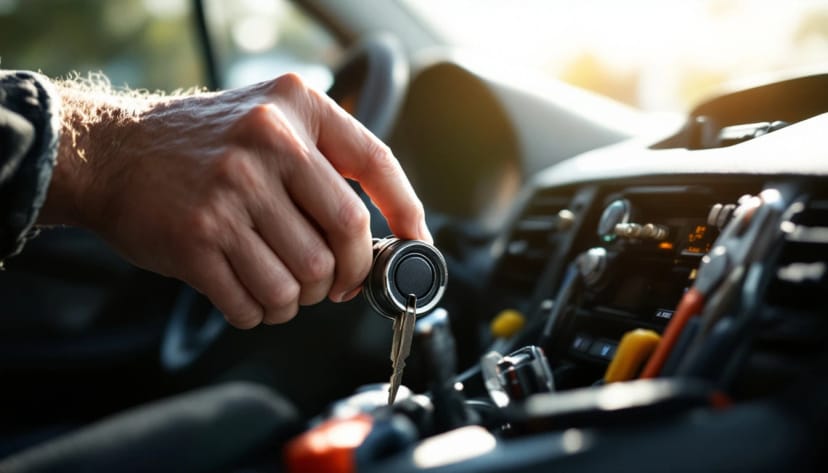
- The lock cylinder is worn. Wafers and springs wear from a decade of daily rotation, often accelerated by a heavy keyring. Key will not turn, or turns only in one position.
- The electrical ignition switch has failed. Key turns fine, car does nothing or does it intermittently. This is a different part behind the cylinder.
And running underneath all four: NATS, the Nissan immobilizer. A NATS or antenna-ring fault produces a start-then-stall that owners routinely misdiagnose as an ignition problem.
As of August 2026, ignition repair work in Fort Worth sits in the $150–$400 band. A bladed transponder key, if the repair needs one, is $120–$200. A lockout with no key work is $75–$200. Full scope is on our ignition repair page.
Call 817-842-1256 and describe the symptom precisely — the exact wording of what the car does is most of the diagnosis.
Quick answer
If the key will not turn, the problem is mechanical: interlock, key, or cylinder. If the key turns but nothing happens, the problem is electrical: the ignition switch. If the engine fires and then dies within a couple of seconds with a blinking security light, the problem is the immobilizer, not the ignition at all. Those three sentences separate the majority of calls we take on these cars, and getting them straight before anyone orders a part is what keeps a job at the bottom of the ignition band instead of the top of it.
How the Nissan ignition system works
There are three distinct systems stacked in the same few inches of steering column, and confusing them is the single most expensive mistake in this repair.
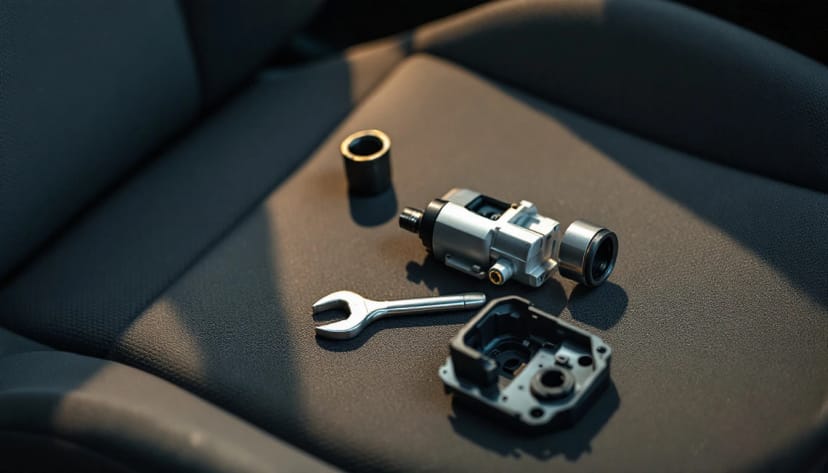
The mechanical lock cylinder
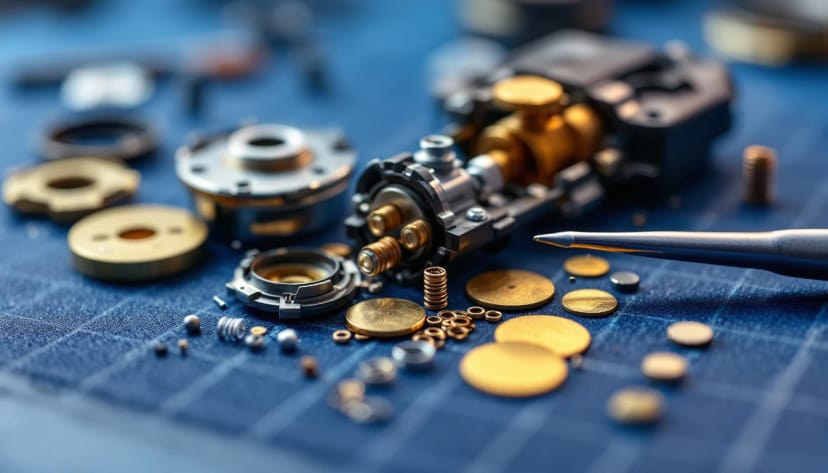
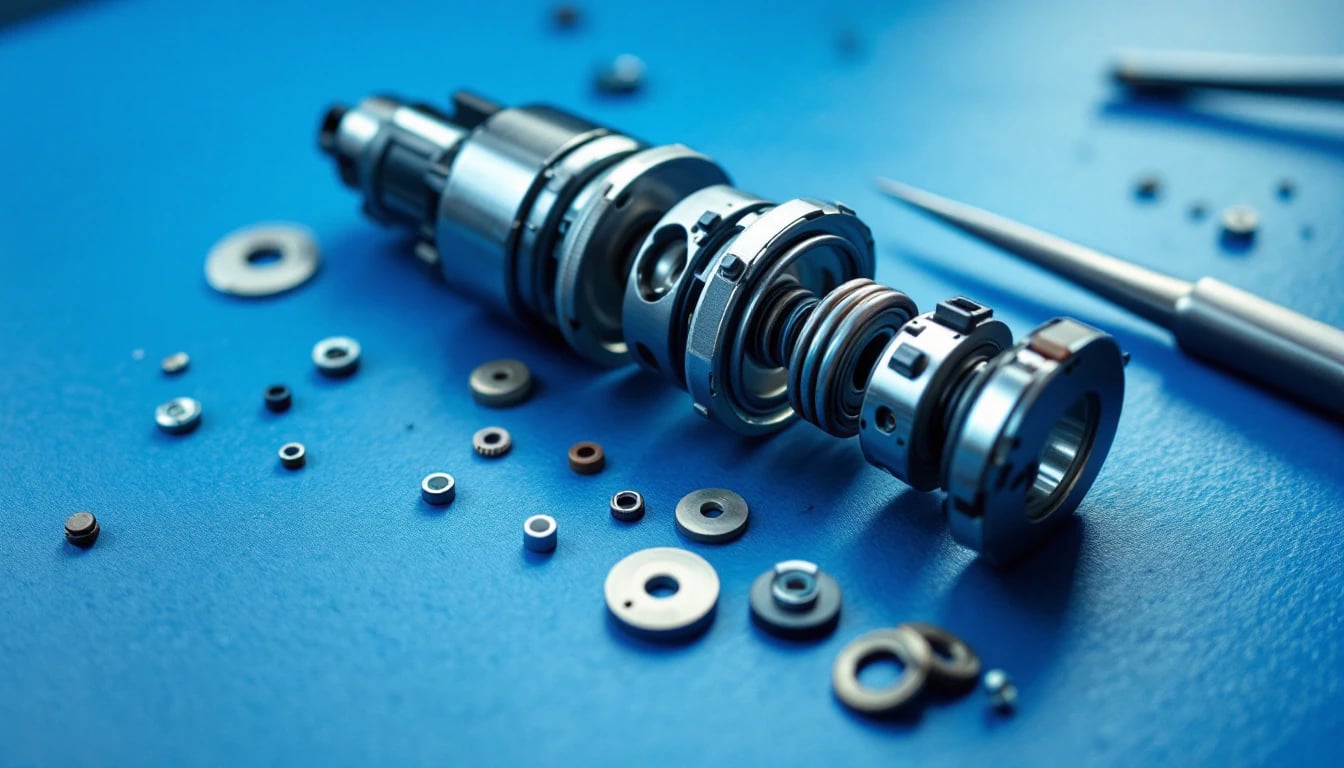
Your key blade slides into a cylinder containing spring-loaded wafers. The cuts on the blade lift each wafer to exactly the right height so the shear line clears and the cylinder can rotate. Every one of those wafers is a small spring-loaded part being cycled thousands of times a year in a car that lives outside in Texas.
Wear happens on both sides simultaneously. The blade rounds off slightly. The wafers wear slightly. For years neither matters because the tolerance stack still clears. Then it does not, and it usually happens over a period of months that the owner registers as "getting harder" without ever quite acting on it.
The heavy keyring problem is real. A cylinder cycled with a two-inch wad of house keys, gym tags, and a bottle opener hanging off it is being side-loaded on every turn. On a car with a decade of that, the wear is not evenly distributed and the cylinder fails earlier than it should.
The electrical ignition switch
Behind the cylinder sits a completely separate component. The cylinder's rotation drives it mechanically, and it converts that motion into circuits: accessory, on/run, start. This part has no wafers, no key, and no relationship to your key blade at all.
When it fails, the key rotates through every detent perfectly and the car does nothing — no dash lights, no crank, or an intermittent version of both that comes and goes with temperature or with a bump in the road. Owners describe this as "the ignition is bad," and they are half right, which is exactly why the phone diagnosis matters.
NATS — the Nissan immobilizer
The Nissan Anti-Theft System is the third layer, and it does not care about mechanical rotation at all.
An antenna ring surrounds the lock cylinder. When your key is inserted, the ring energizes a passive transponder in the key head, the transponder answers, and the immobilizer authority compares that answer against its stored credentials. Valid answer, the engine is permitted to run. Invalid or absent answer, fuel is cut.
That last behavior is the key diagnostic. The engine frequently starts and then stalls within about two seconds — long enough to fire, not long enough to run. If you have ever had a Sentra do that with a blinking security light on the cluster, you were watching NATS work exactly as designed.
If you are unclear on the difference between the transponder credential and the remote buttons, our explainer on transponder key vs key fob covers it in plain terms — they are two independent systems sharing one piece of plastic.
The decision tree
Work it in this order. It is the same order a competent technician works it, and it is free until step four.
Step one — is the wheel loaded? Turn the steering wheel firmly left and right while applying light, steady turning pressure to the key. Do not force the key; forcing a bound cylinder is how blades snap off inside it. If the key frees up, the steering lock interlock was binding and nothing is broken. This resolves a meaningful share of "my ignition failed" calls at zero cost.
Step two — does a different key behave differently? If you have a second key, especially a less-used one, try it. If the spare turns smoothly and the daily key does not, your problem is the key, not the car. That is the cheapest outcome on this page.
Step three — does the key turn?
- No, it never turns → mechanical. Worn key or worn cylinder.
- Yes, freely, but nothing happens electrically → the ignition switch behind the cylinder.
- Yes, and the engine fires then dies in about two seconds → NATS. Not an ignition fault.
Step four — watch the security indicator. With the key in the run position, the security light should behave predictably: illuminate briefly, then go out. A light that stays on solid, or blinks continuously through a stall, is pointing at the immobilizer side. Our no key detected and immobilizer page covers what that path looks like.
Step five — check the obvious electrical basics. A 12V battery sitting at the edge of usable voltage produces symptoms that convincingly imitate both switch failure and immobilizer failure. It is a two-minute test and it occasionally ends the whole job right there.
The Sentra call I get most is somebody who has already bought a whole ignition assembly online because a video told them to. Half the time the actual problem is a key worn past its tolerance and I could have fixed it in fifteen minutes for a fraction of what the part cost them. The other half, the part they bought is for the wrong side of the column entirely — they bought a cylinder and they needed a switch. Describe the symptom before you buy anything.
— a NASTF-registered Fort Worth automotive locksmith, ALOA Master Automotive Locksmith (MAL) credential, DFW metroplex (anonymized)
Fort Worth pricing
As of August 2026. Bands, not single numbers, because what the car actually needs is only known once the column is open.
| Symptom | Likely cause | What the repair involves | Fort Worth band |
|---|---|---|---|
| Key binds only when wheel is loaded | Steering lock interlock | Free the wheel, no parts | no repair needed |
| Key turns hard, spare turns fine | Worn key blade | Cut a fresh key to code, register transponder | $120–$200 |
| Key will not turn with any key | Worn lock cylinder | Rebuild or replace cylinder, re-key to existing code | $150–$400 |
| Key turns, no dash, no crank | Electrical ignition switch | Replace switch behind cylinder | $150–$400 |
| Intermittent dead dash over bumps | Switch or connector fault | Diagnose, replace switch | $150–$400 |
| Starts then stalls in two seconds | NATS immobilizer or antenna ring | Diagnose immobilizer path, register key | $150–$400 plus key work |
| Broken blade stuck in cylinder | Key failure | Extract blade, assess cylinder, cut new key | $150–$400 |
| Lockout, no key or ignition work | Locked out | Non-destructive entry | $75–$200 |
For how these numbers compare across the wider market, see our breakdown of car key replacement cost in Fort Worth TX.
Common problems we see
The slow-motion cylinder failure
This one has a script. The key gets slightly harder to turn over about six months. The owner starts jiggling it, then wiggling the wheel, then developing a personal technique that works. Then one morning the technique stops working and the car is stranded. Every step of that progression was a warning, and the repair was cheaper at every earlier point.
The snapped blade
A worn key in a worn cylinder eventually meets someone in a hurry, and the blade shears off inside. Do not try to dig it out with pliers or glue — both routinely turn a straightforward extraction into a cylinder replacement. See broken car key extraction.
Antenna ring failure masquerading as ignition failure
The NATS antenna ring around the cylinder is a wound coil with a connector, sitting in a hot, vibrating environment for a decade. When it degrades, the car reads no credential from a perfectly good key and produces the start-then-stall. Because the failure happens exactly when you turn the key, it feels like an ignition problem. It is not. Detail on the module side is on our Nissan and Infiniti BCM issues page.
Steering column lock faults
Some Nissan configurations of this era carry an electronic steering lock element in addition to the mechanical interlock, and a fault there can prevent a start with its own distinct symptom set. Diagnosis and repair scope is covered on steering column lock repair.
The wrong part already in the trunk
We arrive to find the correct diagnosis is an inexpensive part on one half of the column, and the customer has already bought the considerably pricier assembly for the other half. It is the most common avoidable expense on this repair, and one phone call prevents it every time.
Re-keying versus replacing
When a cylinder has to come out, there is a choice to make on site, and it is worth understanding before the technician asks.
Re-key the replacement cylinder to your existing key code. The new cylinder is rebuilt with wafers matching the code your current key is cut to. You keep one key that opens the doors, opens the trunk, and turns the ignition. This is the outcome most owners want, and it is usually achievable.
Fit the replacement cylinder as supplied. You end up with a second key for the ignition and your original for the doors. It works, but carrying two keys for one car is a daily annoyance that people regret within a week.
Replace the full lock set. Cylinder plus door locks all keyed alike to a new code. Cleanest result, most parts, top of the band.
The right answer depends on your key code being retrievable and on the condition of the door locks, which is exactly why this decision gets made at the car rather than over the phone.
Note also that a mechanical cylinder swap does not by itself erase your immobilizer credentials — the transponder authority is a separate system. But if the antenna ring is replaced or the repair reaches into the immobilizer or body control side, credential registration becomes part of putting the car back together. An honest operator tells you which path you are on before starting.
Honest boundaries
Four things we say plainly:
- Some faults are not locksmith faults. A no-crank with a healthy switch and a healthy immobilizer can be a starter, a relay, a neutral safety switch, or a ground. We will tell you when the answer is a mechanic rather than sell you a part you do not need.
- Deeper body control faults need diagnosis time. Where a symptom traces into the body control module or the wider immobilizer network, that is a diagnostic path with its own scope and a technician confirms what your specific car needs before committing.
- Push-button-start Nissans are a different repair entirely. This guide covers the bladed-ignition cars only. A keyless-start Sentra or Versa has no lock cylinder to wear and its no-start faults live elsewhere.
- We do not force a bound cylinder. Forcing is how a repair becomes a replacement.
Cross-model context: the Nissan brand page, the Nissan Rogue key replacement guide, and the Nissan Maxima key replacement guide. For how the same class of failure looks on other platforms, see Mazda 3 ignition repair and Ford Focus ignition repair.
How the on-site visit works in Fort Worth
We are mobile-only, seven days a week from 8AM to 8PM, and on ignition work that is the whole point. A car that will not start is not driving to a shop — that is a tow on top of the repair, and the tow is frequently the larger number. AAA's Your Driving Costs research put average annual new-vehicle ownership above $12,000 in its 2024 edition, which is a fair frame for what days without a vehicle actually cost a household running one car.
On site the sequence is: symptom confirmation in your presence, 12V load check, interlock and key testing before any disassembly, security-indicator observation, column disassembly only once the diagnosis narrows, then repair, re-key or register as needed, and a full function test. Testing means every position of the ignition, every door, the trunk, and a cold restart after everything is reassembled.
Ownership documentation matters here too. Any work that involves generating or registering a key credential begins with the vehicle title or a current registration plus a government-issued photo ID in a matching name, recorded on the invoice. The FTC's consumer guidance on hiring a locksmith treats identity verification as a baseline expectation, and the legitimate route for independent access to manufacturer security data is the NASTF Vehicle Security Professional registry.
We cover Fort Worth plus Arlington, Bedford, Hurst, Keller, and North Richland Hills. Coverage detail sits on the Fort Worth service area page.
One licensing note: Texas locksmiths are regulated through the Texas DPS Private Security Program, under the Department of Public Safety. An operator naming a different Texas agency is not describing the law correctly.
On why the immobilizer layer exists at all: NHTSA's material on anti-theft systems covers immobilizers as a federal theft-deterrence measure, and IIHS vehicle theft research documents how sharply theft losses dropped as immobilizers became standard. NATS cutting fuel two seconds into a start is a system doing exactly what it was designed to do. The Associated Locksmiths of America certification ladder and FTC business guidance on honoring quoted pricing are the two standards worth holding any operator to before you authorize work.
References
- NASTF Vehicle Security Professional (VSP) Registry — Credentialed independent access to OEM immobilizer and security data.
- Associated Locksmiths of America (ALOA) — Certification ladder including Master Automotive Locksmith.
- NHTSA — Anti-Theft Systems — Federal guidance on immobilizer and anti-theft equipment.
- IIHS — Vehicle Theft — Research on theft loss rates and immobilizer effectiveness.
- FTC Consumer Advice — Hiring a Locksmith — Verifying an operator before authorizing service.
- FTC — Business Guidance — Federal guidance on pricing and advertising disclosure.
- AAA — Your Driving Costs — Vehicle ownership and downtime cost research.
Frequently Asked Questions
My Sentra key will not turn at all. Is the ignition broken?
Not necessarily, and the first thing to rule out is the steering lock interlock. If the front wheels are loaded against a curb or the wheel was turned as the car was shut off, the locking pin binds and the cylinder physically cannot rotate. Rock the steering wheel gently left and right with light turning pressure on the key. If that frees it, nothing is broken. If it never frees up, or if it has been getting progressively harder for months, you are looking at a worn key or a worn lock cylinder.
What is the difference between the lock cylinder and the ignition switch?
They are two separate parts that sit behind one another in the steering column. The lock cylinder is the mechanical piece your key goes into, with wafers that the key blade lifts to allow rotation. The electrical ignition switch is behind it and translates that rotation into accessory, run, and crank signals. A cylinder failure means the key will not turn. A switch failure means the key turns freely but the car does not respond, or responds intermittently. Two different symptoms, two different parts, two different repairs.
The car cranks but dies after two seconds. Is that the ignition?
That specific pattern usually points at the immobilizer rather than the ignition. Nissan NATS lets the engine start and then shuts fuel down within a couple of seconds when it cannot authenticate the key credential. Watch the security indicator on the cluster while it happens. A blinking security light through the stall is close to a signature for an immobilizer or antenna ring problem rather than a mechanical ignition problem.
Can you re-key a new Nissan lock cylinder to my existing key?
Often yes, and it is usually the better outcome. Re-keying the replacement cylinder to your current key code means you keep one key that operates the doors and the ignition, which matters because on many of these cars the door locks are not being replaced. If the cylinder cannot be re-keyed to your code, you end up carrying either a second key or a full lock set change. That decision gets made on site once the technician has the cylinder out and the key code confirmed.
How much does a Nissan ignition repair cost in Fort Worth?
As of August 2026, ignition repair and replacement work sits in the 150 to 400 dollar band. Where you land inside that band depends on whether the job is a cylinder rebuild, a cylinder replacement re-keyed to your existing key, an electrical switch replacement, or a combination. If a new transponder key has to be made and registered as part of the repair, that is separate work in the 120 to 200 dollar band for a bladed transponder key.
Does replacing the ignition cylinder mean reprogramming my key?
It depends on what actually gets replaced. Swapping the mechanical lock cylinder does not by itself erase the immobilizer credentials, since the transponder authority is a separate system. But if the antenna ring around the cylinder is replaced, or if the repair extends into immobilizer or body control components, credential registration may be part of putting the car back together. An operator should tell you which path your car is on before starting, not after.
Is this a job a mobile locksmith can do at my house?
For the large majority of Sentra and Versa ignition work in this year range, yes. The column comes apart with hand tools, the cylinder and switch are accessible, and cutting and registering a key can happen at the same visit. That matters because a car that will not start is not driving to a shop and the tow is frequently a larger number than the repair. Where a fault turns out to sit deeper in the body control or immobilizer side, a technician will tell you plainly rather than guessing at parts.
Get the ignition diagnosed before you buy parts
Fort Worth Car Keys is a mobile-only automotive locksmith serving Fort Worth and Tarrant County, seven days a week from 8AM to 8PM. Call 817-842-1256 or email contact@fortworthcarkeys.com. Describe exactly what the car does — whether the key turns, whether the dash lights up, whether it fires and dies — because on these cars the wording of the symptom is most of the diagnosis.
More: ignition repair, Nissan brand page, car key cutting, transponder key programming, and 24-hour car locksmith.
Reviewed against the ALOA Master Automotive Locksmith (MAL) field-service standard for Fort Worth mobile automotive work. Pricing bands current as of August 2026 and quoted as ranges only; your exact figure depends on which component has actually failed, confirmed on site.