TL;DR — Focus ignition trouble in one screen
If the key goes into your 2012-2018 Ford Focus and will not rotate, three things are almost certainly true:
- It is the lock cylinder, not the key. The mechanical wafer stack inside the ignition lock has worn to the point where it no longer aligns at the shear line. Your key is a contributing factor, not the cause.
- It is not the immobilizer. PATS, Ford's anti-theft system, only gets involved after the key turns. A key that will not physically rotate has not reached that stage of the sequence.
- It is repairable without changing your key. A replacement cylinder can be re-keyed to your existing HU101 blade, which means no transponder reprogramming and no second key on the ring.
Fort Worth working range for the job: $150-$400, depending on whether it is a cylinder service, a cylinder replacement re-keyed to your key, or a cylinder plus electrical switch.
The 2011-2019 Ford Fiesta is the same story on a smaller car — same HU101 blade family, same column architecture, same wear pattern.
If your key turns fine but the car cranks and dies instead, you are in a different problem entirely and want the no key detected / immobilizer path rather than this one.
Start by separating the two failures
More money gets wasted on ignition complaints than almost any other automotive lock job, and it is nearly always because the wrong part got replaced. There are two independent components stacked behind the same hole in your steering column, and they fail in ways that look similar to a driver but are not similar at all.
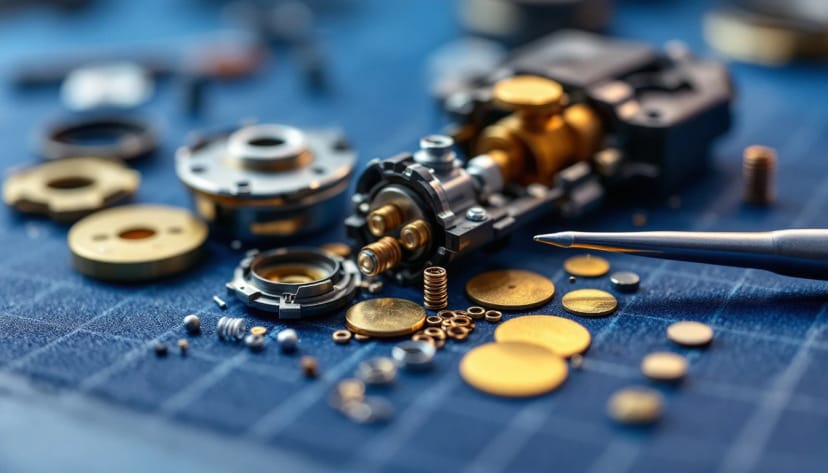
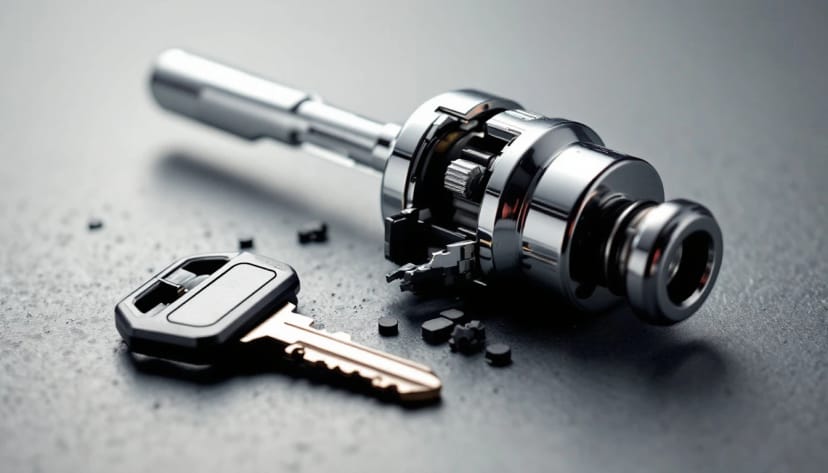
The ignition lock cylinder is a purely mechanical device. It is a brass or zinc barrel containing a stack of spring-loaded wafers. When the correct key is inserted, each wafer is pushed to a precise height so that all of them sit flush with the outside of the barrel — the shear line. Only then can the barrel rotate. Rotation drives a mechanical linkage or a lock-cam that operates the electrical switch and releases the steering column lock.
The ignition switch is the electrical device behind it. It has discrete positions — off, accessory, run, start — and internal contacts that route battery power to different circuits at each position. It knows nothing about keys. It only knows that something rotated it.
Now the diagnostic split:
- Key will not go in, or goes in and will not rotate → mechanical. Lock cylinder.
- Key rotates through all positions but the dash stays dark, or accessory works and run does not, or run works and the starter never engages → electrical. Switch.
- Key rotates, dash lights up, engine cranks and dies after about one second → neither. That is PATS immobilizer, and it belongs under Ford PATS key programming.
- Key rotates but the steering wheel is locked hard against the stop → steering column lock, a related but distinct assembly covered under steering column lock repair.
A technician who quotes a part before running those four checks is guessing. The tests take under ten minutes with the shroud off.
Why the 2012-2018 Focus specifically
The third-generation Focus sold in enormous numbers in North America, and a large share of them are now in the hands of second and third owners with high mileage and original hardware. That combination — volume plus age plus original lock cylinders — is why this platform generates a disproportionate share of stuck-ignition calls in the Fort Worth market.
The mechanical cause is simple wear arithmetic. Every insertion and removal drags the key blade across the wafer edges. A daily-driven car goes in and out of the ignition roughly four to eight times a day. Over ten years that is somewhere between 15,000 and 30,000 cycles a year, and cumulative totals in the 80,000 to 150,000 cycle range are ordinary by the time these cars reach 100,000-plus miles.
Two things wear simultaneously. The wafers develop small flats and rounded edges. The key blade loses material off the milled channel that positions those wafers. Individually either is tolerable. Together, the tolerance stack finally exceeds what the shear line can absorb, and the cylinder starts binding.
That is why the failure is progressive rather than sudden. Drivers describe the same arc almost word for word: first it needed a little wiggle once a month, then once a week, then every cold morning, then it stopped entirely in an H-E-B parking lot.
A worn key accelerates the failure and disguises it. People carry the same key for a decade with three pounds of house keys and a carabiner hanging off it. The side load bends the blade microscopically and grinds the channel. A brand new key cut fresh from the vehicle's key code will often turn a marginal cylinder that the old key no longer will — which is a useful diagnostic, and occasionally a cheap fix on its own.
The HU101 blade, and why it changes the repair
The Focus of this generation uses the HU101 high-security blade profile — a laser-cut, or sidewinder, key. Instead of sawtooth cuts on the edge, the code is milled as a wavy channel down the flat face of the blade, usually on both sides so the key is reversible.
Three practical consequences follow.
It cannot be copied at a hardware store. HU101 requires a laser or milling code cutter. A key traced on a standard duplicator will not work, and a poorly traced one will make a marginal cylinder worse.
It can be cut from the vehicle's key code. Because the code is derivable from the VIN through a credentialed lookup, a fresh, factory-correct key can be produced without having the old key present. That is the same capability that makes all-keys-lost work possible, and it is governed by the credentialing framework of the NASTF Vehicle Security Professional program.
It supports re-keying. Because the cut is a defined code rather than an arbitrary duplicate, a new lock cylinder can be disassembled and rebuilt with a wafer set that matches your existing key's code. That is the whole basis of the repair path most owners actually want.
The repair options, in order of preference
There are three legitimate ways to fix a bound Focus ignition, and a good technician walks you through all three rather than defaulting to the most expensive.
Option one: cut a fresh key first. If the cylinder is only marginally worn and your key is visibly worn, a new key cut to code sometimes restores normal operation entirely. It is the cheapest test available and it produces a useful spare regardless of the outcome. It is not a fix for a genuinely worn-out cylinder, and an honest operator will tell you when the cylinder is too far gone for this to hold.
Option two: replace the lock cylinder, re-keyed to your existing key. This is the standard repair. A new cylinder is fitted and its wafer stack is rebuilt to match your current key code, so the key you already carry continues to operate the ignition and every door. Nothing electrical is touched, and critically, no transponder programming is required — the chip lives in the key head, and the key head never changes. This is the option that keeps a single key on the ring and keeps the invoice at the lower end of the $150-$400 band.
Option three: cylinder plus electrical switch. When testing shows the switch has also failed — intermittent accessory, no crank in start, dash flicker with wheel movement — both parts get replaced. This is the upper end of the range. It is genuinely necessary on some high-mileage cars, and it is also the upsell a dishonest operator reaches for by default. The defense is simple: ask which specific electrical symptom justified the switch, and expect a specific answer.
There is a fourth thing that occasionally gets proposed and should be treated with suspicion: replacing the entire steering column assembly. On a 2012-2018 Focus that is almost never the correct repair for a bound ignition, and it is dramatically more expensive.
Focus and Fiesta cross-reference
The 2011-2019 Fiesta is the Focus's smaller sibling and shares the relevant hardware family. Same HU101 blade profile. Same wafer-stack architecture in the column lock. Same wear curve, same symptom progression, same repair options, same price band.
If you own both, expect the higher-mileage one to fail first, and expect the second one within a couple of years. The failure is a function of cycles, not luck.
The same diagnostic discipline applies to other makes with column-mounted wafer locks. The wear mechanism on a Subaru Outback ignition switch repair job looks different in the parts catalog but identical in the physics — brass wafers, a worn key, and a shear line that eventually stops aligning.
Symptom-to-cause reference table
| Symptom | Most likely cause | Failing component | Typical Fort Worth service | Range |
|---|---|---|---|---|
| Key enters, will not rotate at all | Worn wafer stack, bound cylinder | Ignition lock cylinder | Cylinder replacement re-keyed to your key | $150-$400 |
| Key rotates only with jiggling, worsening over weeks | Combined key and wafer wear | Lock cylinder plus worn key | Fresh key to code, then cylinder if needed | $150-$400 |
| Key will not fully insert | Debris, bent blade, or damaged wafers | Lock cylinder | Cylinder service or replacement | $150-$400 |
| Key rotates freely, no dash power in any position | Contact failure | Electrical ignition switch | Switch replacement | $150-$400 |
| Accessory works, no crank in start | Start contact failure | Electrical ignition switch | Switch replacement | $150-$400 |
| Cranks then dies after about one second | Immobilizer authentication failure | PATS, key chip, or antenna | Key programming or immobilizer diagnosis | $120-$200 transponder key |
| Key rotates, steering wheel locked solid | Column lock actuator bind | Steering column lock | Column lock repair | $150-$400 |
| Key broke off inside the lock | Fatigued blade in a bound cylinder | Lock cylinder plus extraction | Extraction plus cylinder replacement | $150-$400 |
What actually happens on site
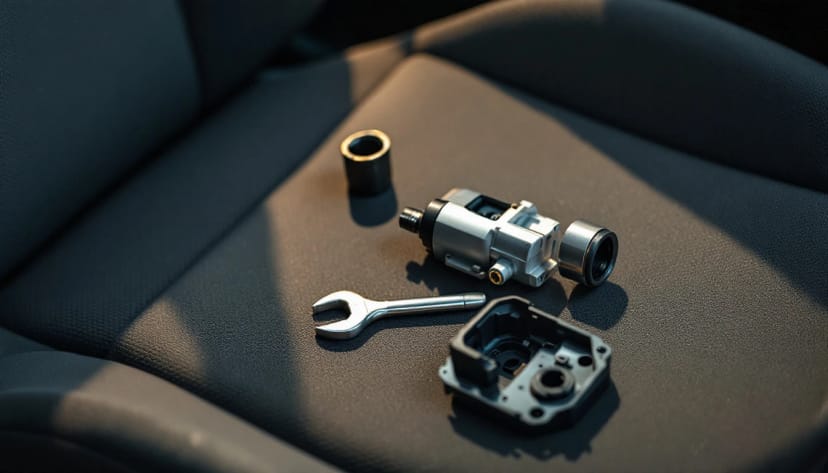
A mobile ignition repair on a Focus is a hand-tool job. There is no lift, no alignment rack, and nothing that requires the car to be driveable — which matters, because a Focus with a dead ignition frequently cannot be driven anywhere.
The sequence a credentialed technician follows:
- Verify ownership. Title or current registration in your name plus a matching government-issued photo ID. On a company vehicle, registration plus a letter of authorization on letterhead. This applies to ignition work as much as to key work, because a technician who can defeat and rebuild an ignition lock can start the car.
- Confirm the diagnosis. Rotation test, power test at each switch position, key condition inspection, and a scan for stored fault codes. This is where the cylinder-versus-switch question gets answered rather than assumed.
- Remove the column shroud and access the lock housing. On this platform the upper and lower shrouds separate with a small number of fasteners.
- Extract the cylinder. Normally this is done by depressing the retaining detent with the key at the accessory position. On a fully seized cylinder that is not possible, and controlled extraction is required — slower, and the reason a seized job lands at the upper end of the range.
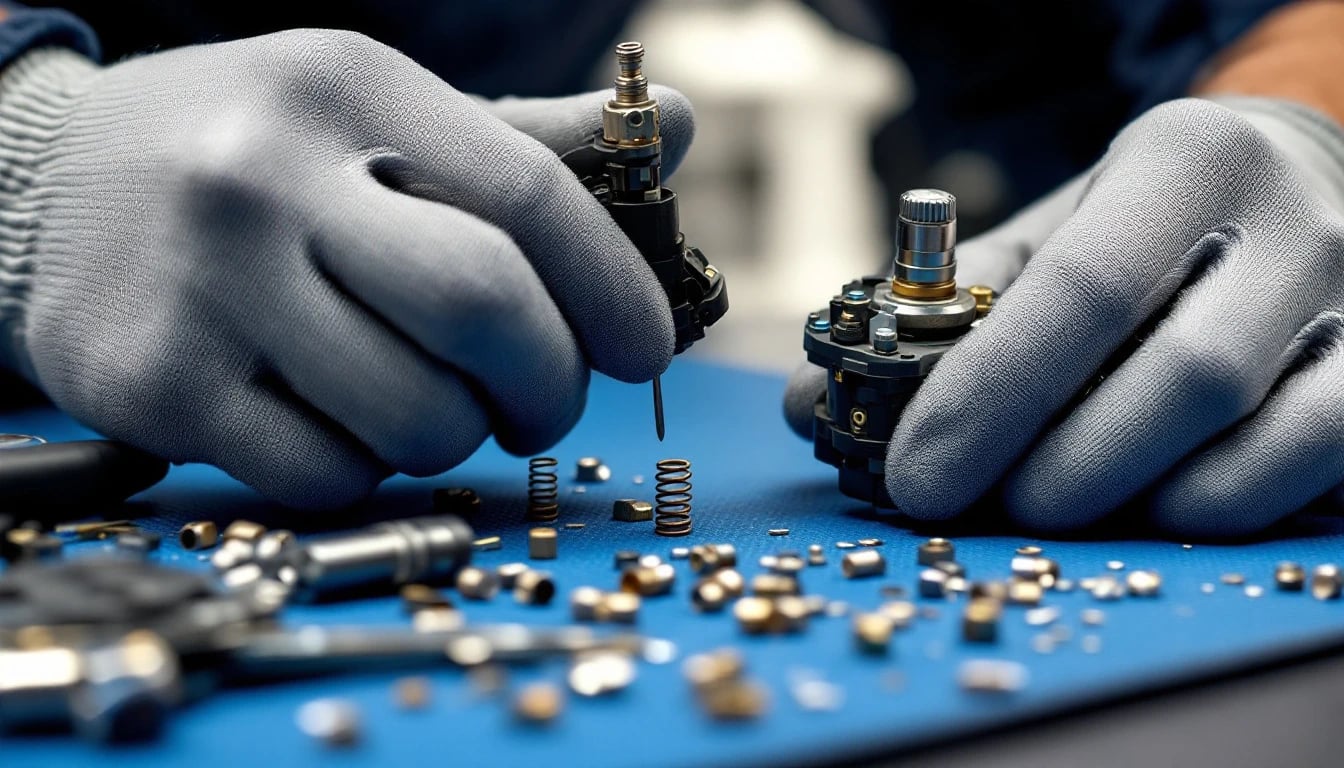
- Re-key the replacement cylinder to your existing key code, wafer by wafer, and bench-test rotation before it goes into the car.
- Install, reconnect, and verify. Every switch position tested, engine started, steering lock cycled, shrouds reinstalled.
- Written invoice listing parts, labor, company license number, and warranty terms.
Typical on-site time is 45 to 90 minutes for a standard cylinder replacement and longer when a seized cylinder has to be extracted or the electrical switch is also being replaced.
Choosing an operator without getting burned
Ignition work is a category where consumer-protection guidance is directly relevant, because the customer is standing next to an immobilized car and has limited leverage. The Federal Trade Commission's guidance on hiring a locksmith lays out the core defenses, and they apply cleanly here:
- Get a flat-rate range before dispatch, not a starting-at number. A quote of "$29 service call" for ignition work is a hook, not a price.
- Confirm licensing. Texas locksmith companies are licensed through the Texas DPS Private Security Program — not a general trade board. Ask for the company license number and expect it on the invoice.
- Expect ownership verification. An operator willing to rebuild your ignition without checking a title is an operator willing to do it for someone who is not you.
- Get the diagnosis in words before the parts. "Your cylinder is bound and your switch tests good in all four positions, so we are replacing the cylinder only" is a real diagnosis. "It needs an ignition" is not.
The Associated Locksmiths of America maintains the credentialing standards behind that expectation, and the FTC's truth-in-advertising standards are the benchmark an advertised price is supposed to meet.
There is a safety dimension too. The National Highway Traffic Safety Administration's work on anti-theft and ignition systems exists partly because ignition and column-lock hardware sits at the intersection of theft prevention and driver safety, and the Insurance Institute for Highway Safety's theft research documents why a properly functioning column lock is not just a convenience feature.
The cost of waiting
A sticky ignition is the rare car problem that is strictly cheaper to fix early, and the delta is not small.
Fixed while it still turns with a jiggle, it is a scheduled 45-to-90-minute driveway appointment inside the $150-$400 band. Fixed after the blade snaps off inside a seized cylinder, it is an extraction job plus the cylinder, at the top of that band, on a car that is now genuinely immobile.
There is also the downtime cost, which people systematically underestimate. The AAA driving cost analysis is a reasonable reference point for what a car being unavailable actually costs a household once rideshare fares, missed work, and rental days are counted. On a car that stops starting on a Tuesday morning, those numbers add up faster than the repair itself.
As of July 2026, the practical advice has not changed: the day it needs a wiggle is the day to book it.
Field-operator perspective
The Focus job I get called out on twice a month is the one where somebody forced it. It was catching for a month, they gave it one hard twist on a cold morning, and now half the key is in the lock. Everything about that repair is harder — extraction, a seized cylinder, sometimes a damaged housing. If they had called when it first got sticky it would have been an hour in the driveway and the same key back in their pocket. The wiggle is the warning. That is the entire lesson.
— a NASTF-registered Fort Worth automotive locksmith (anonymized)
Frequently Asked Questions
Why will my Ford Focus key not turn in the ignition?
On a 2012-2018 Focus the overwhelmingly common cause is wafer wear inside the ignition lock cylinder. Every time the key goes in and out it drags across a stack of spring-loaded brass wafers. After roughly 80,000 to 150,000 cycles the wafers and the key blade have both worn enough that the wafers no longer line up at the shear line, so the cylinder binds. The tell is that it gets progressively worse over weeks and that wiggling or jiggling the key still works some of the time.
Is this the ignition lock cylinder or the ignition switch?
They are two separate parts that fail in two different ways. The lock cylinder is mechanical and lives in the steering column where the key goes in. The electrical switch is behind it and sends power to accessory, run, and start. If the key will not physically rotate, the cylinder is the suspect. If the key rotates freely but nothing electrical happens in one or more positions, the switch is the suspect. A technician confirms which by testing rotation and power separately before quoting parts.
Can you repair a Focus ignition without changing my key?
Usually yes. A replacement lock cylinder can be re-keyed to your existing HU101 key by rebuilding the wafer stack to match your current cut. That keeps one key working every door and the ignition, and it avoids reprogramming the transponder entirely because the chip in your key head never changes. It only fails as an approach when your existing key blade is worn so badly that copying it would just reproduce the failure, in which case a fresh key is cut from the vehicle key code instead.
How much does Ford Focus ignition repair cost in Fort Worth?
As of July 2026 ignition repair runs 150 to 400 dollars depending on whether the job is a cylinder rebuild, a full cylinder replacement re-keyed to your key, or a cylinder plus electrical switch replacement. The lower end covers a straightforward cylinder service on a car where the key is still in good shape. The upper end covers a column with a seized cylinder that has to be extracted plus a new switch. Fort Worth Car Keys quotes a flat range before dispatch.
Does the Ford Fiesta have the same ignition problem as the Focus?
Yes, and for the same reason. The 2011-2019 Fiesta shares the HU101 high-security blade profile and a closely related column lock design with the same generation Focus. Wafer wear presents identically, the diagnostic sequence is identical, and the repair options are the same. If you own both cars in one household it is common to see the second one develop the symptom a year or two after the first, because they accumulate key cycles at similar rates.
Is it safe to keep driving a Focus with a sticky ignition?
It is a risk that grows quietly. A binding cylinder does not usually fail while you are driving, but it does fail on a cold morning in a parking lot when you need to leave. The more serious scenario is forcing it, because forcing a bound cylinder can shear the key blade off inside the lock or damage the lock housing, which turns a straightforward 150 to 400 dollar repair into an extraction job. Once it needs jiggling to start, book the repair.
Can a mobile locksmith do this in my driveway or do I need a shop?
Driveway is normal for this job. Ignition lock cylinder work on a 2012-2018 Focus is done through the steering column shroud with hand tools, and no lift or alignment equipment is involved. Fort Worth Car Keys works mobile only, Monday through Sunday, 8 AM to 8 PM, so the car can stay parked at home, at work, or wherever it stopped starting. That matters because a Focus with a dead ignition often cannot be driven to a shop in the first place.
References
- NHTSA — Anti-Theft Systems — Federal guidance on immobilizer, ignition, and anti-theft equipment.
- NASTF — Vehicle Security Professional Program — Credentialed access to OEM key-code and security data.
- Associated Locksmiths of America (ALOA) — Trade association and certification body for the locksmith trade.
- FTC Consumer Advice — Hiring a Locksmith — Verifying a locksmith and avoiding bait pricing.
- FTC — Truth in Advertising — Standards governing advertised service pricing.
- IIHS — Vehicle Theft — Research on theft losses and vehicle security hardware.
- AAA — Your Driving Costs — Vehicle ownership, downtime, and unscheduled repair cost data.
Related Pages
- Ignition Repair Fort Worth
- Ford Brand Page
- Steering Column Lock Repair
- Car Key Cutting
- Transponder Key Programming
- Fort Worth Service Area
Get a firm quote on your ford focus ignition repair
Have your VIN and an accurate count of how many keys exist, and we can give you a band before anyone is dispatched — no guessing and no surprises when the van arrives.
Call or text 817-842-1256, Mon-Sun 8AM-8PM. Mobile service throughout Fort Worth and Tarrant County. You can also reach us via the contact page.