TL;DR — Infiniti module work in one screen
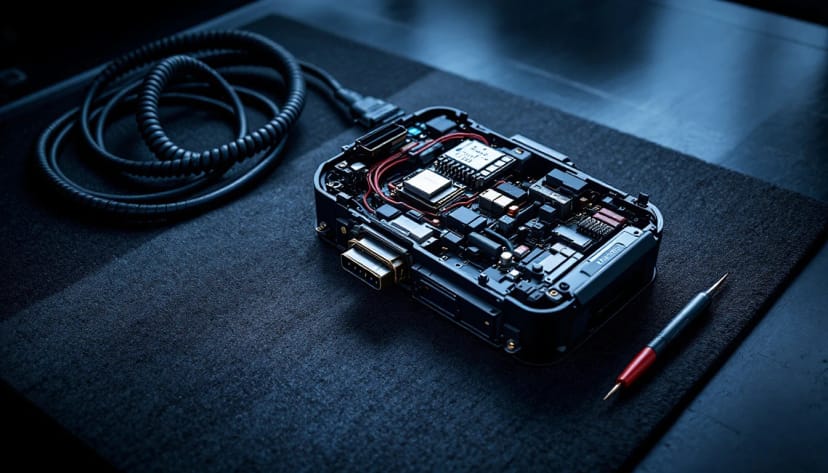
If your Q50 or QX60 will not start, will not accept a key, or throws intermittent warnings, the fault is roughly as likely to be in a module as in the key. Three components matter:
- BCM (body control module) — the immobilizer authority. It validates the credential and permits the start. Most Infiniti "the key stopped working" complaints that are not actually key complaints end here.
- IPDM E/R (intelligent power distribution module, engine room) — handles relay and power distribution functions downstream of the start permission. Faults here produce no-crank and no-fuel symptoms that mimic immobilizer faults.
- NATS (Nissan Anti-Theft System) — the security layer Infiniti shares with Nissan, gated behind a vehicle-specific PIN that must be obtained through legitimate channels before any credential is written.
As of August 2026 in Fort Worth: module programming and immobilizer work sits in the $350–$800 premium band. Smart key replacement on its own is $220–$500, a lost smart key is $180–$450, ignition-related mechanical repair is $150–$400, and a lockout with no key work is $75–$200.
The one thing that saves Infiniti owners the most money is the diagnosis. Call 817-842-1256 before you buy a key or a module.
Why Infiniti no-starts get misdiagnosed so often
The reason is structural. On an older bladed car the immobilizer was a small, isolated function: a chip answered a challenge, and the engine control unit either fuelled or did not. On a Q50 or QX60 that same decision is the output of a networked conversation between several controllers, and a failure anywhere in the chain produces the same dashboard message.
So the driver sees "no key detected," concludes the key is dead, and buys a key. Sometimes that is right. Often it is not, and the money is gone.
The National Highway Traffic Safety Administration has tracked the broader trend behind this for years: as vehicle electrical architecture consolidated into fewer, more capable modules, single-point faults began producing symptoms across multiple unrelated systems. That is exactly what a failing BCM does. It is why a car with a locking problem, a lighting problem and a starting problem usually has one fault rather than three.
The Infiniti call I get most often is somebody who has already bought two keys online. Neither worked, so now they are convinced they need a third. What they actually need is fifteen minutes on a scan tool, because the car has been telling us for a month that the body module is going. I would rather sell nobody a key than sell somebody the wrong one twice.
— a NASTF-registered Fort Worth automotive locksmith, ALOA Master Automotive Locksmith (MAL) credential, DFW metroplex (anonymized)
The Q50: what the platform actually does
The Q50 arrived for the 2014 model year and has run with the same fundamental security architecture since, with revisions along the way.
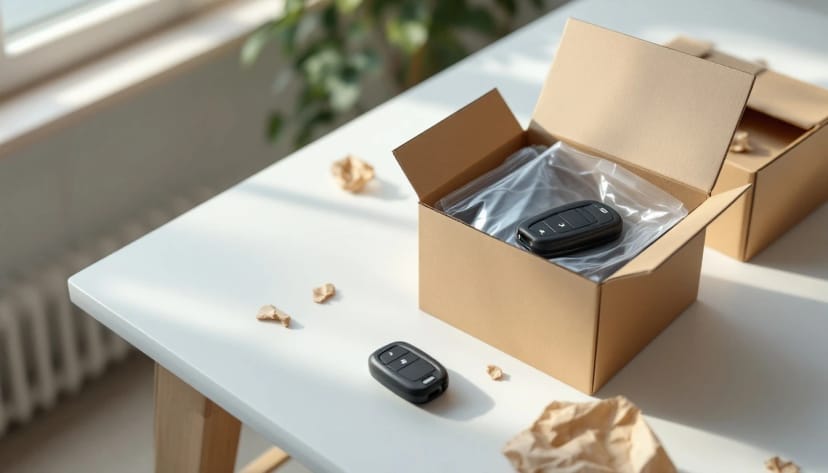
Credential handling. The Intelligent Key is a proximity fob. Antennas inside and outside the cabin detect it, the BCM validates it against stored credentials, and the start permission propagates from there. There is a mechanical emergency blade inside the fob for the driver's door, and it still has to be cut — a point owners discover on the day the vehicle battery is flat.
The backup start path. Every Q50 has a documented procedure for starting with a fob whose battery has died, in which the fob is held against a marked location so the vehicle can read it inductively at very short range. This is diagnostically valuable, not just a convenience: if the backup procedure starts the car, the credential is intact and you have a battery or antenna problem rather than a key or module problem. If the backup procedure fails with two separate keys, the vehicle side is at fault.
Common Q50 field faults in Tarrant County.
Steering-lock and electronic steering column lock complaints. The column lock is an actuator that has to release before a start is permitted. When it fails or sticks, the car reports a security or key fault because the start sequence never completes. This is a mechanical failure producing an electronic symptom, and our steering column lock repair page covers the distinction.
Push-button start unresponsiveness. The start button assembly itself wears. A button that requires several presses is not an immobilizer problem, and the diagnostic path for it is covered in our guide on push-button start not working.
Heat-related intermittency. Texas summers matter here. A module or connector that is marginal at 70°F can fail reliably at 105°F in a parked car, which is why so many Infiniti complaints in this metro are described as "only in the afternoon."
The QX60: the family-hauler pattern
The QX60 shares the security architecture but arrives with a different usage profile, and the usage profile changes which faults show up.
Multiple drivers, multiple keys. Three-row family vehicles typically have two or more keys in circulation, often with one that has spent years in a bag or a pocket. That produces two distinct issues: fobs with degraded batteries that fail unpredictably, and fobs that have been through a washing machine and now function intermittently as their internals corrode.
Interference from crowded keyrings. A fob carried on a ring with a gate remote, a fleet tag, or a second vehicle's transmitter can be swamped at exactly the moment you need it. This produces a genuinely confusing symptom — the key works at home and not at the office — and it is resolved by separating the fobs rather than by buying anything.
The single-key used purchase. The QX60 changes hands frequently on the used market, very often with one key. That is the setup for the expensive version of every job on this page. Adding a second credential while the first still works is inexpensive; recovering from zero keys is not.
The diagnostic order that saves money
This is the sequence a competent operator follows, and knowing it lets you tell whether the one you called is following it.
One — fob battery, in both keys. Cheap, fast, and it resolves a large share of intermittent complaints outright. Do this before anything else.
Two — the backup start procedure. If holding the fob at the designated point starts the car, the credential is fine.
Three — scan for stored faults across modules, not just the immobilizer. A BCM going bad usually leaves evidence in systems nobody thought to check. Erratic interior lighting, door locks cycling unprompted, and intermittent dash warnings are all part of the same picture.
Four — check the mechanical path. Steering column lock, start button, and on relevant cars the ignition assembly. Our ignition repair page covers where the mechanical boundary sits.
Five — only now, key or module. By this point the decision is evidence-based rather than a guess, and the customer is spending money on the actual fault.
The Federal Trade Commission's locksmith hiring guidance frames the consumer-side version of this: an operator who commits to a diagnosis over the phone, before seeing the vehicle, is telling you something about how they work.
NATS, the PIN, and why credentialing matters
Every immobilizer credential written to a Q50 or QX60 passes through a security gate. The Nissan Anti-Theft System requires a vehicle-specific code before key or module data can be modified.
That gate exists for an obvious reason. The Insurance Institute for Highway Safety has documented for decades that electronic immobilizers are among the most effective single anti-theft measures ever introduced, and their effectiveness depends entirely on the credential-writing path being hard to reach. A system anyone could rewrite in a parking lot would protect nothing.
Independent operators reach that gate legitimately through the NASTF Vehicle Security Professional registry, which extends manufacturer-level security access to credentialed locksmiths under an accountability framework — identity verification, record-keeping, and traceability. This is why every legitimate job on this page begins with ownership documentation, and why an operator who offers to skip that step is disqualifying themselves.
What that means for you practically: proof of ownership is not bureaucracy and it is not optional. Vehicle title or current registration, plus a government-issued photo ID whose name matches, recorded on the invoice. Have it ready and the appointment is straightforward.
Fort Worth pricing by scenario
All figures are ranges within our published bands. As of August 2026.
| Scenario | Vehicle | What the job involves | Fort Worth band |
|---|---|---|---|
| Diagnosis, module and immobilizer scan | Q50 / QX60 | Full-network scan, fault isolation | Folded into the job performed |
| Spare Intelligent Key, working key present | Q50 / QX60 | Cut emergency blade, register credential | $220–$500 |
| Lost smart key, one key still working | Q50 / QX60 | Register replacement, delete lost credential | $180–$450 |
| All keys lost | Q50 / QX60 | Ownership verify, PIN access, write credential set | $350–$800 |
| BCM programming to VIN, replacement module | Q50 / QX60 | Write vehicle identity, restore key credentials | $350–$800 |
| Immobilizer or antenna fault repair | Q50 / QX60 | Isolate and address vehicle-side fault | $350–$800, varies |
| Steering column lock or start button repair | Q50 / QX60 | Mechanical or actuator work | $150–$400 |
| Lockout, no key work | any | Non-destructive entry | $75–$200 |
For how these numbers compare across the rest of the market, see our breakdown of car key replacement cost in Fort Worth TX. Scope for the module side lives on module programming and the shared-platform detail on Nissan and Infiniti BCM issues.
Repair, reprogram, or replace
Three different outcomes, three different prices, and the difference between them is worth understanding before you authorise anything.
Repair. Some module faults are recoverable — connector corrosion, a marginal solder joint, water intrusion that has not yet destroyed the board. Repair preserves the vehicle identity and key data already stored, which avoids all of the downstream work.
Reprogram the existing module. When the hardware is sound but the stored data is corrupted, rewriting is often sufficient. This is the middle path and it is more common than owners expect.
Replace and program to VIN. When the hardware is genuinely dead, the replacement has to be written to your vehicle's identity before it will do anything, and your key credentials written into it afterwards. Those are two sequential operations. A module bought online and installed by a general mechanic without that step will not start the car, and the owner is then paying for the installation twice.
The single most important thing to understand: a used module is not a drop-in part on this platform. It arrives carrying another vehicle's identity. Depending on the module and the year, it may or may not be re-purposable at all — which is exactly the kind of thing to confirm before purchase rather than after.
The same architecture logic runs across the shared Nissan platforms, which is why our Nissan Rogue key replacement guide and Nissan Maxima key replacement guide describe recognisably similar procedures on cheaper hardware. The Infiniti brand page and Nissan brand page cover the wider service scope.
Honest boundaries
Some things we will tell you on the phone rather than after we have taken your money.
The newest model years. Independent tooling support trails the manufacturer release. On very recent cars there are all-keys-lost and module scenarios where the dealer is genuinely the right call, and we will say so.
Physically damaged and water-damaged modules. A module that has been submerged is a different problem from a module that has failed electrically, and the recovery odds are worse. We will scope it honestly rather than promise a result.
Faults outside the security system. If the scan says the problem is a charging fault, a starter, or a wiring harness, that is not our work and we will tell you so rather than sell you a key.
Anything unpriced over the phone. A band is not a quote. The VIN turns it into one.
How the on-site visit works in Fort Worth
We are mobile only, which suits this work: a car that will not start does not need towing to have its network scanned.
Coverage runs across Fort Worth and Tarrant County — Arlington, Hurst, Bedford, North Richland Hills, Keller, and the wider service areas. Hours are Mon–Sun, 8AM–8PM.
Bring the VIN, the ownership documents, and every key that exists — including the ones you think are dead, because a fob with a flat battery still carries a credential we can read.
References
- National Highway Traffic Safety Administration — federal vehicle safety, electrical architecture and anti-theft standards.
- Insurance Institute for Highway Safety — research on immobilizer effectiveness and vehicle theft rates.
- NASTF Vehicle Security Professional registry — legitimate independent access to manufacturer security data and vehicle PINs.
- Federal Trade Commission — hiring a locksmith — consumer guidance on quoting practice and identity verification.
- ALOA Security Professionals Association — trade credentialing, including the Master Automotive Locksmith designation.
- AAA Newsroom — consumer research on roadside events and unplanned vehicle costs.
Frequently Asked Questions
What is a BCM and why does it affect whether my Infiniti starts?
The body control module is the controller that manages door locks, lighting, interior electrical function and, critically, the immobilizer handshake with your key. On the Q50 and QX60 the BCM is the component that decides whether a presented credential is valid and then tells the rest of the network to permit a start. If the BCM is faulty, has lost its stored key data, or has been replaced without being programmed to the vehicle, a perfectly good key will be rejected.
How do I tell a BCM fault from a dead key on a Q50?
Symptom pattern is the strongest clue. A dead key usually fails consistently and is resolved by the emergency backup start procedure, in which the fob is held against a marked point on the steering column so the vehicle can read it at close range. A module fault more often presents as intermittent, temperature-sensitive, or accompanied by unrelated electrical oddities such as erratic interior lights or door locks that cycle on their own. If two known-good keys both fail, the key is not the problem.
Can a used BCM from a salvage yard be installed in my Infiniti?
Not as a drop-in. A donor module arrives carrying the identity and stored key data of the vehicle it came from, and the Q50 and QX60 will reject it. A replacement module has to be programmed to your VIN and then have your key credentials written into it, which is a separate operation from installing it. Buying a used module without confirming it can be reprogrammed for your specific vehicle is one of the more expensive mistakes we see.
Why does Infiniti module and key work require a PIN?
The Nissan Anti-Theft System family, which Infiniti shares, gates immobilizer operations behind a security code tied to the vehicle. That code must be obtained through legitimate manufacturer channels before any key or module credential can be written. Independent operators reach it through the NASTF Vehicle Security Professional registry, which is the mechanism the industry uses to give credentialed locksmiths the same access a dealer has, with the same accountability.
How much does Infiniti module programming cost in Fort Worth?
As of August 2026, module programming and immobilizer work on the Q50 and QX60 falls in our $350 to $800 European and premium band, with the position in that band set by which module is involved, whether it is a repair or a replacement, and how much key credential work follows. Smart key replacement on its own is $220 to $500, and a lost smart key is $180 to $450. A diagnosis-first approach is the only way to know which of those you actually need.
Can this work be done at my house or does the car need towing?
In the large majority of cases it is done where the car sits. Module programming and immobilizer work on these platforms runs through the OBD-II port and does not require a lift. A stable battery voltage matters more than a shop does, so on a car that has been sitting with a flat battery we will support the electrical system during the session. Physically damaged modules and water-damaged vehicles are the exceptions where a technician confirms your exact setup first.
My QX60 says no key detected but the fob works sometimes. What is that?
Intermittent no-key-detected is most often one of four things, in this order of likelihood: a weakening fob battery, interference from another transmitter carried on the same keyring, a failed antenna or receiver in the vehicle, or a BCM fault. Replace the fob battery first because it is inexpensive and it resolves a large share of these complaints. If a fresh battery in two separate keys does not fix it, the vehicle side is the problem and it needs scanning rather than another key.
Get the diagnosis before you buy anything
If your Q50 or QX60 is refusing keys, starting intermittently, or showing electrical symptoms that nobody has connected to each other yet, the cheapest next step is a scan — not a key and not a module.
Call or text 817-842-1256, Mon–Sun 8AM–8PM. We come to you anywhere in Fort Worth and Tarrant County, and you will get a plain statement of what the car is actually doing before anyone recommends a part. You can also reach us through the contact page.
Written to the Fort Worth Car Keys field-service review standard. Module behaviour described here reflects current independent-trade practice on Nissan and Infiniti platforms; your vehicle's exact configuration is confirmed by VIN and scan at the appointment.