As of July 2026: what Chevrolet and GMC key work costs in Fort Worth
Chevrolet key replacement pricing hinges on two questions: which General Motors theft-deterrent generation your vehicle uses, and whether you still have a working key. Get those two answers and the price stops being a mystery. Because GMC shares GM's platforms and security architecture almost entirely, everything in this guide applies to GMC trucks and SUVs as well.
Here is the honest Fort Worth mobile range as of July 2026, drawn entirely from the published price bands for this market:
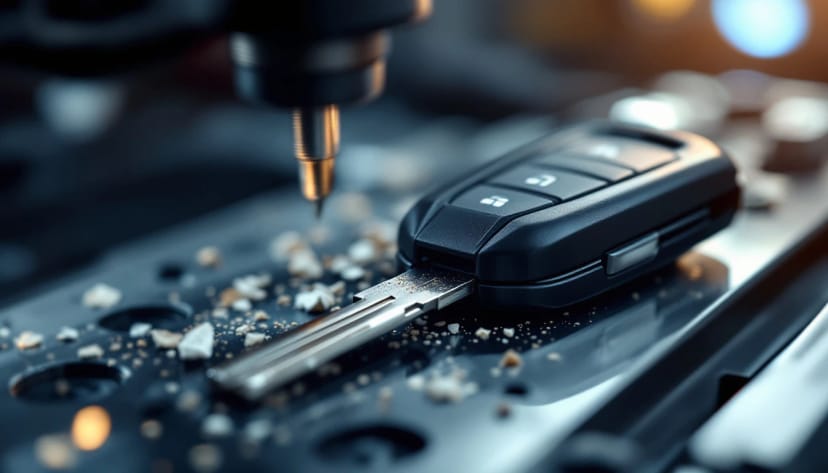
- Bladed transponder / remote-head key: $120–$200 cut and programmed
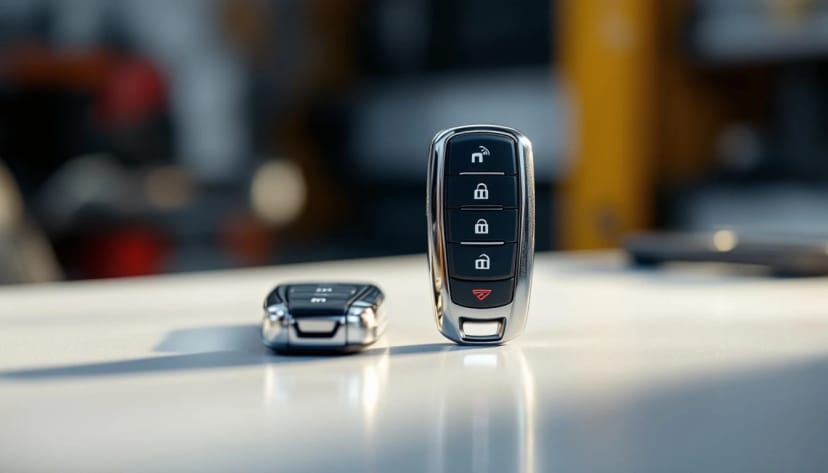
- Smart / proximity fob (push-to-start): $220–$500 depending on model
- All-keys-lost, transponder: $120–$200
- All-keys-lost, smart fob: $180–$450 depending on model and fob count
- Extra spare programmed with a working key present: often around $65 add-on
- Ignition cylinder repair or replacement: $150–$400
- Vehicle lockout (no key damage): $75–$200
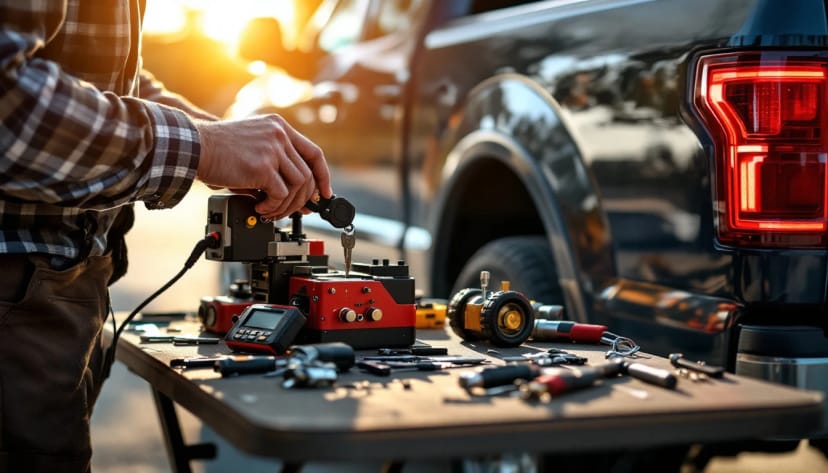
These are mobile-service ranges — a technician comes to your driveway, job site, or a Fort Worth parking lot and completes the work on-site. Dealer pricing for the same job typically runs higher once you add service-writer overhead, parts markup, and — for all-keys-lost — a tow for a non-starting vehicle. Our GM theft-deterrent system service page covers the by-appointment process, or call 817-842-1256 for a firm phone quote.
The GM theft-deterrent lineage: VATS, PassKey, PassLock, and beyond
To understand your Chevy key, it helps to understand the security generation behind it. General Motors has iterated its anti-theft architecture more visibly than most manufacturers, and the generation your vehicle uses dictates the tool and the procedure.
- VATS (Vehicle Anti-Theft System) — The original mainstream GM system, common on 1980s and 1990s cars like the Corvette and Camaro. A small resistor pellet was embedded in the key blade; the ignition read its resistance value and would only start if the value matched. There is no chip — the security is literally a measured resistance.
- PassKey and PassKey II — Refinements of the resistor-pellet approach through the 1990s, with a wider range of resistor values and a security lockout timer after failed attempts.
- PassLock — A significant shift, common in the late 1990s and 2000s. GM moved the security intelligence out of the key and into a sensor in the ignition lock cylinder. The key itself is mechanical; a Hall-effect or magnetic sensor reads the cylinder rotation and passes an encoded signal to the body control module. This is why a PassLock "security" fault can strand you even with a perfectly good key — the sensor, not the key, has failed.
- Transponder chip systems — By the 2000s and 2010s, Chevrolet moved to conventional RFID transponder chips in the key head, similar to the rest of the industry.
- Encrypted smart / proximity fobs — The current generation: keyless-entry proximity fobs with push-button start and rolling-code encryption, used across newer Silverado, Equinox, Malibu, Traverse, and Tahoe trims.
Per the National Highway Traffic Safety Administration's anti-theft systems guidance and FMVSS 114, each of these generations exists to make unauthorized starting difficult — which is exactly why a properly credentialed locksmith with the right tool is required to make you a new key. The Insurance Institute for Highway Safety's vehicle-theft research attributes much of the long-term decline in theft of equipped vehicles to precisely this kind of factory immobilizer and theft-deterrent hardware.
Chevrolet and GMC key types, model by model
Identifying your key family before you call saves everyone time. Here is how the common Fort Worth models break down.
Chevrolet Silverado / GMC Sierra
The full-size trucks span every generation. Bladed transponder and remote-head keys were standard for years, and work trims (WT) kept a bladed key well into the current generation because fleet buyers prefer simple, cheap-to-replace keys. Smart proximity fobs with push-button start became common on higher trims — LT, LTZ, High Country, Denali — in the mid-2010s and later. Insert-and-turn is a transponder job ($120–$200); press-to-start is a smart-fob job ($220–$500).
Chevrolet Equinox / GMC Terrain
Earlier Equinox and Terrain models used bladed transponder keys; newer generations widely adopted smart proximity fobs with push-button start on mid and upper trims. Most Equinox key replacements a Fort Worth owner needs today are smart-fob jobs in the $220–$500 range, though older bodies remain transponder work.
Chevrolet Malibu
The Malibu is a useful example of the whole lineage — older Malibus used PassLock and later bladed transponders, while the current generation offers smart proximity fobs with keyless start on most trims. A 2008 Malibu is likely a PassLock/transponder-era diagnosis; a 2020 Malibu is a smart-fob job.
Chevrolet Tahoe / Suburban / Traverse and GMC Yukon
The large SUVs skewed toward smart proximity fobs earlier than the cars, especially on premium trims. Expect smart-fob jobs ($220–$500) on most late-model examples, with remote start built into the same fob.
Chevrolet Camaro / Corvette (older)
If you're servicing a genuinely vintage GM performance car, you may still be in VATS/PassKey resistor-pellet territory — a different, older procedure. These are less common calls today but very much still on the road in DFW.
Chevrolet key options and Fort Worth cost — at a glance
| Chevy/GMC key type | Typical models | What it does | Fort Worth mobile range (2026) |
|---|---|---|---|
| VATS / PassKey resistor key | Older Camaro, Corvette, 1990s GM | Resistor pellet in blade; measured value | Within $120–$200 transponder band |
| PassLock (sensor in cylinder) | Late-1990s/2000s Malibu, Impala, trucks | Ignition-cylinder sensor, mechanical key | $120–$200 (often ignition-linked) |
| Bladed transponder / remote-head | Silverado, Sierra, older Equinox | Insert and turn; chip authenticates | $120–$200 cut & programmed |
| Smart / proximity fob | Silverado LT+, Equinox, Malibu, Tahoe | Keyless entry + push-button + remote start | $220–$500 |
| All-keys-lost, transponder | Any bladed-key Chevy/GMC, no key | New key generated from scratch | $120–$200 |
| All-keys-lost, smart fob | Any push-start Chevy/GMC, no key | New fob + security relearn | $180–$450 |
| Extra spare (working key present) | Any Chevy/GMC | Add a backup while you have a good key | ~$65 add-on programming |
| Ignition cylinder repair/replace | Worn or seized ignition, PassLock fault | Mechanical/sensor repair | $150–$400 |
The security light that isn't a key problem
One of the most common Chevrolet calls in Fort Worth is a crank-no-start with the security light illuminated — and on a large share of those, the key is fine. The classic culprit is PassLock: the sensor inside the ignition lock cylinder degrades, sends a bad security signal to the body control module, and the module cuts fuel as an anti-theft measure. The key never changed; the cylinder sensor did.
A credentialed operator scans the theft-deterrent module before recommending any key. If the diagnosis is a PassLock sensor or a security-relearn requirement, that is an ignition repair or a relearn — not a new key. Replacing a perfectly good key would not fix it. This is one of the clearest illustrations of why the scan-before-you-cut rule matters, and why the Federal Trade Commission's advice on hiring a locksmith stresses getting a diagnosis and a written price before work begins.
Other common Chevy no-start diagnoses that are not lost keys:
- Dead smart-fob battery. A CR2032 coin cell. Push-start Chevys have a backup start method (hold the fob to a marked spot), but a dead fob can mimic a key failure.
- Weak transponder read from a cracked key head or aging antenna ring.
- Theft-deterrent lockout after a prior failed programming attempt, which a credentialed operator resets.
- Ignition cylinder wear — the key sticks or turns partially; a mechanical repair, not a key.
Spare key vs. all-keys-lost on a Chevrolet
The presence of a working key is the biggest single lever on your Chevrolet key price. With at least one programmed key in hand, the theft-deterrent relearn is quick and low-risk, and a spare lands at the bottom of the range — often around $65 in add-on programming, or within the $120–$200 band for a freshly cut-and-programmed transponder key.
Lose every key and the job becomes an all-keys-lost (AKL) procedure: the operator reads the security module, generates credentials from scratch, and completes a full relearn — sometimes with a timed security wait that the module enforces before it will accept a new key. AKL for a bladed transponder key stays in the $120–$200 band; for a smart proximity fob it typically runs $180–$450 depending on model and fob count. If you're facing a full loss right now, our lost car keys and all-keys-lost resources explain the process step by step.
Field-operator perspective
On a GM, the security light does half my diagnosis for me. When a customer says the truck cranks but won't start and there's a security light, I'm already thinking PassLock sensor or a relearn — not a lost key — before I even leave. I've turned away plenty of people who were about to pay for a new key that would not have fixed a thing, because the actual fault was in the ignition cylinder. Scan first. On a GM you have to respect the theft-deterrent module or you'll sell somebody the wrong repair.
— ALOA Master Automotive Locksmith (MAL), GM-specialty operator, 13 years experience, DFW metroplex (anonymized)
Why the spare is the cheapest key you'll buy
Program a Chevrolet backup while you still have a good key and you're looking at roughly $65 in add-on programming, or a full transponder key in the $120–$200 band. Wait until every key is gone and an all-keys-lost smart fob runs $180–$450. The math favors the spare every time.
There's a downtime argument too. Per AAA's Your Driving Costs research, rental days while you wait on dealer-ordered fobs add up quickly, and Bureau of Labor Statistics data on the locksmith trade shows the mobile segment has grown specifically because it removes that wait — a same-day spare in your driveway is genuinely cheap insurance. See our spare car key page for details.
Verification checklist before you book a Fort Worth Chevrolet key job
Before you authorize dispatch on a Chevy or GMC key call, confirm:
- The operator asks whether your vehicle is push-to-start or bladed-key, and whether the security light is on.
- They give a flat-rate price range in writing before dispatch.
- They are licensed by the Texas Department of Public Safety Private Security Bureau (ask for the company license number).
- They will scan the theft-deterrent module before cutting any key.
- They can name the diagnostic tool they'll use for your specific model.
- They issue a written invoice with the license number, parts installed, and warranty terms.
An operator who satisfies all six is worth booking. Fort Worth Car Keys is a mobile automotive locksmith serving Fort Worth, Arlington, North Richland Hills, and the surrounding metroplex. Call or text 817-842-1256, or email contact@fortworthcarkeys.com, for a firm Chevrolet key quote on the phone.
Frequently Asked Questions
How much does a Chevrolet key replacement cost in Fort Worth?
As of July 2026, mobile ranges in Fort Worth are: bladed transponder or remote-head key $120–$200; smart / proximity fob for push-to-start models $220–$500; all-keys-lost on a smart-fob vehicle $180–$450 depending on model and fob count; an extra spare programmed with a working key present is often around $65 in add-on programming. Ignition-related work runs $150–$400 and a straightforward lockout is $75–$200. Dealer pricing typically runs higher after markup and, for all-keys-lost, a tow.
What is the GM theft-deterrent system — VATS, PassKey, or PassLock?
They are successive generations of General Motors anti-theft. VATS (Vehicle Anti-Theft System) used a resistor pellet in the key blade, common on 1980s–1990s GM cars. PassKey and PassKey II refined that resistor approach. PassLock moved the security to a sensor in the ignition lock cylinder rather than the key, common in the late 1990s and 2000s. Later Chevys moved to standard transponder chips and then to encrypted smart fobs. Which generation you have determines the tool and the procedure.
Does my Chevy Silverado use a transponder key or a smart fob?
It depends on year and trim. Bladed transponder and remote-head keys were standard on the Silverado for years, and work-trim trucks kept a bladed key well into the current generation. Smart proximity fobs with push-button start became common on higher Silverado trims in the mid-2010s and later. If you insert and turn a key, it is a transponder job; if you press a button to start, it is a smart-fob job.
Can a mobile locksmith program a Chevrolet key at my location?
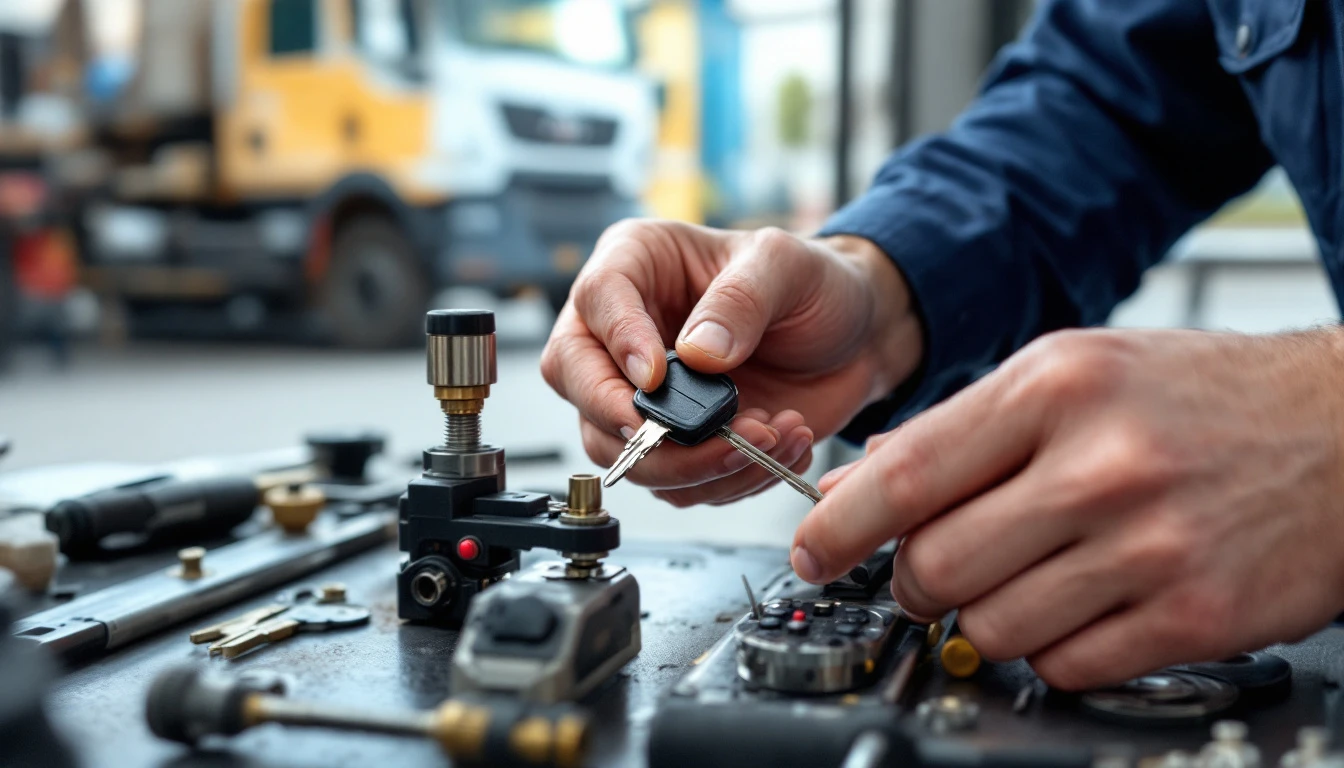
Yes. A credentialed mobile operator connects a diagnostic tool to your Chevrolet or GMC OBD-II port, authenticates to the theft-deterrent module, cuts the mechanical blade from your VIN code, and programs the transponder or smart fob on-site. This covers spare adds, all-keys-lost, and remote-start fob programming for nearly every Chevy and GMC on Fort Worth roads.
My Chevy cranks but won't start, and the security light is on — is it the key?
Not necessarily. A flashing or steady security light with a crank-no-start often points to a PassLock sensor fault or a theft-deterrent lockout rather than a bad key. On PassLock vehicles the ignition lock cylinder sensor can fail and trigger the anti-theft mode even with a perfectly good key. A credentialed operator scans the theft-deterrent module before recommending a key — do not authorize a new key until the diagnosis points to the key itself.
Do Chevrolet remote-start fobs need special programming?
The remote-start function lives in the same fob as lock, unlock, and (on push-start models) the proximity credential, so programming a replacement fob restores remote start along with everything else. Factory remote start is a feature of the fob and the vehicle's configuration, not a separate device, so a correctly programmed OEM-equivalent fob brings the remote-start button back. This falls within the smart / proximity fob range of $220–$500.
Is a Fort Worth locksmith licensed for Chevrolet key work?
Automotive locksmith companies in Texas are licensed and regulated by the Texas Department of Public Safety Private Security Bureau, which covers both the company and its individual technicians. Ask for the company license number, confirm the technician will scan the vehicle before cutting any key, and get a flat-rate range in writing before dispatch.
References & external sources
- NHTSA — Anti-Theft Systems & FMVSS 114 — Federal Motor Vehicle Safety Standard governing key-code and immobilizer disclosure.
- IIHS — Vehicle Theft — Insurance Institute for Highway Safety research on immobilizers and theft-rate reduction.
- FTC Consumer Advice — Hiring a Locksmith — Federal Trade Commission guidance on verifying locksmith legitimacy and getting a price up front.
- NASTF Vehicle Security Professional (VSP) Registry — National Automotive Service Task Force registry for credentialed access to OEM security data.
- Associated Locksmiths of America (ALOA) — Trade association governing locksmith certifications including the Master Automotive Locksmith (MAL) credential.
- U.S. Bureau of Labor Statistics — Locksmiths (49-9094) — BLS OEWS national wage + employment data for the locksmith occupation.
- AAA — Your Driving Costs — Annual ownership-cost study including unscheduled-maintenance and rental projections.