Battery Died During Key Programming: Fort Worth Recovery Guide
When the battery dies during key programming, the vehicle's security module often ends up in a locked or incomplete state that prevents starting, unlocking, or recognizing any key—new or old. This happens because automotive immobilizer systems store encryption data in volatile memory that requires continuous power, and an interruption mid-write can corrupt the entire sequence. Call or text (817) 842-1256 for mobile diagnostic and module recovery service in Fort Worth and surrounding Tarrant County areas.
The good news: most battery-interruption failures can be resolved without replacing expensive modules. The bad news: the solution depends entirely on which system failed and whether the module retained partial programming data or wiped itself completely.
Why a Dead Battery During Key Programming Causes System-Wide Failures
Modern vehicle security systems use encrypted communication between the key transponder, the body control module, and the engine control unit. Programming a new key requires writing cryptographic pairing data to multiple modules simultaneously through a multi-step handshake process. When power fails mid-sequence, the modules can end up in mismatched states—the key thinks it's programmed, the immobilizer thinks it isn't, and the body module may have locked itself awaiting confirmation that never arrived.
According to ALOA's automotive security guidance, immobilizer systems vary significantly by manufacturer, and some are far more fragile during programming interruptions than others. European vehicles—particularly BMW, Mercedes-Benz, Audi, and Volkswagen—often enter a protected "transport mode" or require dealer-level reset procedures when programming is interrupted. Domestic and many Asian manufacturers typically allow reprogramming attempts without module replacement, though the original key data may be lost.
The voltage drop itself is the culprit. Most programming tools require stable battery voltage above 12 volts throughout the entire procedure, which can take five to twenty minutes depending on the vehicle. A weak battery may start strong but sag under the electrical load of the programming device, the vehicle's own computers, and accessory circuits. Many technicians connect an external power supply or battery maintainer specifically to prevent this scenario, but roadside or DIY attempts often skip this step.
How to Tell if the Programming Interruption Damaged Your Vehicle
Start with the basics: Does the vehicle recognize any key, including keys that worked before the programming attempt? Try every key you have. If an old key still starts the car, the immobilizer base programming is intact and the problem is limited to the new key not being added to the system. You can simply retry programming with stable power.
If no key works—not even previously functional keys—the immobilizer or body control module is in a fault state. You will typically see one or more of these symptoms:
- Dashboard displays "No Key Detected," "Key Not Recognized," or "Immobilizer Active" even with a known-good key in the ignition or near the start button
- Security or immobilizer warning light stays solid or flashes a specific pattern (consult your owner's manual for the meaning)
- Engine cranks but will not fire, indicating fuel or ignition is disabled by the immobilizer
- No crank at all, no dash lights, or only partial electrical function—possible body control module lockout
- Remote unlock or lock functions do not work on any key fob
For push-to-start vehicles, try the emergency start procedure for your make and model (usually holding the fob directly against the start button). If that works, the problem is fob battery or signal-related, not immobilizer corruption. If the emergency start also fails and the dash shows a key error, the module is the issue.
What Actually Failed: Module vs. Key vs. Stored Data
The programming interruption can damage three distinct things, and knowing which failed determines your repair path and cost:
The new key itself: Least common. Transponder chips and fob circuit boards are not usually harmed by power loss during programming—they simply remain unprogrammed or partially programmed. The key can be reprogrammed once power is stable.
Stored key data in the vehicle: More common. The immobilizer module may have erased all previously learned keys when it started the "add new key" sequence, then failed to write the new key data when power dropped. Result: zero authorized keys in memory. The module itself is functional but needs a complete key set reprogram, which often requires dealer-level or locksmith scan tools with security access.
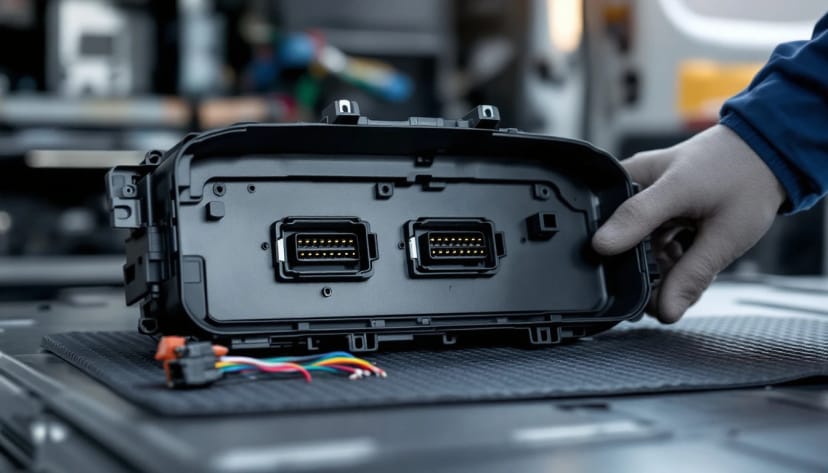
The immobilizer or body control module: Most serious. If the module was mid-write to its own firmware or encryption tables, it can become unresponsive, corrupted, or locked in a error state that will not clear with a simple retry. Symptoms include no communication over the OBD-II diagnostic port, repeating fault codes that will not clear, or a complete failure to enter programming mode. In severe cases, the module needs bench programming (removed from the vehicle and connected to specialized equipment) or replacement with a new unit that must then be coded to your vehicle's VIN.
BMW, Audi, and some Mercedes-Benz vehicles are particularly vulnerable to module-level failure because their FEM, CAS, or EIS modules maintain strict anti-theft lockout protocols. As our BMW FEM / CAS / FRM repair page explains, these modules often require genuine manufacturer diagnostic software (ISTA for BMW, ODIS for VW/Audi) to recover from programming interruptions—aftermarket scan tools frequently cannot restore them.
Your Options When Nothing Works After a Battery-Interruption Programming Failure
You have three realistic options, ranked from least to most expensive:
1. Mobile locksmith re-attempt with stable power. If the module still communicates over OBD-II and shows fault codes related to key data (rather than module corruption), a qualified automotive locksmith can often clear the faults, restore factory key memory, and reprogram all keys with a proper power supply connected. This works on most domestic and Asian vehicles and some European models. Cost is typically the standard programming service rate. Call or text (817) 842-1256 for an on-site diagnostic in Fort Worth—we can often tell within minutes whether the module is recoverable or needs escalation.
2. Dealer reset or reflash. If the module is locked or corrupted and requires manufacturer software, the dealership can sometimes perform an immobilizer reset or reflash the module to factory state using their proprietary tool. You will need proof of ownership, all existing keys, and often a tow unless a mobile locksmith can at least get the vehicle into accessory mode. Dealership turnaround varies from same-day to several days depending on parts availability and whether the module needs to be sent out. This is typically the most expensive option for labor and programming, though some dealers handle it as a warranty or goodwill repair if the battery failure was due to a recent service they performed.
3. Module replacement and coding. If the module is bricked—no communication, no fault codes, no response to reset attempts—it must be replaced. The new module must be programmed with your vehicle's VIN and security data, then new keys must be cut and programmed to it. This is the most expensive path and often requires dealership involvement for the VIN coding step, though some independent locksmiths have access to the required software for certain makes. Replacement modules for European vehicles can run into four figures for the part alone before labor and programming.
For straightforward reprogramming attempts and many module recoveries, mobile service at your location in Fort Worth, Arlington, North Richland Hills, or elsewhere in Tarrant County avoids towing costs and speeds up the process. For complete module replacement or reflash, you may need to bring the vehicle to a shop with bench programming capability.
What You Can Try Before Calling a Locksmith or the Dealer
If the vehicle still has partial function, these steps cost nothing and occasionally resolve the issue:
Disconnect the battery for ten minutes. This forces a hard reset of all modules and sometimes clears transient fault states. Reconnect the battery, ensure it is fully charged (12.6 volts or higher at rest), then try your old keys again. Do not attempt to reprogram the new key yet—verify the old keys work first.
Check for blown fuses. A power surge during the interruption can blow fuses for the immobilizer, body control module, or OBD-II port. Consult your owner's manual for fuse locations and descriptions. Replace any blown fuses and retry.
Try the emergency start procedure. For push-button start vehicles, hold the key fob directly against the start button (or insert the physical key blade into the emergency slot if equipped) and press start. Some vehicles can start this way even if the wireless fob communication has failed.
Look for a second chance at on-board programming. A few manufacturers—Honda, Toyota, Nissan, and some Ford models—offer owner-accessible programming procedures using a specific sequence of key turns, door locks, or button presses. Search for your exact year, make, and model plus "onboard key programming" to see if a procedure exists. Note that these procedures almost never work if the immobilizer is in a fault state, but if the module is fine and simply did not finish learning the new key, it may succeed. Our transponder key programming page covers which vehicles support owner programming and which require a scan tool.
If none of these steps restore function, the failure is beyond DIY repair and requires diagnostic equipment to read fault codes, check module communication, and attempt a proper recovery sequence.
When the Module Needs Bench Programming or Replacement
Bench programming means removing the immobilizer or body control module from the vehicle, connecting it to a specialized programmer on a workbench, and directly writing new firmware or key data to its memory chips. This bypasses the vehicle's normal communication protocols and can often recover modules that will not respond through the OBD-II port.
You will know bench work is required if:
- Scan tool shows "No Communication" with the immobilizer, body control, or engine control module
- Module communicates but returns unrecoverable error codes (often manufacturer-specific codes starting with "U" or "B")
- Repeated programming attempts using manufacturer software fail with the same error
- The module physically damaged (water intrusion, component failure) in addition to the programming interruption
Bench programming is specialized work. Not all locksmiths or repair shops have the equipment or software, and it is generally not something the dealership service department does—they typically replace the module instead. Independent specialists who focus on module repair can often recover units the dealer would discard, but turnaround is usually several days because the module must be shipped or dropped off.
Replacement is faster but more expensive. The new module must match your vehicle year and be VIN-coded (also called VIN learning or adaptation) so the vehicle's other computers recognize it as legitimate. Texas locksmith companies and technicians must follow state licensing and vehicle-ownership verification requirements. Reputable automotive locksmiths should be able to show business identification, insurance, and proof of authorization before performing vehicle key work. Always verify credentials before authorizing module replacement, as it involves both expensive parts and security-sensitive programming.
Frequently Asked Questions About Battery-Interruption Programming Failures
Can I jump-start the car and retry programming immediately?
Yes, but connect a battery maintainer or second vehicle with jumper cables and leave it connected throughout the entire programming procedure. A jump-start alone brings voltage up temporarily, but the weak battery will sag again under load. For guidance on post-jump electrical issues, see Car Won't Start After a Battery Replacement or Jump Start.
Will disconnecting the battery erase my radio presets and other settings?
Yes, a battery disconnect typically clears radio memory, clock, seat settings, and sometimes learned engine parameters. The vehicle will relearn engine data after a few drive cycles. Write down radio presets before disconnecting if you want to restore them.
How much does module recovery or replacement cost in Fort Worth?
Programming recovery when the module is intact typically costs the same as standard key programming. Module replacement costs depend entirely on the part—domestic modules range from a few hundred dollars, European modules can exceed a thousand dollars for the part alone, plus labor and programming. Request a specific quote after diagnosis rather than guessing based on averages.
Does insurance cover this kind of repair?
Standard auto insurance does not typically cover key programming failures or module damage from service interruptions unless it resulted from a covered event like a collision or comprehensive claim. Check your policy or call your agent to confirm.
Should I go to the dealer or a locksmith for this problem?
For most domestic and Asian vehicles, a qualified mobile locksmith can diagnose and recover the system at your location, often the same day. For European vehicles or confirmed module-level failure, the dealer may have better access to proprietary software and replacement parts. Our auto locksmith vs. dealership guide compares the two options in detail. Diagnosis first, then decide based on what actually failed.
If your vehicle is stuck with no working keys after a programming interruption anywhere in Fort Worth, Arlington, or Tarrant County, call or text (817) 842-1256 for mobile diagnostic service. We bring the scan tools, power supplies, and programming equipment to your location, diagnose the specific failure, and provide a clear quote before beginning any work. Most recoveries happen on-site the same day when the module is intact—no tow required.