The short answer
As of September 2026, when one key works and the other does not, the cause is almost always one of five things: a flat fob battery, a worn blade, a failed transponder chip, a key erased during a previous key-learning session, or a key that was never properly programmed. The good key proves the car is fine, which is why this fault is usually cheap. Re-learning an existing key runs around $65 alongside other work; a genuine replacement follows normal key pricing of $120 to $500 depending on type.
Why the working key is the most valuable diagnostic tool you own
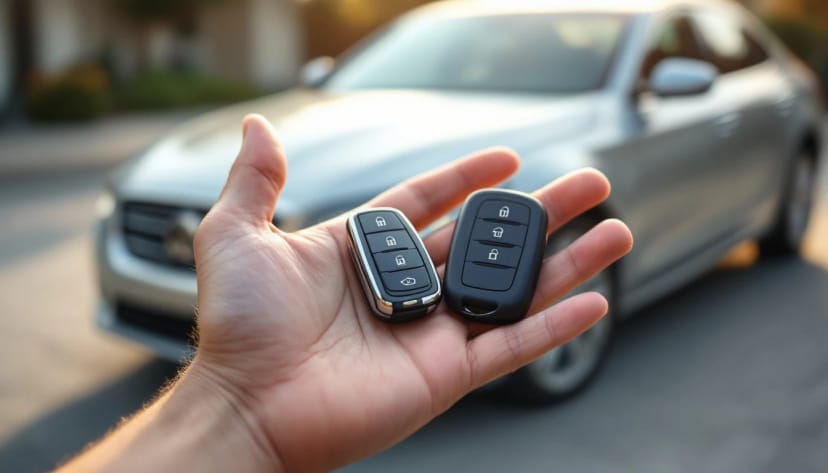
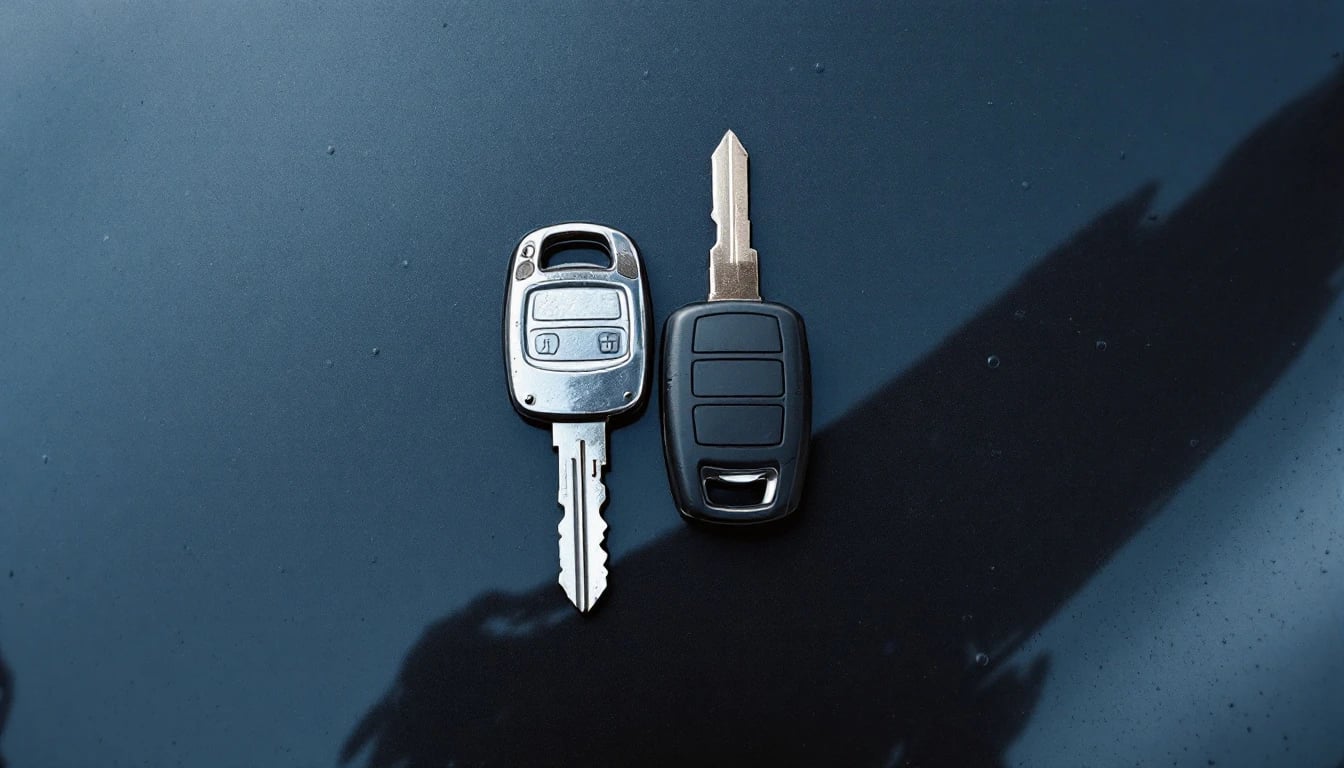
Most automotive faults are hard to narrow down because too many things could be wrong. This one is different. You have two keys and one car, and one of the keys works perfectly.
That single fact eliminates an enormous amount of expensive territory. The immobiliser is working, because it is authorising a key right now. The antenna ring or receiver is working, because it is reading a key right now. The door locks are working. The ignition cylinder or start button is working. The battery, starter and ignition switch are all working, because the car starts.
Everything left is inside the key that failed — or in the relationship between that key and the car. That is a short list, and most of it is cheap.
Compare that to a car where no key works, which is a genuinely different and more expensive problem covered in what to do when there is no working key at all. If you are reading this page, you are in the fortunate version of this situation.
The five causes, in order of likelihood
1. A flat fob battery
The most common cause by a wide margin, and the cheapest to rule out.
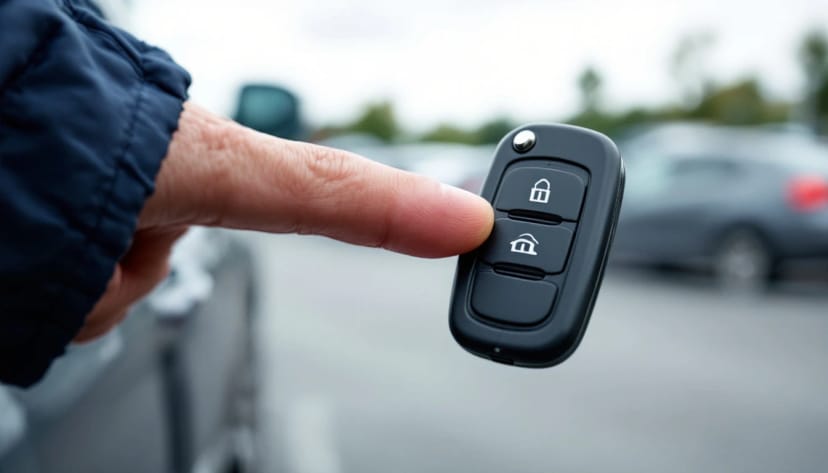
The signature is graceful degradation rather than sudden death. The key stops working from across the car park but still works at the door. Then it works only when almost touching the handle. Then the buttons stop entirely. Range loss before total loss is the classic pattern, because the long-range radio function is the first thing a weakening cell fails to support.
Important nuance: on a push-button-start car, a fob with a completely dead battery will usually still start the engine if you hold it against the designated spot on the steering column or start button, because that function uses a short-range field rather than the battery-powered radio. If your fob will not open the doors but will still start the car when held in the right place, you have found a battery, not a fault. Our guide to key fob battery replacement covers doing it yourself for the price of a coin cell.
2. A worn blade
Applies to any key with a metal blade, including the emergency blade inside a proximity fob.
Keys wear. The blade you use every day wears steadily and the lock wears with it, so the pair drift together and keep working. The spare that sat in a drawer for four years never wore at all — and when the lock has moved on, the pristine spare can fit worse than the battered daily key. This is counter-intuitive and it catches people out constantly.
The tell is mechanical: the key enters but feels rough, needs jiggling, or turns in the door but not the ignition. If the failing key also feels physically different in the lock, the blade is the suspect and the fix is re-cutting rather than re-programming. Our duplicate key work is cut to the vehicle's actual lock rather than copied from a worn key, which is exactly why a copy of a copy tends to fail.
3. A failed transponder chip
Inside almost every modern key is a small chip that answers the car's security challenge. It has no battery — it is powered by the field the vehicle generates — and it can fail.
The signature is precise and worth memorising: the buttons still work, the doors still lock and unlock, and the engine will not start — or starts and dies after a second or two. Radio alive, security dead. That split is the fingerprint of a chip problem.
Chips fail from physical shock (a key dropped hard on concrete enough times), from heat, and from moisture. A key that went through a wash cycle and then behaved this way is a strong candidate. The distinction between the radio side and the security side of a key is explained more fully in transponder key versus key fob, which is worth reading if the vocabulary here is new.
4. The key was erased and nobody told you
This is the cause almost nobody anticipates, and it is more common than it should be.
Many vehicles, when they learn keys from scratch — the all-keys-lost path — erase every key the car previously knew. This is deliberate and it is a good security design: it means a key stolen from a valet, a mechanic or a previous owner stops working the moment the owner has new keys made. The Insurance Institute for Highway Safety has documented how much modern immobiliser design has reduced vehicle theft, and this erase-on-relearn behaviour is part of why.
The consequence for you is straightforward. If your car ever had keys made without every key present — after a loss, after a module replacement, during a repair, or before you owned it — then an older key you were not carrying that day may simply have been dropped from the list. It is not damaged. The car no longer recognises it as authorised.
The fix is programming, not replacement, and it is inexpensive. This is one of the most satisfying calls we run, because the customer expects to buy a key and instead gets the one in their hand switched back on.
5. It was never properly programmed
Common with keys bought online and with the cheapest possible cutting services.
Every key needs two things done to it: the blade cut to the vehicle's locks, and the credential programmed to the vehicle. A key can arrive with one done and not the other. Worse, on some platforms the remote functions and the immobiliser credential are programmed separately, so a key can genuinely lock and unlock the doors while never having been introduced to the security system at all. It feels like a working key right up to the moment it needs to start the engine.
If the failing key came from an online purchase, mention that on the phone. The whole diagnostic changes, and our page on aftermarket fobs that will not program covers the part-quality side of the problem in detail.
Five-minute diagnostic you can run right now
Do these in order with both keys in hand. Each step is free.
One — buttons. Press lock and unlock on the failing key from a few feet away. Nothing at all? Suspect the battery. Works fine? Skip straight to the transponder question.
Two — proximity. If nothing happened, stand right next to the door and try again. Working only up close is a dying battery, not a dead key.
Three — the blade. Slide the emergency blade out of a proximity fob, or use the bladed key directly, and try the driver's door lock mechanically. Smooth means the cut is fine. Rough, sticky or refusing to turn means the blade is the problem.
Four — start attempt. With the failing key, try to start the car. If the engine cranks and dies after a second or two, or the security light flashes, that is the immobiliser rejecting the key — the chip or the programming. If nothing happens at all on a push-button car, hold the fob against the start button or the marked spot on the column and try again; if it starts that way, it is the battery.
Five — swap and confirm. Immediately try the good key and confirm the car behaves normally. This proves nothing about the car changed between attempts, which matters more than it sounds — it rules out a marginal 12-volt battery masquerading as a key fault.
What your results mean
| What the failing key does | Most likely cause | Usual fix | Cost picture |
|---|---|---|---|
| No button response at all | Fob battery | Replace the cell | A few dollars, DIY |
| Buttons work only up close | Fob battery weakening | Replace the cell | A few dollars, DIY |
| Buttons work, engine will not start | Transponder chip or lost programming | Re-learn key, or replace if chip failed | ~$65 add-on, or key price |
| Engine starts then dies in 1–2 seconds | Immobiliser rejecting the key | Re-learn key | ~$65 add-on |
| Key rough in the lock, will not turn | Worn blade | Re-cut to the vehicle's locks | Cutting price |
| Opens doors, never has started the car | Never fully programmed | Complete the programming | ~$65 add-on |
| Key was an online purchase | Part quality or wrong family | Verify part, re-program or replace | Depends on part |
| Stopped after other keys were made | Erased during a relearn | Re-learn key | ~$65 add-on |
Notice how much of that table ends in programming rather than replacement. That is the point of running the diagnostic before buying anything: our key fob programming work exists precisely because the key in your hand is usually salvageable.
What the repair costs in Fort Worth
Re-learning an existing key: around $65 when done alongside other work at the same visit, and modest as a standalone job. This is the outcome for erased keys, incompletely programmed keys and most keys that lost their credential.
Re-cutting a blade: cutting-only pricing, well below a full key replacement, and the answer when the electronics are fine and the metal is not.
Full replacement: if the chip has genuinely failed or the key is physically beyond use, you are into standard key pricing — $120 to $180 for a basic transponder, $175 to $275 for a remote head or flip key, $220 to $500 for a smart or proximity fob as of September 2026. The full cost guide breaks that down by make.
The saving is in the sequence. Diagnose, then buy. Buying a new key first and discovering the old one only needed re-learning is the most common way people overspend on this fault, and it happens weekly.
An ALOA-credentialed automotive locksmith working this market described the field reality: "Two keys, one works — that is the easiest call of my week and usually the cheapest for the customer. The expensive version of this call is the one where somebody bought a fob online first and now owns a part nobody can use."
Fix it while the good key still works
The reason this matters is arithmetic, not urgency.
Right now you have one working key, which means every job available to you is an add-a-key job — the cheap side of the price table. Lose or damage that remaining key and every job becomes an all-keys-lost job: higher key price, a $75 to $150 surcharge, a longer appointment, and on many platforms a security wait that nothing can shorten. If you go the dealer route instead, add a tow at $150 to $300 and a wait of several days.
Running on one functional key is running without a spare, whatever the drawer says. The case is made in full in is a spare car key worth it, and the same logic applies with more force here, because you have already been shown that your backup is unreliable.
The Federal Trade Commission publishes sensible guidance on getting a clear estimate before authorising vehicle work, and this is a fault where that advice pays for itself: insist on knowing whether you are being sold programming or a new key, and why.
When to call us
Call when the failing key still has good buttons but will not start the car, when a key stopped working after other keys were made, when a key came from an online purchase and has never worked properly, or when the key feels wrong in the lock. All four are on-site jobs at your home or workplace, and all four have a realistic chance of ending in a programming charge rather than a replacement.
Bring both keys to the appointment. The working one is part of the procedure on many platforms, and it is also the fastest way to prove the fix before we leave.
Frequently Asked Questions
Why does one of my car keys work and the other one not?
The five common causes, in order, are a flat fob battery, a worn blade that no longer matches the lock closely enough, a failed transponder chip inside the key, a key that was erased when the vehicle relearned its keys at some point, and a key that was never fully programmed to begin with. The useful part is that your working key rules half the list out immediately, because it proves the car, the locks and the immobiliser are all functioning.
Can a key be erased without me doing anything?
Not spontaneously, but yes as a side effect of work you may not have been told about. Many vehicles perform an all-keys-erase when new keys are learned from scratch, which is deliberate anti-theft behaviour — it prevents a stolen key from working after the owner replaces the set. If keys were made at any point without every key present, an older key you were not carrying that day can come back to the car dead. It is not broken, it is simply no longer on the list.
Can my dead key be re-programmed instead of replaced?
Very often, and it is the cheapest outcome available. If the key's chip is intact and the blade still fits, re-learning it to the vehicle is a programming job rather than a new-key job. If the chip has failed or the blade is worn past usefulness, the key has to be replaced. A minute with the key in hand settles which of the two you are looking at, and we would rather tell you it is the cheap one.
The buttons work but the car will not start with that key. What does that mean?
It means the radio side of the key is alive and the immobiliser side is not, which is a genuinely useful split. Locking and unlocking the doors uses one system; authorising the engine to run uses a different one. A key that opens the car but will not start it usually has a transponder or immobiliser-credential fault rather than a battery fault, because a dead battery would kill the buttons first.
How much does it cost to re-program an existing key in Fort Worth?
Adding or re-learning a key while you have another working key present is the least expensive job we do — around $65 on top when it is done during the same visit as other work, and modest as a standalone call-out. If the key turns out to need replacing rather than re-learning, you are into normal key pricing, which as of September 2026 runs $120 to $180 for a basic transponder and $220 to $500 for a smart or proximity fob.
Could a cheap aftermarket key be the problem?
It is a frequent cause and worth ruling in early. Aftermarket keys vary enormously in quality, and some will never hold a program reliably on certain platforms even when they appear to work at first. If the failing key is one you bought online or had cut somewhere very cheap, that history matters and you should mention it — it changes the diagnosis from a car problem into a part problem.
Is a key that works intermittently dangerous to keep using?
It is not a safety hazard so much as a schedule hazard. An intermittently recognised key does not usually leave you stranded, because the car simply refuses to start rather than stopping while driving. What it does do is fail on the morning you cannot afford it, and it removes your safety margin — an intermittent key plus a lost primary key means an all-keys-lost job at full price. Fix it while the good key still works.
Should I just buy a new key instead of diagnosing this?
Not before a five-minute check. A battery costs a couple of dollars, and re-learning an existing key is a fraction of a new key's price. Buying a replacement first is the single most common way people overspend on this fault, and the diagnostic that would have prevented it costs nothing but attention.
References
- Insurance Institute for Highway Safety — immobiliser effectiveness and vehicle theft-loss research.
- National Highway Traffic Safety Administration — federal anti-theft standards governing vehicle key and immobiliser systems.
- Federal Trade Commission — consumer guidance on repair estimates and authorising vehicle work.
- Associated Locksmiths of America — professional standards for automotive key cutting and programming.
- National Automotive Service Task Force — secure vehicle security data access for qualified independents.
- American Automobile Association — roadside assistance and vehicle ownership cost research.
- U.S. Bureau of Labor Statistics — motor vehicle maintenance and repair price trends.
Bring both keys and we will sort it on site
Tell us what the failing key does — buttons, blade, start attempt — and we will usually know before arriving whether this is a battery, a re-learn or a replacement. Call 817-842-1256 or get in touch here, and we will come to wherever the car is parked.