The short answer
As of September 2026 in Fort Worth, a replacement key for a Toyota Highlander or Sienna costs $130 to $195 if your vehicle uses a bladed transponder key and $250 to $500 if it uses a proximity smart fob. A spare added while you still hold a working key runs around $65 on top during the same visit. Both are mobile jobs — no dealer, no tow. The variable that surprises people is the Toyota security learn timer on the all-keys-lost path, which adds a wait nobody can shorten.
Why these two belong on one page
The Highlander and the Sienna are different vehicles with the same job description. Both are the three-row family Toyota, both spend their lives doing school runs and airport trips across Tarrant County, and both are commonly the household's only car. That last point is why a key failure on either one is treated as an emergency in a way that a key failure on a second car simply is not.
Mechanically, for our purposes, they are close relatives. Both span enough model years to cross three key generations. Both moved from bladed keys through remote head keys to proximity smart fobs, with overlapping years where trim level decides which one you got. And both run Toyota's security architecture, which behaves consistently across the range — including the learn timer.
That consistency is what makes a shared reference page useful. What is not consistent is the key itself, and that is the part you need to pin down before anybody quotes you.
Identify your generation before you call
Do not start with the model year. Start with what is in your hand and what you do to start the engine.
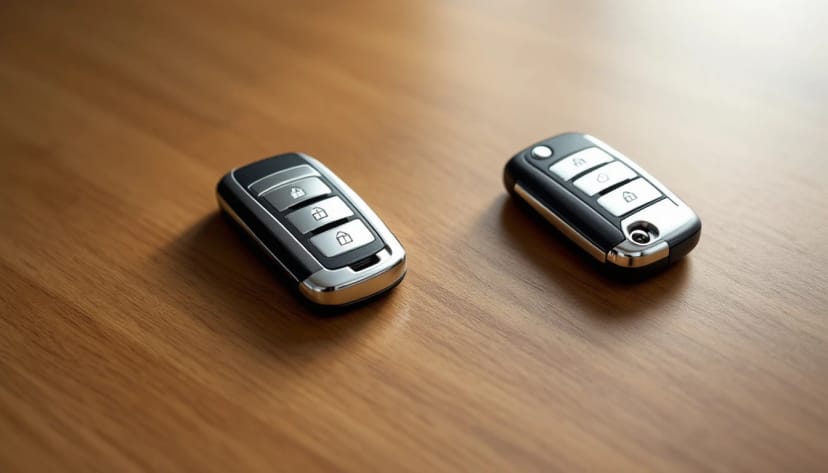
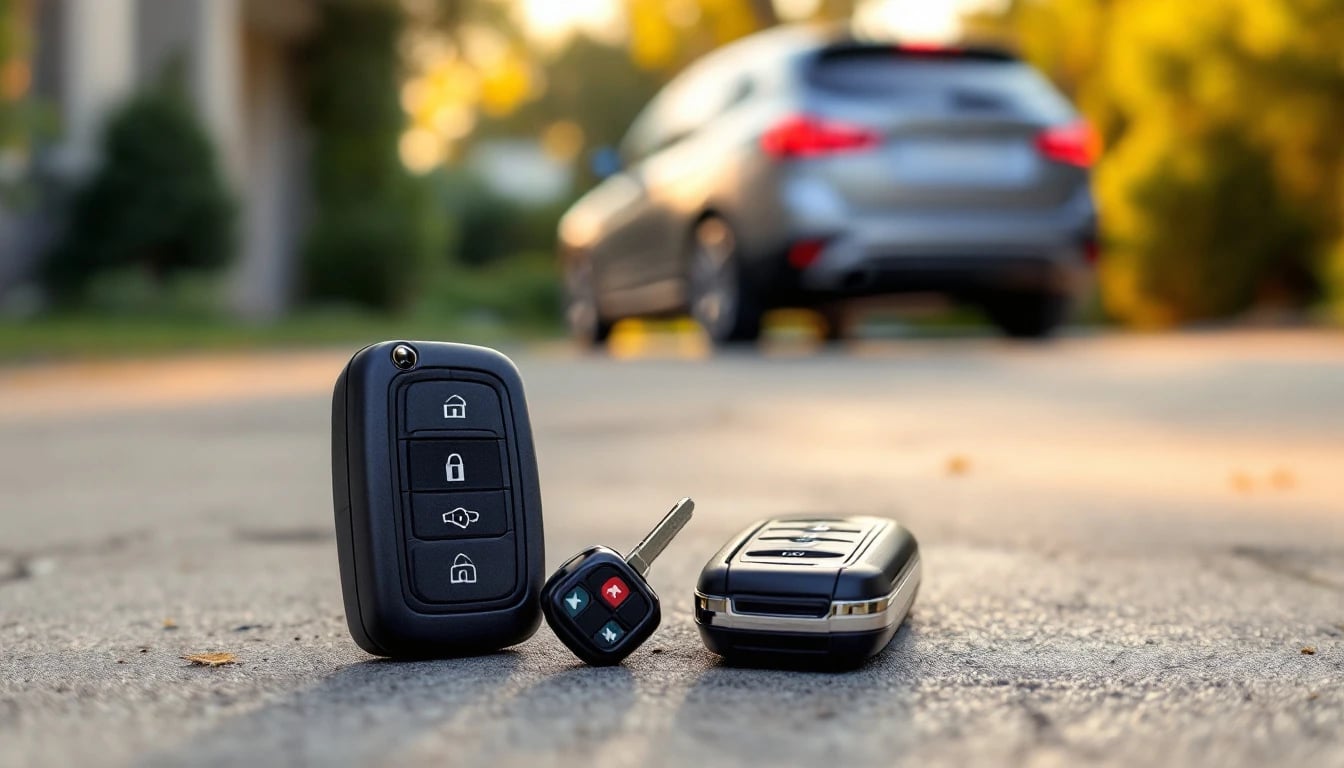
Bladed transponder key. A metal blade with a plastic head, no buttons at all. The security chip lives in the plastic head, invisible and without a battery of its own. This is the earliest family on both vehicles and it is still very common on well-kept older examples in this market.
Remote head key. A blade, plus lock and unlock buttons built into the same unit. On a Sienna it will usually also have a sliding-door button, which is the single fastest way to identify a Sienna key across a table of fobs. You turn this key in the ignition — there is no start button.
Proximity smart fob. No blade in daily use, a start button on the dash, and the vehicle unlocks when you approach with the fob in a pocket. There is an emergency metal blade hidden inside the fob, released by a small catch, and it matters more than owners realise — more on it below.
The middle years are genuinely mixed. On both models there was a period where higher trims carried smart entry and lower trims did not, on the same model year. This is exactly why a table of years would mislead somebody, and why the identifier printed on the back of your fob is the authoritative answer for your specific vehicle. Read it to us on the phone and the quote is firm before anyone leaves.
What each key family costs
| Your key family | How to recognise it | Spare with working key | Replacement, all keys lost |
|---|---|---|---|
| Bladed transponder (earliest) | Blade only, no buttons, chip in the head | $130–$195 | $130–$195 plus $75–$150 surcharge |
| Remote head key | Blade plus buttons in one unit; Sienna adds a door button | $175–$275 | $175–$275 plus $75–$150 surcharge |
| Proximity smart fob | No blade in use, push-button start | $250–$500 | $250–$500, timer applies |
| Extra key added at the same visit | Any of the above | around $65 on top | n/a |
| Emergency blade cut only | The blade inside a proximity fob | Cutting price | n/a |
| Lockout, keys are fine | You can see the keys inside | $75–$200 | n/a |
Deliberately absent from that table: part numbers. Toyota fob part numbers vary by market, by model year and occasionally mid-year, and a printed list would be wrong for somebody within months of publication. The identifier printed on the back of your existing fob is authoritative for your car, and paired with the VIN it removes every remaining variable. Our full pricing guide carries the same bands with the other makes alongside for comparison.
The Toyota security timer, explained honestly
This is the part of the job that generates the most surprise, so here is the plain version.
When a Toyota has to learn keys from scratch — no working key anywhere — the vehicle typically imposes a timed security cycle. During it, the car sits and does nothing while the security system satisfies itself that the request is legitimate. It is not a fault, it is not a slow technician, and no tool on the market shortens it. It exists because a car that could be re-keyed instantly would be a car that could be stolen instantly.
The practical consequences are worth planning around:
All-keys-lost is a longer appointment than you expect. Budget an hour or more, most of which is the vehicle thinking rather than anybody working.
A spare-key job avoids the timer almost entirely. With a working key present, the vehicle already trusts a credential and the add-a-key path is short. That is the mechanism behind the price difference, not an arbitrary markup.
A quote that ignores it is a warning sign. Anybody who promises an all-keys-lost Toyota in fifteen minutes has either not done the job or is about to discover the timer in your driveway.
The Insurance Institute for Highway Safety has documented how substantially immobiliser-equipped vehicles reduced theft losses, and the National Highway Traffic Safety Administration sets the federal anti-theft standards that pushed this architecture into every mainstream vehicle. The wait you are sitting through is the same design decision that makes your Highlander hard to steal.
Model-specific notes worth knowing
Highlander
The Highlander's long production run is the reason its key question cannot be answered from the badge. Early examples are bladed-key vehicles through and through. Later generations are proximity vehicles throughout. The transition years are where trim decides, and where owners buying used most often assume wrong.
One recurring Fort Worth pattern: hybrid Highlanders arrive with owners convinced that the hybrid system complicates the key job. It does not. Hybrid and conventional drivetrains share the same security architecture, and the key work is identical. What differs is that a hybrid's 12-volt system behaves differently when weak, which occasionally produces symptoms that get blamed on the key — a distinction covered in what happens when the car will not start after a battery change.
Sienna
Two things set the Sienna apart in practice.
The sliding doors are a diagnostic. They are the first remote function to fail when a fob battery weakens, because they draw a higher-effort request than a simple unlock. A Sienna owner reporting "the doors stopped responding but the locks still work" has almost always found a battery, not a fault.
Loading and unloading is where keys get lost. The Sienna's use case — buggies, sports gear, groceries, children — puts a key in a hand that is doing four other things. Sienna all-keys-lost calls cluster around car parks and driveways at exactly the moments the vehicle was fullest.
Later Siennas are hybrid-only, which raises the same question as the Highlander and has the same answer: no difference to the key work.
The emergency blade nobody knows about
If you drive a proximity Highlander or Sienna, find the catch on your fob now and slide the metal blade out. This takes ten seconds and it is genuinely useful knowledge.
That blade opens the driver's door mechanically. It works when the vehicle's 12-volt battery is flat, when the fob's own battery is dead, and when the car has stopped responding to radio for any reason. It will not start the engine — on a proximity vehicle that still needs the fob credential — but it gets you into the cabin, which on a dead-battery morning in a supermarket car park is the entire problem solved.
Two things follow from that. First, when a spare is made, the emergency blade must be cut too. A fob programmed but not cut is a fob that fails you in exactly the scenario a spare exists for, and it is the corner budget operators cut most often. Second, if your fob has never had its blade out, check now that it actually fits your driver's door — used vehicles occasionally arrive with a fob from a different car whose electronics were programmed but whose blade was never cut.
Dealer or mobile locksmith
For both vehicles, the mobile route is the default and the dealer route is the exception.
A credentialed mobile locksmith cuts and programs at your location. The car does not move, which matters enormously on an all-keys-lost job because a vehicle with no working key is a vehicle that cannot be driven anywhere. Secure vehicle data access for qualified independents is administered through the National Automotive Service Task Force, which is the framework that makes legitimate independent Toyota key work possible.
The dealer is genuinely the answer for a narrow set of module-related situations, and we identify those from the VIN rather than discovering them on site. The economics otherwise favour mobile heavily: a dealer visit on an all-keys-lost vehicle means a tow at $150 to $300 one way, plus a wait of several days in a service queue for a car that cannot be driven in. The trade-offs are laid out in mobile locksmith versus the dealership, and the broader pricing context in how much a locksmith costs in Fort Worth.
An ALOA-credentialed automotive locksmith working this market put the Toyota case simply: "These are the easiest family vehicles in the business to key correctly and the easiest to key badly. The difference is whether somebody cut the emergency blade and whether they allowed for the timer."
What we do on site
We come to the vehicle. You show registration or title in your name plus photo ID — any operator who will make a key to a Toyota without checking that is one to send away.
We confirm the key family from the identifier and the VIN, and confirm the price quoted on the phone before work starts. The blade is cut to your vehicle's locks, including the emergency blade inside a proximity fob. The credential is programmed to the vehicle. Where the security timer applies, we tell you before it starts rather than during it.
Then you test it yourself before we leave: doors, tailgate or sliding doors, ignition or start button, panic. On a proximity vehicle we also confirm the emergency blade physically opens the driver's door.
Twenty-five to forty-five minutes with a working key present. Longer on all-keys-lost, dominated by the timer. Related Toyota reading if you want the wider picture: our Toyota key replacement overview, the Toyota and Lexus smart-key ECU programming page for the module side, Avalon and Venza spare keys for the sedan equivalents, and the dedicated Toyota all-keys-lost service.
Get the spare made before the timer becomes your problem
The whole argument for these two vehicles compresses into one sentence: a spare made today is a half-hour appointment at a time you choose, and a replacement made after the last key is gone is a longer, more expensive appointment at a time chosen for you, in a household that has lost its only car.
The American Automobile Association puts the annual cost of running a new vehicle north of $12,000. Against that, a spare key for a family Toyota is the cheapest risk removal in the entire ownership budget, and the Federal Trade Commission would tell you the same thing it tells every used-car buyer: settle the question before you need the answer.
Frequently Asked Questions
How much is a replacement key for a Toyota Highlander or Sienna in Fort Worth?
As of September 2026, our Toyota and Lexus band is $130 to $195 for a basic transponder key and $250 to $500 for a smart or proximity fob. Which one applies depends on your generation rather than your badge — older Highlanders and Siennas use bladed keys, later ones use proximity fobs, and the middle years can be either depending on trim. Adding a spare while you still hold a working key is the cheapest version, at around $65 on top during the same visit.
How do I tell which key generation my vehicle has?
Look at what you carry and how you start the car. A plain metal blade with a chip in the plastic head, no buttons, is the earliest family. A blade that folds or sits alongside lock and unlock buttons is a remote head key. A fob with no blade in daily use, paired with a start button on the dash, is a proximity smart key with an emergency blade hidden inside it. The identifier printed on the back of your existing fob confirms the exact family in seconds, which is why we ask for it on the phone.
Is there a waiting period when Toyota keys are programmed?
On the all-keys-lost path, frequently yes. Toyota security systems commonly impose a timed learn cycle during which the vehicle sits and refuses to proceed while it satisfies itself the request is legitimate. It is an anti-theft feature, not a fault, and no tool shortens it. Any quote that does not allow for it came from somebody who has not done the job on these platforms.
Do I need to go to a Toyota dealer?
For the overwhelming majority of Highlanders and Siennas on Fort Worth roads, no. Both are routine mobile work for a properly equipped independent, done wherever the vehicle is parked, with no tow and no service-department queue. The narrow exceptions involve specific module faults or unusual vehicle history, and those are identifiable from the VIN before anybody is dispatched.
My Sienna's power sliding doors stopped responding to the fob. Is that the key?
Usually it is the fob battery rather than anything expensive, and the sliding doors are often the first function to go. They are a higher-current remote request than a simple unlock, so a weakening cell tends to fail there first while lock and unlock still work. Replace the battery before spending anything else, and if the doors still refuse, the fault is more likely in the door mechanism than in the key.
Can I buy a Highlander or Sienna fob online and have it programmed?
Sometimes, and the saving is real when the part is right. The risk is that the fob has to match both your vehicle's radio frequency and its chip family, and online listings describe both loosely. Read us the identifier off your existing fob before you order, and we will tell you whether the listing is the right family — thirty seconds on the phone is cheaper than a fob nobody can use.
How long does the appointment take?
With a working key present, typically twenty-five to forty-five minutes from arrival for either vehicle. All-keys-lost runs considerably longer and is dominated by the Toyota security timer rather than by anything we control, so budget an hour or more. Neither job requires moving the vehicle and neither is an all-day appointment.
Should I get a spare before I need one?
On these two vehicles more than most, yes. Both are frequently a family's only vehicle, so an all-keys-lost event does not just cost money, it removes the school run, the commute and the appointments in one go. The spare is made at a time you choose in about half an hour; the replacement is made at the roadside on the worst possible morning, at a higher price, with a security wait attached.
References
- Insurance Institute for Highway Safety — theft-loss research across immobiliser-equipped vehicle generations.
- National Highway Traffic Safety Administration — federal motor vehicle theft prevention standards and anti-theft device requirements.
- National Automotive Service Task Force — secure vehicle security data access for qualified independent locksmiths.
- Associated Locksmiths of America — professional credentialing and consumer guidance for automotive locksmith work.
- American Automobile Association — Your Driving Costs annual vehicle ownership research.
- Federal Trade Commission — used-vehicle purchase guidance and repair estimate consumer protections.
- U.S. Bureau of Labor Statistics — motor vehicle maintenance and repair price trends.
Read us the fob identifier and the VIN
Two numbers on the phone and you will have a firm price and a realistic time window for your Highlander or Sienna — including whether the Toyota security timer is going to be part of your afternoon. Call 817-842-1256 or get in touch here, and we will come to the vehicle. More Toyota-specific detail lives on our Toyota brand page.