TL;DR — Armada and Titan key work in one screen
The Armada arrived in 2004 as a 2005 model and the Titan in 2004, and both have run continuously since. That long production window is exactly why a flat price quoted over the phone without a VIN is meaningless on these trucks.
- Early era, roughly 2004 to 2007 — bladed transponder key, NSN14 family blank, Nissan 4D-class chip. Cheapest key work on either nameplate.
- Intelligent Key era, roughly 2008 onward — proximity fobs in the KR55WK48903 and CWTWB1U families. Verify the exact FCC ID by VIN, because Nissan ran overlapping part numbers across trims and years.
- 2017 and newer — updated proximity hardware and updated security handling on the second-generation Titan and the 2017-plus Armada, which shares its bones with the global Patrol rather than the outgoing US platform.
- Every one of those eras runs its immobilizer function through the BCM and the IMMU relationship, not a standalone box you can point at.
- PIN retrieval through the credentialed security channel is the gate. It is the single thing that separates a real Nissan operator from a parts-swapper.
As of August 2026, Fort Worth pricing runs $120–$200 for a bladed transponder key, $220–$500 for an Intelligent Key proximity fob, roughly $65 to add a second fob during the same visit, $180–$450 for a lost fob with no working spare, $150–$400 for ignition work, and $75–$200 for a straight lockout with no key work. Call or text 817-842-1256.
Service detail lives on truck key replacement and the Nissan brand page.
Quick answer
If a key still works, this is a short driveway visit: confirm the hardware family by VIN, cut the blade or source the correct fob, pull the PIN through the credentialed channel, run the registration sequence, and test every key on every function before leaving. If nothing works, the same truck becomes an ownership-verified job with a longer on-site procedure on a vehicle nobody can reposition. The entire cost gap between those two calls is a matter of when you made the call.
How the Nissan security system actually works
The BCM and IMMU relationship
Owners often ask which module holds the keys, expecting a single part number. On these trucks the answer is a relationship rather than a box. The immobilizer control function, commonly written as IMMU, lives inside or alongside the body control module, and the two are functionally married for the purposes of key work.
That architecture has three practical consequences. First, a key credential is not stored in the ignition switch or the steering column, so replacing mechanical parts does nothing for a no-start caused by authorization failure. Second, when a body control module is replaced, the incoming module arrives configured to nothing in particular and has to be brought into a working relationship with the vehicle before any key will authorize a start. Third, a fault in the module can present exactly like a dead key, which is why a credentialed operator scans before cutting anything.
Deeper coverage of that module relationship lives on our Nissan and Infiniti BCM issues page, and the same architecture is why an ignition-side complaint on a smaller Nissan is a genuinely different diagnosis from a key complaint — we walked through that distinction in detail in the guide to Sentra and Versa ignition switch repair.
The PIN requirement
Nissan gates key registration behind a vehicle-specific security PIN. No legitimate procedure bypasses that gate. A credentialed operator retrieves the value through the manufacturer security data channel using registry credentials issued through the NASTF Vehicle Security Professional program, which is the same underlying pathway a dealership technician uses to get the same value.
This matters commercially, not just technically. The retrieval step takes real time on site and carries a real per-transaction cost to the operator. Any quote that assumes it away is a quote that is going to change once the technician is standing in your driveway. When an operator on the phone cannot describe how they get the PIN, you have learned everything you need to know.
The 20-minute registration sequence
Nissan's registration procedure is a timed, ordered sequence of vehicle-side actions performed in concert with the diagnostic tool. The trade shorthand for it is the 20-minute procedure. The number is shorthand rather than a stopwatch figure, but the underlying reality is accurate: the truck has to be walked deliberately into and held in programming mode, and a missed step drops it back out and forces a restart from the top.
That is why a Nissan visit is not a five-minute job even when everything goes right, and it is why the honest on-site estimate for an all-keys-lost Armada is measured in hours rather than minutes.
Armada and Titan key hardware, era by era
Early bladed transponder trucks, roughly 2004 to 2007
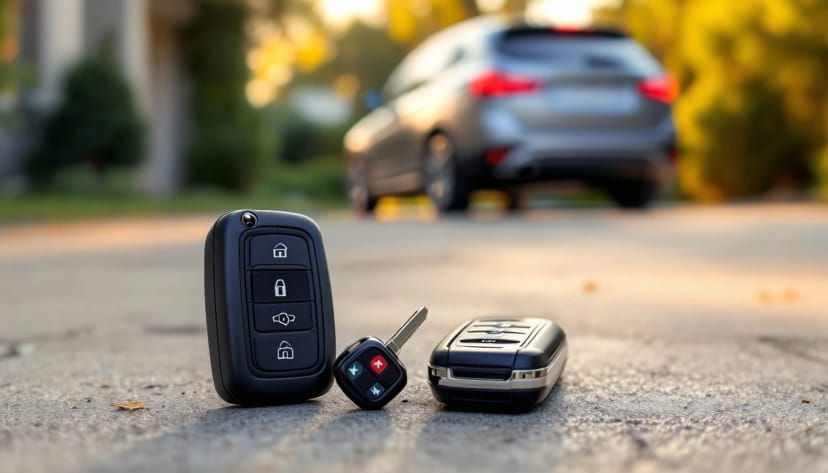
The first Armada and the first-generation Titan shipped with a conventional bladed key carrying a transponder chip in the head, on the NSN14 blank family with a Nissan 4D-class chip. Remote functions, where equipped, lived in a separate remote or in a combined head depending on trim.
These are the least expensive keys on either nameplate. The blade can be cut from code derived from the VIN or, where the code is unavailable, decoded from a lock. The transponder registration still requires the PIN and the timed sequence, so the labor side does not disappear even though the hardware is cheap. A second key added during the same visit is the best value available anywhere in this entire article.
The Intelligent Key era, roughly 2008 onward
Nissan rolled Intelligent Key across the truck and SUV lines through the late 2000s, and the fobs you will encounter on Armadas and Titans from that window sit mainly in the KR55WK48903 and CWTWB1U families. Both designations cover multiple part numbers with different button counts, different remote-start provisions and different internal revisions.
Do not order hardware off a photograph. Nissan ran overlapping fob part numbers across trims and model years, and a fob that looks correct on a marketplace listing can be electronically wrong for your specific truck. The FCC ID is printed on the back of the fob, and on an all-keys-lost job where there is no fob to read, the correct hardware is determined by VIN before anything is ordered. This is the single most common way owners waste money on these trucks: buying a fob online, discovering it will not register, and then paying for the correct one anyway.
The 2017-and-newer generation
The second-generation Titan arrived for 2017 and the Armada moved onto the global Patrol platform for the same model year, which makes 2017 the hinge point for both nameplates. Both carry updated proximity hardware and updated security handling relative to the trucks that preceded them.
Practically, spare-key work on these remains a driveway job. All-keys-lost on the very newest model years is where tooling coverage genuinely varies across the independent tool platforms, and an honest operator confirms feasibility against your VIN before dispatch instead of arriving and finding out. We say the same thing about the newest heavy-duty Fords for the same reason, and the reasoning is laid out in the guide to Super Duty F-250 and F-350 key replacement.
Ordering hardware without getting burned
Three rules cover almost every bad outcome we get called to clean up.
First, match the FCC ID, not the shape. Second, treat suspiciously cheap fobs as suspiciously cheap for a reason, because an unbranded fob with a marginal transponder can register successfully and then fail intermittently three weeks later in July heat. Third, if you already bought a fob, say so on the phone — a technician can often work with owner-supplied hardware, but only if they know before they load the van.
The Armada and Titan key matrix
Everything above compresses into one lookup. Find your truck, read across, then confirm the specifics by VIN.
| Era | Models | Key hardware | Typical blank or FCC family | Fort Worth band |
|---|---|---|---|---|
| 2004–2007 | Armada, Titan gen 1 | Bladed transponder key | NSN14 family, Nissan 4D-class chip | $120–$200 |
| 2008–2016 | Armada, Titan gen 1 late | Intelligent Key proximity fob | KR55WK48903 / CWTWB1U families | $220–$500 |
| 2017–2026 | Armada (Patrol-based), Titan gen 2 | Updated proximity fob | Verify FCC ID by VIN | $220–$500 |
| Any era | Armada, Titan | Second key added same visit | Matches primary hardware | about $65 |
| Any era | Armada, Titan | Lost fob, no working key | Matches primary hardware | $180–$450 |
The band you land in is decided by hardware family and by whether a working key exists, not by how urgent the situation feels.
Fort Worth pricing, plainly
Fort Worth Car Keys is mobile only, so there is no shop rate hiding behind the quote and no tow line item on an all-keys-lost job. What you are paying for is hardware, credentialed security data access, and a technician's time in your driveway.
A bladed transponder key for an early Armada or Titan sits in the $120 to $200 band. An Intelligent Key proximity fob sits in the $220 to $500 band, with the position inside that band driven by generation, button count and whether remote start is provisioned. A second fob added during the same visit is roughly $65, which is the cheapest insurance available on either nameplate. A lost fob with no working key runs $180 to $450, reflecting ownership verification and the longer credentialed procedure. Ignition work, when the diagnosis actually points at the cylinder rather than the key, runs $150 to $400. A straight lockout with no key work at all is $75 to $200.
Dealer pricing on equivalent Nissan work commonly runs materially higher than the independent bands above, and the gap widens on all-keys-lost because the dealer path also requires getting a non-starting truck to the dealer. That is dealer pricing, described as dealer pricing, not ours. If you want the full breakdown of how these numbers are built rather than just the bands, the guide to car key replacement cost in Fort Worth TX walks through every line item.
Per the Federal Trade Commission's guidance on hiring a locksmith, the correct phone-call ask is a total price range before dispatch, including labor and any service-call fee. An operator who will not give a range by hardware family on a truck this well documented is an operator to keep shopping past.
Common problems we see on these trucks
Remote works, engine does not start
The most-called-about symptom on Intelligent Key trucks. The remote and the engine authorization are separate functions inside the same fob, and a battery that is weak but not dead can run the remote while failing the transponder handshake. Replace the coin cell first — it costs a few dollars and resolves a real share of these calls. If the symptom persists, the suspects are the antenna amp near the ignition or start button, or a body control module fault. None of those are fixed by a new key.
The one-key used truck
Armadas and Titans move through the DFW used market constantly, and a large share arrive with exactly one key. That is a spare-key job today at $65 as an add-on, or a $180 to $450 all-keys-lost job on the day the only key goes missing. The decision costs nothing to make correctly and a great deal to make late.
Heat-related intermittent no-detect
Tarrant County summers are hard on fobs left on a dashboard. Heat accelerates coin-cell decay and stresses solder joints on the fob board, and the failure mode is intermittent before it is permanent. An intermittent no-detect that clears when the cabin cools is a warning, not a nuisance.
Blade wear on early trucks
On the 2004 to 2007 bladed-key trucks, twenty years of pocket wear rounds the cuts. The result is a key that has to be jiggled, then a key that sticks, then a broken key inside a cylinder. Cutting a fresh key from code rather than duplicating a worn one is the difference between fixing the problem and copying it.
Water damage, delayed
A fob that went into a cooler, a stock tank or a wash cycle can look completely normal and be electronically dead weeks later, because corrosion on the circuit board does not announce itself immediately. If a soaked fob still works, that is the moment to make a spare, not the moment to relax.
Spare key versus all keys lost
These are not two prices for the same job. They are two different jobs.
With a working key present the truck is drivable, the system reads cleanly through the existing credential, and the visit is short. With no key at all, the job adds ownership verification, PIN retrieval through the credentialed channel, and a longer on-site procedure on a vehicle that cannot be repositioned. On the newest model years a technician also confirms feasibility against the VIN before dispatch rather than assuming it.
Every all-keys-lost job requires proof of ownership. That means a government-issued photo ID plus a vehicle title or current registration in a matching name, verified before any credential is generated and recorded on the invoice. That requirement comes from the credentialed security data channel itself. An operator willing to make keys for a truck they cannot connect to a documented owner is telling you something important.
What the data says about all of this
Four numbers frame why key work on full-size trucks and SUVs matters more than owners expect.
The Insurance Institute for Highway Safety publishes theft-loss research showing that large pickups and full-size SUVs consistently post above-average whole-vehicle theft claim rates relative to the passenger-car fleet, which is precisely the segment the Armada and Titan sit in. The National Highway Traffic Safety Administration has reported roughly a million vehicles stolen nationally in a recent year, the highest figure in more than a decade, and points at electronic immobilizer integrity as a central defense. The American Automobile Association's Your Driving Costs study puts average annual ownership cost for a new vehicle above twelve thousand dollars, which is the number a $65 spare key should be measured against. And the Bureau of Labor Statistics reports the locksmith and safe-repairer occupation as a small trade of roughly fifteen thousand workers nationally with a median wage in the high forties — a useful reality check when an operator advertises a price that could not cover a credentialed technician's time.
Dealer service pricing context is worth one more note: the J.D. Power Customer Service Index has tracked dealership service cost and satisfaction for years, and the persistent gap between franchise-dealer and independent service pricing on routine work is exactly the gap you are shopping when you call a mobile operator.
Field-operator perspective
On Nissan the tell is the PIN. Ask them how they get it. If the answer is anything other than a straight description of retrieving it through the credentialed security data channel, they are going to show up with a generic tool, fail, and either leave you worse off or start talking about drilling something. On an Armada that is an expensive conversation to have in your own driveway at nine at night.
— ALOA-credentialed automotive locksmith working Tarrant County, anonymized
Honest boundaries
We will tell you when a job is not ours. If a scan points at a failed body control module rather than a key problem, that is a module conversation with a different cost and a different timeline, and pretending otherwise just sells you a key that will not fix anything. On the newest model years, if tooling coverage for a specific all-keys-lost configuration is genuinely uncertain, a technician confirms against the VIN before dispatch instead of collecting a service call fee to find out.
We are also mobile only. There is no shop to drop the truck at, which is a feature on a vehicle that will not start and worth knowing in advance either way.
How the on-site visit works in Fort Worth
You call or text 817-842-1256 with the VIN and whether you turn a key or press a button. Those two facts convert a guess into a real quote. A technician confirms the hardware family, quotes the band before dispatch, and comes to the truck wherever it sits across Fort Worth and Tarrant County, seven days a week between 8AM and 8PM.
On site, the sequence is ownership verification where required, a diagnostic scan before anything is cut, blade cutting or fob preparation, PIN retrieval through the credentialed channel, the timed registration sequence, and then a full functional test of every key against every function — start, doors, panic, and remote start where equipped. You get a written invoice.
References
- NASTF Vehicle Security Professional (VSP) Registry — Credentialed access to manufacturer immobilizer and security code data.
- NHTSA — Vehicle Theft Prevention — Federal data and guidance on vehicle theft and anti-theft equipment.
- IIHS — Vehicle Theft — Research on theft claim rates by vehicle segment and immobilizer effectiveness.
- FTC Consumer Advice — Hiring a Locksmith — Verifying a locksmith and getting a total price before authorizing service.
- Associated Locksmiths of America (ALOA) — Certification ladder including the Master Automotive Locksmith credential.
- Bureau of Labor Statistics — Locksmiths and Safe Repairers — Occupational employment and wage data for the trade.
- AAA — Your Driving Costs — Annual vehicle ownership cost research.
- J.D. Power — Customer Service Index — Dealership service cost and satisfaction research.
Frequently Asked Questions
Does my Armada or Titan use a bladed transponder key or an Intelligent Key?
Look at how the truck starts. If you insert a metal blade and turn it, you are on the bladed transponder system that dominated the early Armada and Titan years. If you press a button with the fob in your pocket, you have Intelligent Key. Some middle-year trucks carry a hybrid arrangement where a fob unlocks the doors remotely but a bladed key still turns the ignition. The VIN settles it in seconds, which is why an honest quote starts with a VIN request rather than a number over the phone.
What is the 20-minute procedure people mention on Nissan key jobs?
It is the vehicle-side timing window built into the Nissan registration sequence. The security system requires a deliberate, timed sequence to enter and hold programming mode, and rushing it or skipping a step drops the vehicle out of the mode and forces a restart. The name is shorthand rather than a literal stopwatch figure, and the practical effect is that a Nissan key visit takes real time on site. An operator promising a ten-minute Armada all-keys-lost job has not done many of them.
Why does a Nissan key job require a PIN?
Because the immobilizer function will not accept a new credential without one. The PIN is a vehicle-specific security value that has to be retrieved through the credentialed manufacturer security data channel using registry credentials, the same underlying pathway a dealership technician uses. There is no legitimate shortcut around it. PIN retrieval is the single clearest line between an operator who actually does Nissan work and a parts-swapper hoping a generic tool will guess its way in.
How much does an Armada or Titan key cost in Fort Worth?
As of August 2026, a bladed transponder key for an early Armada or Titan generally lands in the 120 to 200 dollar band. An Intelligent Key proximity fob sits in the 220 to 500 dollar band depending on generation and hardware. Adding a second fob during the same visit runs roughly 65 dollars as an add-on. A lost fob with no working spare runs 180 to 450 dollars because of the ownership verification and security data work involved.
Can this be done in my driveway or does the truck need towing?
Driveway, in almost every case. We are mobile only, and the entire point of a mobile Nissan key job is that a truck which will not start does not have to be dragged anywhere first. The work happens through the OBD-II port with the truck sitting where it died. The rare exception is a very late model year where tooling coverage genuinely varies, and in that case a technician confirms feasibility against the VIN before dispatch rather than showing up and guessing.
What proof of ownership does an all-keys-lost Nissan job require?
A government-issued photo ID plus a vehicle title or current registration in a matching name, verified before any credential is generated and recorded on the invoice. That requirement comes from the credentialed security data channel itself rather than from us being difficult. Anyone willing to cut and program keys for a truck they cannot connect to a documented owner is telling you exactly how they operate.
My Titan key fob works for the doors but the engine will not start. What is that?
That pattern usually points at the immobilizer side rather than the remote side, because the door remote and the engine authorization are two different functions in the same fob. Common causes include a weak fob battery that still has enough power for the remote but not for the transponder handshake, a failed antenna amp around the ignition or start button, or a body control module fault. The diagnosis has to come before any new key is cut, because a new key fixes none of those three.
Getting it done
Fort Worth Car Keys is a mobile-only operation covering Fort Worth and Tarrant County, seven days a week from 8AM to 8PM. Call or text 817-842-1256, email contact@fortworthcarkeys.com, or use the contact page. Have the VIN ready and know whether you turn a key or press a button — those two facts turn a guess into a real quote, and on an Armada or a Titan they change the price by hundreds of dollars.
More: truck key replacement, Nissan and Infiniti BCM issues, the Nissan brand page, all keys lost, and smart key replacement.
Written to the Fort Worth Car Keys field-service review standard by an ALOA Master Automotive Locksmith (MAL). Texas locksmith companies and individuals are licensed through the Texas DPS Private Security Bureau. Platform and hardware details are described in general terms and hedged deliberately — confirm your exact configuration by VIN before ordering anything.