TL;DR — Kona and Veloster spare keys in one screen
The Veloster ran roughly 2012 to 2022 across two generations, and the Kona arrived for 2018 and has run since. Both sell young, both sell used, and both are disproportionately likely to be driving around Tarrant County on exactly one key.
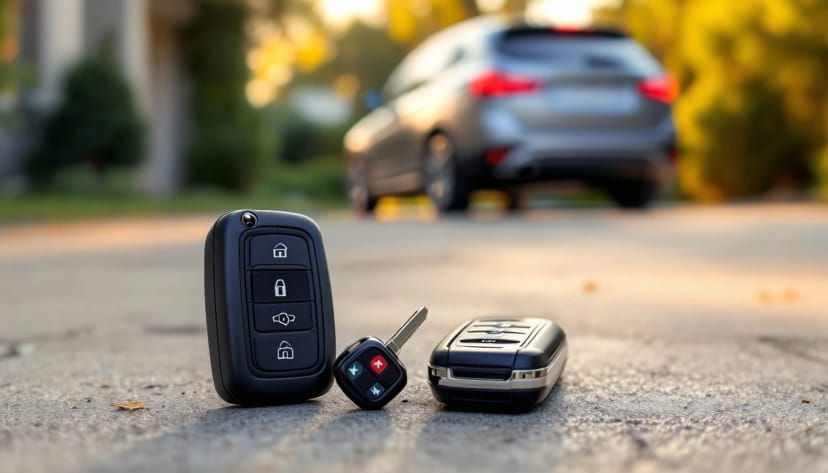
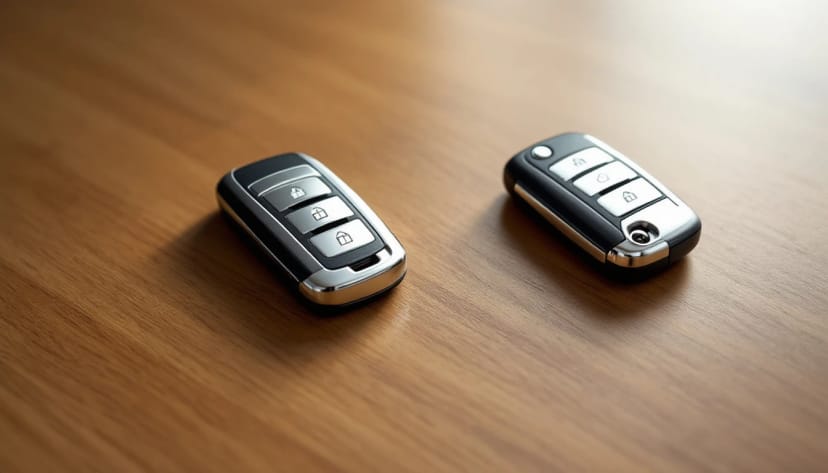
- Two hardware families. A bladed transponder key, usually a folding flip key with the remote buttons in the head, on base and mid trims. A proximity smart key fob on higher trims and on the electrified Kona variants.
- The split runs by trim, not cleanly by model year. Two identical-looking Konas from the same year can take different hardware.
- Registration is gated behind a PIN derived from the VIN, retrieved through the credentialed manufacturer security data channel. There is no legitimate shortcut.
- The immobilizer relearn is what makes a lost key stop working. Skipping it leaves whoever found your key able to start your car.
- A spare added today costs about $65. An all-keys-lost call costs $180 to $450. That is the entire argument.
As of August 2026, Fort Worth pricing runs $120–$200 for a bladed transponder key, $220–$500 for a proximity smart key fob, roughly $65 to add a second key during the same visit, $180–$450 for a lost fob with no working spare, and $75–$200 for a straight lockout with no key work. Call or text 817-842-1256.
Service detail lives on spare car key service and key fob programming.
Quick answer
While a key still works, this is a short driveway visit: confirm hardware by VIN, cut the blade or prepare the fob, retrieve the security value through the credentialed channel, register the new credential, run the relearn, and test everything on every key. With no working key, the same car becomes an ownership-verified job with a longer procedure on a vehicle nobody can move. Same car, same technician, wildly different invoice — and the only variable you control is timing.
How the Hyundai security system works on these cars
The immobilizer and the credential
Both the Kona and the Veloster run an electronic immobilizer that has to authorize a start before the engine will run. The credential lives in the key — in a transponder chip inside the head of a bladed key, or in the electronics of a proximity fob — and the vehicle validates it against stored data every single time you start.
The important consequence for owners: the mechanical cut and the electronic credential are two separate things. A blade cut from your existing key on a hardware-store duplicator will open the doors and turn in the ignition and never start the car, because nothing was done about the chip. That is the single most common wasted twenty dollars in this whole category, and the plain-English breakdown of transponder key vs key fob is worth five minutes before you buy anything.
PIN by VIN
Hyundai gates key registration behind a vehicle-specific security value derived from the VIN. A credentialed operator retrieves it through the manufacturer security data channel using registry credentials issued through the NASTF Vehicle Security Professional program — the same underlying pathway a dealership technician uses to obtain the same value.
That step is not a formality. It takes real time on site and carries a real per-transaction cost to the operator, which is precisely why an advertised price that could not cover it is a price that is going to change once a technician is standing in your driveway. When you call around, ask how they get the security value. The answer tells you everything.
The immobilizer relearn, and why it matters more than people think
The relearn is the step where the vehicle is told which credentials it should now accept, and on all-keys-lost work, which credentials it should stop accepting.
Owners think of this as a technical detail. It is actually a security event. After a genuine loss or a theft, a proper relearn is what makes the missing key stop working. A shop that adds a new key without erasing the old credentials has left whoever has your lost key fully able to start your car, and you would have no way of knowing. Ask whether old credentials are being erased. On an all-keys-lost job the answer should be an unhesitating yes.
Kona and Veloster hardware, trim by trim
The Veloster, roughly 2012 to 2022
The first-generation Veloster ran from roughly 2012 to 2017 and the second generation, including the Veloster N, from roughly 2019 to 2022. Across that run, base and mid trims commonly carry a folding flip key with the transponder in the head and the remote buttons built in, while higher trims and the performance variants carry a proximity smart key.
The flip-key hardware is worth understanding before you shop for it. The blade and the electronics are one assembly, and a worn hinge or a cracked shell is a mechanical problem on a part that also carries your credential. A shell swap is sometimes viable, but only if the electronics are genuinely healthy — and that is a judgment made with the part in hand, not from a photograph.
The Kona, 2018 onward
The Kona launched for 2018 and spans conventional, hybrid and electric variants across its run. Lower trims commonly carry the bladed transponder arrangement; higher trims and the electrified variants carry proximity smart key hardware with push-button start.
The Kona is where the trim-not-year rule bites hardest. Two Konas from the same model year sitting side by side in a Fort Worth apartment lot can take entirely different key hardware because they left the factory in different trims. Any quote that does not start with a VIN request is a quote built on a coin flip.
Ordering hardware without getting burned
Three rules cover nearly every bad outcome we get called out to fix.
Match the FCC ID printed on the back of your existing fob, not the shape in a marketplace photograph. Treat suspiciously cheap fobs as suspiciously cheap for a reason, because an unbranded fob with a marginal transponder can register successfully and then fail intermittently three weeks later in July heat. And if you have already bought hardware, say so on the phone — a technician can often work with owner-supplied parts, but only if they know before loading the van.
The same discipline applies across the wider Hyundai and Kia family, and the larger three-row cars make the point at a bigger scale — we covered that hardware in the guide to Telluride and Palisade key fob programming.
The Kona and Veloster key matrix
One lookup. Find your car and your situation, read across, then confirm by VIN.
| Vehicle and era | Typical hardware | How you start it | Job type | Fort Worth band |
|---|---|---|---|---|
| Veloster 2012–2017, base and mid | Folding flip key, transponder in head | Insert and turn | Spare with working key | $120–$200 |
| Veloster 2019–2022, higher trims and N | Proximity smart key fob | Push button | Spare with working key | $220–$500 |
| Kona 2018–2026, lower trims | Bladed transponder key | Insert and turn | Spare with working key | $120–$200 |
| Kona 2018–2026, higher and electrified trims | Proximity smart key fob | Push button | Spare with working key | $220–$500 |
| Either car, second key same visit | Matches primary hardware | Either | Add-on during visit | about $65 |
| Either car, no working key at all | Matches primary hardware | Either | All keys lost, ID required | $180–$450 |
Notice that the cheapest row and the most expensive row describe the same car. The only difference is whether you still have a key when you call.
Fort Worth pricing, plainly
Fort Worth Car Keys is mobile only, so there is no shop rate hiding in the quote and no tow line on an all-keys-lost job. You are paying for hardware, credentialed security data access, and a technician's time in your driveway.
A bladed transponder key sits in the $120 to $200 band. A proximity smart key fob sits in the $220 to $500 band, with position inside that band driven by hardware generation and button count. A second key added during the same visit is roughly $65, and that number is the reason this article exists. All keys lost runs $180 to $450, reflecting ownership verification and the longer credentialed procedure. A straight lockout with no key work at all is $75 to $200.
Dealer pricing on equivalent Hyundai work commonly runs meaningfully higher, and the gap widens on all-keys-lost because the dealer path also requires getting a non-starting car to the dealer. That is dealer pricing, labeled as dealer pricing, not ours.
Per the Federal Trade Commission's guidance on hiring a locksmith, the right phone-call ask is a total price range before dispatch including labor and any service-call fee. On a car this well documented, an operator who will not quote a range by hardware family is an operator to keep shopping past.
What the data says about the spare-key decision
Four numbers make the case better than any sales argument.
The American Automobile Association responds to tens of millions of roadside assistance calls annually and puts average new-vehicle ownership cost above twelve thousand dollars a year in its Your Driving Costs research — against which a roughly $65 spare is a rounding error. The National Highway Traffic Safety Administration has reported roughly a million vehicles stolen nationally in a recent year, the highest total in more than a decade, and treats immobilizer integrity as a core defense, which is exactly why the relearn step matters. The Insurance Institute for Highway Safety publishes theft-loss research showing large differences in theft claim rates depending on whether a vehicle shipped with a functioning immobilizer. And the Bureau of Labor Statistics reports the locksmith and safe-repairer occupation as a small trade of roughly fifteen thousand workers nationally with a median wage in the high forties — a useful reality check against advertised prices that could not plausibly cover a credentialed technician's time plus a security data transaction.
For dealer comparison, the J.D. Power Customer Service Index has tracked the persistent gap between franchise-dealer and independent service pricing on routine work for years. That gap is what you are shopping when you call a mobile operator.
Common problems we see on these cars
The single-key used purchase
Konas and Velosters move through the DFW used market constantly, and a large share arrive with exactly one key. Every one of those cars is a $65 add-on today or a $180 to $450 emergency later. There is no third outcome. If you bought either of these used in the last year, check right now whether you actually have two working keys, because most people assume they do and a meaningful share are wrong.
Duplicated blades that never start the car
Someone copies the blade at a kiosk, the copy turns in the ignition, and nothing happens. The blade was duplicated; the credential was not. This is not a defect and not a scam — it is simply a different job. What you needed was transponder programming, not key cutting.
Heat-related intermittent no-detect
Tarrant County summers punish fobs left on dashboards. Heat accelerates coin-cell decay and stresses solder joints on the fob board, and the failure is intermittent long before it is permanent. A no-detect that clears once the cabin cools is a warning, not a nuisance. That is the week to make a spare.
Fob shell failure on flip keys
Veloster flip keys live in pockets and take abuse. A cracked shell or a failed hinge is a mechanical failure on a part that carries your credential, and a rattling key is often weeks away from being a broken key. Worth addressing while the electronics are still healthy.
Water damage, delayed
A fob that went through a wash cycle or into a pool can look completely normal and be electronically dead weeks later, because corrosion on the board does not announce itself immediately. If a soaked fob still works, that is the moment to make a spare, not the moment to relax.
Spare key versus all keys lost
These are two different jobs. With a working key present, the car is drivable, the system reads cleanly, and the visit is short. With no key at all, the job adds ownership verification, security value retrieval, and a longer on-site procedure on a car that cannot be repositioned.
Every all-keys-lost job requires proof of ownership — a government-issued photo ID plus a vehicle title or current registration in a matching name, verified before any credential is generated and recorded on the invoice. That requirement comes from the credentialed security data channel itself, and it protects you as much as it slows you down.
If you are already in that situation rather than reading ahead of it, the walkthrough for what to do when you have lost car keys with no spare covers the whole sequence, documentation included. And if your Kona or Veloster is the second small car in a household that already learned this lesson the hard way, the same logic applies to every compact on the driveway — the Subaru Crosstrek and Impreza spare key guide makes the identical case on a different badge.
Field-operator perspective
The Kona calls break into two piles. Pile one is somebody who bought it used, realized this month they only have one key, and books a spare. That call takes under an hour and costs about sixty-five dollars as an add-on. Pile two is the same car, same person, six months later, standing in a parking lot with no key at all. Nothing about the car changed. Only the timing changed, and the timing is worth a few hundred dollars.
— ALOA-credentialed automotive locksmith working Tarrant County, anonymized
Honest boundaries
We will tell you when a job is not ours. If the symptom points at an ignition cylinder or a body electronics fault rather than a key, a new key fixes nothing and we say so before you spend money on one. On the very newest model years, if tooling coverage for a specific all-keys-lost configuration is genuinely uncertain, a technician confirms against the VIN before dispatch instead of arriving and finding out.
We are also mobile only. There is no shop to drop the car at, which is a feature on a car that will not start and worth knowing in advance either way.
How the on-site visit works in Fort Worth
You call or text 817-842-1256 with the VIN and whether you turn a key or press a button. Those two facts convert a guess into a real quote and, on these cars, often move the price by hundreds of dollars.
On site: ownership verification where required, a diagnostic check before anything is cut, blade cutting or fob preparation, security value retrieval through the credentialed channel, registration and relearn, then a full functional test of every key against every function — start, doors, panic and trunk release. You get a written invoice. We cover Fort Worth and Tarrant County seven days a week from 8AM to 8PM.
References
- NASTF Vehicle Security Professional (VSP) Registry — Credentialed access to manufacturer immobilizer and security code data.
- NHTSA — Vehicle Theft Prevention — Federal data and guidance on vehicle theft and anti-theft equipment.
- IIHS — Vehicle Theft — Research on theft claim rates and immobilizer effectiveness.
- FTC Consumer Advice — Hiring a Locksmith — Verifying a locksmith and getting a total price before authorizing service.
- Associated Locksmiths of America (ALOA) — Certification ladder including the Master Automotive Locksmith credential.
- Bureau of Labor Statistics — Locksmiths and Safe Repairers — Occupational employment and wage data for the trade.
- AAA — Your Driving Costs — Annual vehicle ownership and roadside assistance research.
- J.D. Power — Customer Service Index — Dealership service cost and satisfaction research.
Frequently Asked Questions
Does my Kona or Veloster take a smart key or a bladed transponder key?
Start it and watch what your hands do. If you insert a blade and turn it, you are on the bladed transponder system, which on these cars often comes as a folding flip key with the remote buttons built into the head. If you press a button with the fob in your pocket, you have the proximity smart key system. The split runs by trim rather than cleanly by model year, so two identical-looking Konas from the same year can take completely different hardware. The VIN settles it in seconds.
What is the PIN by VIN step on a Hyundai key job?
Hyundai gates key registration behind a vehicle-specific security value derived from the VIN and retrieved through the credentialed manufacturer security data channel using registry credentials. Nothing legitimate skips that gate. It is the same underlying pathway a dealership technician uses to get the same value, and it carries a real per-transaction cost and real time on site. If an operator on the phone cannot describe how they obtain that value, they are going to fail in your driveway.
How much does a Kona or Veloster spare key cost in Fort Worth?
As of August 2026, a bladed transponder key with an integrated remote generally lands in the 120 to 200 dollar band. A proximity smart key fob sits in the 220 to 500 dollar band depending on hardware. Adding a second key or fob during the same visit is roughly 65 dollars as an add-on, which is the single best value in this entire article. A lost fob with no working spare runs 180 to 450 dollars.
Why is all keys lost so much more expensive than adding a spare?
Because it is a different job, not a different price for the same job. With a working key present the car is drivable, the system reads cleanly through the existing credential, and the visit is short. With no key at all the job adds ownership verification, security value retrieval through the credentialed channel, and a longer on-site procedure on a car that cannot be repositioned. The gap between those two calls is measured in hundreds of dollars and it is decided entirely by when you pick up the phone.
What is an immobilizer relearn and does my car need one?
A relearn is the step where the vehicle is told which credentials it should now accept and, on all-keys-lost work, which ones it should stop accepting. On these cars it happens through the diagnostic port after the security value is retrieved. It matters for a reason owners rarely think about: after a genuine loss or theft, a proper relearn is what makes the missing key stop working. If a shop programs a new key without erasing the old credentials, whoever has your lost key can still start your car.
Can a mobile locksmith program a Hyundai key in my driveway?
Yes, for the Kona and Veloster range this is routinely a driveway job, and a car that will not start does not need towing anywhere first. The work happens through the OBD-II port wherever the car is sitting. On the very newest model years, tooling coverage across the independent platforms genuinely varies for all-keys-lost work, and an honest operator confirms feasibility against your VIN before dispatch instead of collecting a service call fee to find out.
What proof of ownership do I need for a Hyundai all keys lost job?
A government-issued photo ID plus a vehicle title or current registration in a matching name, verified before any credential is generated and recorded on the invoice. That requirement comes from the credentialed security data channel itself rather than from us being difficult. It is also protection for you: the same rule that slows you down today is the rule that stops someone else from having keys made to your car tomorrow.
Getting it done
Fort Worth Car Keys is a mobile-only operation covering Fort Worth and Tarrant County, seven days a week from 8AM to 8PM. Call or text 817-842-1256, email contact@fortworthcarkeys.com, or use the contact page. Have the VIN ready and know whether you turn a key or press a button — on a Kona or a Veloster those two facts decide the price band before a technician ever leaves.
More: spare car key service, key fob programming, smart key replacement, all keys lost, and the full brands index.
Written to the Fort Worth Car Keys field-service review standard by an ALOA Master Automotive Locksmith (MAL). Texas locksmith companies and individuals are licensed through the Texas DPS Private Security Bureau. Trim and hardware details are described in general terms and hedged deliberately — confirm your exact configuration by VIN before ordering anything.