The short answer
As of August 2026, emergency automotive locksmith work in Fort Worth breaks into three prices, not one:
- Vehicle lockout — key visible on the seat, doors shut: $75 to $200
- Lost car key, cut and programmed roadside — no key at all: $180 to $450
- Roadside ignition or no-start failure — key present, car will not go: $150 to $400
Those are all-in mobile prices including travel to your location. On a legitimate quote, the "emergency" is not a separate surcharge stacked on top — it is already priced into the range you are told on the phone.
If you are standing next to your car right now, call (817) 842-1256. Have your year, make and model ready and say plainly whether the key is locked inside or lost. Those two facts decide which of the three prices above applies.
The three emergencies people call about
Almost every after-hours call to a Fort Worth automotive locksmith is one of three situations. They cost differently because they are genuinely different jobs, and conflating them is the main reason people feel misquoted.
Situation one: the key is inside the car. You can see it on the seat. Nothing is broken; the car is simply secured with you on the wrong side of the glass. This is the cheapest emergency there is because no hardware and no programming are involved — a technician arrives, opens the door without damage, and leaves. Fifteen to thirty minutes of work.
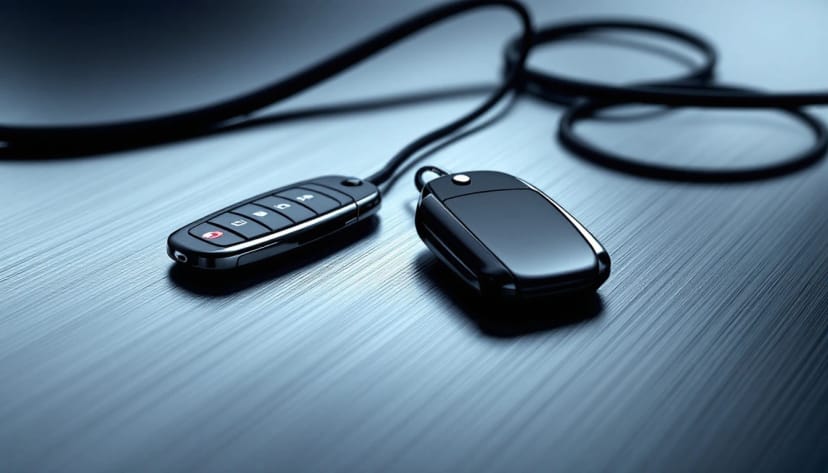
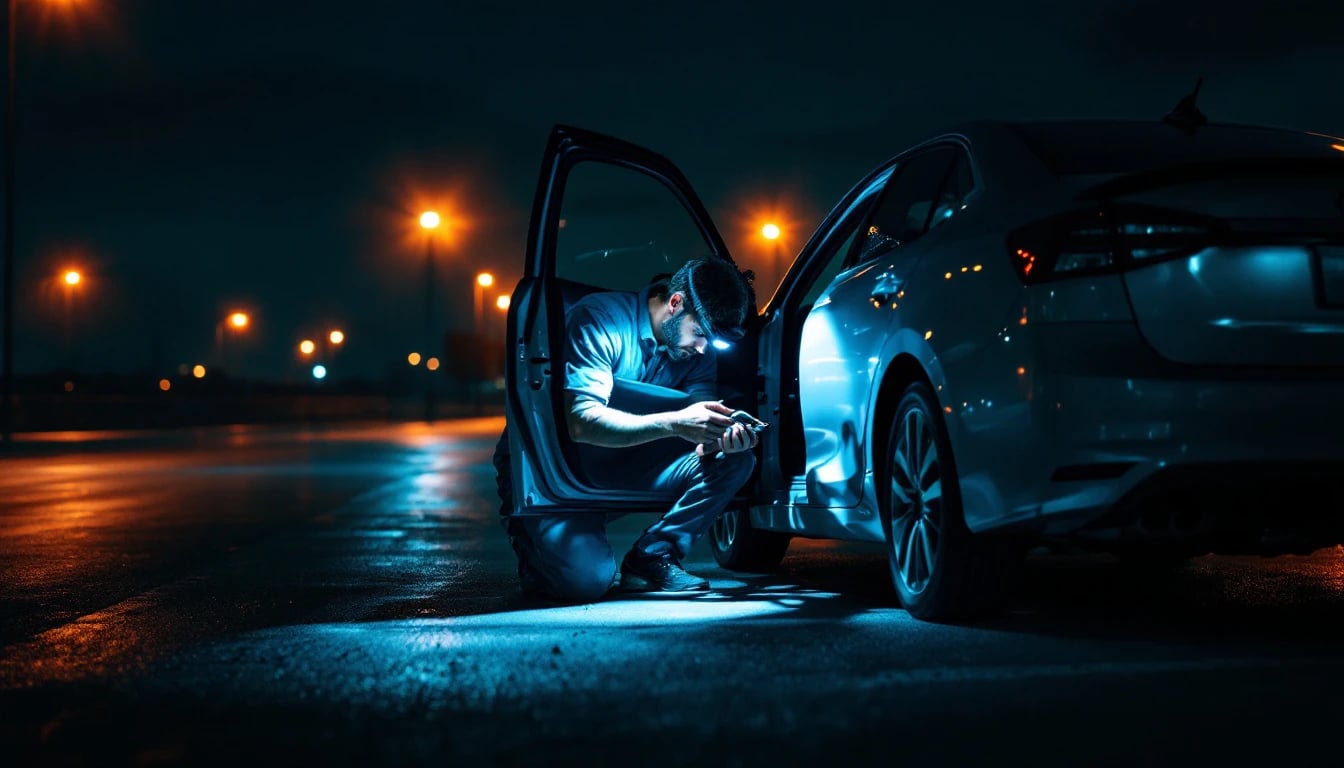
Situation two: the key is gone. Dropped at the stadium, gone into a lake, stolen with a bag. Nothing on your person opens or starts the car. This is the expensive one, because a key has to be created from scratch: the code pulled or decoded, a blank cut to match, and on any modern vehicle a transponder or smart key programmed to the immobilizer. That is a real job done in a parking lot at 11 PM.
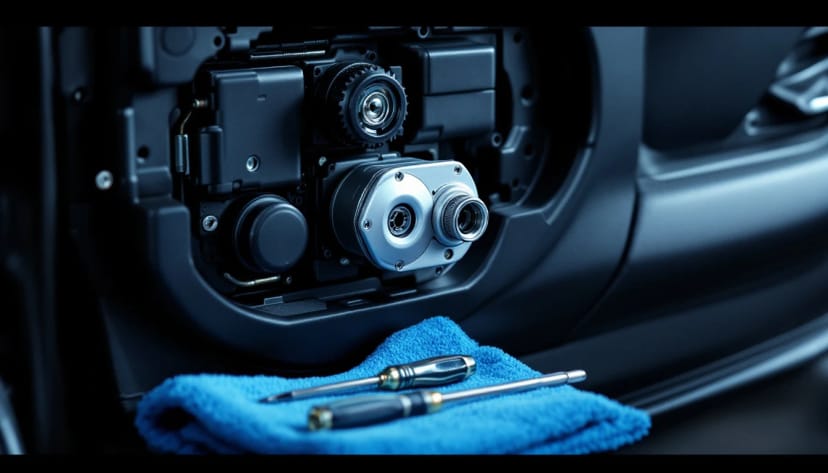
Situation three: the key is in your hand and the car will not go. The ignition will not turn, the fob will not authenticate, or the dash lights up and nothing happens at crank. Not a lockout at all. This is diagnosis first, repair second, and the price depends on which part failed. Our ignition repair versus replacement cost breakdown covers that side in detail.
Knowing which of the three you have before you dial is worth real money, because it lets the person on the phone quote a range rather than a placeholder.
What each emergency costs, itemised
Everything below is mobile, at your location anywhere in the Fort Worth service area, and includes travel.
| Emergency | What happens on arrival | Typical all-in cost | Time on-site |
|---|---|---|---|
| Standard vehicle lockout | Non-destructive door opening, keys retrieved | $75 – $150 | 15 – 30 min |
| Lockout, high-security or armoured door | Same, on a vehicle with hardened door structure | $150 – $200 | 30 – 45 min |
| Lost transponder key, cut and programmed | Blank cut to code, chip programmed to immobilizer | $180 – $300 | 45 – 90 min |
| Lost smart or proximity fob, all keys lost | Fob supplied, emergency blade cut, key originated | $300 – $450 | 60 – 120 min |
| Roadside ignition failure | Diagnosis, cylinder or switch service on-site | $150 – $400 | 60 – 150 min |
| Broken key extracted from lock or ignition | Fragment removed, lock checked, key re-cut | $120 – $200 | 30 – 60 min |
| Second key programmed during the same visit | Spare enrolled while the technician is already there | $65 | +15 min |
Two notes on reading that table. First, the lockout band tops at $200 and that is a real ceiling — a plain lockout on a passenger vehicle does not legitimately cost more, no matter the hour. Second, the all-keys-lost band is wide because it spans a 2003 pickup with a bladed transponder and a 2024 crossover with a proximity fob and a push-button start. Those are not the same job.
What the "after hours" part actually adds
This is the question everybody wants answered and few operators answer straight.
The honest version: the clock moves the price much less than the vehicle does. A lockout at 2 AM on a car with a conventional door is still a lockout. The technician still opens it the same way with the same tools in the same twenty minutes. What genuinely changes overnight is not labour cost but availability — fewer operators are on the road, so the one who answers may be coming from further away, and the wait stretches. That is a scheduling reality, not a pricing one.
Where a modest overnight difference is legitimate is in the incidental costs of dispatching at all: a technician woken for a single call absorbs travel that a daytime route would spread across several jobs. A reasonable operator reflects that by quoting toward the upper half of the band overnight rather than by inventing a separate emergency fee.
Where it is not legitimate is a number that doubles or triples after dark. If a company quotes you a plain lockout at daytime rates and then produces a materially larger figure on arrival because it is late, that is the classic bait-and-switch pattern the Federal Trade Commission's locksmith guidance warns about specifically. The FTC's recommendation is blunt and worth following: get the total in advance, in writing if you can, and confirm it covers labour, hardware and the callout.
There is a reason this pattern targets emergencies. You are stressed, it is dark, and you have no leverage once someone is standing at your car. Asking one question on the phone — "is that number the total, including coming out to me?" — defuses most of it.
Why lost-key calls cost more than lockouts
People are frequently surprised that opening a door costs under $200 while making a key can approach $450. The gap is real and it comes from three places.
Hardware. A lockout consumes no parts. A lost-key job consumes a key or a fob, and on modern vehicles that is a genuine electronic component, not a piece of brass.
Origination access. With no working key, the cutting code has to be obtained through the manufacturer-authorised channel. In the United States that access is gated through the National Automotive Service Task Force Vehicle Security Professional registry, which requires a background-checked, credentialed operator. That access has a cost, and it is why an uncredentialed operator cannot legitimately do all-keys-lost work at any price.
Programming time. Immobilizer systems became effectively standard on US-market vehicles through the late 1990s and 2000s under the federal theft-prevention framework administered by NHTSA. On many platforms, an all-keys-lost origination involves enforced security wait timers built deliberately into the vehicle — dead time the technician cannot shorten, and time you are paying for.
The Insurance Institute for Highway Safety's work on vehicle theft makes the trade-off explicit: the same design decisions that made cars dramatically harder to steal without a key also made legitimate key replacement slower and more specialised. You are paying, in part, for the security that is protecting your car.
Roadside assistance versus calling a locksmith directly
If you already have roadside coverage — through your insurer, a motor club, or the vehicle manufacturer's included programme — use it first for a plain lockout. You have already paid for it. The AAA consumer guidance on roadside and repair services is the reference point most programmes are built around, and door-opening is a standard covered benefit.
Call a locksmith directly in four cases:
- Roadside declines the job. Many programmes will not touch a vehicle with a damaged lock or a suspected theft attempt.
- The wait is unacceptable. Programme dispatch on a busy night can run past two hours.
- The key is lost or broken, not locked inside. Roadside opens doors; it very rarely makes keys.
- The fault is the ignition or the immobilizer. That is a repair, not a lockout, and it falls outside almost every roadside benefit.
What a legitimate Fort Worth emergency call looks like
You call. You are asked five things: year, make and model; exactly where you are; whether the key is inside or lost; whether a spare exists anywhere; and whether the car currently starts. From those five answers you get a range, not a single number, and the range is the total.
If a child, a pet, or a running engine is in the car, say so immediately — those calls jump the queue everywhere, and any operator who does not prioritise them is one to hang up on.
On arrival, the technician verifies ownership before touching anything. Registration or title plus photo ID that matches. That standard is set out in the Associated Locksmiths of America code of ethics and it is non-negotiable — an operator willing to open or key a car for someone who cannot prove it is theirs will do exactly that to your car for the next caller.
Then the work. For a lockout, non-destructive entry with proper tools; no drilling, no broken glass, no bent door frames. For a lost key, ownership verification, code retrieval, cutting, programming, and a functional test of every door and the ignition before payment. For an ignition fault, a scan first — because selling a part before diagnosing is how people end up paying twice.
As one credentialed automotive locksmith who reviews our technical standards puts it: "On an emergency call the customer has no leverage and knows it. That is exactly why the number you say on the phone has to be the number on the invoice. If it isn't, you're not in the locksmith business, you're in something else."
Where we go, and when
Fort Worth Car Keys is mobile-only and covers Fort Worth plus the surrounding cities, seven days a week from 8 AM to 8 PM. Typical arrival runs 25 to 45 minutes depending on your location and what is already on the board.
For overnight and around-the-clock coverage, see our 24-hour car locksmith in Fort Worth and emergency car locksmith pages, and our car lockout service for the lockout specifics.
If you are reading this before an emergency rather than during one, the single highest-value thing you can do is read what to do when you lose your car keys with no spare and then go get a spare cut. A spare programmed during a routine visit costs $65. An all-keys-lost origination at midnight does not.
Related reading: 24/7 emergency locksmith in Fort Worth, our full locksmith cost breakdown for Fort Worth, and getting a key fob programmed in Fort Worth.
Frequently Asked Questions
How much does an emergency car locksmith cost in Fort Worth?
As of August 2026, a vehicle lockout in Fort Worth runs $75 to $200 depending on the vehicle and how it is secured. A lost key that has to be cut and programmed on the spot runs $180 to $450. A roadside ignition failure runs $150 to $400. Those are all-in mobile prices including the travel. The emergency itself is not a separate line item on a legitimate quote — it is already reflected in the range you are given on the phone.
Is a car lockout more expensive at night in Fort Worth?
Somewhat, but not dramatically. Most of what moves the price is the vehicle, not the clock. A late-night call on a car with an exposed lock and a simple door structure still lands in the lower half of the $75 to $200 lockout band. What genuinely costs more after hours is availability, not labour — fewer operators are working, so you may wait longer or reach an operator further away. Be suspicious of anyone whose overnight number is several times their daytime number.
Why do some locksmiths quote $19 or $29 on the phone?
Because that figure is a service-call fee, not the job. The pattern is well documented by consumer-protection agencies: a very low number gets the technician dispatched, then the real price appears once they are standing at your car and you are out of options. A legitimate Fort Worth operator quotes an all-in range on the phone that covers travel, labour and any hardware, and honours it on arrival. Ask directly whether the number you were given is the total.
Can a locksmith make a car key at night without the original?
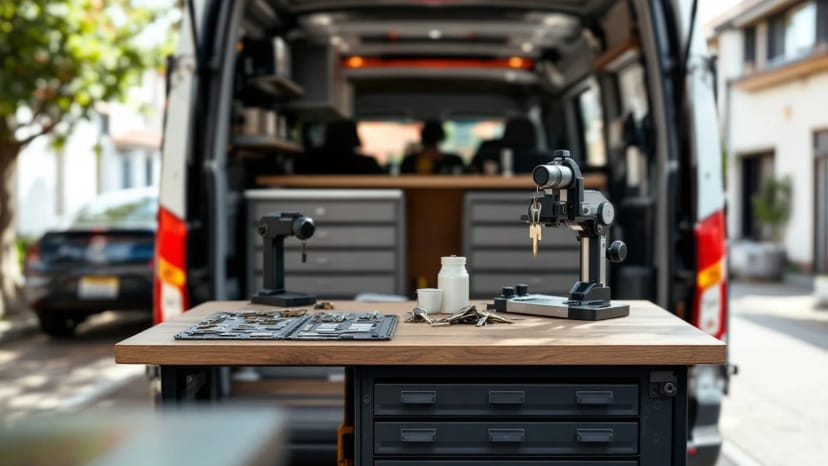
Yes. A properly equipped mobile operator carries key blanks, a cutting machine and diagnostic programming tools in the vehicle, so a lost key can be originated and programmed on-site at any hour. What is required is proof of ownership — registration or title plus photo ID matching the name. No credentialed operator will originate a key to a vehicle without it, and that requirement does not relax because it is late.
Should I call a locksmith or roadside assistance for a lockout?
If you have roadside coverage through your insurer, a motor club or the vehicle manufacturer, use it first for a plain lockout, because it is usually already paid for. Call a locksmith directly when roadside declines the job, when the wait is unacceptable, when the key itself is lost or broken rather than locked inside, or when the fault is the ignition or the immobilizer. Roadside programmes generally cover opening a door, not making a key.
How fast can an emergency locksmith reach me in Fort Worth?
Typical arrival across the Fort Worth service area runs 25 to 45 minutes depending on where you are and what is already on the board. Central Fort Worth, Arlington, Hurst, Bedford and North Richland Hills sit at the short end. Outlying areas add time. Any operator promising a flat 15 minutes to anywhere in the metroplex regardless of time of day is making a dispatch promise they cannot control, and that is worth noting.
What information should I have ready when I call?
Year, make and model, your exact location, whether the key is locked inside or genuinely lost, whether you have a spare anywhere, and whether the car currently starts. Those five answers are what let an operator quote a real range instead of a placeholder. If you are locked out, also mention whether a child, a pet or a running engine is involved, because those calls are prioritised.
Call an emergency car locksmith in Fort Worth
Fort Worth Car Keys is a mobile automotive locksmith serving Fort Worth and the surrounding cities seven days a week, 8 AM to 8 PM. Automotive locksmith licensing in Texas is administered by the Texas Department of Public Safety Private Security Program, and any operator working on your vehicle should be able to produce that credential when asked.
Call (817) 842-1256 or email contact@fortworthcarkeys.com. Tell us the year, make, model and whether the key is inside or gone, and you will get the total before anyone is dispatched.
References
- Federal Trade Commission — Hiring a Locksmith
- NHTSA — Federal Motor Vehicle Safety Standards
- National Automotive Service Task Force — Vehicle Security Professional registry
- Associated Locksmiths of America
- IIHS — Vehicle theft research
- AAA — Auto repair and roadside consumer guidance
- Bureau of Labor Statistics — Automotive Service Technicians and Mechanics