The short answer
As of August 2026 in Fort Worth, common car door lock work sits inside the $75 to $200 door-service and lockout band — freeing a seized cylinder, servicing a lock that will not turn, or opening a jammed door. Electrical faults behind the door panel, such as a failed actuator or a keyless entry problem, are quoted after inspection because the part decides the price. Rekeying a door cylinder is a mechanical job; changing who can start the car is a separate electronic one.
Three faults that feel identical from the driver seat
Almost every call that starts with "my door lock is broken" turns out to be one of three genuinely different problems, and they have almost nothing to do with each other:
- The mechanical lock. The cylinder your key goes into. It wears, it gets dirty, its internal wafers break, its linkage pops off. Symptom: the key will not go in, will not turn, or turns without doing anything.
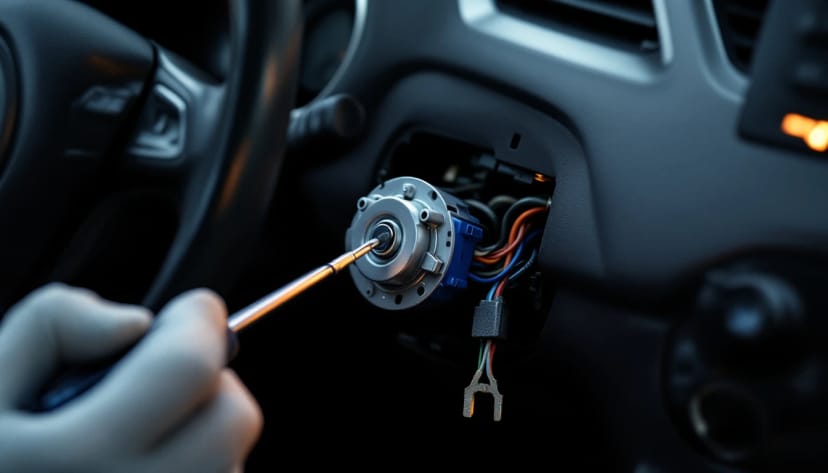
- The actuator. A small electric motor in the door that pulls the latch when you press the interior button or the fob. Symptom: the key still works perfectly but the button and fob do nothing on that one door.
- The electronic side. Fob, receiver, body control module. Symptom: nothing electrical works on any door, or it works intermittently, or it stopped after a battery change.
Get this wrong and you pay for the wrong repair. That is not a hypothetical — it is the single most common way people overspend on a door problem, because the cheapest explanation and the most expensive explanation produce very similar noises from inside the car.
| The symptom you have | Most likely cause | Where it lands | Notes |
|---|---|---|---|
| Key will not enter or will not turn in the door | Dirty, dry or worn cylinder | $75–$200 | Service and lubrication fixes most of these |
| Key turns freely but nothing happens | Broken linkage or failed cylinder tailpiece | $75–$200 | Panel comes off; usually mechanical |
| Key works, button and fob do nothing on ONE door | Failed door lock actuator | Quoted after inspection | Parts-led; varies widely by vehicle |
| Nothing electrical works on ANY door | Fob battery, pairing loss, or receiver fault | $75–$200 typical; fob work priced separately | Cheapest cause first, always |
| Door will not open at all, latch jammed shut | Seized latch or broken cable | $75–$200 | Non-destructive opening comes first |
| You want an old key to stop working | Rekey the cylinder | $75–$200 | Mechanical only; see the start-the-engine caveat below |
| Keys locked inside a working car | Standard lockout | $75–$200 | 10–25 minutes on most vehicles |
One table, seven answers, and it maps cleanly onto the published bands on our automotive locksmith near me page. We do not price door work off a separate sheet.
Why the door panel has to come off before a real number exists
This is the part that frustrates people, and it is worth explaining rather than defending.
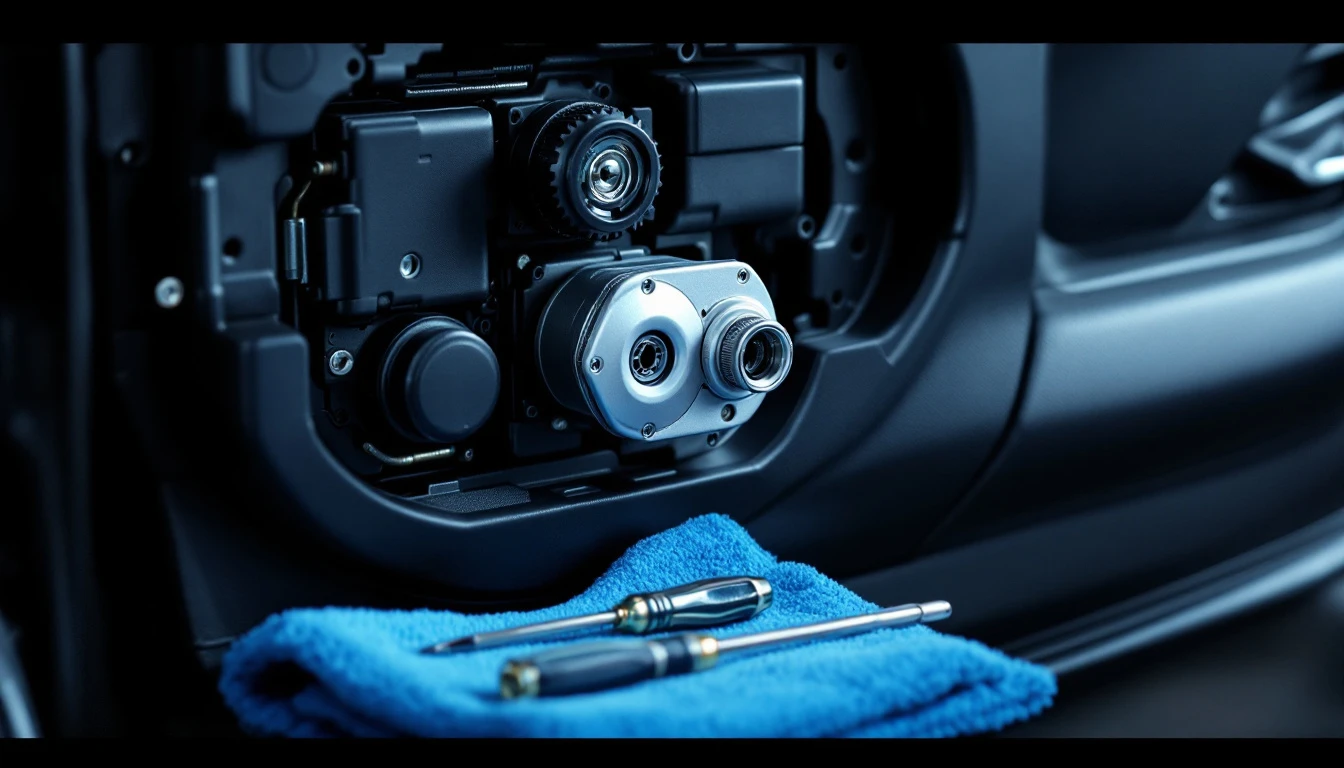
Everything that makes a car door lock or unlock lives inside a sealed cavity behind the trim panel: cylinder, latch, actuator, linkages, wiring, and the weather barrier that keeps rain out of all of it. From outside, a failed actuator and a snapped linkage produce the same silence. From inside, they are five minutes apart to identify and very different to fix.
So an honest process runs: symptom description on the phone, a band quoted on the phone, panel off on site, cause identified, firm number given before any parts come out of the van. If someone quotes you a precise figure for a door lock fault sight-unseen, they are either quoting the most expensive possibility to protect themselves or the cheapest one to win the call. Neither is a quote.
The door jobs I regret are the ones where somebody replaced a good actuator because they never took the panel off to look. Fifteen minutes with a trim tool would have found a linkage clip lying in the bottom of the door. That clip costs nothing and it was the entire fault.
— Automotive locksmith, 11 years mobile service in Tarrant County, credentials verified, name withheld by request
Rekeying a car lock — what it does and what it does not
Rekeying means altering the internal code of a lock cylinder so a previously working key no longer operates it. It is genuinely useful, and it is routinely oversold.
What it does. It stops an old mechanical key from opening that door or turning that cylinder. If you bought a used car and have no idea how many keys exist, if a relationship ended badly, if a former employee had a work vehicle, or if a valet key never came back, rekeying closes the mechanical half of the problem.
What it does not do. On any vehicle built with an immobiliser — which is essentially every car on the road here — the key that starts the engine is an electronic credential stored in the vehicle, not a shape cut into metal. Rekeying the door cylinder does nothing to that credential. Someone holding an old programmed key can still start the car even with the doors rekeyed.
The complete answer for a used-car purchase is therefore two-part: address the mechanical cylinders, and have the electronic key list rewritten so previously programmed keys are deauthorised. That second part is genuine security work and it is the piece most people do not know exists. The Insurance Institute for Highway Safety has documented how sharply immobiliser adoption changed theft patterns, which is precisely why the electronic credential — not the metal — is now the thing that matters.
The Federal Trade Commission guidance on buying a used car is worth reading for the wider checklist; the key situation is one line item on it that almost nobody thinks about until later.
The actuator: the most common failure nobody names
If your key works and your button does not, on one door only, you are almost certainly looking at a door lock actuator.
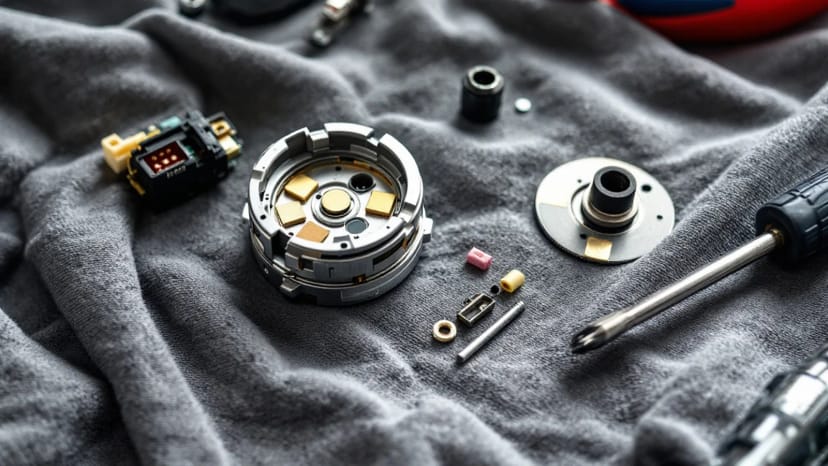
Actuators are small DC motors with a plastic gear train. They run every time you lock or unlock, which on a daily driver is thousands of cycles a year, and they fail the way small motors fail: the gears wear, the motor draws more current, and eventually it either stalls or goes silent. Often there is a warning period first — the door lags behind the others, or works on a warm afternoon and not on a cold morning, or clicks without moving.
Signs it is the actuator and not the lock:
- The mechanical key still operates that door normally.
- Every other door responds to the button and the fob.
- You can hear a faint click, buzz or grind at the failing door when you press lock.
- It got worse gradually rather than failing all at once.
Signs it is not the actuator:
- All doors stopped together — that points at the fob, the receiver or a fuse.
- The key will not turn either — that is mechanical.
- It began immediately after a battery replacement, a body shop visit or a stereo install — that points at what was disturbed, not at a coincidental failure.
That last one matters more than people expect. The National Highway Traffic Safety Administration documents how tightly integrated modern body electronics have become, and a door circuit that goes dead the same week something else was worked on is rarely a coincidence.
What changes the price
The vehicle. Some manufacturers sell a door cylinder as a serviceable part for very little. Others only sell a complete handle assembly that includes it. That single sourcing decision, made years ago in a design meeting, is often the largest variable in your bill and there is nothing either of us can do about it.
Which door. Driver doors are used far more and wear accordingly. Rear doors on family vehicles take abuse from children and car seats. A passenger door that has been opened twice in five years can seize solid from disuse and grit — common on trucks and on second cars.
Whether it is mechanical or electrical. Mechanical work is predictable. Electrical work depends on the part.
Whether the door is currently open. A jammed door that will not open at all is a longer job than one that opens and simply will not lock, because non-destructive opening has to happen before diagnosis can start.
Time of day. After-hours work carries a surcharge, stated before you agree.
When the door is fine and the fob is the problem
A large share of door-lock calls are solved without touching a door.
Start with the cheapest possibility every time: the fob battery. A weak cell produces exactly the behaviour people describe as a broken lock — works up close but not from across the lot, works sometimes, works for one person and not the other because one of them stands closer. Our key fob battery guide covers the two-minute version.
If a fresh battery changes nothing, the next candidates are pairing loss and receiver failure, both covered on the keyless entry repair page. Pairing loss is common after a vehicle battery goes flat or is disconnected. Receiver failure is rarer and usually announces itself by taking every fob down at once.
Only after those are ruled out is it worth opening a door panel. Working in that order is how you avoid paying for a repair you never needed — and it is the order the Associated Locksmiths of America consumer guidance implicitly recommends when it advises getting a diagnosis before authorising work.
Break-ins, damaged locks and what insurance usually covers
Fort Worth sees the same pattern as every metro: vehicle break-ins cluster around parking lots, apartment complexes and anywhere a bag is visible through a window. When a lock is damaged in a break-in, three things are worth knowing.
First, a punched or drilled cylinder is a replacement, not a repair. The internal components are destroyed by design. Second, damage to the lock frequently comes with damage to the latch and the door sheet metal around it, which is why a proper assessment happens with the panel off. Third, this is usually a comprehensive insurance claim rather than an out-of-pocket repair, and your carrier will want documentation — photographs before the repair, and an itemised invoice after.
The Bureau of Labor Statistics has tracked steady increases in vehicle repair costs generally, and body-adjacent work has not been an exception. If the vehicle is older and the deductible is high, the arithmetic sometimes favours paying directly; if the door sheet metal is involved it usually does not.
We can also address a related question people ask afterwards: whether the thief could return with something they took. If a key or a garage remote was in the car, the answer is to change what that key controls. For the vehicle side that is a rekey plus an electronic key rewrite, as described above.
Areas we cover for door and lock work
Door work is mobile work — we come to the vehicle rather than the other way round, which matters when the door in question will not open. That covers Fort Worth proper and the surrounding communities at the same published rates: Lake Worth, Saginaw, White Settlement, River Oaks, Benbrook and Keller among them.
If the immediate problem is simply that the keys are inside a perfectly healthy car, that is a straightforward lockout and it is the fastest job we do — see the car lockout service page for what to expect. If the car will not start once you are back inside it, that is a different article: start with the Ford Escape or Chevrolet Malibu write-ups if either is what you drive, or the general how much a locksmith costs in Fort Worth breakdown for the full price picture.
Texas automotive locksmiths operate under the Department of Public Safety Private Security Program. Any vehicle work that changes access — rekeying, key replacement, opening a locked vehicle — requires proof that the vehicle is yours. We ask every time, including for a lockout, and a company that does not ask is one to be wary of. The National Automotive Service Task Force maintains the framework that lets qualified independents do this work legitimately, and that framework only functions because ownership verification is taken seriously at the door.
Frequently Asked Questions
How much does it cost to fix a car door lock in Fort Worth?
As of August 2026, door lock work falls inside our $75 to $200 lockout and door-service band for the common jobs: freeing a seized cylinder, correcting a lock that will not turn with its own key, or opening and resetting a door that has jammed shut. Work that crosses into the electrical side — a dead actuator, a keyless entry fault, a module that has stopped answering — is quoted separately once the panel is off and the cause is known, because guessing at that before seeing it is how people get surprised.
Can you rekey a car door lock so an old key stops working?
On many vehicles yes, and it is one of the least understood services we offer. Rekeying a door cylinder changes the mechanical code so a previously working key no longer turns it, which matters after a used-car purchase, a break-up, a former employee, or a valet key you never got back. The catch worth knowing is that on a modern car the door cylinder is only half the security picture — the key that starts the engine is an electronic credential, so a full change of control usually means addressing both.
My door will not unlock with the button but the key works. What is that?
That is almost always the actuator, not the lock. The actuator is a small electric motor inside the door that physically moves the latch when you press the button or the fob. When it fails you keep full mechanical function through the key and lose all electrical function, which is exactly the pattern you are describing. It is a common failure on high-mileage vehicles and it is a parts-and-labour repair rather than a lock repair.
Why does my key work in one door but not the other?
Usually wear, and usually in the lock rather than in the key. Passenger doors get used a fraction as often as driver doors, so a passenger cylinder can stay tight for years while the driver cylinder wears loose — or the reverse, where a rarely used passenger lock seizes from grit and corrosion while the driver side stays fine. Either way the diagnosis is quick and the fix is usually cleaning and servicing the cylinder rather than replacing it.
Is it cheaper to fix the lock or replace the whole door handle assembly?
It depends on which part failed, which is why we open the door before quoting. A cylinder that is dirty, dry or lightly worn is a service job and the cheapest outcome available. A cylinder with broken wafers, a snapped linkage, or a handle assembly cracked at the mount is a parts job. On some vehicles the manufacturer only sells the cylinder as part of a larger assembly, which forces the answer regardless of what we would prefer.
Do I need to go to the dealership for a door lock?
For the mechanical side, almost never. Door cylinders, latches, linkages and actuators are conventional mechanical and electrical repairs that a mobile automotive locksmith handles at your location. The dealership becomes relevant when a fault sits in a body control module that needs manufacturer software, and in that case we tell you rather than charging you to find out slowly.
Will a door lock repair fix my keyless entry too?
Only if the door was the reason keyless entry failed. Keyless entry failures split roughly into three groups: a dead fob battery, a fob or receiver that has lost its pairing, and a failed actuator in one specific door. The first is a few dollars, the second is a programming job, and the third is a door repair. Establishing which one you have takes a few minutes and saves you paying for the wrong two.
Can you help if I am locked out in Lake Worth or another outlying area?
Yes. We cover Fort Worth and the surrounding Tarrant County communities including Lake Worth, Saginaw, White Settlement, River Oaks, Benbrook and Keller, at the same published rates. A lockout is $75 to $200 depending on the vehicle and the time of day, and the price you are given on the phone is the price on the invoice. Outlying does not mean surcharged.
References
- Insurance Institute for Highway Safety — vehicle theft and immobiliser effectiveness research.
- National Highway Traffic Safety Administration — vehicle systems and anti-theft standards.
- Federal Trade Commission — used-car buying and locksmith consumer guidance.
- Associated Locksmiths of America — professional standards and consumer selection guidance.
- Bureau of Labor Statistics — motor vehicle maintenance and repair cost trends.
- National Automotive Service Task Force — secure vehicle data access for qualified independents.
- American Automobile Association — vehicle ownership and repair cost research.
Get the door diagnosed before you buy a part
Describe what happens when you press the button and what happens when you use the key. Those two answers separate the cheap fix from the expensive one before anybody drives anywhere.
Call or text 817-842-1256, Mon–Sun 8AM–8PM. We come to the vehicle across Fort Worth and Tarrant County, and the band you are quoted on the phone is the band you pay in. You can also reach us through the contact page.
Written to the Fort Worth Car Keys field-service review standard. Prices reflect published Fort Worth service bands as of August 2026. Electrical and parts-led door repairs are quoted after inspection, before work begins.