TL;DR — Audi A4 and A5 all-keys-lost in one screen
There is one fact that decides almost everything about the price, the duration, and whether a mobile operator can help you at all: which generation you have.
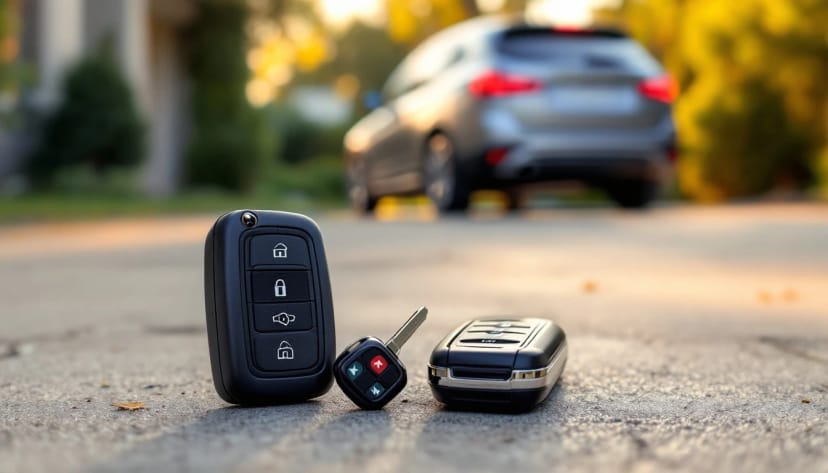
- B8 — roughly 2009–2016 A4, with the A5 tracking closely. Conventional Volkswagen Audi Group immobilizer architecture, the IMMO 4 and IMMO 5 era. Bladed flip keys on base cars, advanced key proximity fobs on equipped cars. A credentialed independent with dealer-level diagnostic equipment handles all-keys-lost on site in the large majority of cases.
- B9 — roughly 2017 onward. The MQB platform with Component Protection. Key credentials live across a chain of modules and authorization normally runs through manufacturer online systems. This is the hardest mainstream-European key job in the market, and on some B9 all-keys-lost scenarios the honest answer is the dealer.
As of August 2026, Fort Worth and Arlington pricing for A4 and A5 key work sits in the European band of $350–$800. B8 spare-key work is at the floor; B8 all-keys-lost is mid-to-upper; B9 all-keys-lost is at the ceiling where it is doable at all. A lockout with no key work is $75–$200 and ignition-related mechanical repair is $150–$400.
Call 817-842-1256 with the VIN. On this brand, more than any other, the VIN is the difference between a quote and a guess.
Why Audi is the make people get wrong
Every locksmith in this metro has taken the same call: an Audi owner who has already spent money — on a key from an auction site, on a general mechanic who could not finish, sometimes on a tow to a dealer and back — and now wants to know why nobody warned them.
The reason is that Audi looks like a normal European car and is not. Two things make it different.
The first is architectural. On most platforms an immobilizer credential is written into one authority and validated against the engine controller. On MQB with Component Protection, the credential participates in a chain — body control, cluster, engine control, steering lock — and the authorization state has to be coherent across all of them. There is no single box to write to.
The second is procedural. Authorization on the newer cars is gated through manufacturer online systems. Independent operators reach that gate legitimately through the NASTF Vehicle Security Professional registry — the framework that extends manufacturer-level security access to credentialed locksmiths under identity verification and record-keeping obligations. An operator without that credentialing is not merely under-equipped; they have no lawful path to the data.
The practical test when you are calling around: ask what platform your car is on and what the Component Protection implication is. An operator who answers with B8 or B9 and explains the difference does this work. An operator who says "we can do any Audi" does not.
The Audi call I dread is the one where somebody says the car is at a shop and the shop already tried. Because now I am not doing an all-keys-lost, I am undoing whatever state the previous attempt left the modules in, and then doing the all-keys-lost. That is not a price problem, it is a time problem, and it is entirely avoidable by making one phone call before anybody plugs anything in.
— a NASTF-registered Fort Worth automotive locksmith, ALOA Master Automotive Locksmith (MAL) credential, DFW metroplex (anonymized)
The B8 generation: conventional VAG immobilizer work
The B8 A4 and its A5 sibling sit on architecture the independent trade understands thoroughly. Two immobilizer generations span the run.
IMMO 4 era. Immobilizer data is held in the instrument cluster, which acts as the authority. Key credentials are written there and validated against the engine control unit. Well documented and widely supported by independent tooling.
IMMO 5 era. The later architecture distributes the role differently, with a component-security code linking the participating modules. More involved than IMMO 4 but firmly within independent capability given proper credentials.
Hardware split within the generation. Non-advanced-key cars use a bladed flip key with an integrated transponder and remote buttons in the head. The blade is cut to the vehicle key code derived from the VIN, and the transponder is registered to the immobilizer. Advanced-key cars use a proximity fob with an emergency blade concealed inside, and that blade still has to be cut — a detail owners reliably forget until the car battery is flat and the door will not open electrically.
What actually fails on B8 cars in Tarrant County.
Flip-key hinge and spring failure. The blade stops locking into the extended position or flops loose. Purely mechanical, and it is the number-one reason an otherwise-healthy B8 key gets replaced.
Worn blade. A twelve-year-old blade rounds off and stops turning the door cylinder. Invisible until the day the fob battery dies and the mechanical backup is all you have.
Fob battery. Produces intermittent no-key-detected behaviour that gets measurably worse in Texas cabin heat, which is why so many of these complaints in this metro are described as afternoon-only.
Single-key used purchases. Extremely common on this platform. A B8 bought secondhand with one key is one bad afternoon away from the expensive version of this job.
The B9 generation: MQB and Component Protection
The 2017-and-later cars sit on MQB, and MQB brings Komponentenschutz into the picture.
Component Protection binds electronic modules to the individual vehicle they were commissioned in. A module that has not been authorized for your specific car remains partially or fully non-functional, even when it is the correct part number, correctly installed, in perfect condition. Authorization normally requires an online session with manufacturer systems.
The anti-theft rationale is obvious and, frankly, sound: it destroys the resale value of parts stripped from stolen vehicles. The Insurance Institute for Highway Safety has documented for decades that raising the technical cost of vehicle crime is the single most reliable way to reduce it, and Component Protection is that principle applied at the component level.
The consequence for key work is equally obvious. On a Component Protection platform a key is not written into one module and done. This is why Audi all-keys-lost is the priciest mainstream-European key job on the road — and it is not markup. It is four separate factors compounding: credentials distributed across modules rather than one; online authorization gating; OEM key hardware that costs materially more than Japanese-brand equivalents; and on-site time measured in hours rather than minutes.
Our dedicated guide on Audi Component Protection and immobilizer programming goes deeper on the authorization mechanics, and because the same architecture runs across the VAG family, the Audi Q5 key replacement guide shows the identical split on the SUV side. The Volkswagen Jetta key replacement guide shows how the same constraints look on lower-cost hardware.
Dealer-level diagnostic equipment: what that phrase should mean
"Dealer-level diagnostic equipment" gets used loosely in this trade, and on an Audi it is worth knowing what it should actually mean before you accept it as an answer.
It should mean three things together. Tooling capable of the platform-specific procedures — not a generic OBD-II scanner, which cannot perform immobilizer writes on any modern VAG car. Credentialing through the VSP registry, which is what converts capability into lawful access. And currency — tooling support for newer platforms trails the manufacturer release, so a tool that was adequate two years ago may not be adequate for a 2024 car today.
An operator serving Arlington and Fort Worth who does genuine Audi work will be able to tell you all three without hedging. One who cannot is quoting an average of other people's cars.
This is also why the Federal Trade Commission's guidance on hiring a locksmith emphasises quoting practice: a refusal to give any range at all before seeing the vehicle is a warning sign, but so is a confident precise figure given with no information about the car. A band plus a stated dependency is the honest shape of an Audi quote.
Fort Worth and Arlington pricing by scenario
All figures are ranges within our published bands. As of August 2026.
| Scenario | Generation | What the job involves | Fort Worth / Arlington band |
|---|---|---|---|
| Spare key, working key present | B8 | Cut blade to code, register credential | $350–$800, floor of band |
| Spare advanced key, working key present | B8 | Cut emergency blade, register prox credential | $350–$800, low-mid |
| All keys lost | B8 | Ownership verify, immobilizer access, register set | $350–$800, mid-upper |
| Spare key, working key present | B9 | Cut blade, register with Component Protection intact | $350–$800, mid |
| All keys lost | B9 | Multi-module authorization, online gating | $350–$800, top of band; dealer on some years |
| Ignition-related mechanical repair | B8 / B9 | Cylinder or switch work | $150–$400 |
| Lockout, no key work | any | Non-destructive entry | $75–$200 |
For how the European band compares against the rest of the market, our breakdown of car key replacement cost in Fort Worth TX puts these figures in context. Scope lives on European car locksmith, Audi key programming and the Audi brand page.
All keys lost: the actual sequence
This is the job class where order matters most, and where cutting a corner early costs hours later.
Step one — ownership verification, before anything technical. Vehicle title or current registration, plus a government-issued photo ID whose name matches, recorded on the invoice. The FTC treats identity verification as a baseline consumer expectation, and on a vehicle in this class it is the clearest signal separating a credentialed operator from a problem. Nobody legitimate skips it.
Step two — VIN and generation determination. B8 or B9. Advanced key or conventional. This decides the entire path and the entire price, and it is why any quote issued before the VIN is a guess dressed as a number.
Step three — key code retrieval. The blade is cut to the code derived from the VIN, not copied from a worn original. On an all-keys-lost there is no original to copy anyway, which is one of the rare advantages of the situation.
Step four — immobilizer access and credential registration. On B8 this is a contained procedure. On B9 it is the multi-stage authorization sequence, and it is where the duration lives.
Step five — verification of every function. Start, both doors, trunk, remote range, and the emergency blade in the driver's lock. A job is not finished because the engine ran.
If you are in this situation right now, our guide on lost car keys with no spare covers the immediate decisions and all keys lost service covers the scope. For the broader picture on recovering a car with nothing to work from, replacing a car key without the original is the companion piece.
Honest boundaries on this brand
There are things we will tell you on the phone rather than after we have taken a deposit.
Some B9 all-keys-lost scenarios are dealer work. Not most, but some, and which ones depends on the model year and the current state of independent tooling support. We will check your VIN against that before dispatching rather than after arriving.
A previous failed attempt changes the job. If a shop or a well-meaning friend has already had a tool on the car, the modules may be in a state that has to be resolved before the actual work begins. Tell us up front; it changes the time estimate, not our willingness.
Component Protection is not something we can work around. It is not a locked door with a trick to it. It is an authorization framework, and the legitimate path through it is credentialing. Anyone offering to bypass it is describing something you do not want done to your car.
Nothing is priced over the phone without a VIN. A band is a band. The VIN turns it into a quote.
How the on-site visit works in Fort Worth and Arlington
We are mobile only, which on an Audi all-keys-lost is a genuine advantage: a car with no working key does not need to be towed anywhere to be recovered.
Coverage runs across Fort Worth, Arlington, and Tarrant County — Hurst, Bedford, Keller, North Richland Hills, and the wider service areas. Hours are Mon–Sun, 8AM–8PM.
Have ready: the VIN, the ownership documents, and an honest account of anything that has already been attempted. Expect a realistic duration rather than an optimistic one, and expect the operator to confirm the generation before committing to anything.
References
- NASTF Vehicle Security Professional registry — the credentialing framework for legitimate independent access to manufacturer security data.
- Federal Trade Commission — hiring a locksmith — consumer guidance on quoting practice and identity verification.
- Insurance Institute for Highway Safety — research on immobilizer effectiveness and vehicle theft deterrence.
- National Highway Traffic Safety Administration — federal vehicle safety and anti-theft standards.
- ALOA Security Professionals Association — trade credentialing, including the Master Automotive Locksmith designation.
- AAA Newsroom — consumer research on roadside events and unplanned vehicle costs.
Frequently Asked Questions
Which Audi A4 generation do I have, B8 or B9?
The B8 A4 ran from roughly the 2009 model year through 2016, and the B9 began with the 2017 model year and continued through the recent cars. The A5 tracks the same split about a year offset, since the A5 shares the A4's platform throughout. That boundary matters more than any other single fact about your car for key purposes, because the B9 sits on the MQB platform with Component Protection while the B8 uses conventional Volkswagen Audi Group immobilizer architecture. The VIN identifies the platform exactly.
Can an independent locksmith do an Audi A4 all-keys-lost, or do I need the dealer?
On B8 cars a credentialed independent operator with dealer-level diagnostic equipment handles all-keys-lost on site in the large majority of cases. On B9 cars it depends on the specific year and configuration, because Component Protection authorization runs through manufacturer online systems that independents reach only through formal credentialing. Any operator who says yes to a B9 all-keys-lost before seeing your VIN is guessing. We will tell you which side of that line your car falls on before we dispatch.
How much does Audi key replacement cost in Arlington and Fort Worth?
As of August 2026 Audi work sits in our European band of $350 to $800. A B8 spare-key add with a working key present is at the floor of that band. A B8 all-keys-lost is mid to upper. A B9 all-keys-lost is at the ceiling where it is doable at all. Dealer pricing for equivalent work generally runs well above that band before you add the cost of towing a car that will not start.
What is Component Protection and why does it make my Audi more expensive?
Component Protection, or Komponentenschutz, is a security layer that binds electronic modules to the specific vehicle they were commissioned in. A module that has not been authorized for your car stays partially or fully non-functional even when it is the correct part, correctly installed and in perfect condition. For key work this means the credential is not written into one box and done. The authorization state has to be coherent across several modules, and that turns a forty-minute job into a multi-stage operation with online gating in the middle.
Do I need proof of ownership for an Audi all-keys-lost job?
Yes, without exception. Vehicle title or current registration, plus a government-issued photo ID whose name matches, recorded on the invoice. This is the baseline expectation for any legitimate operator and it is the clearest single signal separating a credentialed locksmith from a problem. If an operator offers to skip it, that tells you what you need to know about everything else in the transaction.
Why did the Audi key I bought online not work?
Four reasons, and usually more than one at once. The blade ships uncut or generically cut, so it will not turn your door lock. Registration happens at the vehicle, so no seller can genuinely pair a key to a car they have never seen. On B9 cars Component Protection involves modules the seller has no relationship with. And hardware variants differ by button count, frequency and market, so the wrong variant produces a fob that half works. Confirm hardware against your VIN with the operator before buying anything.
How long does an Audi A4 all-keys-lost take on site?
On a B8 car, plan for roughly two to three hours from arrival to a verified working key set, including ownership verification, key code retrieval, blade cutting and credential registration. B9 cars run longer where they are doable at all, because the authorization sequence adds stages. Any operator quoting thirty minutes for an Audi all-keys-lost is describing a job they have not done.
Locked out of your A4 or A5 with no keys at all?
The first thing we need is the VIN. From that we can tell you whether your car is a B8 or a B9, whether it is mobile-doable, what the realistic band is, and how long it will take — before anyone drives anywhere.
Call or text 817-842-1256, Mon–Sun 8AM–8PM. We cover Fort Worth, Arlington and Tarrant County, and we will tell you plainly if your specific car is a dealer job. You can also reach us through the contact page.
Written to the Fort Worth Car Keys field-service review standard. Platform behaviour described here reflects current independent-trade practice on Volkswagen Audi Group vehicles; your car's exact requirements are confirmed by VIN before dispatch.