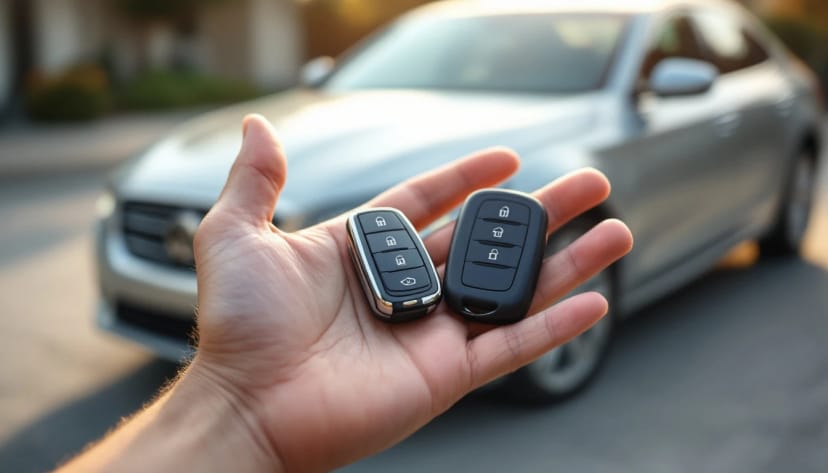
Car key fob battery replacement in Fort Worth, in one screen
Before you spend money on a new key, check the battery. A weak coin cell inside the fob is the single most common reason a remote or a push-button-start car starts misbehaving — and it is a two-dollar fix, not a several-hundred-dollar key replacement. Diagnosing this correctly is exactly what separates an honest operator from one who wants to sell you a key you do not need.
As of July 2026, here is the short version for Fort Worth drivers:
- Most fobs use a CR2032 3-volt lithium coin cell; some use a CR2025, CR2016, or CR1632. The number is printed on the old battery.
- Symptoms of a weak battery: shorter remote range, multiple button presses needed, a low-key-battery or key-not-detected warning, or an intermittent no-detect on push-button cars.
- If the fob battery is dead, you can almost always still start the car using the backup transponder location and the emergency blade.
- The battery costs a couple of dollars; a genuinely faulty fob is where the transponder ($120-$200) or smart-key ($220-$500) replacement bands apply.
A mobile locksmith can confirm in minutes whether it is the battery or the fob. The Federal Trade Commission's guidance on hiring a locksmith recommends getting a clear diagnosis and estimate before any work — and a good operator will tell you when all you need is a battery.
Which battery your fob takes
Nearly all modern car key fobs run on a flat lithium coin cell. The most common by far is the CR2032 — a 3-volt cell about 20mm across and 3.2mm thick (the last two digits, "32," indicate the thickness in tenths of a millimeter). You will also see:
- CR2025 — same diameter, thinner (2.5mm). Used in many slimmer fobs.
- CR2016 — thinnest common size (1.6mm); some fobs stack two.
- CR1632 — smaller diameter, used in some flip and smart keys.
The critical rule: match the exact number printed on the old cell. A CR2025 will physically fit where a CR2032 belongs, but the thinner cell can lose contact as it settles, producing maddening intermittent failures. When in doubt, open the fob, read the number off the old battery, and buy that. Fresh lithium coin cells hold a shelf life of several years, so a spare in a drawer is cheap insurance.
Signs your fob battery is dying
A failing coin cell rarely dies all at once. It fades, and the symptoms are consistent across makes:
- Shorter range. You used to unlock from across the lot; now you have to be a few feet away. Reduced transmit power is the classic first sign.
- Multiple presses. The lock or unlock button needs two or three tries.
- Dashboard warning. Many cars display "key battery low," "key fob battery low," or "key not detected" as the cell weakens.
- Intermittent push-button no-start. On keyless cars, a weak fob is detected sometimes and not others, especially in temperature extremes.
- Worse in cold or heat. Lithium cells lose voltage margin at temperature extremes, so a marginal battery often fails first on the coldest or hottest day.
Any of these usually means a battery, not a key. Swapping the cell first is the smart, cheap move before anyone talks about replacing the fob.
Half the "my key is dying" calls we get are just a CR2032 that has faded. We always tell people to try the battery first — it is a couple of dollars and two minutes. The ones who skip that step and buy a whole new fob online are spending real money to fix a problem a coin cell would have solved. Battery first, diagnosis second, new fob only if the fob is actually bad.
— ALOA Registered Locksmith (RL), DFW automotive-specialty operator, 9 years experience (anonymized)
How to start your car when the fob battery is completely dead
This is the part that panics people: the fob is dead and the car will not detect it. Almost every keyless vehicle has a backup, and knowing it turns an emergency into a non-event.
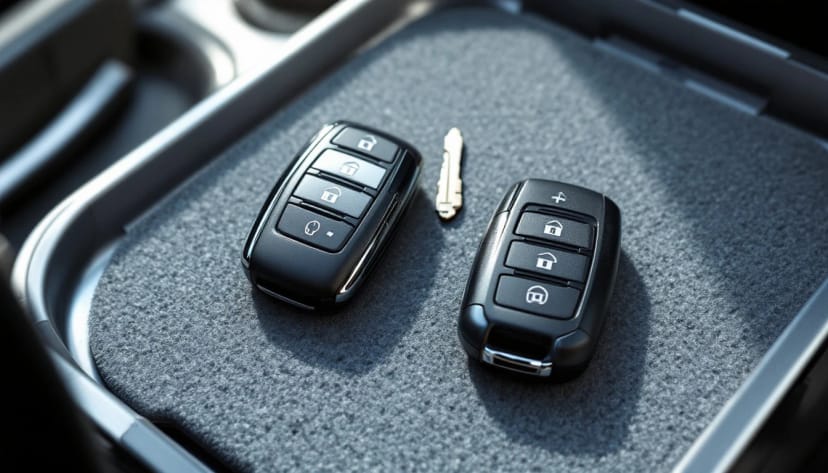
- Push-button-start backup. Most keyless cars can read the transponder chip inside the fob directly if you hold the fob against a specific marked spot — often the start button itself, a point on the steering column, or a cup holder/console pocket. Hold it there and press start. Your owner's manual shows the exact location for your model.
- The emergency blade. Keyless-entry fobs hide a mechanical key blade inside. Slide the release and pull it out to unlock the driver's door manually if the remote will not respond.
- Door-handle touch may still fail with a fully dead fob — that is expected; use the blade for the door and the backup spot for starting.
Because these backups exist, a dead fob battery is almost never a reason to call a tow. It is, at most, a reason to swap a coin cell.
Fob battery vs. a bad fob vs. a car problem — the cost picture
This table separates the cheap fix from the real repair so you know what you are dealing with before anyone quotes you.
| Situation | Likely cause | Fort Worth cost picture |
|---|---|---|
| Range dropping, low-battery warning | Weak coin cell | ~ $2-$5 battery (DIY or minor service) |
| Dead fob, car won't detect it | Dead coin cell | Battery swap; use backup start meanwhile |
| New battery, still no response | Faulty/worn/water-damaged fob | Replacement fob: $120-$200 (transponder) / $220-$500 (smart) |
| Only one of several fobs fails | That fob's battery or board | Battery first, then fob if needed |
| All fobs fail at once | Vehicle-side receiver/module | Diagnose vehicle, not the keys |
| Buttons work, car won't start | Chip/immobilizer or vehicle fault | Diagnose immobilizer, not just battery |
A note on the ranges: replacing the battery is trivial; replacing the fob is where the transponder and smart-key bands apply, and only if the fob itself is genuinely faulty. Our smart key replacement and key fob programming pages cover the fob-replacement path when it is truly needed.
How to change a fob battery safely
For most fobs this is a two-minute job. The steps:
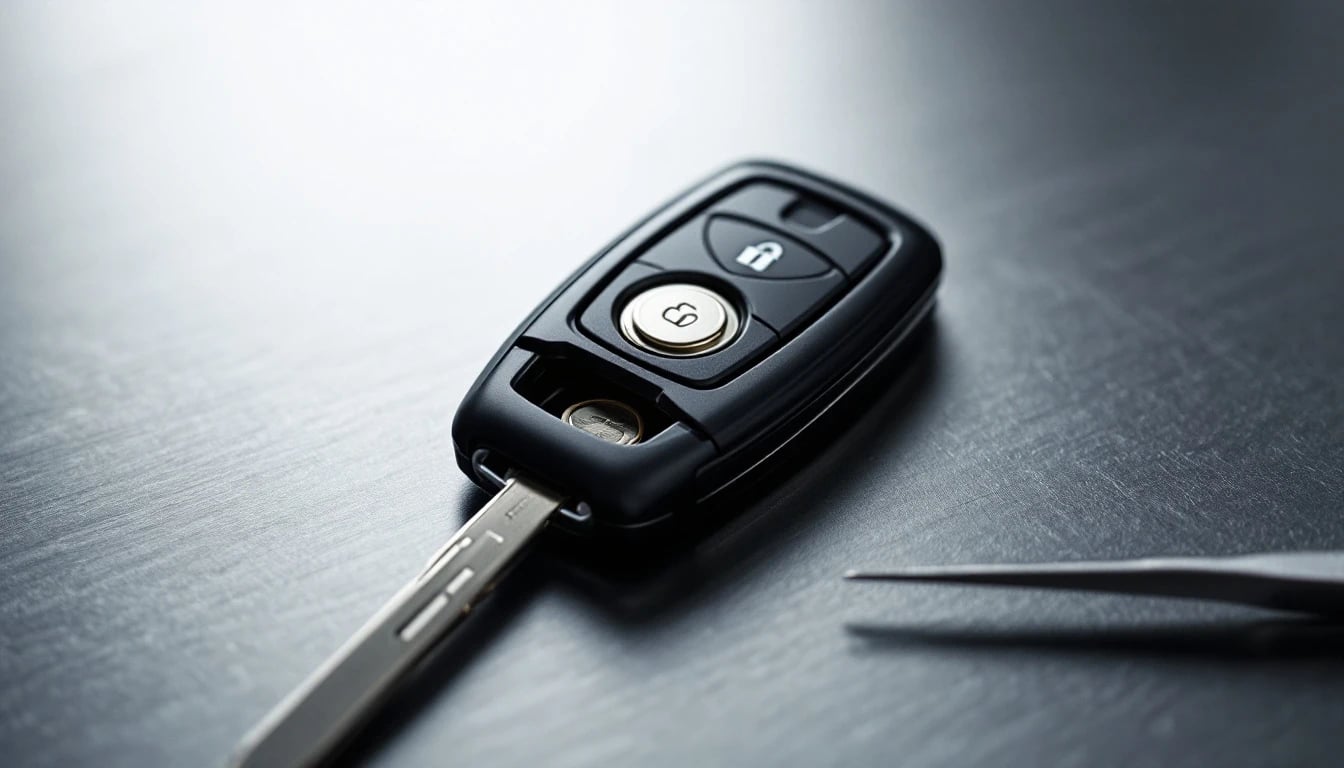
- Release the emergency blade (on keyless fobs) — there is usually a small slider. This often reveals the seam you pry.
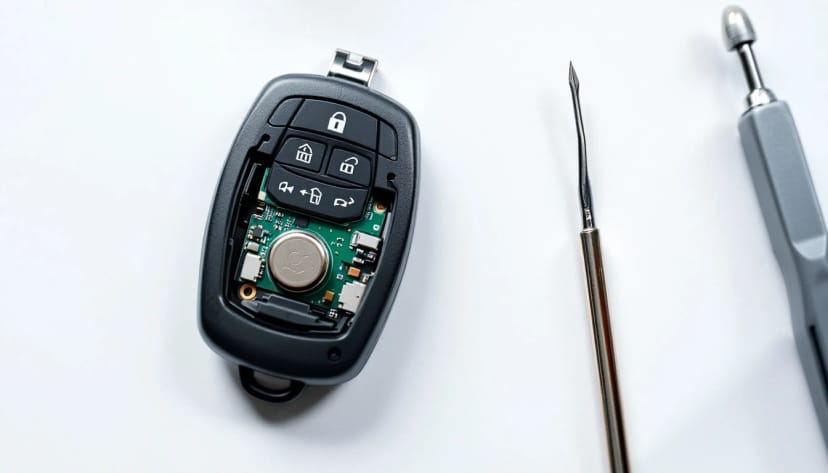
- Find the seam and open gently with a small flat tool or a coin wrapped in tape to avoid scratches. Do not gouge the plastic.
- Note the battery orientation before removing it — usually the printed "+" side faces one way. Phone-photo it if unsure.
- Match the exact cell number and drop the new one in the same orientation. Avoid touching both faces with bare fingers; skin oils can shorten life.
- Snap the halves back together fully and reinsert the emergency blade. Test lock, unlock, and start.
Cautions: premium display keys and some glued fobs are not meant to be pried; forcing them cracks the housing or the circuit board. If your fob is stubborn, unusual, or expensive, let a professional open it. And never use excessive force — a cracked board turns a battery job into a fob replacement.
A couple of extra habits extend the life of the new cell. Buy a well-known lithium brand rather than a bargain multipack; cheap coin cells often read full voltage but sag under the brief high-current pulse a transmitter needs, which mimics a dying battery within weeks. Keep a spare CR2032 (or your fob's exact size) in a drawer so a low-battery warning is never an emergency. And if your fob lives on the same ring as a bulky bunch of keys, the constant knocking can loosen the housing over time — a small silicone case both protects the fob and keeps the halves seated so the battery contact stays solid.
When it is NOT the battery
A fresh battery that does not fix the problem is telling you something. The most common non-battery causes:
- Worn or water-damaged fob. Years of pocket use, a trip through the wash, or a dropped-in-a-drink fob can corrode contacts or crack the board. This needs a replacement fob programmed — see key fob programming.
- Failed button contacts. The rubber/carbon button pads wear out; the battery is fine but the press does not register.
- Vehicle receiver or antenna fault. If every fob fails at once, the car's receiver or antenna is the suspect, not the keys — our no key detected / immobilizer page covers this.
- Immobilizer issue. If the remote buttons work but the car will not start, the problem is the chip-to-immobilizer handshake, not the coin cell.
A licensed operator diagnoses which of these it is rather than selling you battery after battery. Per the Associated Locksmiths of America, accurate diagnosis before parts is the standard for legitimate automotive work, and the U.S. Bureau of Labor Statistics recognizes locksmithing as a skilled trade precisely because that diagnosis takes training.
Why a Fort Worth mobile locksmith is the right call for a fob problem
If you are not comfortable opening the fob, or a new battery did not fix it, a mobile operator settles the question fast — and if you do need a new fob, cuts and programs it on the spot. Vehicle downtime has a real cost: AAA's Your Driving Costs research puts ownership well over ten thousand dollars a year, and a car you are afraid to shut off (because you might not restart it) is a car you are not using confidently.
The mobile advantage is that we come to you — home, work, or a parking lot — and diagnose before selling. For urgent situations, our 24-hour car locksmith in Fort Worth and emergency car locksmith pages explain same-day dispatch, and our make-specific car key battery replacement service page covers the coin-cell work directly.
How to hire the right locksmith for a fob problem in Fort Worth
Before you book:
- Confirm the operator is licensed through Texas DPS Private Security. Texas regulates locksmith companies through the Texas Department of Public Safety, not a general trade board. Ask for the license and verify it.
- Ask them to diagnose battery vs. fob vs. vehicle before quoting a new fob — an honest operator checks the cheap fix first.
- Confirm they can cut and program a replacement fob on-site if the fob is genuinely bad.
- Make sure they come to you. Fort Worth Car Keys is mobile-only; we serve Fort Worth, Arlington, Keller, and Hurst.
You can reach Fort Worth Car Keys at (817) 842-1256 or contact@fortworthcarkeys.com, 8AM-8PM seven days a week. For overall pricing, see our car key replacement cost in Fort Worth page.
Frequently Asked Questions
What battery does my car key fob take?
The large majority of car key fobs use a CR2032 3-volt lithium coin cell; some use a CR2025 or CR2016 (thinner) or a CR1632. The number is printed on the old battery once you open the fob. If you cannot read it, a locksmith or the owner's manual confirms it. Always match the exact number, since a too-thin cell can lose contact intermittently.
How do I know if my key fob battery is dying?
Common signs: you have to stand closer to the car for the remote to work, the buttons need several presses, the dashboard shows a low-key-battery or key-not-detected warning, or a push-button-start car intermittently fails to detect the fob. These are classic weak-battery symptoms and usually cost a couple of dollars to fix rather than a new key.
Can I still start my car if the fob battery is completely dead?
Yes, almost always. Push-button-start cars have a backup: hold the fob against a marked spot (often the start button, the steering column, or a cup holder) so the car reads the transponder chip directly, then press start. Keyless-entry cars also hide a mechanical emergency blade inside the fob to unlock the door. Your owner's manual shows the exact backup location for your model.
How much does key fob battery replacement cost in Fort Worth?
The battery itself is only a couple of dollars, and on most fobs you can swap it yourself. If you would rather a professional open the fob without scratching it, confirm the correct cell, and verify the fob is healthy, a mobile locksmith handles it as a minor service. If the fob turns out to be faulty rather than just low, a replacement key fob is where the transponder $120-$200 or smart-key $220-$500 bands apply.
My fob has a new battery but still doesn't work — what now?
A fresh battery that does not fix it points to a different problem: a worn or water-damaged fob, a cracked circuit board, a failed button contact, or a vehicle-side issue like a weak receiver antenna or a module fault. A locksmith diagnoses whether you need a new fob programmed or a vehicle-side repair, rather than guessing with more batteries.
Can a mobile locksmith replace my fob battery or fob in Fort Worth?
Yes. Fort Worth Car Keys is fully mobile and comes to your home, workplace, or a parking lot anywhere in Fort Worth and the surrounding cities. We can swap a coin cell, confirm whether the fob itself is the problem, and cut and program a replacement fob on-site if you need one. We work 8AM-8PM, seven days a week.
Is it worth replacing the fob battery myself?
For most fobs, yes — it is a cheap, quick job with a small flat-blade tool and the correct coin cell. The main cautions are matching the exact battery number, not scratching the circuit board, and reseating the fob halves so they close fully. If your fob is glued, unusually stubborn, or a premium display key, having a professional do it avoids damage.
References & external sources
- FTC Consumer Advice — Hiring a Locksmith — Federal Trade Commission guidance on getting a diagnosis and estimate before work.
- Associated Locksmiths of America (ALOA) — Trade association governing locksmith certification and diagnostic standards.
- National Highway Traffic Safety Administration (NHTSA) — Anti-Theft Systems — Federal immobilizer and anti-theft standard (FMVSS 114).
- Texas Department of Public Safety — Private Security — Texas locksmith company and individual licensing authority.
- U.S. Bureau of Labor Statistics — Locksmiths (49-9094) — National wage and employment data for the locksmith occupation.
- AAA — Your Driving Costs — Annual vehicle-ownership cost study, including downtime context.