As of July 2026: what Toyota and Lexus key work costs in Fort Worth
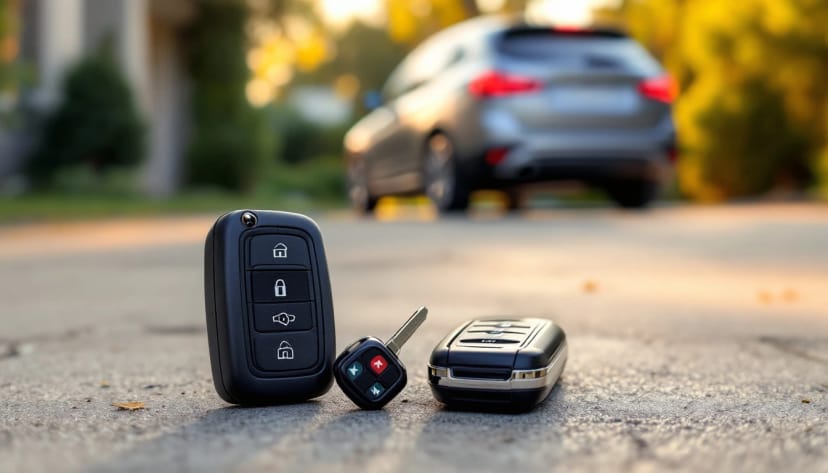
Toyota key replacement comes down to two questions: does your vehicle use a smart proximity key (stays in your pocket, push-button start) or a G-chip / bladed transponder key (you insert and turn it) — and do you still have a working key? Answer those and the price is no longer a mystery. Because Lexus shares Toyota's immobilizer and smart-key architecture, everything here applies to Lexus models too.
Here is the honest Fort Worth mobile range as of July 2026, drawn entirely from the published price bands for this market:
- G-chip / bladed transponder key: $120–$200 cut and programmed
- Smart / proximity (push-to-start) key: $220–$500 depending on model
- All-keys-lost, transponder: $120–$200
- All-keys-lost, smart key: $180–$450 depending on model and key count
- Extra spare programmed with a working key present: often around $65 add-on
- Ignition cylinder repair or replacement: $150–$400
- Vehicle lockout (no key damage): $75–$200
These are mobile ranges — a technician comes to your driveway, workplace, or a Fort Worth parking lot and completes the job on-site. Dealer pricing for the same work typically runs higher once you add service-writer overhead, parts markup, and — for all-keys-lost — a tow. Our Toyota all-keys-lost service page covers the total-loss process in detail, or call 817-842-1256 for a firm phone quote.
Toyota key generations: G-chip, H-chip, and the smart-key era
Toyota's immobilizer has evolved through recognizable generations, and knowing which one you have tells the operator the tool and the procedure.
- Early transponder keys — Bladed keys with a fixed-code or early rolling-code chip, common from the late 1990s into the 2000s.
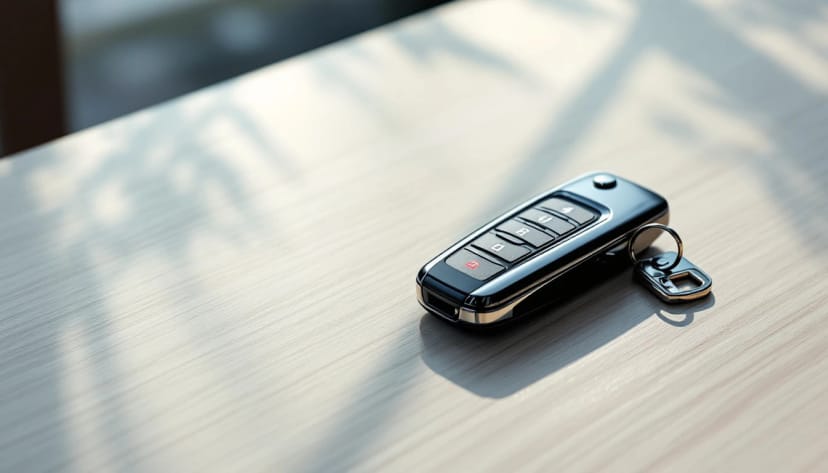
- G-chip keys — A widely used encrypted transponder generation, common on turn-key Toyotas through much of the late 2000s and 2010s. If you have a bladed Toyota key from that era, it is very likely a G-chip. These are conventional insert-and-turn keys and fall in the $120–$200 band.
- H-chip keys — A later, more strongly encrypted transponder generation that appeared on some models in the mid-2010s. Still a bladed key, but with tougher cryptography that requires current tooling.
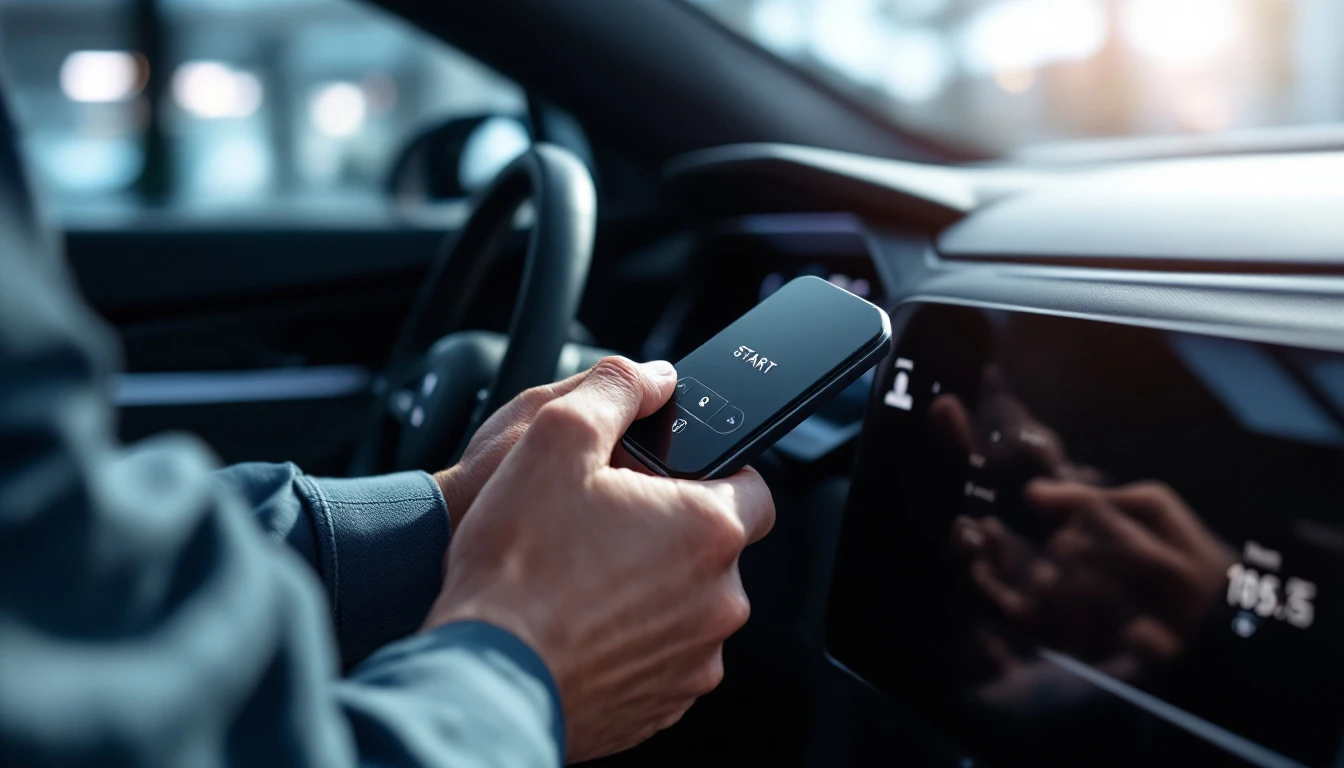
- Smart proximity keys — Toyota's keyless-entry, push-button-start fobs. The car detects the fob near the door, unlocks on a handle touch, and starts with a button. These carry more hardware and require more involved programming, landing in the $220–$500 band.
Per the National Highway Traffic Safety Administration's anti-theft systems guidance and FMVSS 114, each generation exists to make unauthorized starting difficult — which is exactly why credentialed tooling is required to make you a new Toyota key. The Insurance Institute for Highway Safety's vehicle-theft research has long documented that factory immobilizers meaningfully reduce theft of equipped vehicles, which is the security-and-inconvenience tradeoff every Toyota owner lives with the day they lose a key.
Toyota and Lexus key types, model by model
Identifying your key family before you call is the single most useful thing you can do. Here is how the common Fort Worth models break down.
Toyota Camry
America's best-selling sedan spans the transition. Many Camrys used G-chip bladed transponder keys through the early 2010s, while smart-key push-button start spread across trims later in the decade and is standard on most recent Camrys. Insert-and-turn is a transponder job ($120–$200); pocket-the-fob-and-press-start is a smart-key job ($220–$500).
Toyota Corolla
The Corolla followed a similar path — bladed transponder and G-chip keys on older cars, with smart-key proximity systems widespread on newer trims. A 2012 Corolla is typically a transponder job; a 2021 Corolla with push-button start is a smart-key job.
Toyota RAV4
The best-selling compact SUV in the country skewed toward smart proximity keys earlier than the sedans on mid and upper trims, especially from the mid-2010s onward. Most RAV4 key replacements a Fort Worth owner needs today are smart-key jobs in the $220–$500 range, with older bodies remaining transponder work.
Toyota Tundra / Tacoma
The trucks kept bladed transponder keys longer on work-oriented trims, while higher trims adopted smart proximity keys. A base Tundra or Tacoma may well be a G-chip transponder job ($120–$200); a Limited or Platinum with push-button start is a smart-key job.
Lexus (ES, RX, NX, GX, IS)
Lexus shares Toyota's architecture and moved to smart proximity keys earlier and more broadly. Expect most Lexus key replacements to be smart-key jobs ($220–$500), with all-keys-lost in the $180–$450 range. Lexus smart keys are Toyota-family smart keys — not a European-luxury job.
Toyota key options and Fort Worth cost — at a glance
| Toyota/Lexus key type | Typical models | What it does | Fort Worth mobile range (2026) |
|---|---|---|---|
| Early transponder key | Late-1990s/2000s Toyota | Bladed, insert and turn; chip authenticates | $120–$200 cut & programmed |
| G-chip transponder key | Camry, Corolla, Tundra (turn-key era) | Encrypted bladed transponder | $120–$200 |
| H-chip transponder key | Mid-2010s bladed-key models | Stronger-encryption bladed key | $120–$200 |
| Smart / proximity key | RAV4, newer Camry/Corolla, Lexus | Keyless entry + push-button start | $220–$500 |
| All-keys-lost, transponder | Any bladed-key Toyota, no key | New key generated from scratch | $120–$200 |
| All-keys-lost, smart key | Any push-start Toyota/Lexus, no key | New smart key + immobilizer reset/relearn | $180–$450 |
| Extra spare (working key present) | Any Toyota/Lexus | Add a backup while you have a good key | ~$65 add-on programming |
| Ignition cylinder repair/replace | Worn or seized ignition | Mechanical repair, not a key | $150–$400 |
The Toyota all-keys-lost immobilizer reset
The most misunderstood Toyota key job is the all-keys-lost (AKL) scenario — you have no working key at all. This is where the difference between a competent mobile operator and a guesser shows.
With a working key present, the immobilizer already trusts a credential; adding a spare is a quick, low-risk relearn. With no working key, the operator has to establish trust from scratch: reading or resetting the immobilizer, generating fresh key data, and completing a full security relearn. On certain Toyota models the immobilizer enforces a timed reset wait — a deliberate delay before it will accept newly generated key data, built in specifically to frustrate unauthorized rapid key generation. A credentialed operator plans for that wait; it is the system working, not padding.
That extra work is exactly why all-keys-lost smart-key jobs land in the $180–$450 range rather than the roughly $65 add-on of a spare programmed with a good key in hand. For a bladed transponder Toyota, AKL stays in the $120–$200 band. If you're facing a total loss right now, our lost car keys and top-level all-keys-lost resources walk through the process, and the Federal Trade Commission's advice on hiring a locksmith is worth reading before you authorize anyone.
Not every Toyota no-start is a lost or dead key
A meaningful share of Toyota "I need a new key" calls turn out to be something else once a scan tool is connected. The most common Fort Worth diagnoses:
- Dead smart-key battery. A CR2032 coin cell, a few dollars anywhere. Smart-key Toyotas have a documented backup start method — typically holding the fob against a marked spot near the start button — but a fully dead fob can mimic a lost-key symptom. Replace the battery first.
- Weak transponder read. A cracked G-chip key head or an aging antenna ring around the ignition can cause intermittent no-starts, especially in Texas temperature extremes. That's a diagnosis, not automatically a new key.
- Immobilizer lockout from a prior failed programming attempt. If a previous operator tried and failed to program a key, the immobilizer can enter a protection state that a credentialed operator resets.
- Ignition cylinder wear. The key sticks or turns only partially — a mechanical ignition repair ($150–$400), not a key job.
- A genuine key or smart-key replacement. Once the first four are ruled out, then it's a real replacement.
This is why the scan-before-you-cut rule is non-negotiable. A reputable operator diagnoses before cutting or programming anything, and you should never authorize a replacement until the diagnosis points specifically to the key. Our no key detected / immobilizer guide covers the symptom set in depth.
Field-operator perspective
Toyota all-keys-lost is where I earn my keep. Anybody can add a spare when there's a good key in the cup holder. With zero keys, you have to read the immobilizer, generate the data, and then wait out the reset timer some of these models hold you to — and if you don't have the right tool and the patience for that timer, you'll fail the job halfway and lock the car into a protection state. When a customer asks me on the phone whether we can do their RAV4 with no keys at all, the honest answer is yes, but it takes the right equipment and it is not the thirty-minute job somebody promised them online.
— ALOA Master Automotive Locksmith (MAL), import-specialty operator, 12 years experience, DFW metroplex (anonymized)
Why the spare is the cheapest Toyota key you'll ever buy
Program a Toyota backup while you still have a working key and you're looking at roughly $65 in add-on programming, or a full G-chip transponder key in the $120–$200 band. Wait until every key is gone and an all-keys-lost smart key runs $180–$450. The spare wins on price every single time.
There's a downtime argument too. Per AAA's Your Driving Costs research, rental days while you wait on dealer-ordered smart keys add up quickly, and Bureau of Labor Statistics data on the locksmith trade shows the mobile segment has grown precisely because it removes that wait. A same-day spare cut and programmed in your driveway is cheap insurance against a future AKL call. See our spare car key page for the details.
Verification checklist before you book a Fort Worth Toyota key job
Before you authorize dispatch on a Toyota or Lexus key call, confirm:
- The operator asks whether your vehicle is push-to-start (smart key) or bladed-key (transponder), and how many working keys you have.
- They give a flat-rate price range in writing before dispatch.
- They are licensed by the Texas Department of Public Safety Private Security Bureau (ask for the company license number).
- They will scan the immobilizer before cutting or programming any key.
- They can name the diagnostic tool they'll use for your specific model, and confirm they can handle all-keys-lost if that's your situation.
- They issue a written invoice with the license number, parts installed, and warranty terms.
An operator who satisfies all six is worth booking. Fort Worth Car Keys is a mobile automotive locksmith serving Fort Worth, Arlington, Hurst, Bedford, Euless, and the surrounding metroplex. Call or text 817-842-1256, or email contact@fortworthcarkeys.com, for a firm Toyota key quote on the phone.
Frequently Asked Questions
How much does a Toyota key replacement cost in Fort Worth?
As of July 2026, mobile ranges in Fort Worth are: G-chip or bladed transponder key $120–$200 cut and programmed; smart / proximity (push-to-start) key $220–$500 depending on model; all-keys-lost on a smart-key vehicle $180–$450 depending on model and key count; an extra spare programmed with a working key present is often around $65 in add-on programming. Ignition-related work runs $150–$400 and a lockout is $75–$200. Dealer pricing typically runs higher after markup and, for all-keys-lost, a tow.
What is the difference between a Toyota smart key and a G-chip key?
A G-chip key is a bladed transponder key — you insert and turn it, and a chip in the head authenticates to the immobilizer. Toyota's 'G' chip is a specific encrypted transponder generation used broadly in the late 2000s and 2010s on turn-key models. A smart key is a proximity fob that stays in your pocket: the car detects it, unlocks on a handle touch, and starts with a button. Smart keys cost more to replace because of the added hardware and the more involved programming.
Does my Toyota Camry use a smart key or a chip key?
It depends on year and trim. Many Camrys used G-chip bladed transponder keys through the early 2010s, while smart-key push-button start spread across trims later in the decade and is standard on most recent Camrys. If you insert a key and turn it, you have a G-chip or transponder key; if you carry the fob in your pocket and press a button to start, you have a smart key.
Can a mobile locksmith do a Toyota all-keys-lost in my driveway?
Yes, for the vast majority of Toyota and Lexus models. When every key is lost, a credentialed mobile operator connects a diagnostic tool to the OBD-II port, reads or resets the immobilizer, generates a new key or smart key from scratch, and completes the security relearn on-site. Some models enforce a timed immobilizer reset wait, which the operator accounts for. No tow to the dealer is required.
Does Lexus key replacement work the same way as Toyota?
Largely yes. Lexus shares Toyota's immobilizer and smart-key architecture, so the same identification logic and procedures apply. Lexus models skewed toward smart proximity keys earlier and more broadly than the Toyota equivalents, so most Lexus key replacements are smart-key jobs in the $220–$500 range, with all-keys-lost in the $180–$450 range.
My Toyota won't start and the security light is blinking — is it the key?
Maybe, but not always. A blinking security indicator with a no-start can mean the immobilizer isn't recognizing the key — which can be a dead smart-key battery, a weak transponder read, or an immobilizer fault rather than a truly lost key. On smart-key Toyotas a dead fob battery has a documented backup start method. A credentialed operator scans before recommending a key, so you don't pay for hardware that wouldn't fix the problem.
Is a Fort Worth locksmith licensed to replace Toyota keys?
Automotive locksmith companies in Texas are licensed and regulated by the Texas Department of Public Safety Private Security Bureau, covering both the company and its individual technicians. Ask for the company license number, confirm the technician scans the vehicle before cutting a key, and get a flat-rate range in writing before dispatch.
References & external sources
- NHTSA — Anti-Theft Systems & FMVSS 114 — Federal Motor Vehicle Safety Standard governing key-code and immobilizer disclosure.
- IIHS — Vehicle Theft — Insurance Institute for Highway Safety research on immobilizers and theft-rate reduction.
- FTC Consumer Advice — Hiring a Locksmith — Federal Trade Commission guidance on verifying locksmith legitimacy and getting a price up front.
- NASTF Vehicle Security Professional (VSP) Registry — National Automotive Service Task Force registry for credentialed access to OEM security data.
- Associated Locksmiths of America (ALOA) — Trade association governing locksmith certifications including the Master Automotive Locksmith (MAL) credential.
- U.S. Bureau of Labor Statistics — Locksmiths (49-9094) — BLS OEWS national wage + employment data for the locksmith occupation.
- AAA — Your Driving Costs — Annual ownership-cost study including unscheduled-maintenance and rental projections.