TL;DR — Mercedes EIS/EZS in one screen
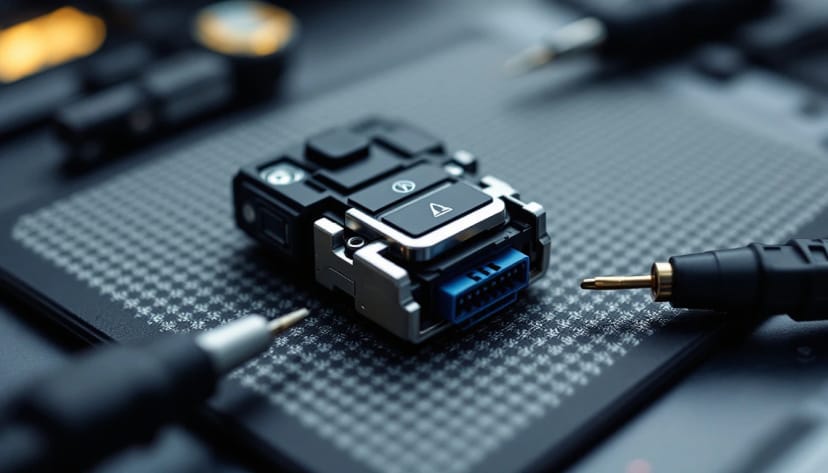
On a Mercedes built since roughly the early 2000s, there is no ignition cylinder in the traditional sense. There is an EIS — Electronic Ignition Switch, called EZS in Mercedes' own German nomenclature — and it is the single most consequential module in the vehicle's security chain.
The EIS does four things:
- Reads the key credential (infrared on the earliest generations, RF thereafter).
- Authorizes or refuses the electronic steering lock (ESL/ELV) to release the column.
- Wakes the vehicle networks and provides ignition-position switching.
- Authorizes the engine control unit to permit fuel and spark.
Break any of those four and the driver sees the same thing: a car that will not start. Which is why "I need a new Mercedes key" is, on this brand more than any other, frequently the wrong diagnosis.
As of July 2026, Fort Worth pricing for this work sits in the European band of $350–$800. Key-only work is priced separately: a smart/proximity key $220–$500, a lost fob $180–$450, ignition-related mechanical repair $150–$400, and a straight lockout $75–$200. Our European car locksmith and module programming pages carry the full scope.
Generation map: what you actually have
Mercedes security architecture changed in ways that determine whether a job is mobile-doable, dealer-only, or somewhere in between. The chassis code matters more than the model name.
W202 / W210 era (roughly 1993–2003). Early electronic ignition with infrared key communication. The key transmits an IR pulse to a receiver in the EIS. These are old enough that the common problems are as much wear and corrosion as cryptography. Key blanks and modules are getting scarce.
W203 / W211 / W219 / W164 era (roughly 2002–2009). The heart of the FBS3 generation. C-Class, E-Class, CLS, and the ML/GL SUVs. This is the era where "key stuck in the ignition slot" becomes a signature complaint, and where EIS internal failures are common enough to be a known pattern rather than a surprise.
W204 / W212 / W207 / W221 era (roughly 2007–2014). Later FBS3. This is the ESL era — the electronic steering lock on several of these platforms is a well-documented failure point, and the failure presents as an immobilizer problem to anyone not looking specifically for it.
W205 / W222 / W213 era (roughly 2014–present). FBS4. Substantially stronger protection. Spare-key and diagnostic work is often still approachable, but all-keys-lost on FBS4 is generally a dealer or manufacturer-online operation. An independent shop claiming routine FBS4 AKL capability should be asked very direct questions about exactly what procedure they intend to run.
The honest framing: FBS3 is independent territory. FBS4 is not, for the hardest jobs. Any operator who blurs that line is either uninformed or selling you something.
The ESL / electronic steering lock, and why it fools everyone
The ESL — Elektronische Lenkradschloss, also written ELV — is a small motorized module in the steering column that physically pins the column until the EIS authorizes release.
On several W204, W207, W212 and R171 platforms, the ESL is a known weak point. The failure is mechanical-electrical: the internal motor, gear, or position sensor degrades, and the module either fails to release the pin or fails to report that it released.
The symptom set is what causes the misdiagnosis:
- Key inserts, dash wakes, but the car will not crank.
- A steering-lock or immobilizer-flavored message appears in the cluster.
- The steering wheel stays physically locked.
- Sometimes the key will not withdraw.
Every one of those reads, to a non-specialist, as "the car does not recognize the key." It is not. The key was recognized perfectly. The column simply never unlocked, and the EIS will not authorize a crank against a locked column.
This distinction is worth real money because the repairs are entirely different jobs. Buying two new keys for an ESL failure buys you nothing. Our Mercedes ESL/EZS issues page covers the fault specifically, and steering column lock repair covers the cross-brand version.
The Mercedes call I hate is the one where somebody already bought keys. Nine times out of ten on a W204 that will not crank, it is the steering lock, and the customer has spent hundreds of dollars solving a problem they did not have. Two minutes on the phone asking whether the wheel is locked and whether the dash lights up would have saved all of it.
— a NASTF-registered Fort Worth automotive locksmith, ALOA Master Automotive Locksmith (MAL) credential, DFW metroplex (anonymized)
Key stuck in the EIS
This is its own complaint and it deserves its own handling instructions.
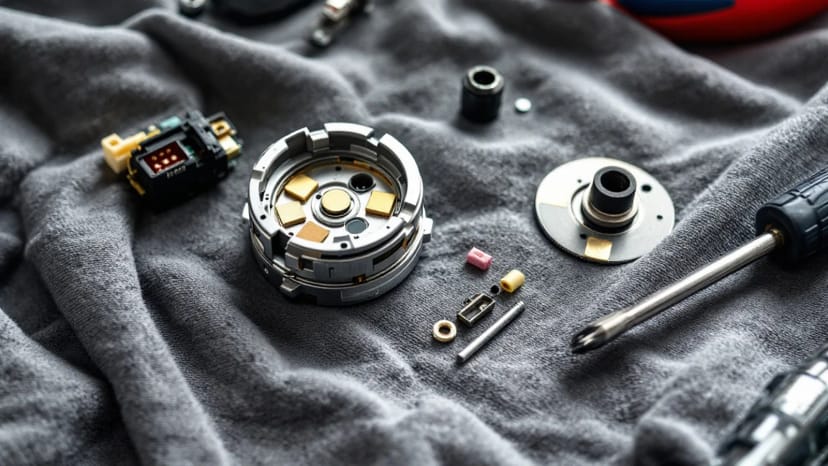
The EIS holds the key mechanically until the module releases it. When the retention mechanism or the release logic fails, the key is trapped in the slot. Drivers typically report a progression: the key becomes stiff, then needs wiggling, then needs a specific angle, then stops coming out entirely.
What not to do:
- Do not force it. The reader assembly sits directly behind the retention mechanism, and levering a stuck key can damage the reader — converting a repairable module into a replacement.
- Do not let anyone drill it. There is no cylinder to drill on a modern Mercedes. Drilling an EIS destroys the module and accomplishes nothing.
- Do not disconnect the battery hoping for a reset. On several platforms a hard power cycle mid-fault leaves the vehicle in a worse state, and on the ESL-equipped chassis it can leave the column locked with no easy path back.
What to do: stop, call a credentialed operator, and describe the progression. The distinction between a retention-mechanism failure that can be released and repaired, and a module-level failure that requires replacement and personalization, is determinable — but it is determined by someone with the tooling, not by force.
Personalization and virginizing
Here is the concept that governs the price of every Mercedes module job.
A Mercedes EIS is personalized. When the vehicle was built, the module was written with the VIN and with the credentials of the key set that shipped with the car. That personalization is what makes the module refuse to work in any other vehicle — which is excellent anti-theft design and inconvenient repair economics.
Three consequences follow:
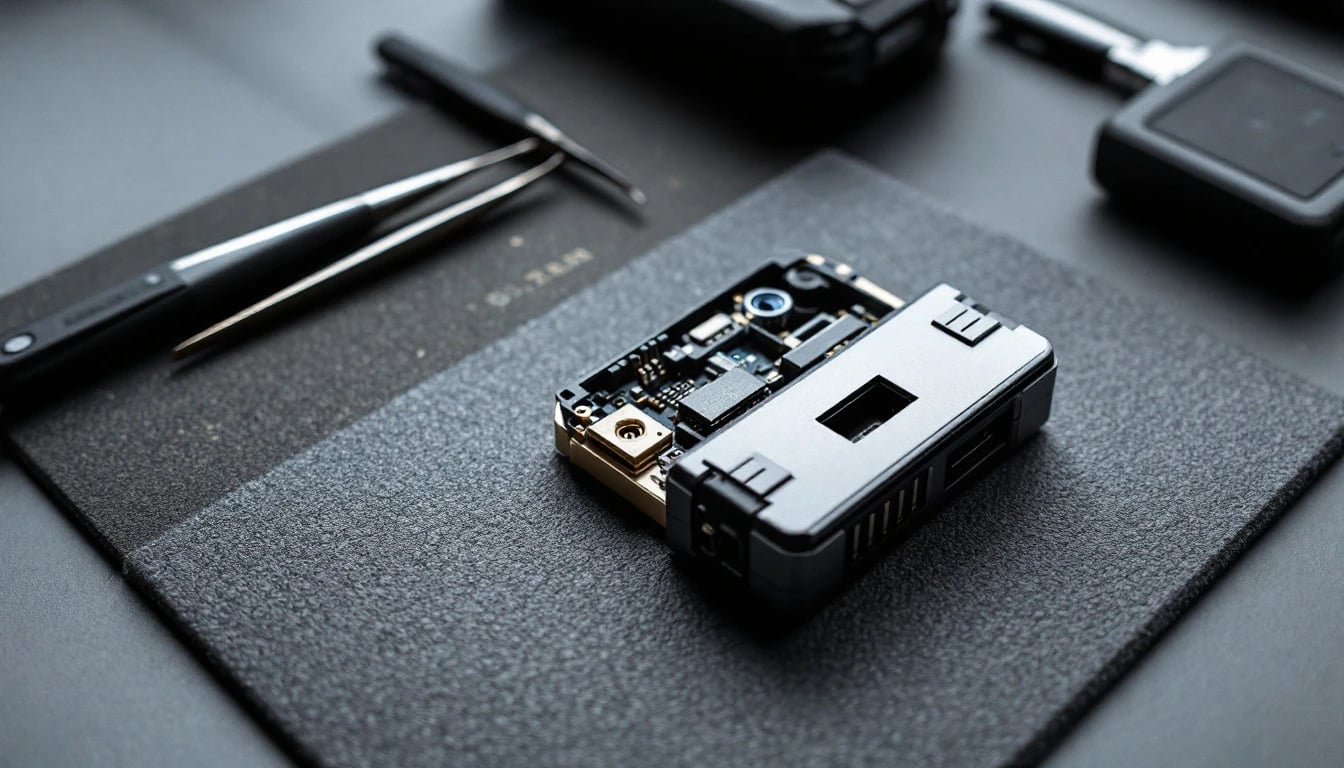
1. A used EIS is not a plug-in part. Buy a matching part number from a salvage yard and it arrives believing it belongs to a different car. On FBS3 platforms it is frequently possible to reset the module to a virgin state — a bench-level operation, not an OBD-port operation — and then personalize it to your VIN and your keys. That is a genuine and legitimate cost saving. On FBS4 platforms that route generally does not exist.
2. Key slots are finite. The EIS holds a limited number of registered key positions. Every key ever registered consumes a slot, and on these systems slots that have been used and then invalidated are not freely recoverable. A module that has cycled through a long history of key registrations has less remaining headroom than a fresh one — worth knowing before you buy a used unit with unknown history.
3. Module, ECU, and ESL are related. On many platforms the EIS, the engine control unit, and the steering lock carry linked credentials. Replacing one in isolation without addressing the linkage produces a car that starts and immediately stops, or does not crank at all. A competent quote addresses the set, not just the failed part.
| Chassis era | Approx. years | System | Common failure | Independent-doable? |
|---|---|---|---|---|
| W202 / W210 | 1993–2003 | Early IR key | Reader wear, corrosion, key IR failure | Yes, parts scarcity is the constraint |
| W203 / W211 / W219 / W164 | 2002–2009 | FBS3 | Key stuck in EIS, EIS internal fault | Yes, including virginize and personalize |
| W204 / W212 / W207 / W221 | 2007–2014 | FBS3 (late) | ESL steering lock failure | Yes, ESL and EIS both |
| R171 SLK | 2004–2011 | FBS3 | ESL failure, EIS reader | Yes |
| W205 / W222 / W213 | 2014–present | FBS4 | Key registration, module protection | Spare keys often yes; all keys lost generally dealer |
Dealer versus mobile: an honest split
Most brand guides oversell the independent path. On Mercedes, the honest answer has a real boundary in it.
Mobile is the better choice when:
- The vehicle is FBS3-era and needs key work, EIS repair or replacement, or ESL work.
- The column is locked or the car will not crank — meaning it cannot be driven to a dealer and a dealer visit implies a tow. A mobile operator eliminates that line item entirely.
- You want a flat-rate range before anyone touches the car.
- You need it resolved this week rather than after a multi-day service-department queue.
The dealer is the better choice when:
- The vehicle is FBS4 and the job is all-keys-lost. This is the clear case. The procedure requires manufacturer-online access.
- There is an open recall or campaign touching the ignition, steering lock, or immobilizer.
- The car is already at the dealer for other warranty work and the job can be bundled.
An operator who tells you every Mercedes job is mobile-doable is telling you something that is not true. The credibility test on the phone is whether they ask for your chassis code or at minimum your exact year and model before quoting, and whether they can articulate the FBS3/FBS4 boundary unprompted.
Model-level detail is on our Mercedes key programming page and the Mercedes-Benz brand page.
All keys lost on a Mercedes
This is the highest-stakes version of the job, and ownership verification is non-negotiable.
Step one, before anything technical: the operator asks for the vehicle title or current registration together with a government-issued photo ID whose name matches, and records that verification on the invoice. The FTC's locksmith hiring guidance treats identity verification as a baseline consumer-protection expectation, and on a vehicle in this value class it is the single clearest signal separating a real operator from a problem.
After that:
- Load-test the 12V battery. Mercedes electrical architecture is voltage-sensitive and a marginal battery generates convincing false immobilizer and steering-lock faults.
- Confirm dash wake behavior. Does inserting a key produce any cluster response at all? That single observation splits the diagnostic tree.
- Scan for module presence. Is the EIS answering on the network? Is the ESL reporting?
- Determine FBS generation from the VIN before quoting a path.
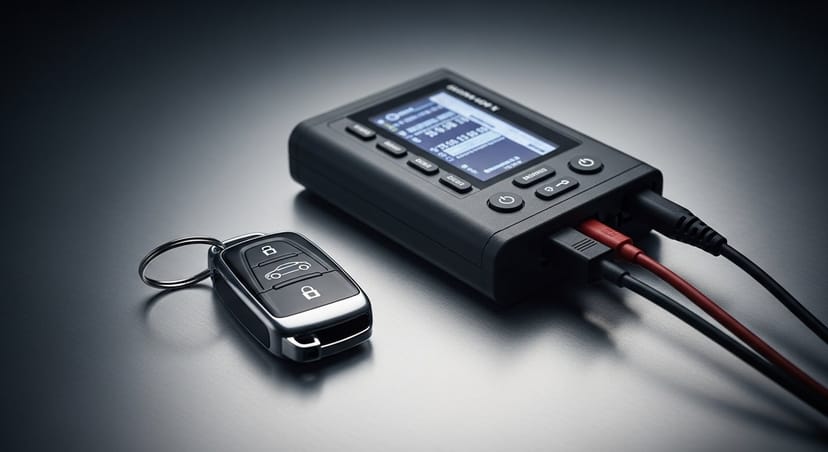
- Then decide between key generation, EIS repair, EIS replacement with personalization, or a dealer referral.
The full walkthrough for this brand is in our Mercedes-Benz all keys lost guide, and the cross-brand version lives on the all keys lost page.
Worth understanding why this is deliberately hard: NHTSA's material on anti-theft systems describes immobilizer architecture as a theft-deterrence measure, and IIHS theft research documents how sharply immobilizers reduced theft rates for equipped vehicles. Mercedes sits at the strong end of that spectrum. The friction you experience as a legitimate owner is the same friction a thief experiences — that is the design working as intended.
Cost in Fort Worth, plainly
As of July 2026:
- Mercedes EIS/EZS or ESL module work (European band): $350–$800
- Smart / proximity key: $220–$500
- Lost fob replacement: $180–$450
- Extra fob added to a working system: around $65
- Ignition-related mechanical repair: $150–$400
- Vehicle lockout, no key work: $75–$200
Dealer pricing for the equivalent module jobs runs materially higher and adds tow cost on any car with a locked column. AAA's driving-cost research is a reasonable frame for pricing the downtime around a multi-day service appointment, which on this kind of repair is often the larger number.
Verification checklist
- They ask for year, model, and ideally chassis code before quoting.
- They can explain the FBS3 versus FBS4 boundary without being prompted.
- They ask whether the steering wheel is locked and whether the dash wakes — the two questions that split ESL from EIS from key.
- They quote a flat-rate range in writing before dispatch.
- They hold Texas DPS Private Security Program licensing. Texas locksmiths are licensed through the Department of Public Safety's Private Security Program; an operator naming a different agency is not describing Texas law.
- They are NASTF VSP registered for OEM security-data access — see the NASTF VSP program.
The Associated Locksmiths of America certification ladder places EIS-level European work at the Master Automotive Locksmith tier. For general pricing-disclosure expectations, FTC business guidance sets the standard that a quoted range should mean something.
Getting it done
Fort Worth Car Keys is a mobile-only operation serving Fort Worth and the surrounding metroplex, seven days a week from 8AM to 8PM. Call 817-842-1256 or email contact@fortworthcarkeys.com. A Mercedes with a locked column is not going anywhere on its own — coming to the vehicle is the entire value of the mobile model on this brand.
More: European car locksmith, module programming, ignition repair, 24-hour car locksmith, and the Fort Worth service area.
Frequently Asked Questions
What is the EIS or EZS on a Mercedes?
EIS stands for Electronic Ignition Switch and EZS is the German abbreviation for the same component. It is the module behind the key slot or start button that reads the key credential, decides whether to release the electronic steering lock, wakes the vehicle networks, and authorizes the engine control unit to run. It replaced the mechanical ignition cylinder as the security authority. On a modern Mercedes the key is only a credential and the EIS is the actual lock.
My key is stuck in the Mercedes ignition slot. Is that the EIS?
Very often, yes. The EIS contains a mechanical retention mechanism that holds the key until the module decides to release it, and a failure inside that mechanism or in the module logic leaves the key trapped. On several platforms the failure is progressive, so drivers report the key becoming harder to withdraw over weeks before it stops coming out at all. Do not force it and do not let anyone drill it. Forcing a stuck key can damage the reader assembly and turn a repair into a full module replacement.
How do I tell whether my Mercedes key is dead or the EIS is dead?
Test both keys and watch the dash. If one key works and the other does not, the fault is in the key. If neither key produces any dash response at all, no cluster wake, no chime, no warning lamps, then power or the module itself is suspect. If both keys wake the dash but neither will crank and you see a steering lock message, the electronic steering lock is the leading suspect rather than the keys. A credentialed operator scans before recommending anything.
What is the difference between FBS3 and FBS4 Mercedes systems?
They are two generations of the Mercedes vehicle authorization architecture. FBS3 covers roughly the mid 2000s through the mid 2010s and includes chassis such as W203, W211, W204, W212 and W221. FBS4 arrived with the W205 generation and later platforms and uses far stronger protection. FBS3 work including key generation and module personalization is achievable by credentialed independent operators. FBS4 all keys lost is generally a dealer or manufacturer online operation, and any shop claiming otherwise deserves hard questions.
Can a used EIS from another Mercedes be installed on my car?
Only with real caveats. A used EIS arrives personalized to its original VIN and its original key set. On FBS3 platforms it is often possible to reset that module to a virgin state and then personalize it to your vehicle and your keys, which is a genuine cost saving. On FBS4 platforms that path generally does not exist. There is also a hard limit on key slots, so a module that has cycled through many key registrations may have less remaining capacity than a fresh unit.
How much does Mercedes EIS or ESL work cost in Fort Worth?
European platform work sits in the 350 to 800 dollar band, and Mercedes EIS and electronic steering lock jobs live in that band. Straight key work is separate and priced by type: a smart or proximity key runs 220 to 500 dollars and a lost fob 180 to 450 dollars. Ignition related mechanical repair falls in the 150 to 400 dollar range. A dealership quote for equivalent module work is typically considerably higher and usually adds a tow, because a car with a locked column cannot be driven in.
Do I need proof of ownership for Mercedes all keys lost work?
Always. A credentialed operator will ask for the vehicle title or current registration plus a government issued photo ID in a matching name, and will record that check on the invoice before generating any credential. Mercedes security data is gated behind registry credentialing precisely because the stakes are high, and no legitimate operator skips the ownership step. If someone offers to make you a Mercedes key without verifying who you are, that is the signal to end the call.
References
- NASTF Vehicle Security Professional (VSP) Registry — Credentialed access to OEM security data for independent operators.
- Associated Locksmiths of America (ALOA) — Certification ladder including Master Automotive Locksmith.
- NHTSA — Anti-Theft Systems — Federal guidance on immobilizer and anti-theft equipment.
- IIHS — Vehicle Theft — Research on theft rates and immobilizer effectiveness.
- FTC Consumer Advice — Hiring a Locksmith — Verifying a locksmith before authorizing service.
- FTC — Business Guidance — Federal guidance on pricing and advertising disclosure.
- AAA — Your Driving Costs — Vehicle ownership and downtime cost research.