As of July 2026: Mercedes-Benz all-keys-lost in Fort Worth
Losing every key to a Mercedes-Benz is not the same problem as losing every key to a pickup, and pretending otherwise is how owners end up with a botched job and a car that still won't start. As of July 2026, a Mercedes all-keys-lost is one of the most technically demanding jobs a mobile automotive locksmith handles — it involves reading and working with the car's ignition module, recovering encrypted key data, and writing a fresh key the vehicle will trust, all without an existing key to authorize anything. This guide explains what actually happens under the surface, why the price sits in the European luxury band, and — most importantly — where the honest boundary is between a job we can finish in your Fort Worth driveway and a job that belongs at the dealer.
We serve Fort Worth and the surrounding cities — Arlington, North Richland Hills, Hurst, Bedford, Euless, Grapevine, Keller, Benbrook, Saginaw, White Settlement, Lake Worth, and River Oaks — with mobile service, and Mercedes work is a specialty within a specialty. If you own a C-Class, E-Class, S-Class, GLC, GLE, CLA, or any of their siblings and you've lost your keys, read this before you call anyone, because the questions you ask up front tell you whether you're talking to someone who understands the platform or someone about to guess with your car.
The heart of the problem: EIS / EZS
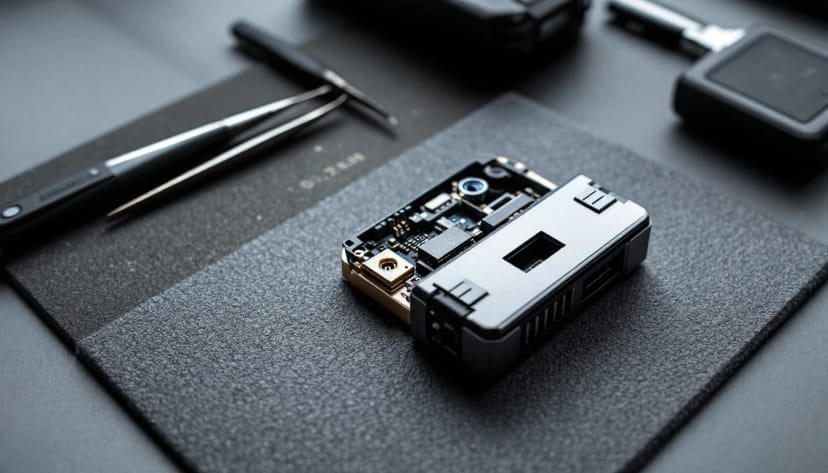
Every modern Mercedes has a module at the center of the ignition system called the EIS — Electronic Ignition Switch, known in German engineering documentation as the EZS (Elektronisches Zündschloss). It is the slot or button your key talks to, and it is the brain of the car's anti-theft chain. The EIS stores the vehicle's key data, tracks which keys are authorized, and decides whether the engine is allowed to start. On many models it also has to hand off authorization to the engine control unit and the electronic steering lock before the car will crank.
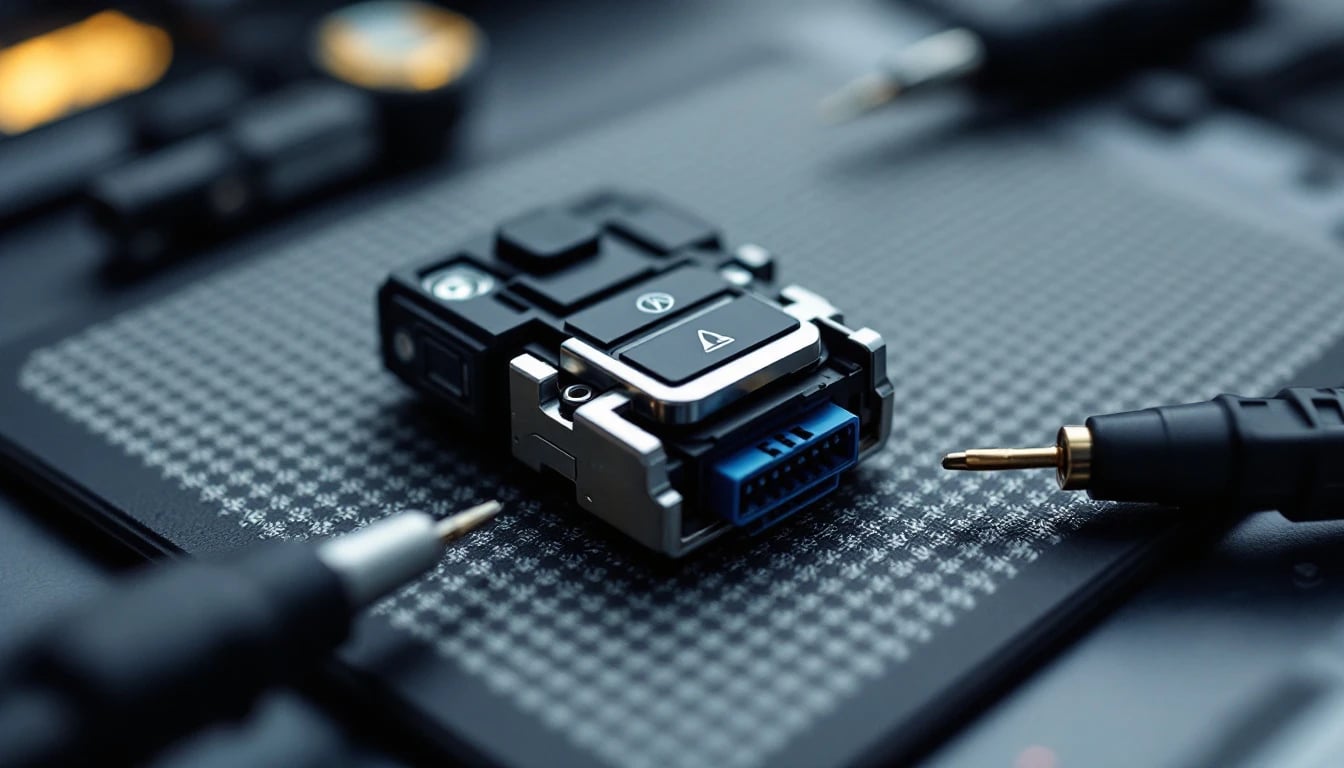
This matters enormously for a lost-key job. On an ordinary transponder vehicle, all-keys-lost means putting the immobilizer into a learn state and teaching it a new chip. On a Mercedes, there is no simple "learn" button an operator can trigger with no key present. Instead, the operator has to work directly with the EIS — reading it, recovering or calculating the encrypted key file, and then generating a new key that carries the correct data. This is why a Mercedes all-keys-lost sits in the European luxury band of $350–$800 for the key, with an all-keys-lost programming session of $180–$450 on top plus the fob hardware. The metal is trivial; the security work is everything.
Infrared, not just radio: how a Mercedes key talks
Here's a detail that surprises most owners: a Mercedes key doesn't authorize the start purely by radio the way a typical proximity fob does. The final ignition handshake between the key and the EIS uses infrared — an optical exchange, similar in principle to a TV remote — layered on top of the encrypted key data. When you insert the key into the slot (on older cars) or hold the fob to the EIS (on keyless-go cars), that infrared conversation is what actually tells the ignition switch "this is a valid key."
That infrared exchange is part of why Mercedes key work is a niche. The key isn't just a chip in plastic; it's a small encrypted device that has to speak the car's exact language. When an operator writes a new key on an all-keys-lost, they are producing a device that will complete that infrared handshake correctly with your specific EIS. A generic aftermarket shell with the wrong data inside will do nothing — the dash may light, but the car will never accept it as a start-authorized key.
FBS3 versus FBS4: the single most important question
If you take one fact from this article, take this one: Mercedes immobilizer security comes in generations, and the generation decides whether your lost-key job is a driveway job or a dealer job.
- FBS3 is the earlier generation, found on a broad swath of Mercedes models built roughly through the mid-2010s. Independent tooling can generally work FBS3 for all-keys-lost — reading the EIS, recovering the key data, and writing a new key on-site. The vast majority of the Mercedes lost-key work a Fort Worth mobile specialist completes is FBS3.
- FBS4 arrived on newer platforms from roughly 2015 onward and is dramatically more locked down. The encryption and the way key data is protected mean that many FBS4 all-keys-lost jobs are specialist or dealer territory, not a routine mobile fix. Promising a fast, cheap FBS4 lost-key job is exactly the kind of bluff a careful operator won't make.
The complication is that model years and platforms overlap — a given nameplate can straddle the transition depending on when it was built and which chassis it's on. That is precisely why the honest answer to "can you make my Mercedes key?" is always "a technician confirms your exact setup by VIN first." The VIN tells us the platform, the platform tells us FBS3 versus FBS4, and only then can anyone give you a real answer instead of a hopeful one.
The electronic steering lock (ESL / ELV): the other failure point
Many Mercedes models add a second module to the start chain: the ESL — Electronic Steering Lock, also abbreviated ELV (Elektrische Lenkungsverriegelung). It's a motorized lock on the steering column that physically secures the wheel and has to release, on the EIS's authorization, before you can drive. It's a genuine anti-theft feature — and on certain models it's also a well-known failure point.
When the ESL fails, the symptom often looks like a key or immobilizer problem: the dash lights up, but the steering stays locked and the car won't start, sometimes with a message about the steering lock or a flashing security indicator. Owners understandably assume they need a key, when in fact the key is fine and the steering lock is the culprit. This is why a proper diagnosis matters before anyone sells you a key you may not need. If your Mercedes shows an anti-theft or immobilizer warning and won't crank, our companion guide on the anti-theft light flashing and the car won't start walks through how to tell an immobilizer fault from a dead-key fault — and a Mercedes ESL problem is one of the classic cases where the light lies about the real cause. Dedicated ESL and EIS diagnosis is its own service; see the Mercedes ESL / EZS issues page for how that work is scoped.
Mercedes key pricing in Fort Worth, by scenario
Here is the single reference table for Mercedes key and all-keys-lost work as of July 2026. Every figure is a mobile, on-site range for Fort Worth and the surrounding cities, and every one assumes the platform is workable independently — FBS4 and the newest cars are the documented exception that may require the dealer.
| Scenario | What's involved | Fort Worth price band |
|---|---|---|
| Spare key added (working key present) | EIS already authorized; new infrared key paired | European key $350–$800 + ~$65 hardware note |
| Lost key, one key remaining | New key written, existing key authorizes | European key band $350–$800 |
| All-keys-lost, FBS3 platform | EIS read, key-file/password work, new key written | $350–$800 key + $180–$450 session |
| ESL / EIS fault diagnosis | Steering-lock / ignition-switch electrical work | Diagnosis-led; ignition-side work $150–$400 |
| Lockout (keys inside, keys exist) | Non-destructive entry, no programming | $75–$200 |
| FBS4 / newest platforms | Specialist or dealer path | Confirm by VIN — a technician verifies feasibility |
Two things to notice. First, the spare-key argument is even stronger on a Mercedes than on a mass-market car: adding a second infrared key while your first one still works keeps you in the ordinary key band and avoids the added all-keys-lost session entirely. Second, the FBS4 row deliberately has no price — because quoting a firm number on a job that may not be independently possible is dishonest, and the responsible move is to verify by VIN first.
Why all-keys-lost on a Mercedes is genuinely complex
It's worth being specific about why this job earns its price, because "European car, so it's expensive" isn't an explanation — it's a shrug. Here's what actually makes a Mercedes all-keys-lost hard:
- No key means no easy authorization. With every key gone, there's nothing to tell the EIS "an authorized owner is here." The operator has to derive the trust from the module itself.
- The key data is encrypted. Recovering or calculating the key file involves working with protected data inside the EIS — the "password" and key-file work that separates a Mercedes specialist from a general locksmith.
- Multiple modules must agree. The EIS, the engine control unit, and (where fitted) the ESL all participate in authorizing a start. A new key has to satisfy the whole chain, not just one module.
- The infrared handshake must be exact. The finished key has to complete the optical exchange with your specific EIS, which is why generic parts fail silently.
- Ownership must be proven. Because this is effectively defeating the car's anti-theft system for a legitimate reason, proof of ownership isn't optional — it's the ethical and credentialed-access baseline.
Federal data underlines why that anti-theft chain exists in the first place. The National Highway Traffic Safety Administration documents that engine immobilizers materially reduce theft of equipped vehicles, and the Insurance Institute for Highway Safety has repeatedly found that models without immobilizers are stolen at conspicuously higher rates than those with them. A Mercedes stacks the EIS, the encrypted key file, the infrared handshake, and often the ESL precisely because luxury vehicles are premium theft targets — and every one of those layers is a layer the lost-key job has to legitimately satisfy.
Proof of ownership is not a formality
Because a Mercedes all-keys-lost effectively re-establishes trusted access to a high-value, heavily protected vehicle, proof of ownership is mandatory. A credentialed operator will ask for title, registration, or a photo ID that matches the registered owner before doing any security work — and will decline the job if that can't be produced. This isn't bureaucracy; it's the line between a legitimate locksmith and someone helping steal a car.
The framework behind this is real. The Federal Trade Commission's guidance on hiring a locksmith tells consumers to verify credentials and get a written quote up front, and warns against operators who commit to a job before diagnosing it. In Texas, automotive locksmiths operate under the Texas Department of Public Safety Private Security program, and a specialist doing OEM-level security work should also be registered through the NASTF Vehicle Security Professional program, which governs credentialed access to manufacturer security data. If a Mercedes lost-key quote comes with no ownership check and no willingness to confirm the platform by VIN, that tells you everything.
Mercedes is the job I turn people away from more than any other — not because I can't do the FBS3 cars, but because someone will call about a new S-Class or GLE that's FBS4, and the honest answer is 'that's a dealer car, and I'm not going to sell you a driveway visit that ends in a tow.' On the cars I can do, the EIS and key-file work is real craft, and I always confirm ownership and pull the VIN before I quote a dime. A caller who's never asked whether their Benz is FBS3 or FBS4 is the caller I most want to slow down and educate.
— ALOA Master Automotive Locksmith (MAL), European immobilizer specialist, DFW metroplex (anonymized)
Mobile versus the Mercedes dealer
For most FBS3-generation Mercedes, a mobile European specialist is both faster and cheaper than the dealer. Your car is at home, at the office, or on a lot, and a car with no working key can't drive itself to the service lane — so the dealer path usually starts with a tow and ends with days of waiting for an appointment. A mobile operator brings the tooling to the car, does the EIS and key-file work on-site, and hands you a working key without the vehicle ever moving.
The cost gap is meaningful. Skilled-trade labor is a real, tracked expense — the U.S. Bureau of Labor Statistics reports locksmith and safe-repair wages as a distinct occupation — and dealer service departments layer a service-writer markup on top of factory labor rates, which is why dealer-side key work commonly runs well above an independent specialist's flat quote. Downtime compounds it: the AAA Your Driving Costs study counts unscheduled events and the time a vehicle is out of service among the larger swings in real ownership cost, and a luxury car sitting at a dealer for a week is exactly that kind of swing.
The dealer genuinely wins in a narrow set of cases: FBS4 all-keys-lost, an open recall or warranty issue tied to the immobilizer or steering lock, or a brand-new platform variant that independent tooling hasn't reached. A trustworthy operator names those cases plainly rather than pretending every Mercedes is a driveway job. For a broader look at how European key work differs from domestic, our European car locksmith overview covers the tooling and credentialing that make marques like Mercedes their own category, and dedicated Mercedes key programming scoping lives on the service page.
What to have ready when you call
A real Mercedes quote depends on a few facts. Have these ready and the answer you get will be honest instead of hopeful:
- The full VIN. It's non-negotiable on a Mercedes — it identifies the platform and therefore FBS3 versus FBS4.
- Model, year, and body style. "2013 C300 sedan" or "2019 GLE" tells a specialist far more than "a Mercedes."
- Do any keys remain? Even one working key changes the job from all-keys-lost to a straightforward key add.
- Your symptoms. No-crank with dash lights, a steering-lock message, or a flashing security indicator each point at a different link in the chain.
- Proof of ownership. Title, registration, or matching ID — have it out before the operator arrives.
With those in hand, a competent Fort Worth European specialist tells you whether your car is a driveway job or a dealer job before anyone commits — which is the entire point of calling a specialist instead of guessing. If your car has genuinely lost every key, the all-keys-lost service page covers that specific job, and the Mercedes-Benz brand page gathers the marque-specific detail in one place.
Frequently Asked Questions
How much does a Mercedes-Benz all-keys-lost cost in Fort Worth?
As of July 2026, a Mercedes key on an older infrared platform lands in the European luxury band of $350–$800 for the key, with the all-keys-lost programming session running $180–$450 on top plus the fob hardware. The exact number depends on whether the EIS is a workable FBS3 module or a newer FBS4 setup, whether the electronic steering lock is healthy, and how many keys the car originally paired. A technician confirms your exact setup by VIN before quoting.
What is the EIS or EZS on a Mercedes, and why does it matter for a lost key?
The EIS (Electronic Ignition Switch, called EZS in German) is the module your key talks to when you insert or hold it near the slot. It stores the car's key data and authorizes starting. On an all-keys-lost, the operator has to read the EIS, recover or calculate the key data, and write a fresh key the module will accept — which is why a Mercedes lost-key job is far more involved than cutting a blade.
What is the difference between FBS3 and FBS4 on a Mercedes?
FBS3 is the earlier immobilizer generation, found roughly through the mid-2010s, and independent tooling can generally work it on-site for all-keys-lost. FBS4 arrived on newer platforms from roughly 2015 and is far more locked down — many FBS4 lost-key jobs are dealer or specialist territory. Because model years overlap and platforms differ, a technician confirms whether your specific car is FBS3 or FBS4 before promising a mobile fix.
Why won't my Mercedes start even though the dash lights come on?
On many Mercedes models the electronic steering lock (ESL/ELV) and the EIS both have to authorize before the engine cranks. A dead key, a failed ESL, or an EIS fault can leave you with dash lights but a no-crank or a steering lock that won't release. A flashing anti-theft indicator points at the immobilizer chain, and the fix depends on which link failed — the key, the EIS, or the steering lock.
Do I need to prove I own the Mercedes before you make a key?
Yes. Reputable operators require proof of ownership — title, registration, or a matching photo ID against the registered owner — on any all-keys-lost or immobilizer job, and Mercedes security work is no exception. This is standard practice and is reinforced by the credentialed-access rules that govern OEM security data. If someone offers to cut a lost Mercedes key with no ownership check, treat it as a red flag.
Can a mobile locksmith really do a Mercedes key at my house in Fort Worth?
For FBS3-era cars, yes — the EIS read, key-file work, and programming are done on-site at your home, office, or a lot anywhere in Fort Worth, Arlington, Grapevine, Keller, or the surrounding cities, with no tow. FBS4 and the newest platforms are the exception and may need the dealer. The honest answer is that a technician confirms your exact setup by VIN first, then tells you whether it's a driveway job or a dealer job.
Is a Mercedes dealer or a locksmith better for a lost key?
For most FBS3-generation Mercedes, a mobile European specialist is faster and cheaper because your car doesn't have to be towed to the dealer and left for days. The dealer is the right call for FBS4 lost-key work, open recalls, or brand-new platforms independent tooling hasn't reached. The best operators are honest about which category your car falls into instead of promising a fix they can't deliver.
References & external sources
- NHTSA — Anti-Theft Systems & FMVSS 114 — Federal standard governing immobilizers and their documented effect on theft rates.
- IIHS — Vehicle Theft — Insurance Institute for Highway Safety data on theft loss and immobilizer effectiveness.
- FTC Consumer Advice — Hiring a Locksmith — Federal Trade Commission guidance on verifying a locksmith and getting a written quote.
- NASTF Vehicle Security Professional (VSP) Program — Registry for credentialed access to OEM security data.
- AAA — Your Driving Costs 2024 — Annual ownership-cost study including unscheduled maintenance and downtime.
- U.S. Bureau of Labor Statistics — Locksmiths & Safe Repairers — Occupational wage data for the locksmith trade.
- Texas DPS — Private Security Licensing — Texas licensing authority for automotive locksmiths.
- Associated Locksmiths of America (ALOA) — Trade association governing the Master Automotive Locksmith (MAL) credential.
Related Pages
- Mercedes Key Programming
- Mercedes ESL / EZS Issues
- All Keys Lost Service
- Mercedes-Benz Brand Page
- European Car Locksmith
Ready when you are
Whether you need this handled today or you are planning ahead, the first step is the same: tell us the VIN and what the car is actually doing.
Call or text 817-842-1256, Mon-Sun 8AM-8PM. We come to you anywhere in Fort Worth and Tarrant County, and you will have a band and a realistic duration before work starts. More ways to reach us on the contact page.