Jeep key replacement is not one job — it is several
If you own a Jeep in Fort Worth and you are staring down a lost key, a dead fob, or a spare you never got around to buying, the single most useful thing to understand is this: "Jeep key replacement" is not one procedure. The immobilizer architecture underneath your Wrangler, Grand Cherokee, or Gladiator changed several times over the last two decades, and the key type — transponder blade, fobik, or proximity smart fob — determines the tooling, the time on-site, and the price.
A 2011 Wrangler JK takes a transponder-chipped blade and a SKIM read. A 2015 Grand Cherokee WK2 takes a one-piece fobik. A 2022 Gladiator or Grand Cherokee L takes a proximity smart fob managed by an RF-hub module. Those are three different jobs with three different price points, even though a caller describes all of them the same way on the phone.
This guide walks the Jeep lineup model-by-model, explains the SKIM and RF-hub systems in plain English, and gives you honest Fort Worth pricing bands as of July 2026 so you can tell a fair quote from a bait-and-switch.
The two immobilizer systems you will meet on a Jeep
Every post-1998 Jeep has an immobilizer — an anti-theft system that refuses to start the engine unless it reads a valid electronic credential from your key. This is not a Jeep quirk; it is federal policy. The National Highway Traffic Safety Administration documents that immobilizer adoption drove a measurable long-run decline in theft rates for equipped vehicles, and the Insurance Institute for Highway Safety has tracked the same relationship in its theft-loss data. That security is exactly why you cannot cut a Jeep key at a hardware store and drive away.
SKIM (Sentry Key Immobilizer Module). On older Jeeps — roughly 1998 through the mid-2010s depending on model — a dedicated module called the SKIM stores the immobilizer secret and reads the transponder chip in your key when you turn the ignition. To add or replace a key, an operator reads the SKIM's stored PIN, then writes the new key's chip identity into the module. Wrangler TJ and JK, Liberty, older Cherokee and Grand Cherokee, Patriot, and Compass live in the SKIM world.
RF-hub (radio-frequency hub module). On newer Jeeps, Chrysler consolidated the immobilizer and keyless-entry radio into a single RF-hub. It handles both the challenge-response that authorizes engine start and the short-range radio that powers keyless entry and push-button start. Wrangler JL, Gladiator, Grand Cherokee WL, Cherokee KL, Renegade, and newer Compass models use the RF-hub. When people say "the RF-hub needs to be online," they mean this module must be read correctly before any proximity fob can be added.
The practical takeaway: whether your Jeep is SKIM-based or RF-hub-based, the module — not the key — is the authority. A good operator diagnoses the module first and only cuts a key once the module reads clean.
Jeep key types, plain-English
Jeep has used three broad key formats, and knowing yours narrows the price immediately.
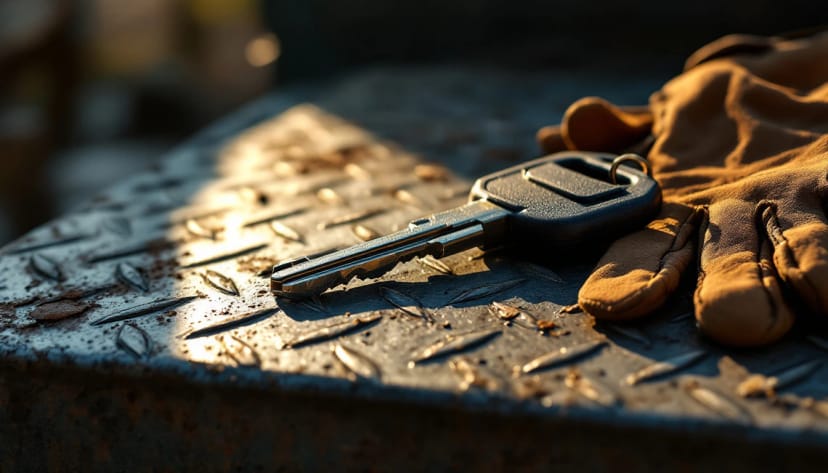
- Transponder blade key. A metal key with an RFID chip in the plastic head. No buttons, no battery — the chip is powered by the ignition ring when you insert and turn. Common on older Wrangler and Cherokee. Falls in the transponder band of $120-$200.
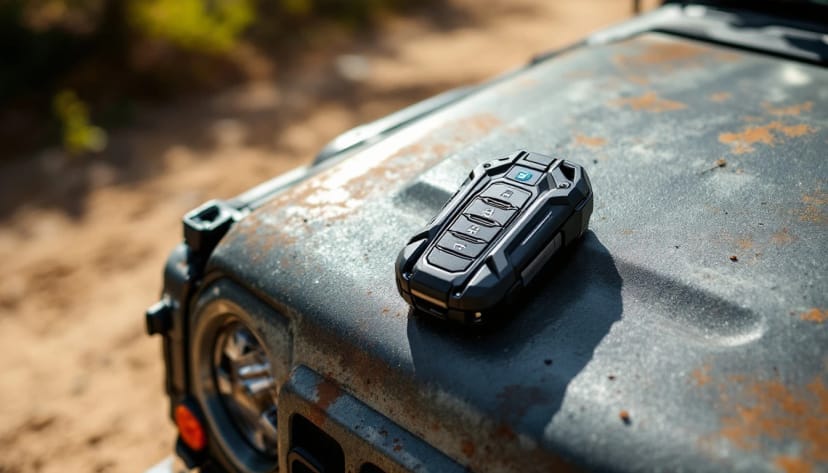
- Fobik. The chunky one-piece key-and-remote Chrysler used from about 2008 to 2018. There is no long metal blade; you slot the whole fobik into the dash and twist, or keep it in your pocket on push-button models. Grand Cherokee WK2 and Durango are the classic fobik vehicles. These program like smart keys and fall in the $220-$500 smart/proximity band.
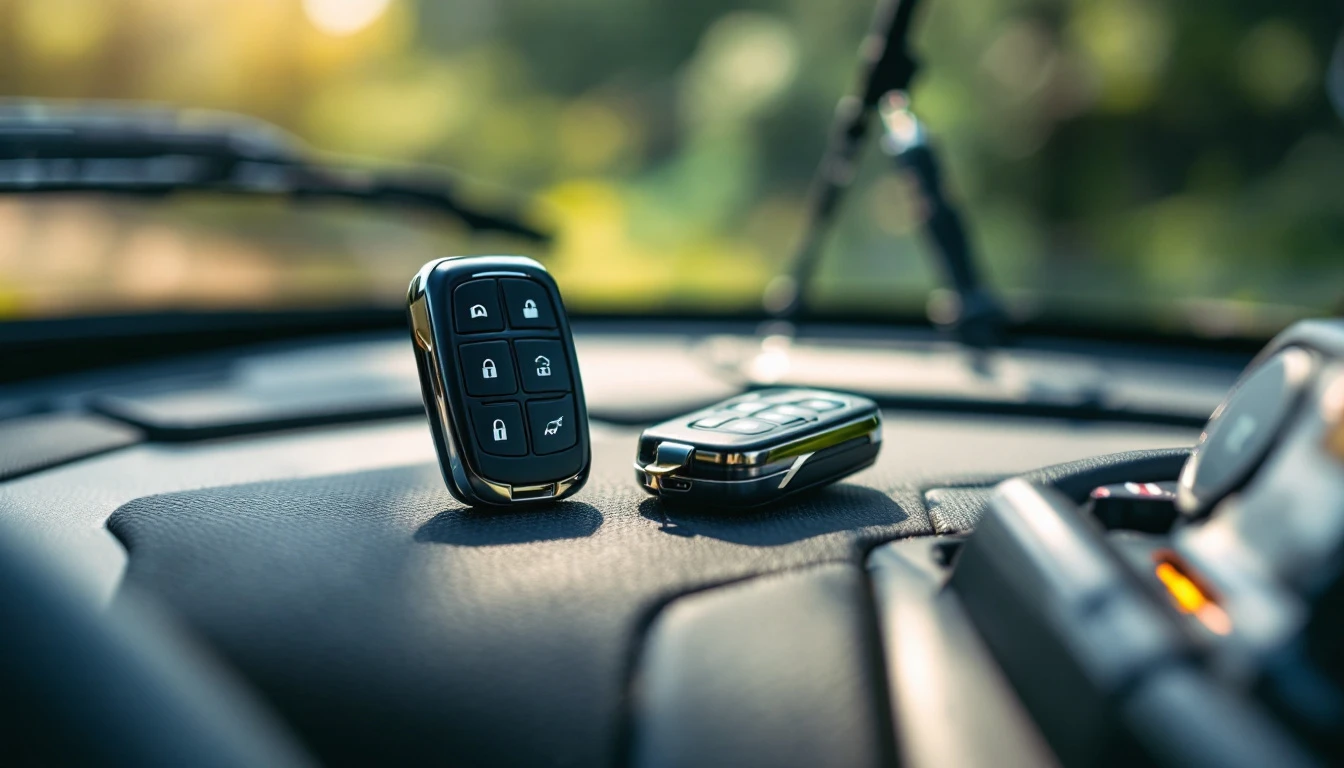
- Proximity smart fob. The modern flat fob with lock/unlock/remote-start buttons and a hidden emergency blade. It talks continuously to the RF-hub so you can unlock by touching the handle and start with a button. Wrangler JL, Gladiator, Grand Cherokee WL. Smart/proximity band, $220-$500, and lost-fob all-keys-lost work reaches $180-$450 for the programming session alone.
Model-by-model: what your Jeep needs
Wrangler (TJ, JK, JL)
The Wrangler is the most common Jeep key call in Fort Worth, and it spans all three key eras. TJ-generation (1997-2006) and early JK (2007-2010) use transponder blade keys and a SKIM read — inexpensive, fast, squarely in the $120-$200 range with programming. Later JK ran the same blade format. The JL (2018-present) moved to a proximity smart fob on the RF-hub; expect the $220-$500 smart-fob band, and if you have lost all keys, budget toward the top because the lost-fob session runs $180-$450 on its own.
Grand Cherokee (WK2, WL)
The WK2 Grand Cherokee (2011-2021) is the fobik-and-then-proximity generation — early WK2 used the fobik, later trims used a proximity fob. Either way it programs as a smart key in the $220-$500 band. The current WL Grand Cherokee and the three-row Grand Cherokee L use a proximity fob on the RF-hub; all-keys-lost on these is the higher end of the smart band because the newer cryptography and module handling take longer on-site.
Gladiator (JT)
The Gladiator (2020-present) shares the JL Wrangler's proximity architecture and RF-hub. Spare-fob adds sit in the smart band; all-keys-lost reaches the lost-fob band of $180-$450 for the programming portion. Because the Gladiator is a work-and-recreation truck, owners frequently want a second fob programmed at the same visit — the extra-fob add is roughly $65 in hardware on top of the programming when done in the same session.
Cherokee (KL), Compass, Renegade, Patriot, Liberty
The KL Cherokee (2014-2023), current Compass, and Renegade use proximity fobs on the RF-hub and fall in the $220-$500 smart band. Older Patriot, Compass MK, and Liberty use transponder or fobik keys and land lower — Patriot and Liberty transponder work is typically the $120-$200 range. As always, the exact figure depends on whether you have a working key (spare add) or none (all-keys-lost).
The one table: Jeep key work at a glance
Use this as a phone-call reference. Prices are Fort Worth mobile-service bands as of July 2026, not fixed quotes — your VIN, model year, and whether a working key exists all move the number.
| Jeep model / era | Key type | System | Typical Fort Worth band |
|---|---|---|---|
| Wrangler TJ/JK (1997-2017) | Transponder blade | SKIM | $120-$200 |
| Wrangler JL (2018+) | Proximity smart fob | RF-hub | $220-$500 (AKL toward top) |
| Grand Cherokee WK2 (2011-2021) | Fobik / proximity | SKIM → RF-hub | $220-$500 |
| Grand Cherokee WL / L (2021+) | Proximity smart fob | RF-hub | $220-$500 (AKL $180-$450 session) |
| Gladiator JT (2020+) | Proximity smart fob | RF-hub | $220-$500 |
| Cherokee KL (2014-2023) | Proximity smart fob | RF-hub | $220-$500 |
| Patriot / Liberty | Transponder blade | SKIM | $120-$200 |
| Extra fob added same visit | any | any | ~$65 hardware + programming |
| Ignition cylinder repair | n/a | mechanical | $150-$400 |
What all-keys-lost actually involves on a Jeep
"All-keys-lost" (AKL) is the scenario people dread — no working key anywhere, and the Jeep will not start. On a Jeep the AKL sequence looks like this:
- Ownership verification. The operator confirms you are the registered owner or authorized driver before any work begins. This is a baseline anti-theft practice the Associated Locksmiths of America builds into its professional standards, and it is also plain common sense — a locksmith who skips it is a locksmith to walk away from.
- Module read. The operator connects an OBD-II diagnostic tool and reads the immobilizer PIN from the SKIM or RF-hub. On some newer RF-hub Jeeps this read requires OEM-level security-data access through the NASTF Vehicle Security Professional registry, which credentialed operators hold.
- Cut and generate. A new blade is cut from the VIN-derived code (for keyed models) or a new proximity fob is prepared.
- Program as master. With no existing key to clone, the new key or fob is written into the module as a fresh master credential.
Because there is no working key to speed the process, AKL takes longer than a spare add and costs more. Budget the lost-fob band of $180-$450 for the programming session on a proximity Jeep, plus the fob hardware. A spare add — where you still have one working key — is faster and cheaper because the module is already unlocked by the existing credential.
The RF-hub PIN-read wrinkle you should know about
Some newer RF-hub Jeeps have a well-documented quirk: the immobilizer PIN cannot always be pulled through the standard OBD-II path, and the module must be read through a secure gateway or, in stubborn cases, benched. This is not a scam upcharge — it is a real technical hurdle on specific model years, and it is exactly why an operator's answer to "what tool do you use for my Jeep" matters. An operator who can name the RF-hub read method for your specific model is an operator who has done the work before.
If your first quote is suspiciously cheap and the operator has not asked your model year or whether you have a working key, that is a red flag. The Federal Trade Commission's guidance on hiring a locksmith is blunt about the low-ball-then-inflate pattern: a real range quoted before dispatch is the sign of a legitimate operator, and a "starts at $XX" that balloons on-site is the classic bait-and-switch.
Mobile vs. dealer for a Jeep key in Fort Worth
The dealer is the right call in exactly three situations: an open recall or warranty issue tied to the immobilizer or RF-hub, a brand-new platform independent tooling has not caught up to yet, or a case where you want the work bundled into other warranty service already scheduled.
For everything else, mobile is faster and cheaper. Consider the math from the customer's side. A dealer all-keys-lost on a proximity Grand Cherokee generally means a tow (because the Jeep will not start), a multi-day parts-and-appointment wait, and a rental in the meantime. The AAA Your Driving Costs study puts everyday ownership and unplanned-service costs in the thousands per year, and a stranded-vehicle rental stacks on top of that at $35-$60 a day. A mobile operator comes to your Jeep, so there is no tow and no rental gap. The direct labor saving versus the dealer service-writer markup is typically 1.5-2x on the programming line alone.
Field-operator perspective
On Jeeps the mistake I see customers make is assuming the year tells the whole story. It does not — the RF-hub changed how these vehicles handle the immobilizer PIN, and two Grand Cherokees a year apart can be completely different jobs. When you call, tell the operator the exact model, the year, and whether you have any working key at all. If they can quote you a range from just those three facts, they know Jeeps. If they dodge, keep dialing.
— ALOA Master Automotive Locksmith (MAL), Chrysler/Jeep-specialty operator, 11 years experience, DFW metroplex (anonymized)
A real-world example
Situation: Anonymized 2016 Jeep Grand Cherokee WK2 owner, driveway in Keller, both proximity fobs lost after a camping trip — a genuine all-keys-lost.
Before:
- Both fobs went missing on a weekend trip; the Jeep would not start on return.
- Local dealer quote: multi-day appointment wait plus a required tow because the vehicle could not be driven in.
- A first paid-ad call quoted "starts at $99" and refused to name a range when asked about the WK2 proximity system.
What changed: The owner called a NASTF-registered, Texas DPS Private Security Bureau-licensed mobile operator. Pre-dispatch flat-rate range: the smart/proximity band with the lost-fob AKL session on top, quoted in writing before dispatch. The technician verified ownership, read the RF-hub PIN, prepared and programmed a new proximity fob as the master, and added a second fob in the same visit.
Outcome:
- Final invoice landed within the quoted proximity-plus-AKL band, no tow and no rental.
- Two working fobs delivered; spare stored per protocol.
- Written labor warranty issued on-site.
Net: The owner avoided the tow, the rental gap, and the dealer's multi-day wait — the mobile path resolved a no-start Jeep the same afternoon.
How to prep before you call
A few facts in hand make your call faster and your quote tighter:
- Exact model and year. "2019 Wrangler JL" is worth more than "a Jeep."
- Do you have any working key? This single fact separates a spare add from an all-keys-lost.
- Key type. Blade, chunky fobik, or flat proximity fob with buttons.
- Where the Jeep is. Home, work, or a parking structure — a mobile operator comes to all three.
With those four, a competent Fort Worth operator can hand you a real range before anyone drives out. That is the entire point of calling a mobile locksmith instead of guessing at a dealer counter.
Frequently Asked Questions
How much does a Jeep key replacement cost in Fort Worth?
As of July 2026, a Wrangler or Cherokee transponder-style key runs $120-$200 with programming. A Grand Cherokee, Gladiator, or newer proximity smart fob runs $220-$500. All-keys-lost on a proximity Jeep is at the higher end because a new fob plus a lost-fob programming session is $180-$450 on its own. Mobile service saves the dealer service-writer markup, which typically runs 1.5-2x the independent rate.
What is the SKIM or RF-hub on a Jeep?
SKIM (Sentry Key Immobilizer Module) is the anti-theft brain on older Chrysler/Jeep vehicles that reads the transponder chip in the key. On newer Jeeps the equivalent role is handled by the RF-hub (radio-frequency hub module), which manages both the immobilizer authentication and the keyless-entry radio. If either module has a PIN-read failure, key programming stalls until a credentialed operator resolves it.
Can a mobile locksmith program a Jeep key at my house?
Yes. For nearly all Wrangler, Cherokee, Grand Cherokee, Compass, Renegade, and Gladiator model years, a credentialed mobile operator can cut and program on-site through the OBD-II port. The key exceptions are certain newest-model-year all-keys-lost scenarios where independent tooling is still catching up to the OEM release — always confirm at time of call.
What is a fobik key on a Jeep?
A fobik is the chunky one-piece key-plus-remote that Chrysler, Dodge, and Jeep used from roughly 2008 to 2018. It has no traditional metal blade sticking out; you insert the whole fobik into a dash slot and twist, or on push-button models you keep it in your pocket. Grand Cherokee WK2 and Durango are the most common fobik Jeeps in Fort Worth.
I lost both Jeep keys — what happens now?
This is an all-keys-lost (AKL) job. The operator confirms you own the vehicle, reads the immobilizer PIN from the SKIM or RF-hub, generates and cuts a new key or fob, then programs it as the new master. Because there is no working key to clone, AKL takes longer and costs more than adding a spare. Budget the lost-fob band of $180-$450 for proximity Jeeps.
Is a dealer or a mobile locksmith better for a Jeep key?
Mobile wins when your Jeep is at home, at work, or stuck in a lot with no working key — the dealer requires a tow for all-keys-lost, and a mobile operator does not. The dealer is the better path only when there is an open recall or warranty module issue tied to the immobilizer, or the vehicle is a brand-new platform independent tooling has not reached yet.
Why does my Jeep key turn but the engine will not start?
That is usually an immobilizer or module fault, not a cut-key problem. The mechanical blade is fine, but the chip-to-SKIM or chip-to-RF-hub handshake is failing. Common causes are a dead fob battery, a failed RF-hub, a WIN/SKIM fault, or an anti-theft lockout from a prior failed programming attempt. A credentialed operator scans before cutting anything.
References & external sources
- NHTSA — Anti-Theft Systems & FMVSS 114 — Federal Motor Vehicle Safety Standard governing key-code and immobilizer disclosure.
- IIHS — Vehicle Theft — Insurance Institute for Highway Safety data on theft loss and immobilizer effectiveness.
- NASTF Vehicle Security Professional (VSP) Registry — National Automotive Service Task Force registry for credentialed access to OEM security data.
- Associated Locksmiths of America (ALOA) — Trade association governing locksmith certifications including the Master Automotive Locksmith (MAL) credential.
- FTC Consumer Advice — Hiring a Locksmith — Federal Trade Commission guidance on verifying locksmith legitimacy before service.
- AAA — Your Driving Costs 2024 — Annual ownership cost study including unscheduled maintenance projections.
Related Pages
- Jeep Brand Page
- Jeep Key Programming
- Dodge / Jeep RF-Hub Issues
- All Keys Lost Service
- Smart Key Replacement
- Transponder Key vs Key Fob
- Contact Fort Worth Car Keys
Get a firm quote on your jeep key replacement
Have your VIN and an accurate count of how many keys exist, and we can give you a band before anyone is dispatched — no guessing and no surprises when the van arrives.
Call or text 817-842-1256, Mon-Sun 8AM-8PM. Mobile service throughout Fort Worth and Tarrant County. You can also reach us via the contact page.