TL;DR — Charger key work in one screen
The 2011-2023 Dodge Charger, the LD platform, is a single-key-type car with a multi-suspect failure profile. That combination is what makes it worth understanding before you call anyone.
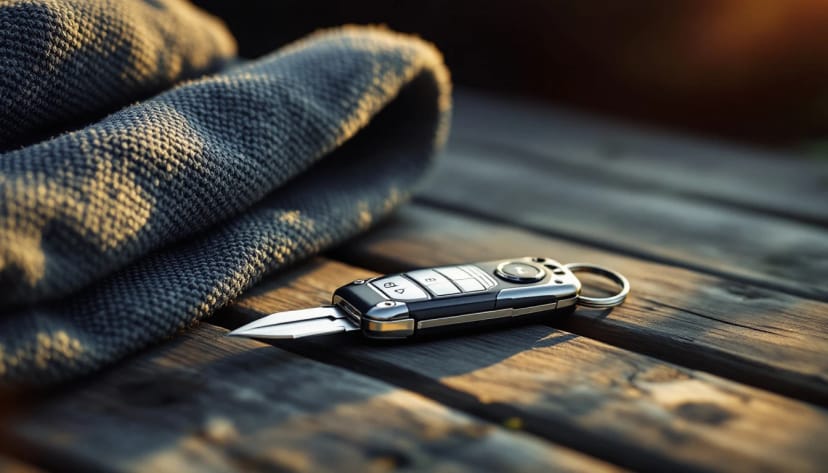
- The key. A smart proximity fob with push-button start, most commonly referenced by FCC ID M3N-40821302 — a part family shared broadly across Dodge, Chrysler, and Jeep products of the same era. A hidden mechanical emergency blade slides out of the fob body and opens the driver's door.
- The modules. Authentication runs through either the Wireless Ignition Node (WIN) on earlier cars or a separate Radio Frequency Hub (RF Hub) on later ones. These decide whether any key is valid.
- The trap. When a Charger refuses to recognize any key including brand-new ones, the fob is only one of three suspects. Buying fobs to solve a module fault is how people spend $500 and still have a dead car.
Fort Worth working ranges as of July 2026:
- Smart proximity fob replacement: $220-$500
- Lost fob rather than duplicate: $180-$450
- Additional fob programmed during the same visit: about $65
- Vehicle lockout, no key work: $75-$200
If you want to understand how a flat-rate quote is assembled before you start dialing, the breakdown of car key replacement cost in Fort Worth covers what belongs in the number and what should never appear on arrival.
The LD platform, briefly
The Charger returned as a four-door sedan on the LX platform in the mid-2000s and moved to the substantially revised LD platform for the 2011 model year, where it stayed through the end of the gasoline sedan's run. Across those model years the Charger spanned an unusually wide range — SE and SXT V6 cars, R/T and Scat Pack V8s, and the supercharged SRT Hellcat variants — but from a key perspective the range is remarkably consistent.
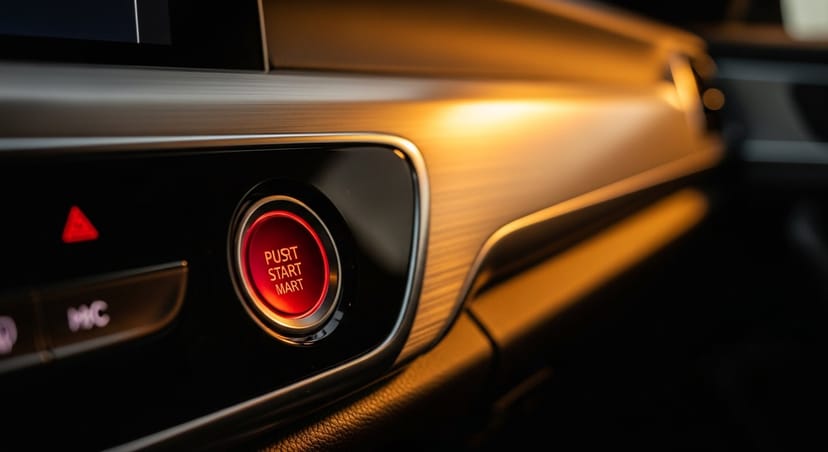
Every LD Charger you are likely to encounter is a push-button-start car with a smart proximity fob. There is no key cylinder in the steering column to worry about, and there is no split between a bladed-key trim and a proximity trim the way there is on some competitors.
That consistency simplifies the quote. It does not simplify the diagnosis, because the complexity moved from the key into the modules behind it.
The same architecture family runs across the Chrysler group of this era, which is why cross-model experience matters here. A technician who regularly works Dodge, Chrysler, and Jeep products will recognize a WIN node symptom immediately — the same module logic drives a Chrysler 300 ignition repair diagnosis and a Jeep Cherokee key replacement job.
The three modules that decide whether your key works
This is the part of the Charger story that most owners have never been told, and it is the part that determines whether a new fob is going to help.
SKREEM — Sentry Key Remote Entry Module. The older Chrysler-group immobilizer receiver, found on the preceding LX-generation cars. It handled both transponder authentication and remote keyless entry reception. You will still hear the name used loosely for later hardware, which causes confusion.
WIN — Wireless Ignition Node. On the earlier cars in this platform family, the WIN is the assembly at the ignition interface that combines the start function with the immobilizer receiver. It is a known wear point. When a WIN fails, symptoms range from intermittent no-key-detected to a car that will not enter the run state at all — and critically, it fails in a way that mimics a bad fob.
RF Hub — Radio Frequency Hub. Later cars moved fob reception and immobilizer authentication into a discrete RF Hub module. It is more reliable than the older integrated approach, but it is not immune, and when it fails the presentation is the same: the car does not see any key.
Here is the operational rule that follows from all of this. If a Charger will not recognize a brand-new, correctly programmed fob, stop buying fobs. At that point you are looking at an antenna, a WIN node, or an RF Hub, and the correct next step is module-level diagnosis. That path is covered under Dodge and Jeep RF Hub issues and, when a module genuinely needs replacing and configuring, module programming.
The National Highway Traffic Safety Administration's material on anti-theft systems describes the design intent behind all three generations of this hardware: the system authorizes nothing it cannot authenticate. That is why a module fault presents as a total refusal rather than a degraded start.
The fob itself: what to know before you buy one
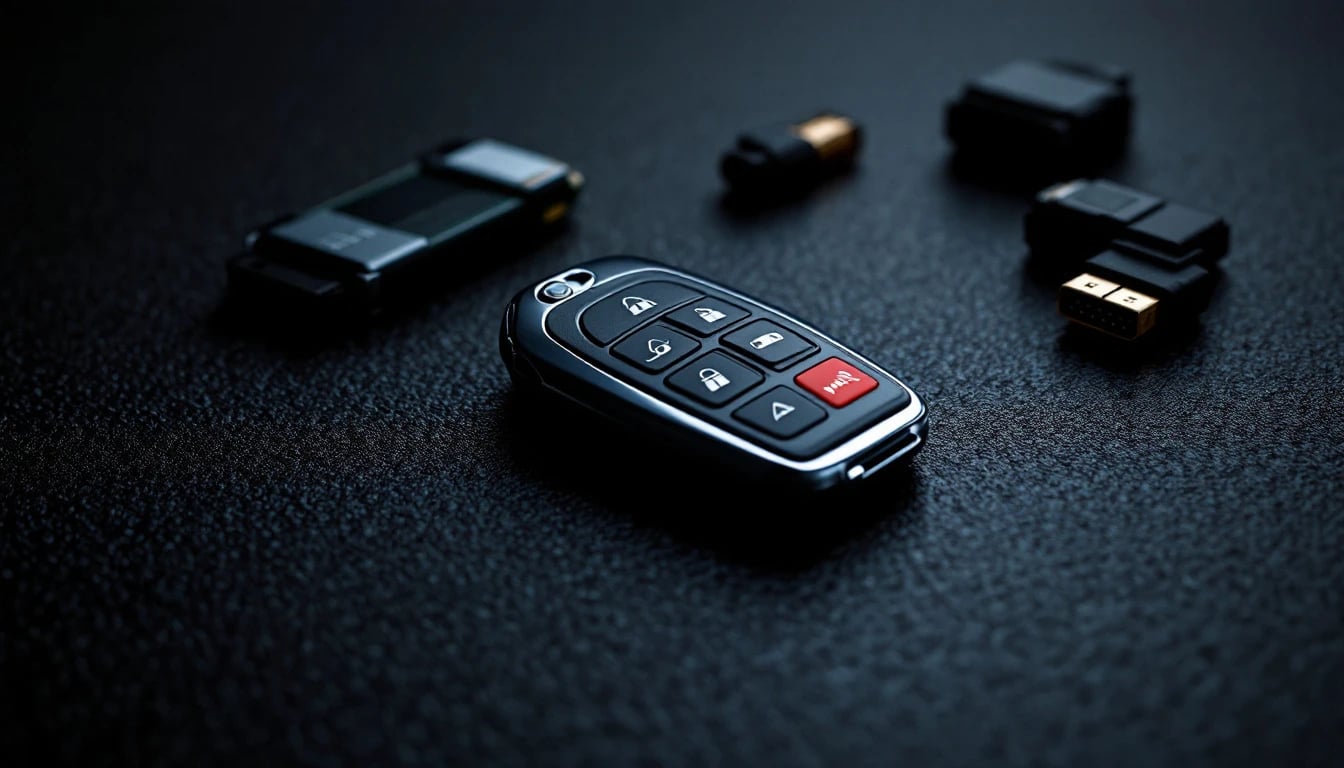
FCC ID M3N-40821302 is the identifier printed on the back of most LD Charger fobs, and it appears across a wide swath of Dodge, Chrysler, and Jeep vehicles of the period. That breadth is convenient — parts availability is good — and it is also a hazard, because a fob with the right FCC ID is not automatically the right part for your specific car. Board revisions and configuration differ.
Button configuration varies by trim. A base fob and a fob with remote start and trunk release are different parts at different costs, which is the main reason the price band on a Charger fob is as wide as $220-$500.
The emergency blade is real and most owners have never found it. A small mechanical blade releases from the fob body and opens the driver's door. If your fob battery dies in a parking garage on a Saturday night, that blade is the difference between a two-minute inconvenience and a service call. Locate it today, with the owner's manual, in daylight.
There is a backup start position. With a dead fob battery, holding the fob at a specific location described in your owner's manual lets the vehicle read it passively. This is why a dead battery almost never actually strands a Charger owner who has read the manual once.
On buying online. It is possible and it occasionally works. It is also the single most common way these jobs go wrong. Aftermarket quality varies enormously, the board revision has to match, and a fob previously paired to another vehicle may be permanently locked. When it fails you have paid for the wrong fob, paid for the trip, and still need the right part. For most owners the arithmetic favors having the technician supply a verified fob inside the quoted range.
Reference table: what fails, what it looks like, what it costs
| Symptom | Most likely cause | Component | Fort Worth service | Range |
|---|---|---|---|---|
| Intermittent no-key-detected, short range | Dead or weak coin cell | CR2032 fob battery | Battery replacement, check before anything else | A few dollars |
| No-key-detected plus odd electrical behavior | Low vehicle battery voltage | 12-volt battery | Voltage test before any key work | Diagnostic |
| One fob dead, the other works normally | Failed fob board or water damage | Smart proximity fob | Smart key replacement | $220-$500 |
| Every key lost, none available | No key present | Smart proximity fob plus blade cut to code | All-keys-lost fob programming | $180-$450 |
| Want a spare while the current fob works | None, preventive | Additional smart fob | Extra fob programmed same visit | About $65 |
| New correctly programmed fob still not recognized | Antenna, WIN node, or RF Hub fault | Vehicle module | Module diagnosis, then programming | Diagnostic first |
| Keys visible inside the locked car | Lockout, no key fault | None | Vehicle lockout, non-destructive entry | $75-$200 |
| Fob cracked but electronics intact | Housing damage | Fob shell | Shell transfer where the board is good | Below fob replacement |
All-keys-lost on a Charger
All-keys-lost, abbreviated AKL, means there is no working key anywhere. It is the most procedure-heavy version of this job and the one where the wrong operator does the most damage.
Step one: ownership verification. Before any tool touches the car, expect to produce the vehicle title or current registration showing your name, plus a government-issued photo ID that matches. A company-titled vehicle needs the registration plus a letter of authorization on company letterhead. This is not friction for its own sake — it is the condition under which the trade is permitted to generate keys from a VIN, and it is codified in the NASTF Vehicle Security Professional program. An operator who does not ask you for it would not ask a thief either.
Step two: getting into the car without damage. The emergency blade is cut from the VIN-derived key code through a credentialed lookup and used to open the driver's door. Nothing is drilled. If anyone proposes drilling a door lock on a Charger as an opening move, end the call — a modern door lock is not the intended entry point and the damage is expensive.
Step three: programming. The new fob is written into the vehicle key list through the OBD-II port using a diagnostic platform with current Chrysler-group security access. On AKL work the existing key list is typically erased and rebuilt, which means any old fob still in a couch cushion stops working. When keys were stolen rather than misplaced, that is exactly the outcome you want.
Step four: verification. Start the car, cycle it, verify remote lock and unlock, verify remote start if equipped, verify the emergency blade opens the driver's door, and verify the backup start position works with the fob battery removed. A job that ends at "it started once" has not been verified.
Realistic on-site time is 60 to 120 minutes, longer if two fobs are being built at once. The full walkthrough is on the all-keys-lost page, and if you are in the first hour after realizing they are gone, lost car keys covers the immediate steps.
One realistic note about theft. The Charger, particularly in its V8 forms, has a theft profile that the Insurance Institute for Highway Safety's vehicle theft research has tracked closely. If your keys were stolen rather than lost, erasing the old key list is not optional housekeeping — it is the point of the visit. Say so when you call, because it changes how the job is scoped.
Push-button start problems that are not key problems
A substantial share of Charger key calls turn out to be something else. In rough order of frequency:
- Dead CR2032 fob battery. A few dollars, two minutes, and it produces symptoms indistinguishable from a failed fob. Always first.
- Weak 12-volt vehicle battery. Modern Chargers behave strangely on marginal voltage — intermittent fob detection, dash warnings that make no sense, and no-start with a perfectly healthy key. Voltage gets tested before anything is sold.
- Interference or shielding. A fob in a metal container, pressed against a phone, or sitting next to certain wireless devices can fail to be detected. Move it and retry.
- Brake pedal or start-button interlock. The car will not start unless the brake is fully depressed and the shifter is in park. On a car with a heavy floor mat or a worn brake switch, that condition is not always met.
- Antenna, WIN node, or RF Hub fault. The one that actually requires module work. Identified by the fact that a new, correctly programmed fob still is not recognized.
The broader diagnostic tree for the push-button family of complaints is on the push-button start problems page.
The Federal Trade Commission's guidance on hiring a locksmith makes the same point from the consumer-protection side: a legitimate operator diagnoses before selling parts and quotes a flat range before dispatch rather than a starting-at number that inflates on arrival. The FTC's truth-in-advertising standards are the benchmark that advertised number is supposed to meet.
Mobile versus the dealership
The dealership is the right call in a narrow set of situations: an open recall or technical service bulletin touching the immobilizer or the WIN node, warranty work you are already bundling, or a platform so new that independent tooling genuinely has not caught up. As of July 2026, no LD-platform Charger model year falls into that last category.
Mobile wins the rest, and the advantages land hardest on the calls that hurt most. Fort Worth Car Keys operates mobile only, Monday through Sunday, 8 AM to 8 PM:
- No tow on an all-keys-lost car. The largest hidden cost of the dealer path disappears entirely.
- The car stays put. Driveway, office lot, apartment garage, or roadside.
- A flat-rate range before dispatch, so the number is known before anyone drives out.
- Same-day turnaround rather than a service-department appointment slot.
The AAA analysis of annual driving costs is the right frame for the second-order math. The invoice is rarely the whole number. Days without the car, rental days, and rideshare fares while a vehicle sits waiting on a service department are real money, and they land entirely on the mobile side of the ledger. Coverage across the surrounding cities is on the Arlington, Hurst, and North Richland Hills pages.
The spare-fob argument, in numbers
This is the clearest cost case in the entire automotive lock trade, and Charger owners are among the most likely to ignore it.
Building a second fob while you still have a working one is an additional fob at about $65 during a visit you are already paying for. Losing every key turns the same vehicle into an all-keys-lost job at $180-$450 with a longer on-site procedure — and at a dealership it usually adds a tow on top.
The gap is not close, and it is entirely avoidable. Most used-car buyers receive exactly one fob at purchase and never think about it again until the day it matters. The spare car key page exists for exactly this decision.
Verification checklist before you book
Six questions, on the phone, before anyone is dispatched:
- Can they name the fob by FCC ID? M3N-40821302 is the expected answer for most LD Chargers.
- Do they know what the WIN node and RF Hub are, and will they diagnose a module fault rather than selling a second fob?
- Do they quote a flat-rate range in advance, not a starting-at teaser?
- Are they licensed under the Texas DPS Private Security Program? Texas locksmith licensing runs through the Department of Public Safety Private Security Program — not a general trade board. Ask for the company license number and expect it on the invoice.
- Are they NASTF VSP registered, and will they verify ownership before doing all-keys-lost work?
- Will you receive a written invoice listing parts, labor, license number, and warranty terms?
The Associated Locksmiths of America publishes the credentialing framework behind questions four and five.
Field-operator perspective
The Charger call that costs people real money is the second fob. First one did not work, so they buy another one, and that one does not work either — because the car was never going to see any fob. The RF Hub or the node was the problem the whole time. Two fobs and two trips later they finally get a module diagnosis. Ask on the first call whether the operator can test the module, not just program a key. That one question is worth a few hundred dollars on this platform.
— a NASTF-registered Fort Worth automotive locksmith (anonymized)
Frequently Asked Questions
What key does a 2011-2023 Dodge Charger use?
The LD-platform Charger uses a smart proximity fob with push-button start across essentially the entire range. The most widely referenced FCC ID on these cars is M3N-40821302, shared across a number of Dodge, Chrysler, and Jeep products of the same era. The fob contains a hidden mechanical emergency blade that opens the driver door if the fob battery or the vehicle battery is dead. Button counts vary by trim, particularly on cars equipped with remote start and a trunk release.
What are the WIN node and the RF Hub, and why do they matter?
They are the modules that actually decide whether your key is valid. The Wireless Ignition Node, or WIN, is the earlier assembly on this platform family and combines the ignition interface with the immobilizer receiver. Later cars moved to a separate Radio Frequency Hub, the RF Hub, that handles fob reception and immobilizer authentication. When a Charger refuses to see any key at all, including brand-new ones, a failing WIN node or RF Hub is a real possibility and no number of new fobs will fix it.
How much does a Dodge Charger key cost in Fort Worth?
As of July 2026 a smart proximity fob for an LD Charger runs 220 to 500 dollars depending on the fob variant and the button configuration. If every key is lost rather than duplicated, expect 180 to 450 dollars for the fob replacement. An additional fob programmed during the same visit is about 65 dollars, which is why building two while the technician is already on site is the cheapest way to end up with a spare. Dealer pricing for the equivalent work is generally higher.
Why does my Charger say No Key Detected when the fob is right there?
Four causes, in order of how often they turn up. A dead CR2032 fob battery, which is a few dollars and two minutes. A weak vehicle battery, which produces strange electrical behavior on these cars including intermittent fob detection. Radio interference or a fob sitting inside a metal container or against a phone. And finally an interior antenna, WIN node, or RF Hub fault. Try the backup start position described in your owner manual before assuming the fob has failed.
What is required for an all-keys-lost Dodge Charger job?
Ownership verification comes first: the vehicle title or current registration showing your name, plus a government-issued photo ID that matches it. A company-titled car needs the registration plus a letter of authorization on company letterhead. After that the emergency blade is cut from the VIN-derived key code through a credentialed lookup, the door is opened without damage, and the new fob is written into the vehicle key list through the OBD-II port using a diagnostic platform with current security access.
Can a mobile locksmith program a Charger fob in my driveway?
Yes. Every LD-platform model year from 2011 through 2023 is programmable on site through the OBD-II port with a diagnostic platform carrying current Chrysler group security coverage. Fort Worth Car Keys works mobile only, Monday through Sunday, 8 AM to 8 PM, so the car never has to move. On an all-keys-lost Charger that is the decisive advantage, because the dealership path normally requires a tow before the work can even be scheduled.
Should I buy a Charger fob online and just have it programmed?
It is possible but it is the most common way these jobs go sideways. Aftermarket fobs vary widely in quality, the FCC ID and board revision must match your specific car, and a fob that has already been paired to another vehicle may be locked and unusable. If it fails, you have paid for the fob, paid for the trip, and still need the correct part. Most owners come out ahead having the technician supply a verified fob within the 220 to 500 dollar range.
References
- NHTSA — Anti-Theft Systems — Federal guidance on immobilizer and anti-theft equipment.
- NASTF — Vehicle Security Professional Program — Registry governing credentialed access to OEM key-code and security data.
- Associated Locksmiths of America (ALOA) — Trade association behind the Master Automotive Locksmith credential.
- FTC Consumer Advice — Hiring a Locksmith — Verifying a locksmith before service.
- FTC — Truth in Advertising — Standards for advertised service pricing.
- IIHS — Vehicle Theft — Research on theft losses and anti-theft technology by vehicle.
- AAA — Your Driving Costs — Annual vehicle ownership and downtime cost study.
Related Pages
- Dodge Brand Page
- Car Key Replacement Fort Worth
- Dodge & Jeep RF Hub Issues
- Push-Button Start Problems
- Mobile Key Fob Programming
- Emergency Car Locksmith
Ready when you are
Whether you need this handled today or you are planning ahead, the first step is the same: tell us the VIN and what the car is actually doing.
Call or text 817-842-1256, Mon-Sun 8AM-8PM. We come to you anywhere in Fort Worth and Tarrant County, and you will have a band and a realistic duration before work starts. More ways to reach us on the contact page.