Chrysler key replacement in Fort Worth, in one screen
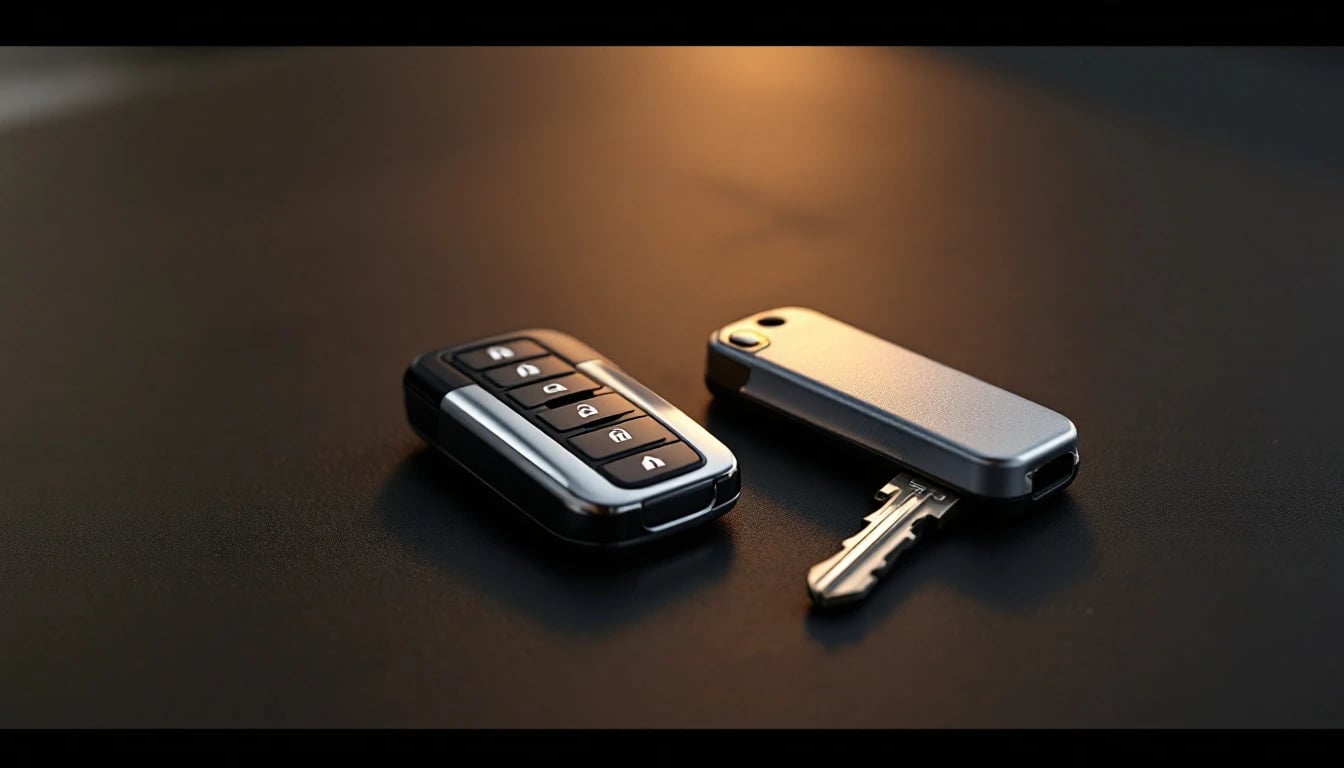
Chrysler's keys span three distinct technologies, and knowing which one your car uses is the whole game. Older Chryslers use a transponder key with the SKREEM immobilizer; a big band of mid-2000s-to-mid-2010s models use the distinctive FOBIK that you insert into a dash slot and twist; and newer models use a full proximity smart key tied to the RF hub. Each has a different replacement path and price.
As of July 2026, here is the short version for Fort Worth owners:
- Older Chryslers (300, PT Cruiser, Sebring, roughly 2004-2010) use a transponder key with the SKREEM immobilizer. Fort Worth mobile price: $120-$200.
- FOBIK-era Chryslers (versions of the 300, Town & Country, roughly 2008-2016) use a FOBIK — insert into the dash slot and twist. Fort Worth mobile price: $220-$500.
- Smart-key Chryslers (current 300, Pacifica, Voyager) use a proximity fob with push-button start tied to the RF hub. Fort Worth mobile price: $220-$500.
- A lost fob with no working key runs $180-$450, and a spare/extra fob where you still have a working key can be as low as roughly $65 plus programming for simple cases.
Every price above is a flat mobile range from a licensed operator who comes to you. A Chrysler dealer, for the same jobs, typically runs $400-$900 plus a tow if your car will not start. The Federal Trade Commission's guidance on hiring a locksmith recommends getting a total-price estimate before work begins — a real Chrysler operator can quote a range this specific over the phone once you give the year and model.
SKREEM, FOBIK, and the RF hub explained
Chrysler's immobilizer history has three chapters, and they explain almost every Chrysler key quirk you will run into.
SKREEM (Sentry Key Remote Entry Module). On older Chryslers, the SKREEM combined the immobilizer and the keyless-entry receiver. When you turn a transponder key, the SKREEM reads the chip and, if it matches, allows the engine to run. A failing SKREEM can throw a security light and block a perfectly good key.
FOBIK (Fob Integrated Key). For a long middle era, Chrysler used the FOBIK — a fob you insert into a dash slot and twist to start. It is not a traditional blade-in-cylinder key, and it is not quite a proximity key either; it is its own thing, and it needs the correct FOBIK part and programming. Many 300s, Town & Country minivans, and related models use it.
RF hub. On current Chryslers, the RF hub replaced SKREEM as the module managing keyless entry and the immobilizer. Programming a modern proximity fob registers it into the RF hub. A worn or failed RF hub is a known failure that blocks good keys — which is why we diagnose the module before cutting anything. Our make-specific Dodge/Jeep RF-hub issues page (the RF hub is shared across the Chrysler-Dodge-Jeep family) and module programming in Fort Worth cover the module-level work.
The number-one Chrysler mistake I see is treating an RF-hub failure like a lost key. The customer buys a fob, it does not work, they buy another, still nothing, because the hub is the problem, not the key. On the Chrysler-Dodge-Jeep platform you scan the hub first. If the hub is bad, no number of new keys will fix it.
— ALOA Registered Locksmith (RL), DFW automotive-specialty operator, 10 years experience (anonymized)
The National Highway Traffic Safety Administration's anti-theft standard (FMVSS 114) is why these immobilizers exist, and why proof of ownership matters on all-keys-lost work.
Transponder, FOBIK, and smart key: what you have
Getting your Chrysler key type right before you call produces an accurate quote.
- Insert a metal blade and turn = transponder key (older 300, PT Cruiser, Sebring).
- Insert a fat plastic fob into a dash slot and twist = FOBIK (many 300, Town & Country).
- Keep the fob in your pocket and press a button to start = proximity smart key (current 300, Pacifica, Voyager).
For a deeper technical breakdown, our guides on transponder key vs. key fob and laser-cut vs. transponder key explain the mechanical and electronic differences. Newer Chrysler blades (including the emergency blade inside a proximity fob) are often laser-cut, which requires a specialized cutting machine.
Chrysler key technology by model and year
This table maps common Fort Worth Chrysler models to their key type and the realistic mobile price band. Exact tech varies by trim and options, so treat this as a planning guide and confirm your VIN when you call.
| Chrysler model | Typical years | Key technology | Fort Worth mobile price band |
|---|---|---|---|
| 300 | 2005-2010 | Transponder (SKREEM) | $120-$200 |
| 300 | 2011-2023 | FOBIK to proximity smart | $220-$500 |
| Pacifica | 2017-2026 | Proximity smart key | $220-$500 |
| Voyager | 2020-2026 | Proximity smart key | $220-$500 |
| Town & Country | 2008-2016 | FOBIK | $220-$500 |
| PT Cruiser | 2001-2010 | Transponder (SKREEM) | $120-$200 |
| Sebring | 2007-2010 | Transponder / FOBIK | $120-$500 |
| 200 | 2011-2017 | FOBIK to proximity smart | $220-$500 |
| Aspen | 2007-2009 | FOBIK | $220-$500 |
| Spare/extra key (working key present) | any | Add-on programming | from ~$65 |
| Lost key (no working key) | any | AKL | $180-$450 |
A note on the ranges: the all-keys-lost surcharge separates the low and high ends of the band. With one working key present, adding a spare is faster and cheaper; with every key gone, the immobilizer/RF-hub data must be handled from scratch. Loaded Pacifica proximity fobs sit toward the top of the band.
All-keys-lost on a Chrysler: how it works without a dealer tow
"All keys lost" (AKL) means no working key at all. The dealer answer is almost always "tow it here and leave it a few days." A licensed mobile locksmith handles it on-site, no tow:
- Verify ownership. Non-negotiable. You will need proof of ownership — a title or current registration matching the vehicle — plus a government-issued photo ID that matches the registration. A legitimate locksmith never makes keys to a car you cannot prove you own.
- Read the immobilizer / RF hub. The operator connects a professional diagnostic tool to the OBD-II port and reads the security data. On AKL there is no working key to clone, so new key identities are registered directly.
- Cut the blade. For proximity fobs, the hidden emergency blade is cut to the vehicle's key code (from the VIN or by reading a lock). For transponder keys, the full blade is cut. FOBIKs are matched to the vehicle.
- Program the key(s). New keys are written into the immobilizer/RF hub. We recommend at least two keys so you always have a spare.
- Test everything. Doors, sliding doors/liftgate on minivans, remote start, and a full start-and-run cycle before we leave.
On-site, a Chrysler AKL job typically takes 45-90 minutes. Our dedicated all-keys-lost service in Fort Worth and Chrysler brand page cover this in more depth, and if you are researching before a key is even lost, replacing a car key without the original is a useful primer.
Why the mobile price beats the Chrysler dealer
The dealership's cost structure is simply higher. A Chrysler key job at the dealer pays for a service writer, a shop labor rate, parts markup on the fob, and, if the car will not start, a tow. Stack those and a routine key job that should cost a couple hundred dollars climbs past $400, sometimes near $900 for a smart-fob AKL.
A few numbers frame the gap. Vehicle downtime has a real cost: AAA's Your Driving Costs research puts the all-in cost of ownership well over ten thousand dollars a year for the average driver, and a rental while your Chrysler sits at the dealer for days adds to that. The U.S. Bureau of Labor Statistics tracks locksmiths as a distinct, growing occupation precisely because independent mobile operators have absorbed work that used to be dealer-only — at lower cost and faster turnaround.
The mobile advantage is sharpest exactly when you are most stuck: a no-start Chrysler in your own driveway. The dealer needs the car towed in; we bring the shop to the car. For the fastest response, our 24-hour car locksmith in Fort Worth and emergency car locksmith pages explain same-day dispatch.
When it is NOT a key problem
Not every "my Chrysler won't start" call is a dead or lost key. Before you authorize a new key, a good operator diagnoses. The most common Chrysler issues that masquerade as key problems:
- RF-hub / SKREEM failure. A failed module blocks a good key and throws a security light — see our Dodge/Jeep RF-hub issues page (same platform module). This is not a key problem.
- Dead fob battery. A weak CR2032 makes a proximity fob intermittently undetected. This is a two-dollar fix, covered on our car key battery replacement page.
- Worn ignition (turn-key and FOBIK-slot models). If the key or FOBIK is hard to turn or the slot is worn, the ignition assembly may need repair — $150-$400, not a new key.
- Immobilizer read failure. If a known-good key is not read, the receiver or module may be at fault. Our no key detected / immobilizer page explains this.
A transponder key programming or smart key replacement job is the right fix only once the diagnosis actually points to the key.
The economics of a spare Chrysler key
One decision saves Chrysler owners the most money over the life of the car: cut a spare while you still have a working key. When you already hold one good key, FOBIK, or fob, adding a second is an add-on program — often near the low end of the range, sometimes as little as roughly $65 plus programming for simpler cases. The moment you have zero working keys, the same car becomes an all-keys-lost job at $180-$450 or more, because the immobilizer and RF-hub data must be handled from scratch rather than cloned. Minivans in particular tend to be family workhorses shared among several drivers, which is exactly when a single fob goes missing at the worst moment. A Pacifica or Voyager stranded in a parking lot with no working key is a costly, avoidable situation; a spare cut today is inexpensive insurance against that emergency, and it means you are never waiting on same-day dispatch to move the car.
How to hire the right Chrysler locksmith in Fort Worth
Chrysler sits at the mainstream tier — no exotic European tooling — but it still demands a licensed, properly equipped automotive operator who knows the RF hub. Before you book:
- Confirm the operator is licensed through Texas DPS Private Security. Texas regulates locksmith companies through the Texas Department of Public Safety, not a general trade board. Ask for the license and verify it.
- Ask whether they diagnose the RF hub / SKREEM before cutting a key — this is the Chrysler-family gotcha.
- Ask for a flat price range by job type — transponder, FOBIK, or smart fob; spare vs. all-keys-lost — before dispatch.
- Confirm they will program at least two keys so you leave with a spare.
- Make sure they come to you. Fort Worth Car Keys is mobile-only; we serve Fort Worth, Arlington, Keller, and Hurst.
You can reach Fort Worth Car Keys at (817) 842-1256 or contact@fortworthcarkeys.com, 8AM-8PM seven days a week. For general pricing across all makes, see our car key replacement cost in Fort Worth page.
Frequently Asked Questions
How much does a Chrysler key or fob cost in Fort Worth in 2026?
For a mobile locksmith in Fort Worth, a transponder key for older Chryslers (older 300, PT Cruiser, Sebring) runs $120-$200, and a FOBIK or smart proximity fob for newer Chryslers (300, Pacifica, Voyager) runs $220-$500 depending on the fob and whether it is a spare or all-keys-lost job. A Chrysler dealer typically charges more, often $400-$900 plus a tow if you have no working key.
What is a FOBIK and does my Chrysler use one?
A FOBIK (Fob Integrated Key) is a Chrysler-family fob you insert into a dash slot and twist to start, rather than a traditional blade in a cylinder. Many mid-2000s to mid-2010s Chryslers, including versions of the 300 and Town & Country, use a FOBIK. Newer Chryslers moved to full proximity smart keys with push-button start. Both are programmed on-site through the OBD-II port.
What is the RF hub / SKREEM on a Chrysler?
SKREEM (Sentry Key Remote Entry Module) was the older Chrysler immobilizer-and-remote module; the RF hub is its modern successor that manages keyless entry and the immobilizer on current models. Key programming registers the new key into that module. A worn or failed RF hub can block a good key, which is why the module is diagnosed before any new key is cut.
Can a mobile locksmith replace a Chrysler key in my driveway in Fort Worth?
Yes. Fort Worth Car Keys is fully mobile and comes to your home, workplace, or a parking lot anywhere in Fort Worth and the surrounding cities. Transponder keys, FOBIKs, and smart proximity fobs are cut and programmed on-site through the OBD-II port. Only a small number of the very newest all-keys-lost scenarios may still need a dealer, and we confirm that when you call.
What do I need for a Chrysler all-keys-lost job?
Proof of ownership is required: a title or current registration matching the vehicle, plus a government-issued photo ID that matches the registration. This protects you from theft and is standard for any legitimate licensed locksmith. Once ownership is verified, a Chrysler all-keys-lost job is completed on-site without a tow to the dealer.
How long does Chrysler key programming take on-site?
A spare key with a working key present usually takes 20-45 minutes on-site. An all-keys-lost job, where no working key exists, takes longer, typically 45-90 minutes, because the immobilizer data has to be read and new keys registered from scratch. Fort Worth Car Keys works 8AM-8PM, seven days a week.
Is a locksmith cheaper than the Chrysler dealer?
In almost every case, yes. A mobile locksmith avoids the dealer service-writer markup, the parts markup on the fob, and the tow to get a no-start car to the dealership. Dealer Chrysler key jobs commonly run $400-$900 plus tow, while a Fort Worth mobile locksmith stays within the transponder $120-$200 or smart-key $220-$500 bands for the same work.
References & external sources
- National Highway Traffic Safety Administration (NHTSA) — Anti-Theft Systems — Federal immobilizer and anti-theft standard (FMVSS 114).
- FTC Consumer Advice — Hiring a Locksmith — Federal Trade Commission guidance on verifying locksmith legitimacy and getting a price estimate.
- Associated Locksmiths of America (ALOA) — Trade association governing locksmith certification and automotive key standards.
- Texas Department of Public Safety — Private Security — Texas locksmith company and individual licensing authority.
- U.S. Bureau of Labor Statistics — Locksmiths (49-9094) — National wage and employment data for the locksmith occupation.
- AAA — Your Driving Costs — Annual vehicle-ownership cost study, including downtime and rental context.