TL;DR — Mini key work in one screen
A Mini Cooper is a BMW underneath. That is not a marketing line, it is the operative fact of every Mini key job, and it means the question that decides your price is not "what year is it" but "which immobilizer module is in it."
- EWS era — R50, R52, R53 (roughly 2002–2006). The original BMW-derived immobilizer. Bladed keys with an embedded transponder. The most forgiving generation to work on and the cheapest to recover from an all-keys-lost situation.
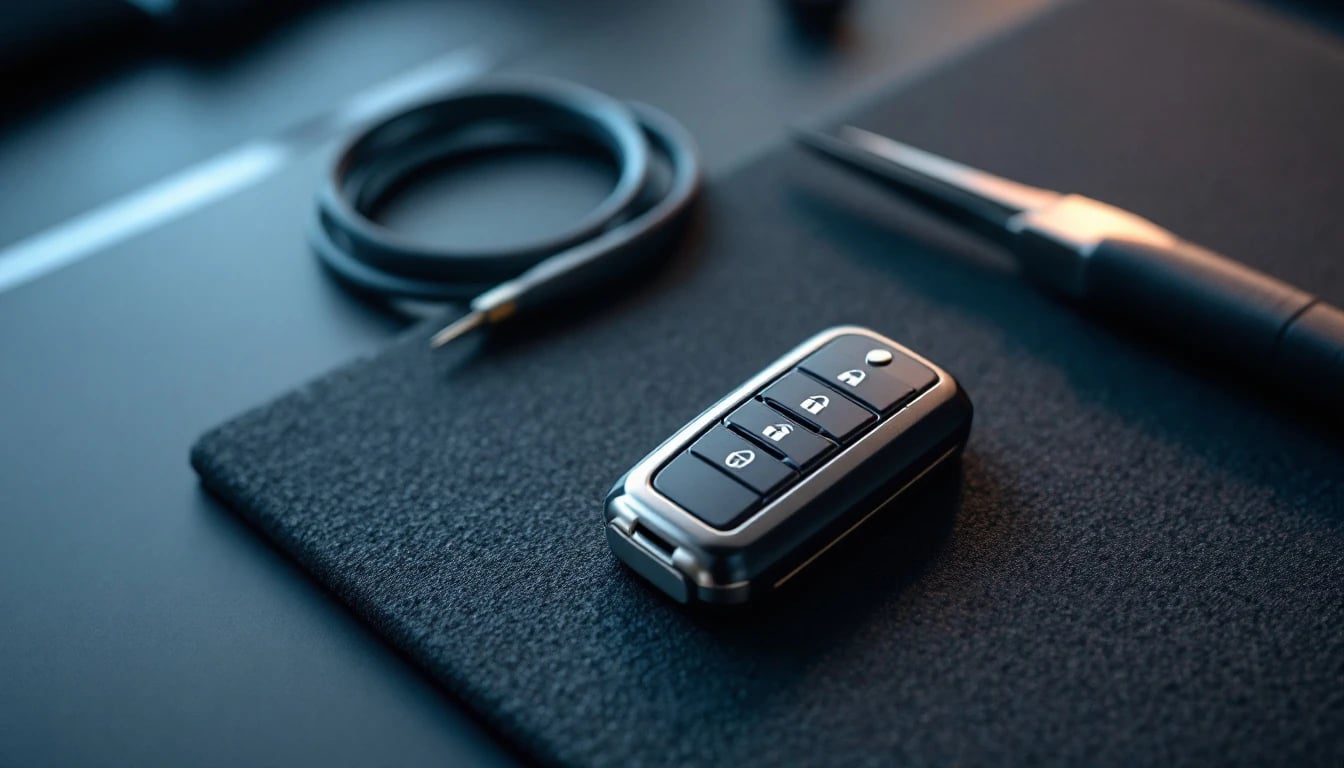
- CAS3 era — R55, R56, R57, R60 (roughly 2007–2013). Car Access System, third revision. This is the generation with the flat rectangular remote that slides into a receptacle on the dash. More capable tooling required, and CAS3 module faults are a genuinely common failure on cars this age.
- FEM era — F54, F55, F56, F60 (roughly 2014–present). The Footwell Electronic Module takes over as the immobilizer authority, with chassis-wide CAN authentication layered on top. The most demanding of the three, and the generation where the honest answer on the newest cars is sometimes "a technician confirms your exact setup first."
As of August 2026, Mini key and module work in Fort Worth sits in the European band of $350–$800. A spare-key add on an EWS or CAS3 car lands near the floor of that band; an FEM all-keys-lost lands at the ceiling. A pure lockout with no key work is $75–$200, and ignition-related mechanical repair is $150–$400.
Call 817-842-1256 with your VIN and you will get a band, not a guess.
Why Mini is a module job, not a key job
Most makes let you think of key replacement as a key problem. Mini does not, and it is worth understanding why before you spend money.
On a mass-market platform the immobilizer is usually a comparatively simple challenge-and-response between a transponder and one controller. BMW Group architecture is not built that way. The immobilizer authority — EWS, then CAS3, then FEM — is a full body-control module that also handles steering-lock release, starter enable, and on later cars a large share of interior electrical function. The key credential is one entry in a module that is doing a dozen other jobs.
The consequence for owners is direct. When a Mini stops accepting a key, the fault is roughly as likely to be in the module as in the key. Diagnosing before cutting is not upselling; it is the only order that does not risk paying twice.
It also explains the tool requirement. The National Automotive Service Task Force maintains the Vehicle Security Professional registry, the mechanism through which independent operators obtain legitimate manufacturer-level security access rather than working around it. BMW Group platforms are precisely the case that registry exists for. An operator without that access and without a current-generation diagnostic platform cannot do this work properly, and the tell is simple: ask which module your car has. An operator who answers with a module name rather than a model year does this work.
The Mini conversation always starts with the customer apologising for the car being small. Then I explain that under the shell it is the same security stack as a 3-Series and the price makes sense to them immediately. The size of the car has nothing to do with the size of the job. What matters is whether I am talking to an EWS, a CAS3, or an FEM, and those are three different afternoons.
— a NASTF-registered Fort Worth automotive locksmith, ALOA Master Automotive Locksmith (MAL) credential, DFW metroplex (anonymized)
EWS era: R50, R52, R53 (roughly 2002–2006)
The first-generation modern Mini — the R50 Cooper, R52 convertible and R53 Cooper S — carries the EWS immobilizer inherited directly from contemporary BMW practice.
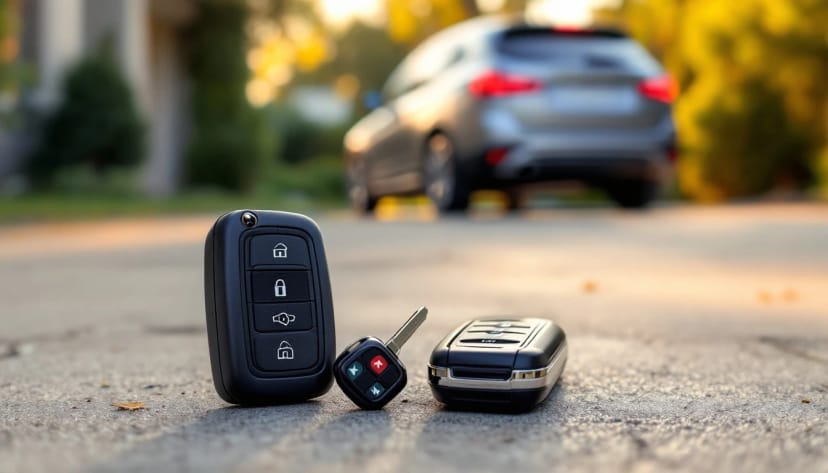
Key hardware. A conventional bladed key with an integrated transponder and, on most cars, remote lock buttons in the head. The blade is a two-track profile that must be cut to the vehicle's key code, which is derived from the VIN rather than copied from a worn original wherever possible. Copying a twenty-year-old worn blade reproduces the wear.
How the credential works. The transponder answers a challenge from an antenna ring around the ignition lock. EWS validates the response and releases the engine control unit to fuel. There is a fixed ceiling on how many keys the module will hold, which is why an operator will ask how many keys currently exist before quoting an all-keys-lost job.
What actually fails on these cars in Tarrant County. After two decades of Texas summers, three things dominate. Fob battery contacts corrode and produce intermittent remote function while the transponder side still works, which confuses owners into thinking the key is dying when only the remote is. Blades wear round and stop turning the ignition, which is a mechanical problem masquerading as an electronic one. And the plastic key head cracks at the split line, eventually letting the transponder move away from the antenna field.
The EWS generation is the good news generation. It is the least expensive Mini to recover from a total key loss, and independent operators handle it routinely.
CAS3 era: R55, R56, R57, R60 (roughly 2007–2013)
The second-generation cars — R56 hatchback, R55 Clubman, R57 convertible, R60 Countryman — moved to the Car Access System, third revision, and changed the key format entirely.
Key hardware. The flat rectangular remote that inserts into a slot on the dashboard rather than turning in a barrel. There is a mechanical emergency blade concealed in the fob body for the driver's door, and that blade still has to be cut. This is the detail most owners forget until the day the car's battery is flat and the door will not open electrically.
How the credential works. CAS3 holds the key data and performs rolling-code authentication with periodic resynchronisation. That resynchronisation is the reason a fob left in a drawer for two years sometimes needs to be re-presented several times before the car accepts it again — the counters have drifted apart.
What actually fails on these cars. CAS3 module faults are common enough on this generation to be a first-line suspicion rather than an afterthought. The classic presentation is a car that cranks normally but will not start, with the immobilizer telltale illuminated, and that behaves differently on different days. Water intrusion into the module's footwell-adjacent location and solder-joint fatigue are both documented contributors. A second common fault is failure of the dashboard key receptacle itself, which reads as a key problem and is not one.
If your CAS3 Mini is being intermittent, the diagnostic order matters: fob battery, then receptacle, then module, then key. Our guide to why the anti-theft light flashes and the car will not start walks the same logic across other makes.
FEM era: F54, F55, F56, F60 (roughly 2014–present)
The third-generation cars — F56 hatchback, F55 five-door, F54 Clubman, F60 Countryman — adopt the Footwell Electronic Module architecture that BMW rolled out across the F-series range.
How it differs. FEM is not merely CAS3 with a new name. Authentication is distributed across the CAN network rather than resolved in one box, and the cryptography was substantially strengthened. Writing a key into an FEM car is a longer, more procedurally sensitive operation, and on some model years the module has to be addressed in a specific state before it will accept a new credential at all.
Key hardware. Proximity fobs on most trims, with keyless start and, on equipped cars, comfort access. The emergency blade is still present and still needs cutting.
Honest boundaries. This is where an operator earns trust by saying no. Tooling support for the newest FEM variants trails the manufacturer release by a meaningful interval, and there are all-keys-lost scenarios on recent cars where the correct advice is the dealer. Anyone who quotes an FEM all-keys-lost over the phone without your VIN is quoting a number they cannot stand behind. The Federal Trade Commission's guidance on hiring a locksmith makes the same point in general terms: a flat refusal to give any range before seeing the vehicle is a warning sign, but so is a confident precise number given with no information.
The same architecture logic applies across the BMW Group range, which is why our BMW key programming guide covering CAS, FEM and BDC and the BMW FEM, CAS and FRM repair service page are worth reading alongside this one if you own both badges.
Fort Worth pricing by scenario
All figures are ranges within our published bands. As of August 2026.
| Scenario | Generation | What the job involves | Fort Worth band |
|---|---|---|---|
| Spare key, working key present | EWS (R50/R52/R53) | Cut blade to code, register transponder | $350–$800, floor of band |
| All keys lost | EWS (R50/R52/R53) | Ownership verify, module access, write credential | $350–$800, low-mid |
| Spare key, working key present | CAS3 (R55/R56/R57/R60) | Cut emergency blade, register remote | $350–$800, low-mid |
| All keys lost | CAS3 (R55/R56/R57/R60) | Authenticated module access, read and write key data | $350–$800, mid-upper |
| Spare key, working key present | FEM (F54/F55/F56/F60) | Cut emergency blade, register proximity credential | $350–$800, mid |
| All keys lost | FEM (F54/F55/F56/F60) | Multi-stage authenticated procedure | $350–$800, top of band; dealer on some years |
| CAS3 or FEM module programming to VIN | CAS3 / FEM | Write vehicle identity into replacement module | $350–$800, varies with module |
| Ignition or receptacle mechanical repair | any | Cylinder, barrel or dash receptacle work | $150–$400 |
| Lockout, no key work | any | Non-destructive entry | $75–$200 |
For a cross-brand view of where these numbers sit against the rest of the market, our breakdown of car key replacement cost in Fort Worth TX puts the European band in context. Scope for the module side lives on the module programming and European car locksmith pages.
Module programming: when the module is the job
A meaningful share of Mini appointments are not key jobs at all. They are module jobs that arrived disguised as key jobs.
Repair versus replace. When a CAS3 or FEM module is faulty, replacement is not automatically the answer. Solder-joint fatigue and data corruption are both recoverable in many cases, and repairing the existing module preserves the vehicle identity already stored in it, which avoids an entire downstream problem.
Programming a replacement to VIN. When a replacement is genuinely required, the module has to be written to your vehicle's identity. A used module pulled from a donor car arrives carrying that car's identity, its mileage record, and its key set. Installed as-is it will not start your Mini, and depending on the platform it may refuse to be re-purposed at all. This is the single most common reason a well-meaning owner buys a module on an auction site and ends up paying more than if they had never touched it.
Why the order matters. Programming a module and programming a key are sequential operations, not interchangeable ones. The module has to hold a coherent vehicle identity before it will accept a key credential. Reversing that order wastes an appointment.
All keys lost: the actual sequence
Ownership verification comes first, before anything technical. Vehicle title or current registration plus a government-issued photo ID whose name matches, recorded on the invoice. This is a baseline expectation for legitimate operators, and the FTC's consumer guidance treats identity verification as one of the clearest signals separating a credentialed operator from a problem. No legitimate operator skips it, and if one offers to, that is your answer about everything else they do.
VIN and module determination. EWS, CAS3, or FEM. This decides the tooling, the procedure, the duration, and the price. It is why any quote issued before the VIN is an estimate of an average car rather than a quote for yours.
Key code retrieval and blade cutting. The blade is cut to the code derived from the VIN rather than copied from a worn original.
Authenticated module access and credential write. The longest phase, and the one that varies most by generation.
Verification. Every key, every function, every door. A job is not finished because the engine started.
If you are in this situation right now with nothing to work from, our guide on lost car keys with no spare covers the immediate decisions, and all keys lost service covers scope.
The spare-key argument, stated plainly
On Mini the gap between the two jobs is among the widest of any make we service. A spare-key add on a CAS3 car with a working key present sits near the bottom of the European band. The same car with every key gone sits several hundred dollars higher, takes substantially longer on site, and carries more risk of an unpleasant discovery about module health.
The AAA analysis of unplanned vehicle costs has consistently made the same general point about deferred maintenance across categories: the cheap preventive action and the expensive reactive one are usually the same underlying problem separated only by timing. A second Mini key is the clearest example of that principle in the automotive-security world.
If you bought a used Mini with one key — which is how most of these cars change hands — you are one bad afternoon from the expensive version of this job. Our discussion of whether a spare car key is worth it runs the arithmetic.
How the on-site visit works in Fort Worth
We are mobile only, which for a Mini job is an advantage rather than a compromise: a car that will not start does not need to be towed to have its immobilizer addressed.
Coverage runs across Fort Worth and Tarrant County — Arlington, Hurst, Bedford, Keller, North Richland Hills and the surrounding service areas. Hours are Mon–Sun, 8AM–8PM.
What we need from you on arrival: the VIN, the ownership documents, and an accurate count of how many keys exist. What you get before work starts: the band, the expected duration, and a plain statement of anything about your specific car that could change either.
References
- NASTF Vehicle Security Professional registry — the credentialing mechanism for legitimate independent access to manufacturer security data.
- Federal Trade Commission — hiring a locksmith — consumer guidance on quoting practice and identity verification.
- National Highway Traffic Safety Administration — federal vehicle safety and anti-theft standards.
- ALOA Security Professionals Association — trade credentialing and training standards, including the Master Automotive Locksmith designation.
- Insurance Institute for Highway Safety — vehicle theft and immobilizer effectiveness research.
- AAA Newsroom — consumer research on unplanned vehicle costs and roadside events.
Frequently Asked Questions
Is a Mini Cooper key job the same as a BMW key job?
Architecturally, yes. Mini has been part of the BMW Group since 2000, and every modern Mini shares its immobilizer generation with a contemporary BMW. R50 and R53 cars use EWS, R56-era cars use CAS3, and F55 and F56 cars use FEM. The procedures, the tooling, and the failure modes carry across. The practical difference is hardware cost, because Mini fob part numbers and blade profiles are their own supply chain and are not always cheaper than the BMW equivalent.
How do I tell which immobilizer my Mini has without a scan tool?
Model year gets you most of the way. Roughly 2002 through 2006 first-generation hatchbacks are EWS. Roughly 2007 through 2013 second-generation cars are CAS3, and this is the generation where the key changed to the flat rectangular remote that slots into a dashboard receptacle. From roughly 2014 the third-generation cars moved to FEM. The Countryman and Clubman variants shift those boundaries by a year or two, so the VIN is the only reliable answer and any competent operator will ask for it before quoting.
Can a mobile locksmith program a Mini key in my driveway in Fort Worth?
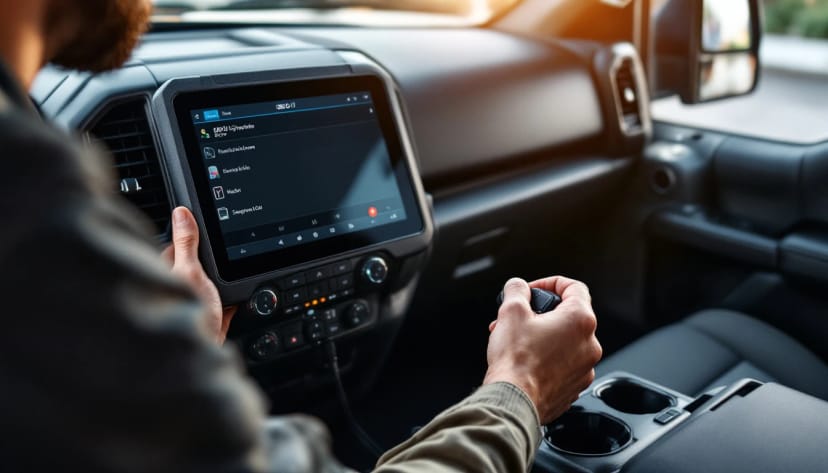
For the large majority of Minis on Tarrant County roads, yes. EWS, CAS3 and FEM key work are all performed through the vehicle's OBD-II port with the appropriate diagnostic platform, and none of the three requires a lift, a shop, or removal of the dashboard in normal circumstances. The exceptions are damaged or failed modules and a minority of the newest cars, where the honest answer is that a technician confirms your exact setup before committing to a mobile appointment.
Why is Mini all-keys-lost so much more expensive than adding a spare?
With a working key present the vehicle can be commanded to accept an additional credential in a comparatively short session. With no working key the operator must first establish authenticated access to the immobilizer module itself, read the stored key data, and write a fresh credential into it. That is a longer, higher-risk procedure requiring more capable tooling. Across European platforms in Fort Worth the all-keys-lost job commonly lands at the upper end of the $350 to $800 European band while a spare-key add sits near the bottom.
My Mini cranks but will not start and the key symbol is lit. Is that the key?
Often it is not. A lit immobilizer symbol with normal cranking means the engine control unit is refusing to fuel because it did not receive a valid authentication. That can be a dead fob battery, a failed antenna ring at the ignition receptacle, a CAS3 or FEM module fault, or a genuine key failure. The correct order is diagnose first and cut nothing until the fault is located. Paying for a new key that was never the problem is the single most common way Mini owners waste money.
Can I buy a Mini key online and have it programmed?
It is possible but it fails often enough that we advise against it. The blade must be cut to your vehicle's key code, the fob has to be the correct frequency and hardware variant for your market and body code, and on CAS3 and FEM cars a used fob previously married to another vehicle may be locked to that car permanently. Confirm the exact hardware with the operator against your VIN before purchasing anything.
Does a failed CAS3 or FEM module mean I need a whole new module?
Not always. A meaningful share of CAS3 and FEM complaints trace to solder-joint fatigue, water intrusion at the module location, or corrupted stored data rather than an unrecoverable hardware failure, and those can sometimes be addressed by repairing and re-writing the existing module rather than sourcing a replacement. When a replacement genuinely is required it must be programmed to your VIN, because a donor module carrying another car's identity will not simply drop in and work.
Get your Mini sorted today
Whether you are adding a spare to an R56 before the one key you have gives up, chasing an intermittent no-start on a CAS3 car, or dealing with a total key loss on an F56, the first step is the same: tell us the VIN and how many keys exist.
Call or text 817-842-1256, Mon–Sun 8AM–8PM. We come to you anywhere in Fort Worth and Tarrant County, and you will have a band and a realistic duration before anyone touches the car. You can also reach us through the contact page.
Written to the Fort Worth Car Keys field-service review standard. Technical procedures described here reflect current independent-trade practice on BMW Group platforms; your vehicle's exact requirements are confirmed by VIN at the appointment.