The Short Answer
As of August 2026, programming a key fob in Fort Worth typically costs $65–$125 if you already have the fob (BYOF — bring-your-own-fob), $175–$275 for a supplied remote head key, $220–$500 for a supplied smart/proximity fob, and $350–$800 for European luxury brands (BMW, Mercedes, Audi, Jaguar, Land Rover, Porsche). Add $75–$150 if all keys are lost. Per J.D. Power's Customer Service Index data, dealer-side equivalents typically run 1.7-2.4× independent mobile rates before adding tow cost.
Why the Range Is So Wide
Three factors: (1) the fob hardware cost itself — a basic transponder fob costs $40–$80 at wholesale, a smart proximity fob $100–$400. (2) The programming labor — older vehicles take 10–20 minutes, newer encrypted systems (Toyota 8A, Mercedes FBS4, BMW FEM/BDC) take 60–120 minutes. (3) The tool cost — BMW/Mercedes/VW require OEM-grade software that cost tens of thousands; those costs get amortized across jobs. Per the Associated Locksmiths of America Master Automotive Locksmith credential standards, encrypted-platform work requires specific tooling certification — a real cost item that justifies the pricing tier.
Costs by Vehicle Category
Domestic mass-market (Ford, Chevy, Dodge, Jeep): $125–$425 full-replacement with fob. Asian mass-market (Toyota, Honda, Nissan, Hyundai, Kia): $130–$500. Luxury Japanese (Lexus, Acura, Infiniti): $225–$550. BMW: $375–$750. Mercedes-Benz: $425–$900. Audi/VW: $325–$775. Porsche/Jaguar/Land Rover: $475–$1,100.
AutoZone and Batteries+ "Free" Programming
AutoZone, O'Reilly, and some Batteries+ stores will program basic transponder fobs for some early-2000s Ford, GM, and Chrysler vehicles at no charge (with fob purchase). The limitations: coverage is narrow (usually 1996–2012), no smart keys, no European vehicles, no laser-cut blades. If you have a 2000 Ford F-150, this might work. If you have anything else, you need a locksmith or dealer.
Dealer vs Locksmith Pricing
Dealers typically charge $300–$900 per fob plus a $75–$150 "diagnostic" or "programming" fee. They also often require you to tow the car in, which adds $150–$300 per AAA's 2024 driving cost data. Mobile locksmiths use the same OEM programming protocols and aftermarket equivalents at 40–60% of dealer prices with no tow. Per BLS Occupational Employment and Wages data for locksmiths, the credentialed independent automotive locksmith trade has grown specifically as the dealer-cost premium has widened.
DIY Fob Programming — When It Works and When It Doesn't
Self-programming works for a small set of early 2000s domestic vehicles using the "turn key to RUN, press fob, repeat" sequence documented in owner's manuals. It does NOT work for: any post-2010 vehicle, any smart/proximity key, any European vehicle, any Asian vehicle with DST-AES (Toyota 2010+, Honda 2015+). For those, you need scan-tool programming.
Hidden Fees to Watch
Watch for: (1) "diagnostic" add-on fees ($50–$150) that weren't quoted; (2) "after-hours" surcharges not disclosed up front; (3) sub-$50 initial quotes that balloon after arrival (bait and switch); (4) "mobile trip charge" in addition to the labor. A legitimate Fort Worth locksmith will quote all-inclusive on the phone. Per the Better Business Bureau locksmith scam advisory and the Federal Trade Commission consumer guidance, bait-and-switch is the single highest-frequency consumer complaint pattern in the trade — and a flat-rate-before-dispatch quote is the most reliable filter.
Why credentialed operators charge what they charge
A NASTF Vehicle Security Professional-registered operator (per the NASTF VSP program) pays annual registry dues, maintains data subscriptions per make, and invests in tooling that ranges from $3,000-$8,000 per platform family. A Texas DPS Private Security license (verifiable on the TX DPS public lookup) requires ongoing compliance. None of this is overhead the customer sees — it shows up as the price difference between a credentialed $295 quote and a "starting at $19" scam quote that ends at $480.
Fob Programming Price Table (2026)
Use this table to sanity-check any quote. "Program-only" assumes you already have a working, correct fob in hand. "Supply + program" means the locksmith brings the hardware too.
| Scenario | Mobile range | Dealer range | On-site time |
|---|---|---|---|
| Program existing fob (BYOF) | $65–$125 | $150–$275 + tow | 15–30 min |
| Supply + program remote head key | $175–$275 | $300–$500 + tow | 30–45 min |
| Supply + program smart / proximity fob | $220–$500 | $450–$950 + tow | 30–75 min |
| European luxury fob (BMW/MB/Audi) | $350–$800 | $700–$1,500 + tow | 45–150 min |
| All-keys-lost add | +$75–$150 | included | +20–60 min |
| Spare fob added at same visit | from ~$65 | rarely offered | +15 min |
The spread inside each row is real: a 2004 Ford remote and a 2024 Toyota proximity fob are both "fobs," but the second one carries several times the hardware cost and the programming can take four times as long.
The Four Fob Types and What Each Costs
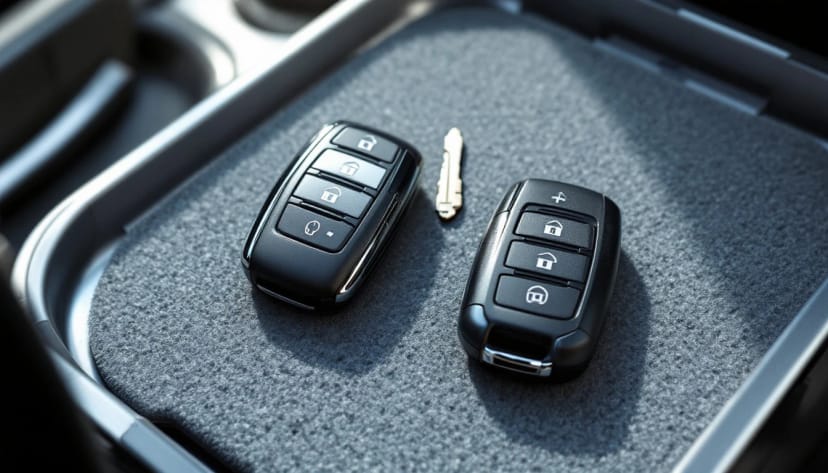
- Basic remote (no chip in the fob, separate transponder key): cheapest to replace; often programmable via an on-board owner's-manual sequence on older domestics.
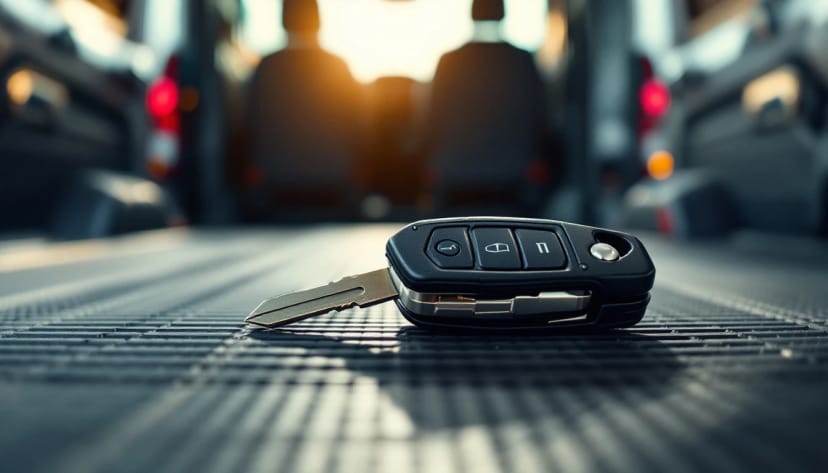
- Remote head key (RHK): the metal blade and the remote buttons are one unit with an embedded chip. $175–$275 supplied and programmed.
- Flip key: same electronics as an RHK but with a spring-out blade. Similar pricing; the flip mechanism itself adds a few dollars of hardware.
- Smart / proximity fob: no blade needed to start (push-button), continuous authentication. $220–$500, and European examples run $350–$800.
Knowing which of the four you have is the difference between a $95 job and a $450 job — and it's the first thing a competent operator will confirm before quoting.
Why "Bring Your Own Fob" Isn't Always Cheaper
BYOF (bring-your-own-fob) sounds like the obvious money-saver: buy the hardware online, pay only for programming labor. It works well when three conditions hold — the vehicle is common, the fob is genuinely correct for your VIN, and the chip inside is the right generation. It backfires when the fob you bought is a counterfeit, is locked to another vehicle, uses the wrong frequency (315 MHz vs 433 MHz), or carries a chip the platform rejects. When that happens you've paid for a paperweight and still need a correct fob. For encrypted platforms (Toyota 8A, Honda smart-entry, anything European), letting a credentialed locksmith source the hardware is usually the safer path even if the sticker looks higher.
OEM vs Aftermarket Fobs
OEM fobs are made by or for the vehicle manufacturer; quality aftermarket fobs are made by established suppliers (Xhorse, KEYDIY, and similar) to the same electrical spec. For most mass-market vehicles a quality aftermarket fob programs and functions identically at a lower hardware cost. For some European platforms and certain proximity systems, OEM (or OEM-equivalent) hardware is required for reliable operation and to survive future software updates. A good operator will tell you which applies to your car and price both — beware anyone who only offers the most expensive option without explaining why.
What Programming Actually Does (Under the Hood)
Programming isn't "copying" a key. The locksmith's tool connects to the vehicle (through the OBD-II port, or on some platforms directly to a module), authenticates with the immobilizer, and writes the new fob's cryptographic identity into the car's key memory so the immobilizer will authorize start. On rolling-code and AES platforms this is a challenge-response handshake, not a simple pairing — which is why the tooling is expensive and why a "free" parts-store programmer can't touch a modern smart key. Per the Associated Locksmiths of America certification standards, encrypted-platform programming is a distinct competency requiring specific, credentialed tooling.
When a Fob Can't Be Programmed at All
A few situations block programming outright: the vehicle's immobilizer module is failed or corrupt (a repair/replacement, not a key job); the fob is physically damaged (water, crush, dead transponder); the platform has reached its maximum key count and needs an existing key deleted first; or ownership can't be verified. On theft-prevention grounds, credentialed operators will not program a key without proof of ownership — a protocol rooted in the same NHTSA anti-theft framework that governs immobilizer behavior. If a "locksmith" offers to skip the ID check, that's a reason to hang up.
How to Avoid Overpaying
Three habits protect you: get the all-inclusive number on the phone (hardware + cut + program + trip); ask specifically whether OEM or aftermarket hardware is being quoted and why; and confirm there's no separate "diagnostic" or "mobile trip" fee waiting at the door. Per the Better Business Bureau locksmith scam advisory, the unbundled add-on fee is the most common overcharge mechanism in the trade — and a firm, itemized phone quote is the simplest defense against it.
Programming Time by Platform
How long programming takes is a decent proxy for how complex — and therefore how expensive — the job is. Early-2000s domestic remotes with an on-board learn sequence can be done in 10–20 minutes. Mid-generation transponder and remote-head keys (roughly 2005–2014) usually take 20–40 minutes on-site. Modern encrypted platforms are where the clock stretches: Toyota 8A/DST-AES, Honda smart-entry, and Nissan Intelligent Key jobs commonly run 30–60 minutes, and European systems — BMW CAS/FEM/BDC, Mercedes EIS/EZS, Audi/VW MQB Component Protection — run 45–120 minutes, occasionally more when bench work is required. All-keys-lost adds 20–60 minutes on top because the tool has to extract the vehicle's security data before it can write a new key. If someone promises a five-minute smart-key program on a 2023 European car, they're either overselling or about to under-deliver.
What to Do If Your Fob Stops Working
Before you assume you need a new fob, run a quick triage — it frequently saves a few hundred dollars. Step one: replace the battery. A dead CR2032/CR2025 is the single most common cause of a "broken" fob; a fresh $5 coin cell restores most of them. Step two: check for physical damage — cracked case, water intrusion, worn buttons — which points to hardware. Step three: test the backup method. On a smart key with a dead battery, most vehicles let you start the car by holding the fob against a marked spot (steering column, cupholder, or start button); your owner's manual shows exactly where. Step four: rule out the vehicle side — if a known-good fob also fails, the problem may be a weak 12-volt battery, a failed antenna, or an immobilizer fault, not the fob at all. Only after those four steps is buying and programming a new fob the right move. A credentialed operator will walk you through this triage rather than selling you hardware sight-unseen — and per the Better Business Bureau's locksmith advisory, a willingness to diagnose before selling is one of the clearest signals you're dealing with a real professional rather than a parts-pusher.
OEM Programming Tools, Explained Plainly
When a locksmith quotes a European or newer-Asian fob higher than a domestic one, the tooling is a big part of why. Programming modern platforms requires professional equipment — Autel IM608/IM508, Xhorse Key Tool Plus, AVDI, or a J2534 pass-through running OEM software — each of which carries thousands of dollars in hardware cost plus per-make data subscriptions. Some platforms go further and require online security-data access: Audi/VW MQB Component Protection, for example, is unlocked through credentialed access via the NASTF Vehicle Security Professional registry, which carries its own annual cost and vetting. This is the structural reason a "free" parts-store programmer can handle a 2004 pickup but not a 2023 luxury SUV, and per the U.S. Bureau of Labor Statistics wage data for locksmiths, it's also why the credentialed independent trade has grown as vehicle security has become more complex. You're not paying for a button-press; you're paying for the accumulated tooling and access that make the button-press possible.
The Most Overlooked Line Item: A Spare
The single best value in fob programming is the one most people skip — adding a spare while the technician is already on-site. A second fob programmed in the same visit typically adds from ~$65 on mass-market platforms (a fraction of what a from-scratch job costs later), because the tool is already connected and the security data already read. Skipping it feels like saving money; it usually isn't. The day your only working fob is lost or destroyed, you're paying for a full lost-key job — often with an all-keys-lost surcharge on top — instead of the modest spare you could have added earlier. If you just bought a used car that came with a single key, this is the highest-return $65–$300 you can spend on it. Think of it as the difference between a planned, discounted add-on today and an unplanned emergency job — often at an after-hours rate — on the worst possible day later.
Field-operator perspective
The two questions that filter the trade are: what tool do you use for my chassis, and what's your flat-rate range for this job. Honest operators answer both in under 60 seconds. The scam operators stall on both. Every customer who calls us armed with those two questions saves themselves $150-$400 on average — that's the entire trick.
— a NASTF-registered Fort Worth automotive locksmith, ALOA Master Automotive Locksmith (MAL) credential, DFW metroplex (anonymized)
A real-world example
Operator: Anonymized 2020 Hyundai Sonata owner, BYOF (bring-your-own-fob) for a spare add
Before:
- Customer bought an OEM Hyundai fob online for $145 and tried to self-program — failed (Sonata uses Hitag3 encryption, not DIY-programmable).
- Hyundai dealer service department: $215 to program a customer-supplied fob, 2-day appointment wait.
- Customer wanted to use the fob immediately.
What changed: Customer called a NASTF-registered mobile operator. Pre-dispatch flat-rate quote: $95-$120 for Hyundai Sonata BYOF programming. Technician arrived in 28 minutes, verified ownership, paired the customer-supplied fob with the vehicle's SMARTRA module in 22 minutes.
Outcome:
- Final invoice: $105 (within quoted range).
- Both fobs (original + new) tested and confirmed working.
- Customer used the fob same evening.
Net: Saved approximately $110 vs the dealer path plus the 2-day wait. BYOF is the cheapest path when the customer has time to source the fob themselves and wants only the programming labor.
Frequently Asked Questions
How much does it cost to program a key fob?
Programming an existing fob runs $65–$125. Supply + program a remote head key runs $175–$275. Supply + program a smart/proximity fob runs $220–$500. European luxury fobs (BMW, Mercedes, Audi) run $350–$800.
Can I program my own key fob?
Sometimes. Self-programming works for some early 2000s domestic vehicles following the owner's manual procedure. It doesn't work for any smart key, any post-2010 European vehicle, or newer Asian vehicles with AES encryption.
How long does key fob programming take?
Most jobs complete in 15–40 minutes on-site. European vehicles and all-keys-lost programming takes 60–120 minutes.
Who can program a key fob near me?
A mobile automotive locksmith is usually fastest and cheapest. Dealers can also program but require a tow and charge 2x more. A few parts stores (AutoZone, Batteries+) can program limited older vehicles only.
Do I need to bring my car in, or can programming be done at my location?
Almost all fob programming is done wherever the car sits, because the tool connects to the vehicle rather than the other way around. That covers driveways, workplace parking, apartment garages and roadside. The only jobs that occasionally need the vehicle moved are ones requiring bench work on a removed module, and a technician will tell you in advance if yours is one of them.
Will programming a new fob erase my existing keys?
Not usually. On most platforms a new fob is added alongside the keys the vehicle already knows, so your working key keeps working. Some systems do require all keys to be present and re-learned together, and a few reach a maximum key count where an old credential must be deleted first. Bring every key you own to the appointment so the technician can re-learn them in one pass if your platform needs it.
Is a cheaper aftermarket fob a false economy?
Not automatically. On most mass-market vehicles a quality aftermarket fob from an established supplier programs and behaves exactly like the factory part at a lower hardware cost. Where it does become a false economy is on certain European and proximity platforms, where a non-OEM fob can pair successfully and then misbehave after a software update. Ask the operator which category your car falls into and have them price both.
Get a quote for your fob
Have your year, make and model ready, plus whether you already have the fob in hand — those two facts alone move a quote from a guess to a firm range. Call 817-842-1256 any day between 8AM and 8PM across Fort Worth and Tarrant County. If you are not sure which type of key you are holding, our guide to transponder key vs key fob sorts it out in about a minute.
References & external sources
- J.D. Power — Customer Service Index — Annual study of dealership service department satisfaction and cost.
- Associated Locksmiths of America (ALOA) — Trade association governing locksmith certifications including the Master Automotive Locksmith (MAL) credential.
- NASTF Vehicle Security Professional (VSP) Registry — National Automotive Service Task Force registry for credentialed access to OEM security data.
- AAA — Your Driving Costs 2024 — Annual ownership cost study including unscheduled maintenance projections.
- U.S. Bureau of Labor Statistics — Occupational Employment and Wages, Locksmiths (49-9094) — BLS OEWS national wage + employment data for locksmith occupation.
- Better Business Bureau — Locksmith Scam Advisory — BBB consumer protection guidance on locksmith bait-and-switch operators.
- FTC Consumer Advice — Hiring a Locksmith — Federal Trade Commission guidance on verifying locksmith legitimacy before service.
- Texas Department of Public Safety — Private Security Licensing — Texas locksmith company + individual licensing requirements.