As of July 2026: Mazda CX-5 key replacement in Fort Worth
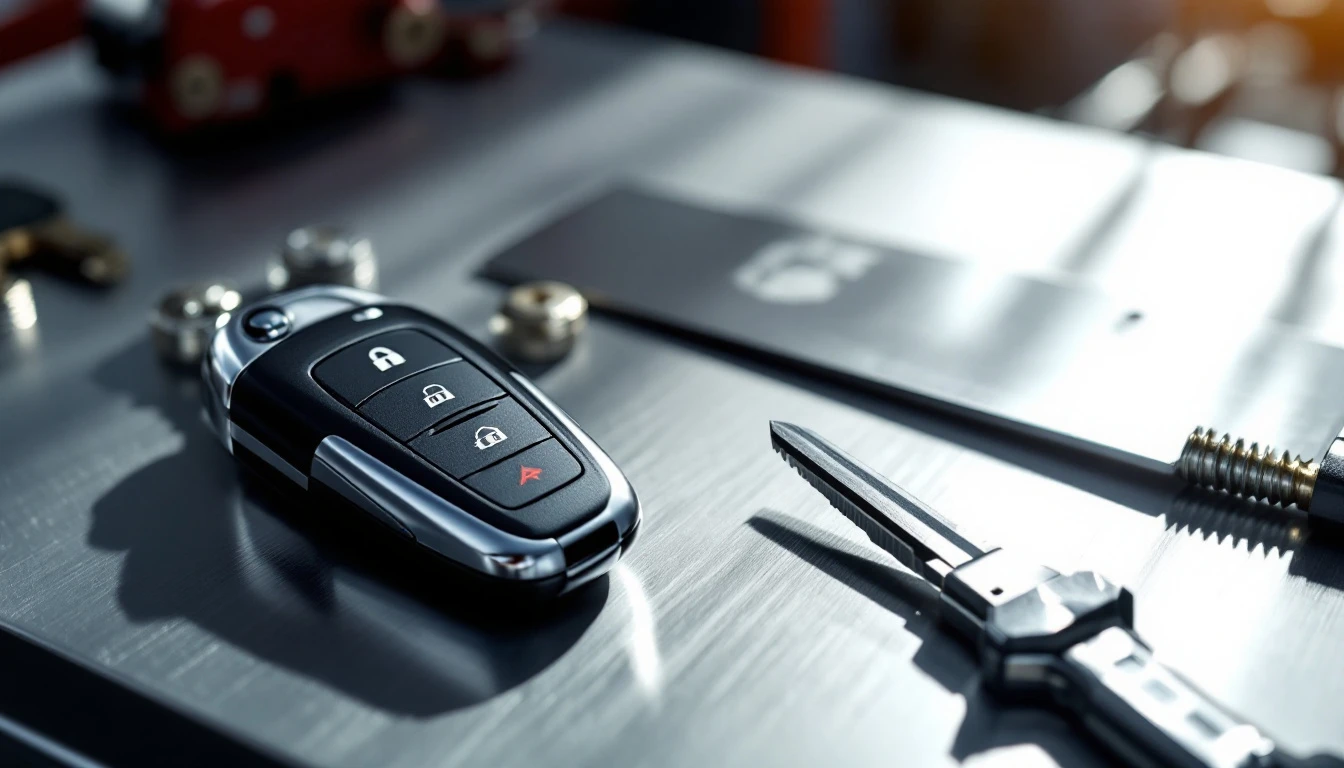
The Mazda CX-5 has been one of the best-selling compact SUVs of the last decade, and it's a common sight in driveways all across Tarrant County. That popularity comes with a wrinkle most owners don't discover until they need a replacement: the CX-5 didn't ship with just one kind of key. Depending on the generation and trim, your CX-5 came with either a flat proximity smart fob for push-button start or a bladed flip key you insert to start — and those two keys carry different chips, different FCC-IDs, and different prices. As of July 2026, this guide breaks CX-5 key replacement down generation by generation so you know exactly what you have before you call.
We serve Fort Worth and the surrounding cities — Arlington, North Richland Hills, Hurst, Bedford, Euless, Grapevine, Keller, Benbrook, Saginaw, White Settlement, Lake Worth, and River Oaks — with mobile service, and every price here reflects on-site work at your driveway, office, or a lot, not a dealer counter quote. The single most useful thing you can do before calling is check whether your CX-5 has push-button start or a key you turn in the ignition, because that one fact places you in the right price band.
How the immobilizer sets the price
Every CX-5 has an electronic immobilizer. A transponder chip — inside the flip key or the smart fob — exchanges a coded handshake with the SUV's immobilizer every time you try to start. If the module doesn't read a valid credential, the engine won't start, often with a security indicator on the dash. This isn't a manufacturer upsell; it's federal safety policy. The National Highway Traffic Safety Administration documents that engine immobilizers materially reduce theft of equipped vehicles, and the Insurance Institute for Highway Safety has found that models without immobilizers are stolen at conspicuously higher rates than those with them.
The pricing consequence is straightforward: the cost of a CX-5 key is mostly the credential and the programming, not the metal. A bladed flip key is inexpensive hardware; a proximity smart fob is a more expensive encrypted device with keyless-entry antennas and a rolling code. That's why the price steps up from the flip-key band to the smart-key band — the fob costs more and the module is more sophisticated. The good news for CX-5 owners is that Mazda keys are ordinary Japanese architecture, well-supported by independent tooling, and priced in the standard smart band — not the higher European luxury band.
Generation by generation: the CX-5 key breakdown
Here is the single reference table for the Mazda CX-5. FCC-IDs and chip types are commonly documented examples — Mazda ran variants across the years, so confirm your exact key by reading the FCC-ID printed on your own fob and by giving your VIN when you call.
| Generation | Years | Key type | Common FCC-ID / chip (verify on your fob + VIN) | Fort Worth price band |
|---|---|---|---|---|
| KE (1st gen) | 2013–2016 | Proximity smart fob (higher trims) | WAZSKE13D01-style; ID49 (HITAG-Pro) chip | $220–$500 |
| KE (1st gen) | 2013–2016 | Bladed flip key (some base trims) | WAZSKE13D02-style; ID49 chip | $120–$200 |
| KF (2nd gen) | 2017–2024 | Proximity smart fob (most trims) | WAZSKE13D03 / SKE13E-01-style; ID49 chip | $220–$500 |
| Any generation | — | Spare added (working key present) | Same key type, module already authorized | ~$65 hardware + programming |
| Any generation | — | Lockout (keys inside, keys exist) | Non-destructive entry, no programming | $75–$200 |
2013–2016: KE (first generation)
The first-generation KE CX-5 is where the key splits by trim, and this is the single most important thing to know before you call. Higher trims — the ones with push-button start — came with a proximity smart fob, commonly documented on an FCC-ID such as WAZSKE13D01, running an ID49 (HITAG-Pro) chip. That fob sits in the $220–$500 smart-key band. Some base trims, by contrast, used a bladed flip key — the metal blade folds into the fob body — commonly on an FCC-ID such as WAZSKE13D02, which lands in the lower $120–$200 flip-key band. Two CX-5s from the same year can therefore have very different keys and very different prices, so when you call, lead with whether you have push-button start. Flip-key programming is scoped on the transponder key programming service page, and the CX-5 flip key is a textbook example of it.
2017–2024: KF (second generation)
The second-generation KF CX-5 moved most trims onto proximity smart fobs with push-button start, commonly documented on FCC-IDs such as WAZSKE13D03 or an SKE13E-01-style variant, again running the ID49 chip family. Pricing sits in the $220–$500 smart band, with all-keys-lost at the $180–$450 session plus the fob hardware. Because nearly every KF is a push-button fob, the spare-fob argument is strongest here: adding a second programmed fob for roughly $65 in hardware, while your first one still works, turns a future lost-fob emergency into a quick swap. Smart-fob work in general is scoped on the smart key replacement service page, and the KF CX-5 is exactly that kind of job.
All-keys-lost versus adding a spare
The biggest single swing in what you pay comes down to one question: do you still have a working key? It changes both the method and the money.
Adding a spare is the easy case. Because a working key already authorizes the immobilizer, a new key or fob is added in a short programming session. On a CX-5 this is why an extra fob is roughly $65 in hardware plus a modest programming charge — the module is already unlocked by your existing credential, so the operator simply teaches it one more.
All-keys-lost is the hard case. With no working key, the immobilizer has to be put into a learn state before any new credential takes. On an early flip-key CX-5 that still lands in the $120–$200 band. On a smart-fob CX-5 it climbs to the $180–$450 lost-fob session plus the cost of the fob itself, because the proximity fob is more expensive hardware and the reset takes longer. A credentialed operator will require proof of ownership — title, registration, or a matching ID — before doing all-keys-lost work.
Here are the concrete numbers worth keeping in mind:
- A CX-5 flip key: $120–$200, cut and programmed on-site.
- A CX-5 smart fob: $220–$500, the Japanese smart band.
- All-keys-lost on a smart CX-5: $180–$450 session plus fob hardware.
- A spare fob with a working key present: roughly $65 in hardware — a fraction of a lost-key event.
The battery is the most common "dead key"
Before you buy a new key at all, rule out the cheapest cause. On a push-button CX-5, the most frequent "the car won't recognize my key" complaint is simply a dead coin cell in the fob — typically a CR2025 or CR2032. When that battery dies, the fob stops broadcasting, and the SUV throws a key-not-detected message even though the fob is otherwise perfect. Mazda lets you start the vehicle anyway by holding the fob near the start button, which is the tell that the fob electronics are fine and only the battery is dead.
Replacing that battery is often a do-it-yourself fix, and it costs a fraction of a new fob. Our companion guide on car key fob battery replacement walks through how to open a CX-5-style fob, which cell to use, and how to tell a genuinely dead fob from a merely flat battery. Ruling this out first is the difference between a two-dollar coin cell and a $220–$500 key — always check the battery before you assume you need programming.
Mobile versus the Mazda dealer
For nearly every CX-5 key job, a mobile locksmith is both faster and cheaper than the dealer counter. Your SUV is usually at home, the office, or a lot, and a mobile operator comes to it, cuts or pairs the key, and programs the immobilizer on-site with no tow. A dealer all-keys-lost typically means towing the vehicle in — a CX-5 that won't start can't drive itself to the service lane — and then waiting for an appointment.
The cost gap is real. Skilled-trade labor is a tracked, real expense; the U.S. Bureau of Labor Statistics reports locksmith wages as a distinct occupation, and dealer service departments layer a service-writer markup on top of factory labor. Customer-service pricing patterns tracked by J.D. Power's Customer Service Index research show dealer-side key work commonly running well above an independent operator's flat rate for the same programming. Downtime compounds it: the AAA Your Driving Costs study counts unscheduled events and out-of-service time among the larger swings in real ownership cost.
The dealer still wins in a narrow set of cases: an open recall or warranty issue tied to the immobilizer, or a brand-new platform variant independent tooling hasn't reached. For the CX-5 specifically — a mature, well-supported Japanese platform — that's rarely the situation. For spare adds, flip-key replacements, and the vast majority of smart-fob work, mobile is the better call. General key-fob programming is scoped on the key fob programming page.
The CX-5 trips people up because the same year can be a flip key or a proximity fob depending on trim. The first question I ask is 'do you push a button to start, or turn a key?' — that answer, not the model year, tells me the band. Both are normal Japanese jobs well within independent tooling, so I confirm the FCC-ID off the customer's own fob and match it to the VIN before sourcing. That one step keeps the programming clean and the quote honest.
— ALOA Master Automotive Locksmith (MAL), Japanese-import specialist, DFW metroplex (anonymized)
Verifying your operator
Verifying an operator before they drive out protects you. The Federal Trade Commission's guidance on hiring a locksmith warns against anyone who commits to a repair before diagnosing it and recommends confirming licensing and a written quote up front. In Texas, automotive locksmiths operate under the Texas Department of Public Safety Private Security program, and a credentialed operator will also be registered through the NASTF Vehicle Security Professional program, which governs credentialed access to OEM security data. Asking for both is a fair question, and a real operator answers it in seconds.
What to have ready when you call
A tight CX-5 quote depends on a few facts. Have these ready and the price you're quoted before dispatch will match what you pay:
- Push-button start or a turn key? This is the fastest way to place your key in the right band.
- Exact model year and trim. "2015 CX-5 Grand Touring" beats "a CX-5" — trim decides key type on the KE generation.
- Do you have a working key? Spare add versus all-keys-lost hinges entirely on this one answer.
- The FCC-ID off your fob. Flip it over and read the printed FCC-ID; it removes guesswork on the exact variant.
- Your VIN. It confirms the factory key configuration and catches running changes within a generation.
With those in hand, a competent Fort Worth operator gives you a real price band before anyone drives out — which is the entire reason to call a mobile locksmith instead of towing your SUV to a dealer counter. You can scope smart-fob work on the smart key replacement page, flip-key work on the transponder key programming page, or general remote work on the key fob programming page.
Frequently Asked Questions
How much does a Mazda CX-5 key replacement cost in Fort Worth?
As of July 2026, a CX-5 proximity smart fob runs $220–$500 in the smart-key band. A bladed flip key on an early CX-5 runs $120–$200 with cutting and programming. An all-keys-lost on a smart-fob CX-5 runs $180–$450 for the programming session plus the fob hardware. An extra fob added while a working key is present is roughly $65 in hardware on top of programming.
Does my CX-5 use a smart key or a flip key?
It depends on generation and trim. On the first-generation KE (2013–2016), higher trims used a proximity smart fob with push-button start while some base trims used a bladed flip key. The second-generation KF (2017–2024) moved most trims onto proximity smart fobs. Your trim decides your key type and therefore your price band, so confirm the trim and check whether you have push-button start when you call.
What FCC-ID does my Mazda CX-5 key use?
On the KE generation the smart fob is commonly documented as WAZSKE13D01 and the flip key as WAZSKE13D02; on the KF generation the smart fob is commonly WAZSKE13D03 or an SKE13E-01-style variant. These CX-5 keys typically use an ID49 (HITAG-Pro) chip. Always verify the FCC-ID printed on the back of your own fob and confirm by VIN, because Mazda ran variants across the years.
Can a mobile locksmith program a Mazda CX-5 key on-site?
Yes. Both the CX-5 smart fob and the flip key are programmed through the vehicle on-site, so a credentialed operator cuts or pairs the key right in your Fort Worth driveway, at the office, or on a lot — no tow to the dealer. All-keys-lost takes longer because the immobilizer must be reset with no existing key, but it's still done at the vehicle.
I lost all the keys to my CX-5 — what does that cost?
All-keys-lost is priced by key type. On an early flip-key CX-5 it lands in the $120–$200 band. On a smart-fob CX-5 the lost-fob session runs $180–$450 plus the fob hardware, because the immobilizer must be reset and a fresh credential learned with no existing key to authorize it. A mobile operator does the whole job at the vehicle, so there's no towing charge on top.
My CX-5 push-button start won't recognize the key — what's wrong?
On a push-button CX-5 that usually means the fob battery is dead or the fob is failing, not that the SUV is broken. Mazda lets you start it by holding the fob near the start button. If a fresh CR2025 or CR2032 coin cell doesn't fix it, the fob may need reprogramming or replacement, which a mobile operator can diagnose on-site — often cheaper than assuming you need a full new key.
Is a spare CX-5 key worth it before I lose one?
Yes — it's the cheapest key decision a CX-5 owner can make. A spare fob added while your working key still authorizes the immobilizer is roughly $65 in hardware plus a short programming charge. Compare that to a $180–$450 all-keys-lost session plus hardware if you lose your only key, and the spare pays for itself the first time it saves you a stranded-SUV emergency.
References & external sources
- NHTSA — Anti-Theft Systems & FMVSS 114 — Federal standard governing immobilizers and their documented effect on theft rates.
- IIHS — Vehicle Theft — Insurance Institute for Highway Safety data on theft loss and immobilizer effectiveness.
- FTC Consumer Advice — Hiring a Locksmith — Federal Trade Commission guidance on verifying a locksmith and getting a written quote.
- NASTF Vehicle Security Professional (VSP) Program — Registry for credentialed access to OEM security data.
- J.D. Power — Customer Service Index (CSI) Study — Automotive customer-service pricing patterns underlying dealer-versus-independent cost differences.
- AAA — Your Driving Costs 2024 — Annual ownership-cost study including unscheduled maintenance and downtime.
- U.S. Bureau of Labor Statistics — Locksmiths & Safe Repairers — Occupational wage data for the locksmith trade.
- Texas DPS — Private Security Licensing — Texas licensing authority for automotive locksmiths.
Related Pages
- Smart Key Replacement
- Transponder Key Programming
- Key Fob Programming
- Car Key Fob Battery Replacement
Get a firm quote on your Mazda CX-5 key replacement
Have your VIN and an accurate count of how many keys exist, and we can give you a band before anyone is dispatched — no guessing and no surprises when the van arrives.
Call or text 817-842-1256, Mon-Sun 8AM-8PM. Mobile service throughout Fort Worth and Tarrant County. You can also reach us via the contact page.