As of July 2026: GMC Yukon key replacement in Fort Worth
The GMC Yukon — along with the longer Yukon XL and the upscale Denali — is one of the most common full-size SUVs on DFW roads, school lines, and driveways. It is also a vehicle whose key changed three distinct times across the generations you still see every day: from a transponder key on the earliest trucks, to a one-piece remote-head flip key, to a flat push-button proximity smart fob. Each one carries a different chip, a different FCC-ID, and a different price, and knowing which you have is the fastest way to a quote that actually matches what you pay.
This guide is built the way a Yukon owner needs it: platform by platform, year range by year range. For each generation you will find the key type, a commonly documented FCC-ID example you can verify against your own fob, the chip and blank detail, and the Fort Worth mobile-service band as of July 2026. We serve Fort Worth and the surrounding cities — Arlington, North Richland Hills, Hurst, Bedford, Euless, Grapevine, Keller, Benbrook, Saginaw, and White Settlement — and every price reflects on-site mobile work, not a dealer counter quote.
What a GMC Yukon key costs up front
Here are the bands that apply to the Yukon. Your exact number depends on the key type, whether a working key still exists, and the model year:
- Transponder key or remote-head flip key: $120–$200 with cutting and programming.
- T1XX push-button proximity smart fob: $220–$500 depending on trim and fob generation.
- All-keys-lost on a smart-fob Yukon: $180–$450 for the programming session, plus fob hardware.
- Extra or spare key/fob added with a working key present: roughly $65 in hardware on top of programming.
- Ignition cylinder repair or replacement: $150–$400 if the lock itself is the fault.
- Lockout (keys locked in the SUV): $75–$200 depending on time and access.
As with any modern SUV, the spare added while you still have a working key is the cheapest insurance you can buy. The distance between a roughly $65 spare add and a $180–$450 all-keys-lost session is the entire argument for handling the second key before the first one disappears.
How GM's theft-deterrent system decides your price
Every Yukon in this guide has a GM theft-deterrent system that refuses to start the engine without a valid key credential. On older Yukons that system reads a transponder chip in the key through the body control module. On the current push-button trucks it is a continuous proximity exchange between the smart fob and the keyless controller, using an encrypted rolling code. In every case, the module is the authority, not the metal blade.
This security is federal policy with a measurable payoff, not a GM upsell. The National Highway Traffic Safety Administration documents that engine immobilizers reduce theft rates on equipped vehicles, and the Insurance Institute for Highway Safety has tracked the same effect across its theft-loss data. Full-size SUVs are frequent theft targets, so GM's system is doing real work — and it is exactly why a blank cut at a hardware kiosk turns the lock but never starts the engine.
The practical upshot for pricing: an older transponder or flip key is inexpensive hardware, while a T1XX proximity fob is expensive hardware with an encrypted rolling code. That is why the bands step up as you move from GMT900 to K2XX to T1XX — the system gets more sophisticated and the fob costs more to source and program.
Generation by generation: the GMC Yukon key breakdown
Here is the single reference table for the GMC Yukon, Yukon XL, and Denali, covering the three platforms most commonly on the road. FCC-IDs are commonly documented examples — GM ran variants across the same years, so confirm your exact key by reading the FCC-ID on the back of your own fob and by giving your VIN and trim when you call.
| Generation | Years | Key type | Common FCC-ID (verify by VIN) | Fort Worth price band |
|---|---|---|---|---|
| GMT900 | 2007–2014 | Transponder key + separate remote, later remote-head flip | Transponder blank; standalone or flip-style remote | $120–$200 |
| K2XX | 2015–2020 | Remote-head flip key, HU100 blade | M3N-32337100 | $120–$200 |
| T1XX | 2021–present | Push-button proximity smart fob | HYQ1ES / HYQ1EA | $220–$500 |
| T1XX (all-keys-lost) | 2021–present | Proximity smart fob, no working key | HYQ1ES / HYQ1EA | $180–$450 + fob |
2007–2014 (GMT900)
The GMT900 Yukon uses a transponder key paired with a separate remote for the door locks on the earlier years, with later model years moving to a one-piece remote-head flip key. The transponder key carries an RFID chip that the body control module reads before it will start the engine. Because the hardware is inexpensive and the programming is well-supported by independent tooling, this generation sits in the $120–$200 transponder band. The variable on these older SUVs is the ignition lock: a worn cylinder can produce a security-light no-start that mimics a key failure, which is why a credentialed operator scans the module before cutting. If the cylinder itself is the fault, ignition work runs in the $150–$400 range on top of the key.
2015–2020 (K2XX)
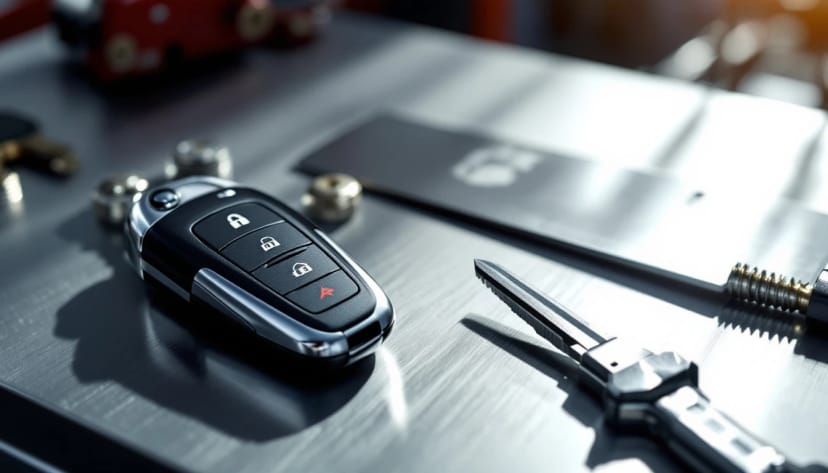
The K2XX Yukon moved to a one-piece remote-head flip key — the transponder blade folds into a housing with the lock, unlock, and remote-start buttons built in — cut on the GM HU100 blade. On these SUVs the FCC-ID is commonly documented as M3N-32337100. This is one of the most frequently replaced Yukon keys we see, because the generation is abundant and the flip mechanism takes wear: a cracked hinge or water-damaged remote takes the whole key with it. It remains a $120–$200 job with cutting and programming. Confirm the FCC-ID on your existing flip key, since matching the variant is what keeps the programming clean.
2021–present (T1XX)
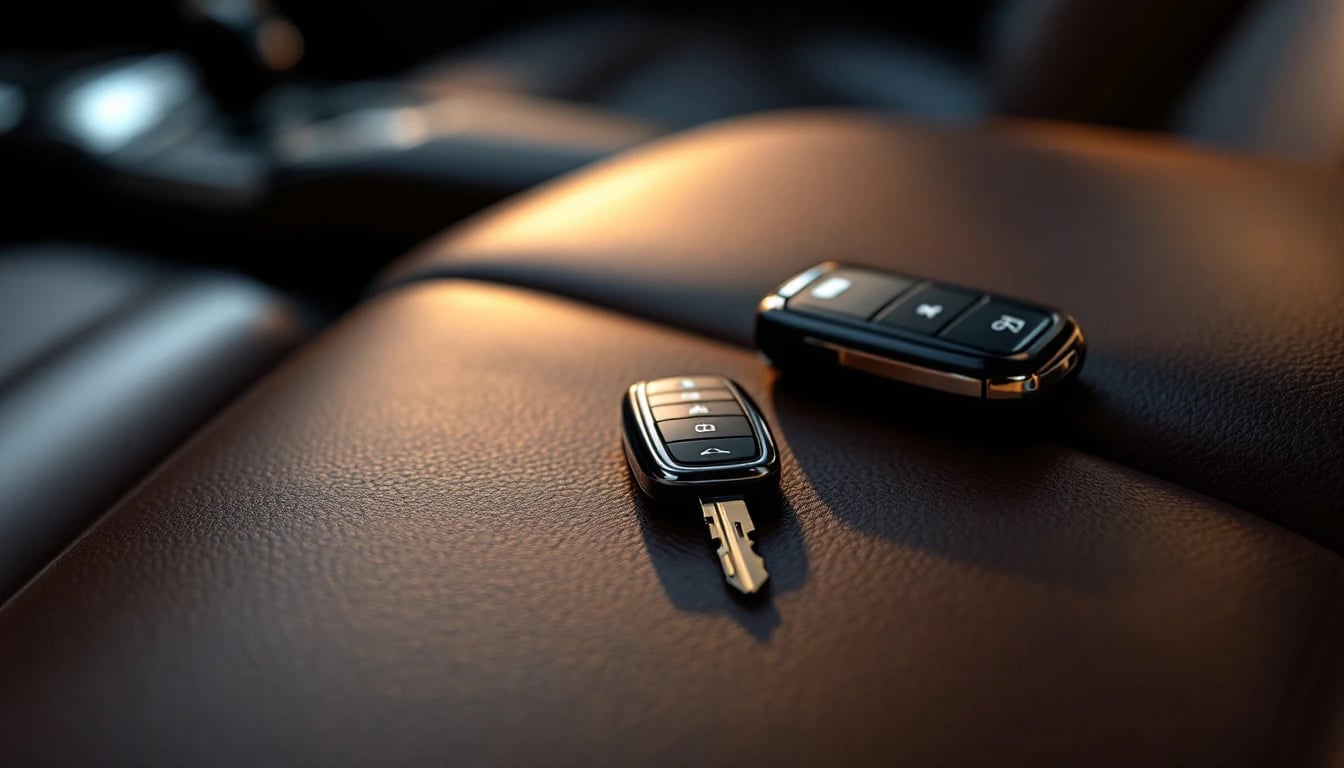
The current T1XX Yukon moved to push-button start with a flat proximity smart fob, commonly carrying the FCC-ID HYQ1ES or HYQ1EA. That smart fob is expensive hardware with an encrypted rolling code, so it lands in the $220–$500 band, and an all-keys-lost on one climbs to the $180–$450 lost-fob session plus the cost of the fob because the body control module has to be reset and a fresh credential learned. The Denali and higher trims on this platform carry the same style of proximity fob — the trim decides the badge, not the key type — so lead with the model year and confirm push-button start when you call.
All-keys-lost versus adding a spare
The biggest single swing in what you pay comes down to one question: do you still have a working key? It changes both the method and the money.
Adding a spare is the easy case. Because a working key already authorizes the module, a new key or fob is added in a short programming session. On a Yukon this is why an extra key or fob is roughly $65 in hardware plus a modest programming charge — the module is already unlocked by your existing credential, so the operator simply teaches it one more.
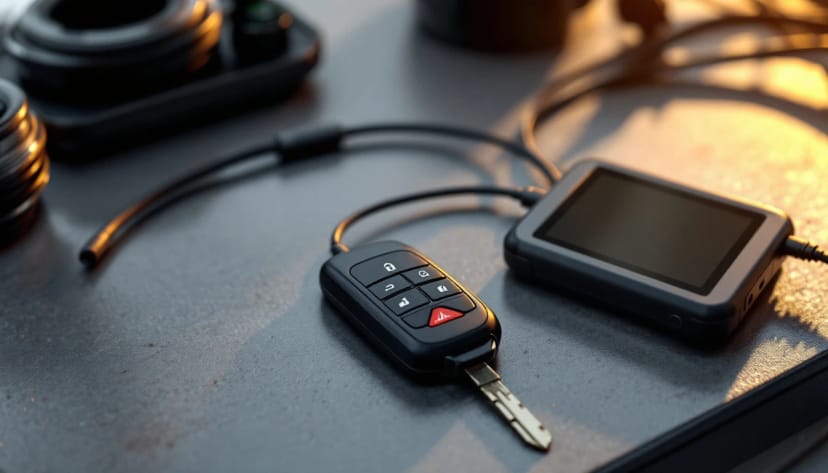
All-keys-lost is the hard case. With no working key, the theft-deterrent system has to be put into a learn state through the data port before any new credential will take. On an older transponder or a K2XX flip-key Yukon that still lands in the $120–$200 band. On a T1XX push-button smart-fob Yukon it climbs to the $180–$450 lost-fob session plus the cost of the fob, because the proximity fob is expensive hardware and the reset takes longer. The lesson is the same either way: the cheapest Yukon key you will ever buy is the spare you program before you need it.
Mobile versus the GMC dealer
For nearly every Yukon key job, a mobile locksmith is both faster and cheaper than the dealer counter. Your SUV is usually at home, a parking lot, or a driveway — and a mobile operator comes to it, cuts the key, and programs the theft-deterrent system on-site with no tow. A dealer all-keys-lost, by contrast, typically means towing the SUV in and waiting for an appointment, because a Yukon that will not start cannot drive itself to the service lane.
The cost gap is real. The U.S. Bureau of Labor Statistics tracks locksmith and safe-repair wages as a distinct skilled trade, and dealer service departments layer a service-writer markup on top of that labor, commonly running well above an independent operator's flat rate for the same programming. Over the life of the SUV, ownership costs compound: the AAA Your Driving Costs study puts unscheduled maintenance and downtime among the larger swings in annual operating cost, and a stranded family SUV adds lost time and disrupted plans on top.
The dealer still wins in a narrow set of cases: an open recall or warranty issue tied to the immobilizer, or a brand-new platform variant independent tooling has not caught up to. For everything else — spare adds, transponders, flip keys, and the vast majority of smart-fob work — mobile is the better call.
On Yukons the fastest way to a right quote is the generation and whether it is push-button. A 2018 is a flip key in the transponder band and a 2022 Denali is a proximity fob at more than double the price, even though they wear the same nameplate. I read the FCC-ID off the customer's fob and match it to the VIN before I source anything. On the older stuff I scan the module first — a worn ignition lock throws a security light that looks exactly like a dead key, and cutting a new key there just burns the customer's money.
— ALOA Master Automotive Locksmith (MAL), GM theft-deterrent specialist, DFW metroplex (anonymized)
Verifying an operator before they drive out protects you. The Federal Trade Commission's guidance on hiring a locksmith warns against anyone who commits to a repair before diagnosing it and recommends confirming licensing and a written quote up front. In Texas, automotive locksmiths operate under the Texas Department of Public Safety Private Security program — not a general trade board — and a credentialed operator will also be registered through the NASTF Vehicle Security Professional program, which governs access to OEM security data. Asking for both is fair, and a real operator answers in seconds.
What to have ready when you call
A tight quote depends on a few facts. Have these ready and the price you are quoted before dispatch will match what you pay:
- Exact model year and trim. "2022 Yukon Denali" beats "a Yukon" — the generation decides the key type.
- Does it start with a button? Push-button start means a proximity fob; a turn-key ignition means a flip or transponder key.
- Do you have a working key? Spare add versus all-keys-lost hinges entirely on this.
- The FCC-ID off your fob. Flip it over and read the printed FCC-ID; it removes guesswork on the exact variant.
- Your VIN. It confirms the factory key configuration and catches running changes within a generation.
With those, a competent Fort Worth operator gives you a real price band before anyone drives out — the whole reason to call a mobile locksmith instead of towing to a dealer counter. Start with our GMC brand page, read the deeper GM theft-deterrent system service page, or compare notes on our GMC Sierra key replacement guide. If your SUV has no working key, the all-keys-lost service page covers that specific job, and general pricing lives on the car key replacement cost page.
Frequently Asked Questions
How much does a GMC Yukon key replacement cost in Fort Worth?
As of July 2026, an older Yukon transponder key or a K2XX remote-head flip key runs $120–$200 with cutting and programming. A newer T1XX push-button smart fob runs $220–$500 depending on trim and fob generation. An all-keys-lost on a smart-fob Yukon runs $180–$450 for the programming session plus fob hardware. An extra key or fob added with a working key present is roughly $65 in hardware on top of programming.
What FCC-ID does my GMC Yukon key use?
It depends on the generation. On 2015–2020 K2XX Yukons the remote-head flip key is commonly FCC-ID M3N-32337100 on an HU100 blade; on 2021-and-up T1XX Yukons the push-button smart fob is commonly FCC-ID HYQ1ES or HYQ1EA. Older GMT900 Yukons use a transponder key with a separate or later flip-style remote. Confirm your exact key by reading the FCC-ID on your own fob and by VIN, because GM used more than one variant.
What is GM's Theft-Deterrent System on my Yukon?
GM's theft-deterrent system reads a valid key credential before it lets the engine start — a transponder on older Yukons and a rolling-code proximity exchange on the current push-button trucks. The body control module is the authority, not the metal blade. A worn ignition lock or a failed prior programming attempt can throw a security-light no-start that looks like a key problem, so a credentialed operator scans the module before cutting any key.
Does my GMC Yukon use a flip key or a push-button smart fob?
It comes down to the generation. GMT900 Yukons (2007–2014) use a transponder key, with later years moving to a remote-head flip key. K2XX Yukons (2015–2020) use a remote-head flip key on the HU100 blade. T1XX Yukons (2021 and up) moved to push-button start with a flat proximity smart fob. If your Yukon starts with a twist of a key it is a flip or transponder job; if it starts with a button, it is a smart-fob job.
Can a mobile locksmith program a GMC Yukon key on-site?
Yes. GM's theft-deterrent programming is done through the SUV's data port, so a credentialed operator cuts the blade and writes the new key or fob credential into the body control module right in your driveway or at a parking lot. No tow to a dealer is needed. All-keys-lost jobs take longer because the module has to be put into a learn state, but they are still handled on-site.
I lost all the keys to my GMC Yukon — what does that cost?
All-keys-lost is priced by key type. On an older transponder or a K2XX flip-key Yukon it lands in the $120–$200 band. On a T1XX push-button smart-fob Yukon the lost-fob session runs $180–$450 plus the fob hardware, because the module must be reset and a fresh credential learned with no existing key to authorize it. A mobile operator does the whole job at the SUV, so there is no tow charge.
Why is my GMC Yukon key turning but the SUV will not start?
That is usually a theft-deterrent or immobilizer fault, not a cut-key problem. The blade turns fine but the chip-to-module handshake is failing. Common causes are a dead fob battery, a worn ignition lock on older Yukons, a body-control-module issue, or an anti-theft lockout from a prior failed programming attempt. A security light on the dash points specifically to the theft-deterrent system rather than the mechanical lock.
Is a locksmith or the GMC dealer better for a Yukon key?
For almost every Yukon key job a mobile locksmith is faster and cheaper, because your SUV is at home, a lot, or a driveway and the operator comes to it with no tow. The dealer is the better path only for an open recall or warranty issue tied to the immobilizer, or a brand-new platform that independent tooling has not reached. For a spare-fob add, a locksmith is decisively cheaper than the dealer counter.
References & external sources
- NHTSA — Anti-Theft Systems & FMVSS 114 — Federal standard governing immobilizers and their documented effect on theft rates.
- IIHS — Vehicle Theft — Insurance Institute for Highway Safety data on theft loss and immobilizer effectiveness.
- FTC Consumer Advice — Hiring a Locksmith — Federal Trade Commission guidance on verifying a locksmith before service.
- NASTF Vehicle Security Professional (VSP) Program — Registry for credentialed access to OEM security data.
- AAA — Your Driving Costs 2024 — Annual ownership-cost study including unscheduled maintenance and downtime.
- U.S. Bureau of Labor Statistics — Locksmiths & Safe Repairers — Occupational wage data for the locksmith trade.
- Texas DPS — Private Security Licensing — Texas licensing authority for automotive locksmiths.
- Associated Locksmiths of America (ALOA) — Trade association governing the Master Automotive Locksmith (MAL) credential.
Related Pages
- GMC Brand Page
- GM Theft-Deterrent System
- GMC Sierra Key Replacement Guide
- All Keys Lost Service
- Car Key Replacement Cost
Talk to a technician about your gmc yukon key replacement
Every vehicle is different, and the fastest way to a real number is a short call with the VIN in front of you. We will tell you the band, the realistic time on site, and anything about your specific car that changes either.
Call or text 817-842-1256, Mon-Sun 8AM-8PM. We are fully mobile across Fort Worth and Tarrant County, or reach us through the contact page.