Minute 0–15: Search Seriously
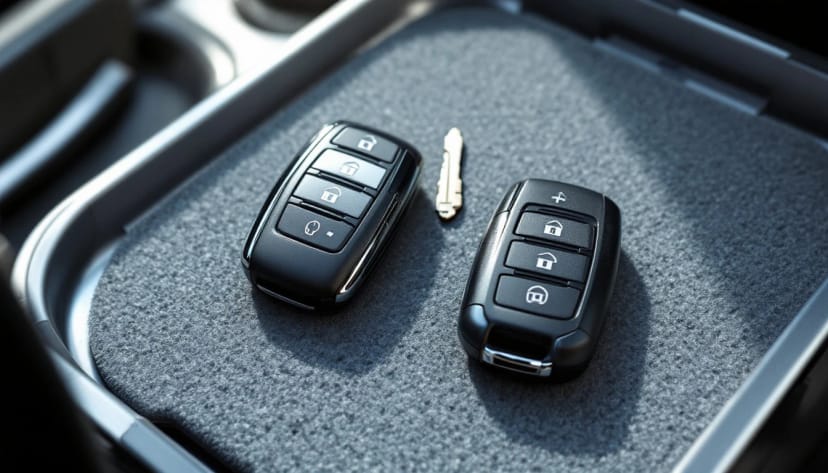
More than half of "lost" keys are actually found within 30 minutes of searching. Check: all pants and jacket pockets (front, back, interior), purses and bags, couch cushions and between seat crevices, inside the car through a window (keys locked inside is a lockout, not a lost-keys situation), washer/dryer, freezer, trash bag you're about to throw out, counter tops, and the floor where you just came in. If you were at a restaurant, gym, or business in the last hour — call them. Valet keys often end up at the podium.
Minute 15–30: Rule Out Lockout
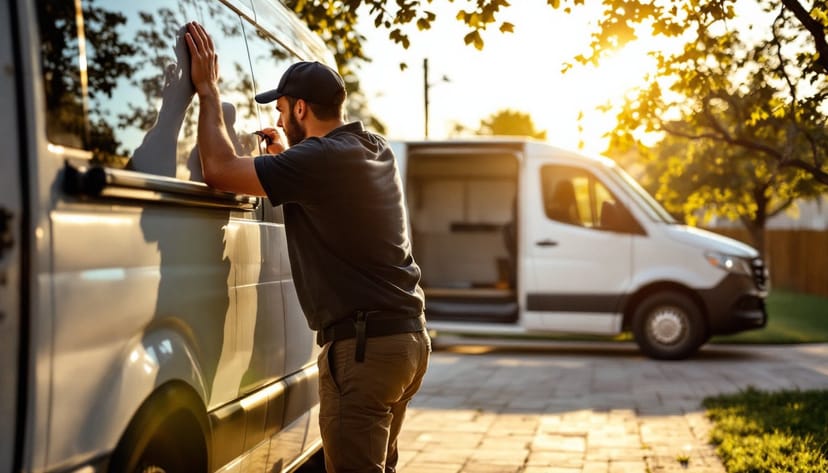
Look through your windows. If you can see the keys inside the vehicle, this is a lockout, not a lost-key situation. A mobile automotive locksmith can unlock non-destructively for $75–$150 — no key replacement needed. Call 817-842-1256 with your location and vehicle and we dispatch in 20–40 minutes.
Minute 30–60: Do You Have a Spare?
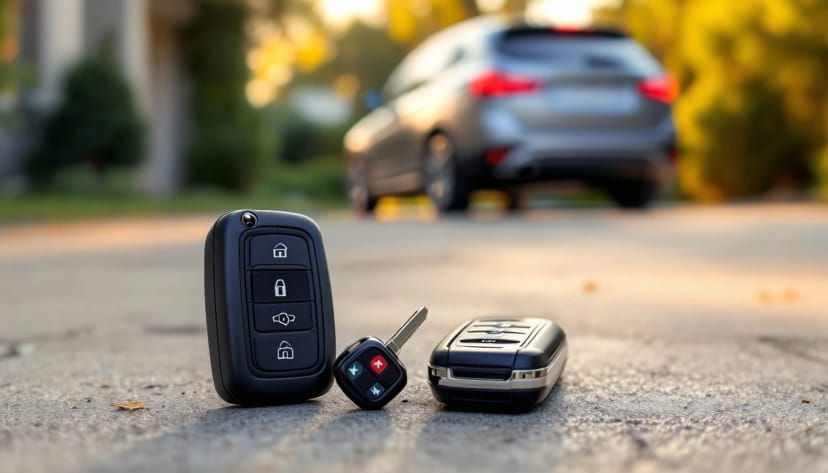
If you have a working spare key somewhere — at home, in a family member's possession, or hidden somewhere accessible — retrieve it. Then call a locksmith to cut/program a new primary key from your spare. This is the cheapest path (spare-to-new is ~50% cheaper than all-keys-lost). If no spare exists or you can't access one, proceed to AKL.
Minute 60+: Call a Mobile Auto Locksmith (Not the Dealer)
Skip the dealer unless your vehicle is under lease/warranty that specifically requires dealer service. Call a mobile automotive locksmith with dealer-level scan tools. Share your year/make/model/location/spare-or-no-spare. Get a firm quote on the phone. Have ID and proof of ownership ready. Per J.D. Power's Customer Service Index data, independent mobile rates typically run 40-60% of dealer rates on equivalent key work — plus same-day turn-around instead of 3-8 days.
When to Call the Dealer Instead
Very rarely. Valid reasons: (1) your vehicle is actively under a lease that requires dealer-only service; (2) your specific model year has an uncommon security system that most mobile locksmiths can't handle (rare — call a locksmith first and ask); (3) you're filing an insurance claim that requires dealership paperwork. In most other cases, mobile is faster, cheaper, and more convenient.
If the Car Was Stolen
If the keys were stolen — not just lost — file a police report immediately, then have the locksmith delete the lost/stolen keys from the vehicle's immobilizer memory. Good locksmiths can "erase" old keys so that even if the thief finds them later, they won't start the car. This is a separate 20–40 minute job and typically adds $50–$125 to the visit. Per the NHTSA's published guidance on anti-theft systems, key invalidation after theft is part of FMVSS-mandated immobilizer behavior.
Insurance and Roadside Coverage
Check your auto insurance and roadside program. AAA, State Farm, Allstate, USAA, and many comprehensive policies cover lockouts. Some cover key replacement after theft. Others have a specific "key-fob endorsement" add-on. We provide itemized receipts with VIN and part number for claims. Per Texas Department of Insurance consumer guidance, comprehensive coverage can include key replacement under specific endorsements — deductible structure usually makes filing only worthwhile for the most expensive AKL scenarios on luxury vehicles.
Verification: 60 seconds before dispatch
Before authorizing the locksmith to dispatch, run the verification check: ask for the Texas DPS Private Security license number and look it up on the TX DPS public lookup. Ask whether the operator is NASTF Vehicle Security Professional registered. Get the flat-rate price range texted to your phone. Per the Better Business Bureau locksmith scam advisory and the FTC consumer guidance, this 60-second check is the highest-leverage scam filter available.
Quick Decision Table: Which Situation Are You In?
Match your situation to the right move before you spend a dollar. The wrong first call (usually a tow to the dealer) is what turns a $150 problem into a $700 one.
| Your situation | Best move | Typical cost | Typical time |
|---|---|---|---|
| Keys visible inside the locked car | Mobile lockout (non-destructive entry) | $75–$150 | 15–30 min |
| You have a working spare accessible | Retrieve spare, then cut/program a new primary | $120–$300 | 30–60 min |
| Only key lost, no spare (all-keys-lost) | Mobile AKL programming on-site | $275–$900 | 30–180 min |
| Keys stolen (not just lost) | Police report + delete old keys from immobilizer | AKL + $50–$125 | 45–180 min |
| Key broke off in the ignition | Broken-key extraction (+ new key if needed) | $95–$275 | 20–45 min |
Every path except the stolen-key case avoids a tow entirely, because a mobile locksmith comes to the car's current location.
Lost vs Misplaced vs Stolen — Why It Changes Your Move
These three feel identical in the moment but call for different responses. Misplaced keys (the majority) are found within 30 minutes of a serious search, so the first 15 minutes should always be spent looking before you spend money. Lost keys — genuinely gone, no theft — mean you go straight to a spare-or-AKL decision; there's nothing for police to do. Stolen keys are the one case where you file a police report first, because you also want the locksmith to erase the old key from the vehicle's immobilizer memory so a thief who later finds it still can't start the car. That deletion step is part of the immobilizer's designed behavior under the NHTSA anti-theft framework.
What Information the Locksmith Needs
When you call, having five facts ready turns a vague conversation into a firm quote and a fast dispatch: (1) year, make, and model; (2) whether you have any working key or spare; (3) your exact location and whether the car is accessible (driveway, garage, lot, roadside); (4) whether it's push-button start or a traditional ignition; and (5) that you can prove ownership. Per J.D. Power's Customer Service Index analysis, the independent mobile channel routinely beats dealer turnaround precisely because it can quote and schedule off those five facts in a single phone call.
Proof of Ownership: What Counts
A credentialed operator will verify ownership before cutting or programming a key — this protects you from key theft as much as it protects them. Acceptable documentation is a government-issued photo ID (your driver's license) plus one of: the vehicle title, current registration, or an insurance card in your name. If the car is titled to a spouse, a company, or a lienholder, expect to provide a little extra documentation. Anyone willing to skip this step should be treated as a red flag, not a convenience.
Timeline: What to Expect From Call to Driving Away
For a typical Fort Worth mass-market vehicle with no spare, the realistic clock looks like this: 1–2 minutes to get a firm quote on the phone; 20–40 minutes for the technician to reach you; 10 minutes to verify ownership and read the vehicle's security data; 20–60 minutes to cut the blade and program the new key (longer for European or encrypted platforms); and a few minutes to test every function. Most drivers are back in a working vehicle inside two hours of the first call — versus a 3–8 day wait for a dealer appointment plus the tow. Request that a spare be programmed in the same visit; a second key added on-site costs 30–40% more than the first, far cheaper than a future all-keys-lost event.
Special Cases: Rental, Leased, Company, and Financed Vehicles
- Rental car: call the rental company first — their contract usually dictates who replaces the key and who pays.
- Leased vehicle: check whether your lease requires dealer-only service; most don't for a lost key, but it's worth a two-minute call.
- Company / fleet vehicle: you'll likely need authorization from the account owner, and the receipt should be itemized for the fleet's records.
- Financed vehicle: you own it for key purposes — a lienholder doesn't change your ability to have a mobile locksmith make a key; standard proof-of-ownership documents apply.
Prevent the Next Time
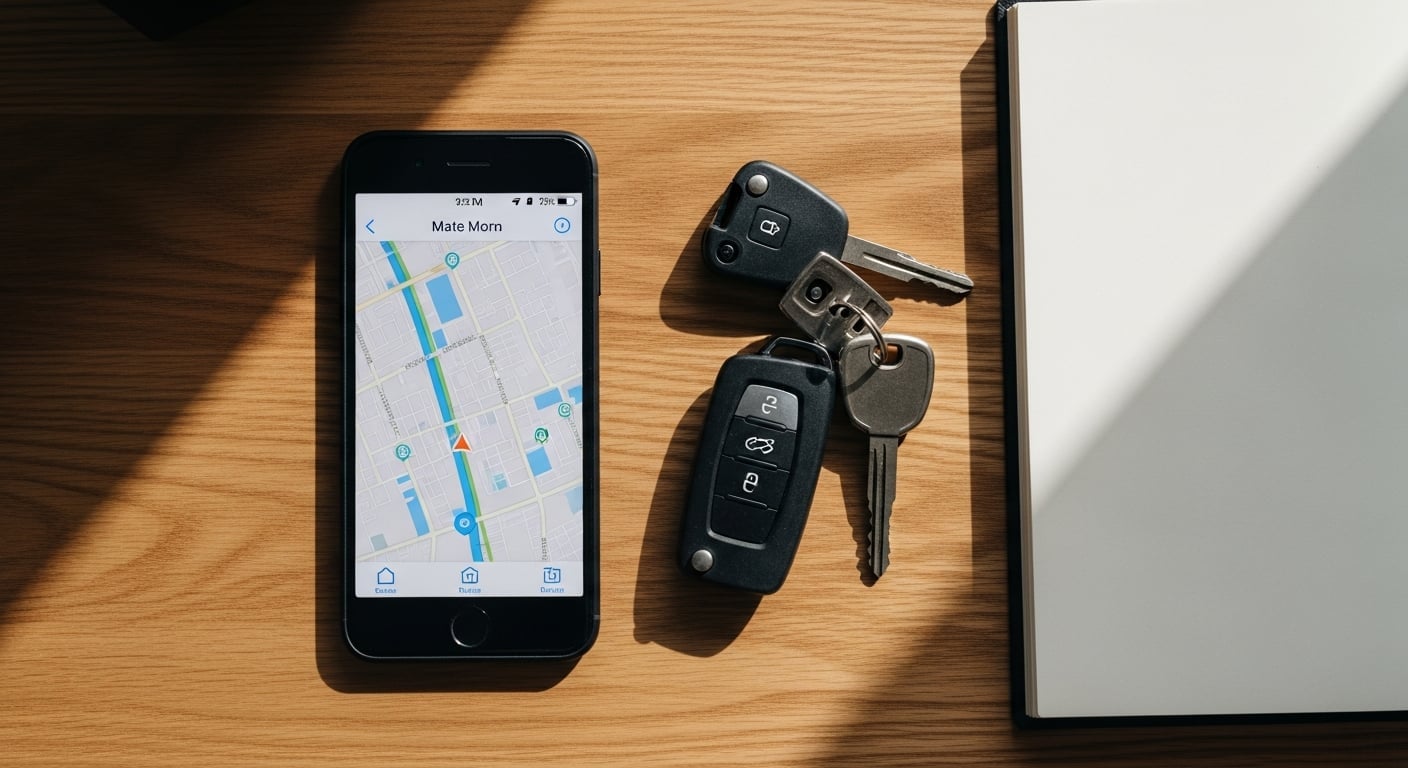
The reason all-keys-lost is the most expensive scenario is that the entire pricing model assumes you'll always have at least one working key. The fix is cheap: own two keys, keep the spare in a secure, accessible place at home (not a magnetic box under the bumper), and put a Bluetooth tracker on the primary fob so a "lost" key becomes a recoverable event instead of a $300+ one. Per BrightLocal's Local Consumer Review Survey 2024, households that keep a maintained spare report far fewer emergency-rate service calls year over year.
If Your Car Is in a Tricky Spot
A lost-key job doesn't require the car to be at your house. Mobile technicians regularly make keys in places a tow truck would complicate: apartment and office parking garages, airport long-term lots, stadium and event lots, impound and tow yards, and roadside shoulders. The only real requirement is safe physical access to the vehicle and its OBD port. Two situations need a heads-up call: an impound or tow yard may require you to show ownership and authorize access at the office first, and a gated garage may need you to meet the technician to badge them in. Describe the location honestly when you call and an experienced operator will tell you immediately whether it can be done on-site — in the large majority of Fort Worth cases, it can.
Lost-Key Cost Quick Reference
If you have no spare, the job is an all-keys-lost (AKL) program, and the price tracks your vehicle's platform. As of August 2026, this quick reference sets expectations before you call.
- Domestic and Asian mass-market (Ford, Chevrolet, Ram, Jeep, Toyota, Honda, Nissan, Hyundai, Kia) — typical mobile all-keys-lost $275–$475, 30–75 minutes on site.
- Luxury Japanese (Lexus, Acura, Infiniti) — $375–$650, 45–90 minutes. Same encryption families as their mass-market siblings, but pricier smart-fob hardware.
- BMW, Mercedes, Audi and Volkswagen — $450–$900, 60–150 minutes. CAS/FEM/BDC, EIS/EZS and MQB Component Protection all demand OEM-grade tooling and, on some model years, online security-data access.
- Jaguar, Land Rover and Porsche — $550–$1,100, 60–180 minutes. The longest jobs on the list, and the ones most likely to need bench work on a removed module.
If you do have an accessible working spare, skip AKL entirely — cutting and programming a new primary from a working key is far cheaper ($120–$300 for most vehicles) and faster. That single fact — spare or no spare — is the biggest lever on your final bill, which is why it's the first question a good operator asks.
What NOT to Do
A few reflexes cost people the most money and time. Don't tow to the dealer first — it's the single most expensive wrong move, adding $150–$300 before the dealer's own markup and multi-day wait. Don't accept a phone quote that's suspiciously cheap ($19, $29, $49); those almost always balloon at the door, which per the FTC's locksmith guidance is the most common consumer complaint in the trade. Don't hand over the car to anyone who won't verify ownership — a real operator always checks ID and proof of ownership. Don't assume you need a whole new key until a locksmith rules out a simpler cause (dead fob battery, a spare you forgot about). And don't skip the spare once a technician is on-site — it's the cheapest insurance against a repeat of exactly this day.
Insurance and Roadside — Getting Reimbursed
Before you pay out of pocket, check what you already have. Many roadside programs — AAA, plus the roadside add-ons on State Farm, Allstate, USAA, and others — cover lockouts, and some comprehensive auto policies cover key replacement after theft (though usually not simple loss). A few carriers offer a specific key-fob endorsement. To keep a claim clean, ask the locksmith for an itemized receipt listing the VIN and part numbers — that's the documentation the Texas Department of Insurance says a comprehensive key-replacement claim typically requires. Keep in mind the deductible math: on a $150 mass-market job, filing rarely beats a $500 deductible, so reimbursement usually only makes sense on the pricier all-keys-lost or luxury scenarios. Either way, it costs nothing to ask your insurer before the technician arrives.
The Bottom Line
Losing your only car key feels like an emergency, but the smart play is calm and ordered: search hard for 15 minutes, rule out a simple lockout, check for an accessible spare, and only then call a mobile automotive locksmith with dealer-level tools. Skip the tow, skip the dealer's multi-day wait, get a firm all-inclusive quote on the phone, verify the license, and have your proof of ownership ready. Most Fort Worth drivers are back on the road within two hours of the first call, at 40–60% of the dealer's price — and if you add a spare while the technician is there, you turn today's expensive lesson into a one-time event instead of a recurring one.
Field-operator perspective
The two questions that filter the trade are: what tool do you use for my chassis, and what's your flat-rate range for this job. Honest operators answer both in under 60 seconds. The scam operators stall on both. Every customer who calls us armed with those two questions saves themselves $150-$400 on average — that's the entire trick.
— a NASTF-registered Fort Worth automotive locksmith, ALOA Master Automotive Locksmith (MAL) credential, DFW metroplex (anonymized)
A real-world example
Operator: Anonymized 2018 Ford F-150 owner, downtown Fort Worth office parking, lost keys after work-day commute
Before:
- Customer realized at 5:30 PM that their only key fob was missing after a full day of meetings.
- Ford dealer quote: $325 + $165 tow = $490, next-day appointment only.
- Customer needed the vehicle that evening for an out-of-town family obligation.
What changed: Customer called a NASTF-registered mobile operator. Pre-dispatch flat-rate quote: $275-$320 for Ford F-150 AKL (PATS system), 90-day labor warranty. Technician arrived in 41 minutes, verified ownership, executed AKL programming in 52 minutes on-site, programmed a spare in the same visit.
Outcome:
- Final invoice: $295 (within quoted range). No tow.
- Two working keys delivered, customer driving by 7:15 PM same evening.
- Spare stored in customer's home safe.
Net: Customer saved approximately $195 hard cost vs the dealer path, and avoided missing the family obligation entirely. The same-day turn-around was the critical factor.
Frequently Asked Questions
I lost my car keys — should I call the police?
Only if they were stolen. If simply lost, police can't do much — but file a non-emergency report if you want a record for insurance. For the actual key replacement, call a mobile automotive locksmith.
Is it cheaper to call a locksmith or the dealer for lost keys?
A mobile auto locksmith is typically 40–60% cheaper than the dealer and comes to your location (no tow needed). Dealers require a tow ($150–$300) plus dealership overhead fees.
Can I drive my car if I lose my only key?
No. Without a programmed key, the immobilizer won't allow the engine to start. You need a mobile locksmith to program a new key on-site before you can drive.
How long does it take to get a new key made after losing mine?
Dispatch across Fort Worth and Tarrant County usually runs 20 to 40 minutes depending on traffic and where the car sits. The work itself is 30 to 75 minutes on most mass-market vehicles and 60 to 180 minutes on European platforms. In practice most people are driving again within about two hours of the call, which is the main reason the mobile route beats a tow and a dealer appointment.
What paperwork do I need before a locksmith will make me a key?
A government-issued photo ID plus proof the vehicle is yours — the title, a current registration, or an insurance card in a matching name. The technician checks both and records the verification on the invoice before generating any credential. If the car is titled to a spouse, a company or an estate, say so when you call so the right document is ready.
Should I replace the locks or ignition if my keys were stolen?
Usually not. On a modern vehicle the meaningful risk is the electronic credential, not the metal, so the correct fix is to erase every key the immobilizer currently knows and write a fresh set. That removes any stolen key's ability to start the car without touching the cylinders. Physical lock or ignition replacement only comes into play if the hardware itself was damaged during the theft.
Can a locksmith make a key if my car is somewhere awkward?
In most cases, yes. Apartment and office garages, airport long-term parking, stadium lots, impound yards and roadside shoulders are all routine. What matters is safe physical access to the vehicle and its diagnostic port. Impound and tow yards will normally want you to authorize access at the office first, and gated garages may need you to badge the technician in, so describe the location when you call.
References & external sources
- Better Business Bureau — Locksmith Scam Advisory — BBB consumer protection guidance on locksmith bait-and-switch operators.
- FTC Consumer Advice — Hiring a Locksmith — Federal Trade Commission guidance on verifying locksmith legitimacy before service.
- Texas Department of Public Safety — Private Security Licensing — Texas locksmith company + individual licensing requirements.
- NASTF Vehicle Security Professional (VSP) Registry — National Automotive Service Task Force registry for credentialed access to OEM security data.
- J.D. Power — Customer Service Index — Annual study of dealership service department satisfaction and cost.
- NHTSA — Anti-Theft Systems & FMVSS 114 — Federal Motor Vehicle Safety Standard governing key-code and immobilizer disclosure.
- Texas Department of Insurance — Auto Insurance Coverage Types — TDI consumer guide to comprehensive coverage and key-replacement claims.
- AAA — Your Driving Costs 2024 — Annual ownership cost study including unscheduled maintenance projections.